Sticky bourbon chicken belongs on a hot griddle. The sauce clings to each piece, the edges caramelize, and the chicken picks up that deep, glossy finish that makes people drift back for one more bite. On a Blackstone, this dish gets the kind of seared, saucy coating that a skillet struggles to match because the wide surface keeps the chicken moving while the glaze cooks down fast.
The key is separating the marinade before the chicken goes in. That reserved portion gets thickened later, so you’re not simmering raw chicken juices back into the sauce. Chicken thighs are the right cut here because they stay juicy through the high heat and fast stirring, and the brown sugar-bourbon combination reduces into something rich without tasting sharp or thin.
Below you’ll find the small details that make the sauce gloss instead of burn, plus a few smart swaps and storage notes for the next time you want a fast griddle dinner that tastes like you worked harder than you did.
The chicken caramelized beautifully on the griddle and the sauce thickened right at the end without turning sticky or burned. My husband kept going back for more and said it tasted like takeout, only better.
Save this Blackstone Bourbon Chicken for the nights when you want glossy, caramelized chicken with almost no cleanup.
The Trick to Bourbon Chicken That Glosses Instead of Burns
The difference between glossy bourbon chicken and a pan full of scorched sugar comes down to timing. Brown sugar and bourbon reduce fast on a griddle, and once the liquid evaporates, the sauce can go from lacquered to bitter in a minute. That’s why the chicken cooks first, the reserved marinade stays raw until it’s thickened separately, and the final glaze goes on only when the meat is already cooked through.
Chicken thighs help here because they stay tender while the sauce cooks down around them. If you use breast meat, it can work, but you’ll need to pull it sooner or it turns dry by the time the glaze tightens. Frequent stirring matters too, not because the dish needs constant babysitting, but because it keeps the sugar moving across the hot surface instead of sitting still long enough to burn.
What Each Ingredient Is Actually Doing in This Griddle Sauce
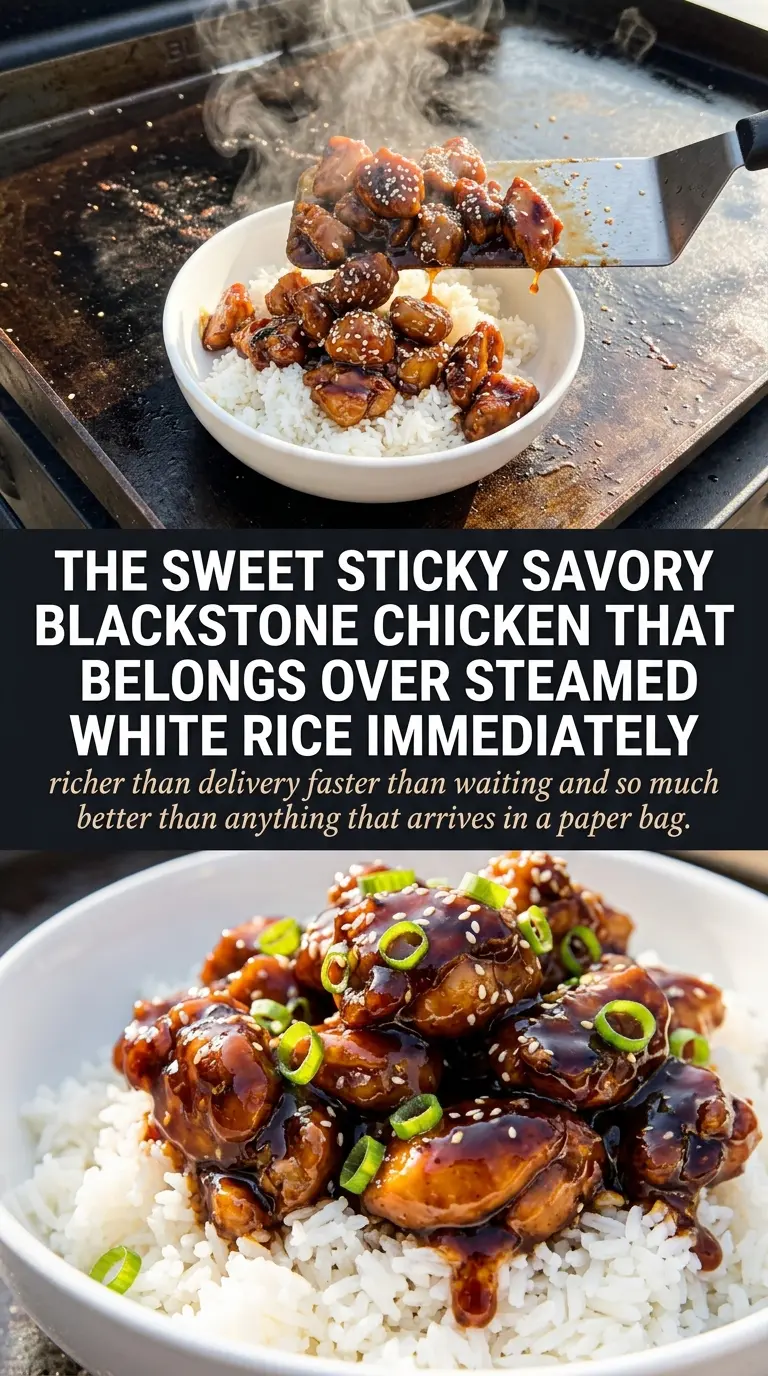
- Chicken thighs — They bring enough fat to stay juicy under high heat, and they’re much more forgiving than breast meat if the griddle runs hot. Cut them into even bite-sized pieces so they brown at the same rate.
- Bourbon — This adds depth and a little warmth to the sauce, but it doesn’t need to taste boozy. The alcohol cooks off quickly, leaving behind a richer background note than you get from vinegar and sugar alone.
- Soy sauce — It gives the glaze salt and color in one shot. A regular soy sauce works best here; low-sodium is fine if that’s what you keep, but don’t skip the salt adjustment in your head because the sauce can turn flat.
- Brown sugar — This is what creates that sticky finish. Light or dark brown sugar both work, though dark brown sugar will give you a deeper molasses note.
- Apple cider vinegar — It keeps the sauce from tasting one-note sweet and helps cut through the richness. Rice vinegar can stand in if that’s what you have, but cider vinegar gives a slightly rounder bite.
- Cornstarch slurry — This is what turns the reserved marinade into a proper glaze. Mix it with cold water first; if it goes straight into hot sauce dry, you’ll get lumps.
- Garlic and ginger — Fresh is worth it here. They give the sauce its sharp, savory edge, and powdered versions taste flatter once the glaze reduces.
Getting the Chicken Cooked Through Before the Sauce Tightens
Mix the Marinade and Hold Some Back
Stir the bourbon, soy sauce, brown sugar, vinegar, garlic, and ginger until the sugar dissolves as much as it can. Pull off one-third of that mixture before the chicken goes in, because that reserved portion is what will become your finishing sauce later. If you skip that split, you’ll have no clean way to thicken the glaze without cooking raw chicken juices directly into the final sauce.
Marinate Briefly, Not Forever
Thirty minutes is enough for the chicken to pick up flavor without turning soft on the outside. Bourbon and vinegar both push the marinade toward a stronger surface effect, so long soaks can make the meat a little mushy. Keep it chilled while it rests, then drain off the excess marinade before the chicken hits the griddle so it sears instead of steaming.
Cook Fast on the Hot Griddle
Heat the oil until it shimmers, then add the chicken in a single layer. You want steady sizzling, not a slow spit; if the griddle isn’t hot enough, the chicken will turn gray before it browns. Stir often and keep moving the pieces so the edges caramelize without letting the sugar catch and burn in one spot.
Finish With the Thickened Glaze
When the chicken is cooked through, mix the cornstarch with water and stir it into the reserved marinade before pouring it over the meat. Let it bubble for a couple of minutes until it turns shiny and starts clinging to the chicken instead of running to the edges. Pull it as soon as the sauce coats the back of a spoon and the glaze looks glossy, because a few extra seconds is all it takes for cornstarch sauce to turn gluey.
Three Ways to Work This Recipe Around What You Have
Make It Gluten-Free
Swap the soy sauce for tamari or a certified gluten-free soy sauce. The flavor stays close, but tamari is often a little rounder and less sharp, so the glaze may taste slightly deeper. Keep the rest of the recipe the same.
Use Chicken Breast Instead
Chicken breast works if that’s what you have, but cut it into slightly larger pieces and start checking early. It dries out faster than thighs, so pull it the moment it’s cooked through and let the glaze finish on low heat instead of pushing it hard.
Dial Back the Sweetness
Reduce the brown sugar slightly and add a touch more vinegar if you want a sharper glaze. That shifts the sauce away from candy-like and toward savory-sweet, but don’t cut the sugar too far or you’ll lose the sticky coating that makes bourbon chicken work.
How to Make It Dairy-Free and Meal-Prep Friendly
This recipe is naturally dairy-free, so there’s nothing to change there. For meal prep, cook the chicken just to done and hold back a little extra sauce if you like a fresher finish when reheating; the glaze tightens as it sits, which is normal.
Storage and Reheating
- Refrigerator: Store in an airtight container for up to 4 days. The sauce will thicken as it chills, which is normal.
- Freezer: It freezes well for up to 2 months. Cool it completely first, then freeze in a flat container so it thaws evenly.
- Reheating: Reheat gently in a skillet over medium-low heat with a splash of water to loosen the glaze. High heat can scorch the sugar before the chicken warms through, so keep it moving and stop as soon as it’s hot.
Questions I Get Asked About This Recipe
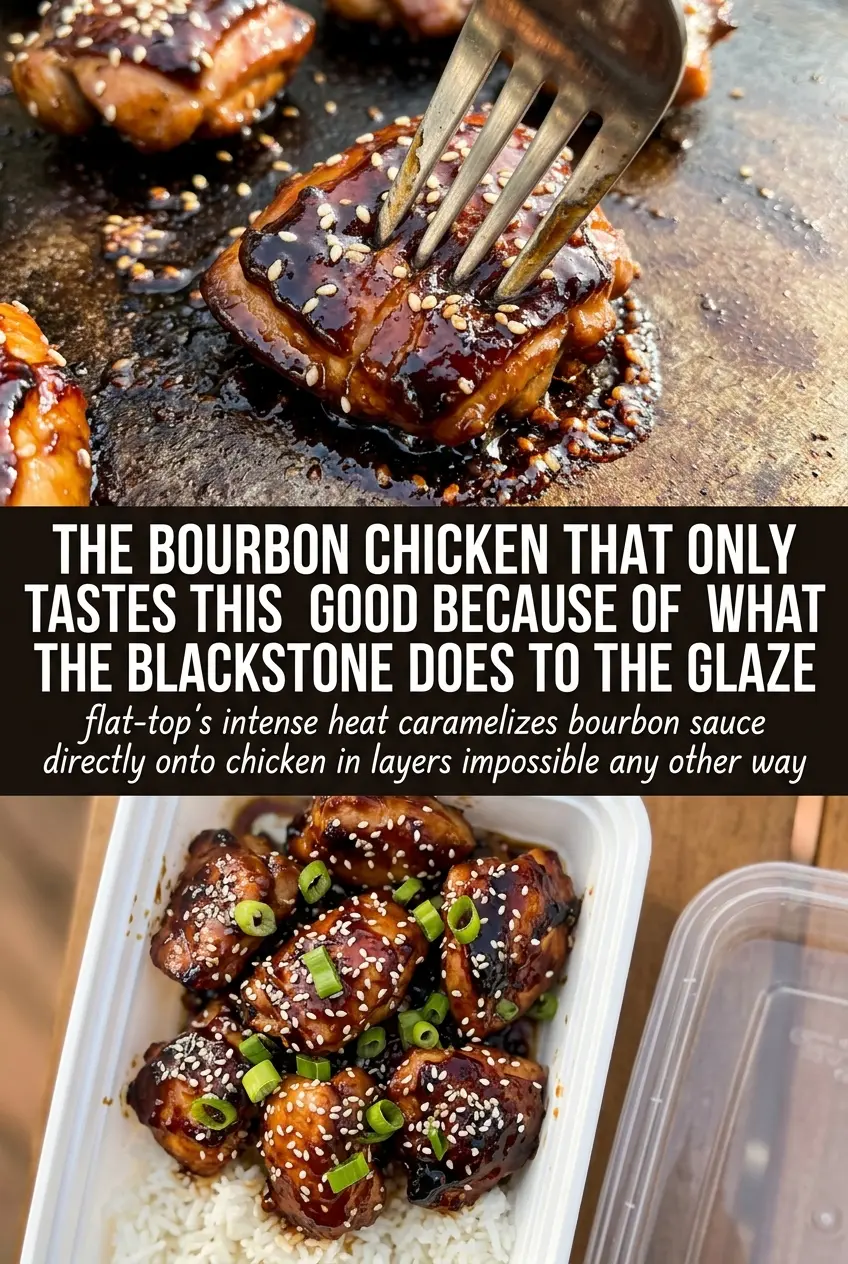
Blackstone Bourbon Chicken
Ingredients
Equipment
Method
- Combine bourbon, soy sauce, brown sugar, apple cider vinegar, garlic, and ginger in a bowl.
- Reserve 1/3 of the marinade and marinate the chicken thighs in the remaining marinade for 30 minutes.
- Heat oil on a griddle over medium-high heat (about 375°F to 425°F) until shimmering.
- Cook the chicken thighs for 10-12 minutes, stirring frequently, until cooked through and caramelized.
- Mix cornstarch with water and add it to the reserved marinade, whisking until smooth.
- Pour the sauce over the chicken thighs and cook for 2-3 minutes until thickened and coating the chicken.
- Garnish with sesame seeds and green onions.