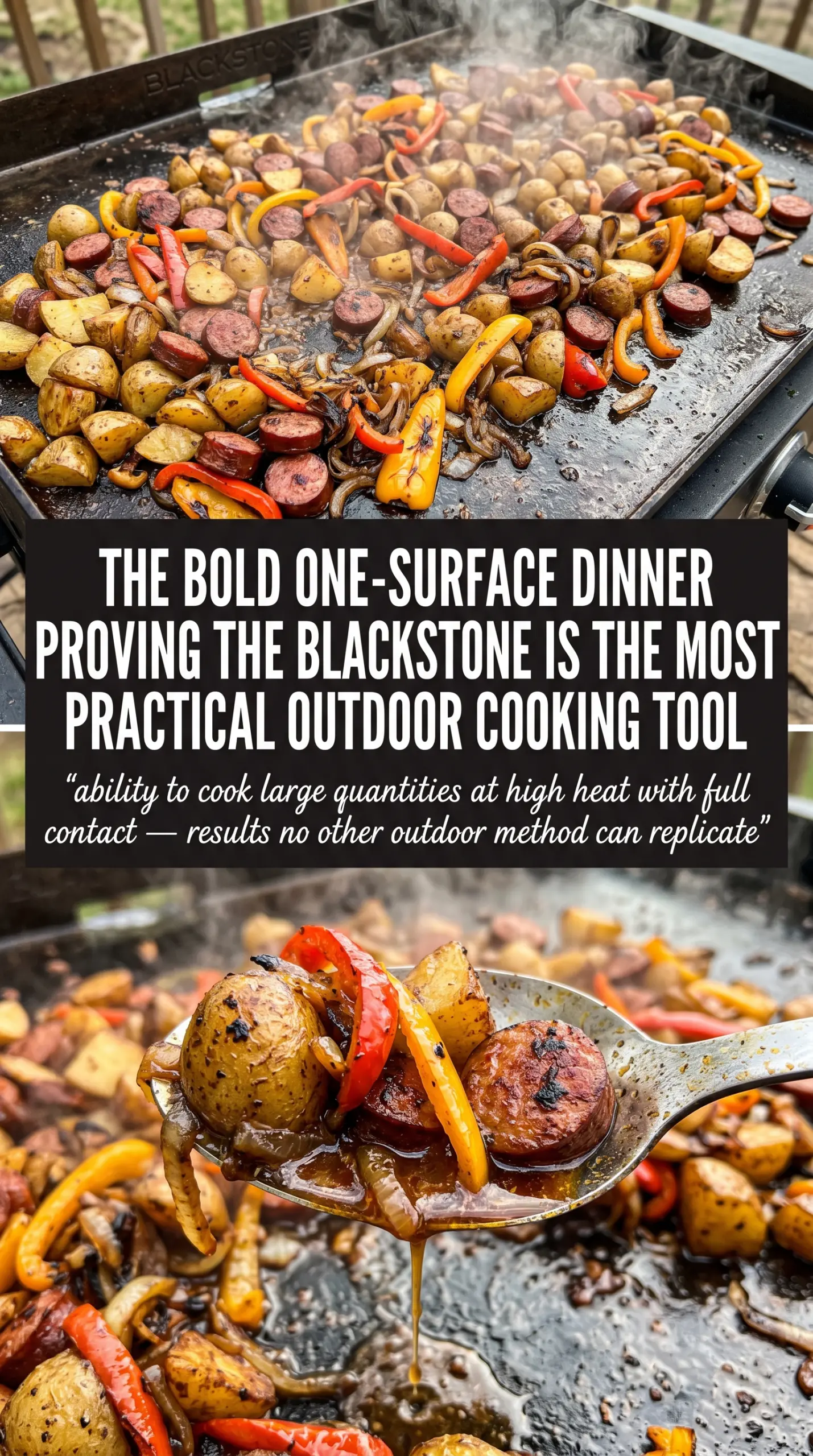
Blackstone Cowboy Stir Fry brings together seared steak, sweet corn, and peppers in a sauce that hits smoky, savory, and just a little sticky at the edges. The griddle gives you the kind of fast, hard heat that browns the beef instead of steaming it, and that char on the vegetables turns an everyday stir fry into something with real personality.
What makes this version work is the order. The steak cooks first and comes off the heat before the vegetables go in, so it stays tender instead of overdone. The sauce is built from soy sauce, BBQ sauce, Worcestershire, and brown sugar, which gives you depth without needing a long simmer. Corn and garlic go in late so they stay sweet and fragrant instead of dull and muddy.
You’ll find the exact griddle timing below, plus a few practical swaps and fixes for the times when your steak is sliced a little thicker than planned or your griddle runs hot in spots.
The steak got a great crust on the griddle and the sauce clung to everything instead of pooling at the bottom. I made it with frozen corn and it still tasted fresh because the vegetables stayed crisp-tender.
Love the smoky-sweet sauce on this Blackstone Cowboy Stir Fry? Save it to Pinterest for the nights when you want fast griddle steak with bold, hearty vegetables.
The Trick to Keeping the Steak Tender on a Hot Griddle
Steak stir fry goes sideways when the pan cools down or the meat sits too long before serving. A Blackstone solves part of that problem, but only if you work in a tight sequence and keep the pieces moving from sear to rest to finish. Thin-sliced sirloin is the right cut here because it browns quickly and still stays juicy after a short return to the heat.
The biggest mistake is crowding the meat, which drops the temperature and gives you gray, steamed strips instead of a proper crust. Give the steak enough space to sear hard, then pull it off as soon as the outside is browned and the center is still a little underdone. It finishes in the sauce at the end, and that last toss is what keeps it from drying out.
- Sirloin steak — Sirloin gives you tenderness without costing ribeye money, and it holds up well to quick griddle heat. Slice it thin against the grain so it stays easy to chew. If your knife work is a little uneven, chill the steak for 20 minutes first; that makes cleaner slices.
- BBQ sauce — This is what gives the dish its cowboy-style sweetness and smoke. A thicker, tangier sauce works better than a thin, sugary one because it clings to the vegetables and beef instead of disappearing. Use what you like, but avoid anything with a heavy molasses taste unless you want a darker, sweeter finish.
- Worcestershire sauce — This adds the deep savory edge that keeps the sauce from tasting like barbecue glaze. There isn’t a perfect substitute, but a splash of soy sauce plus a tiny bit of vinegar can cover some of the same ground in a pinch. It won’t taste identical, but it will keep the sauce balanced.
- Corn and peppers — These bring sweetness and texture, and they’re part of what makes the dish feel hearty instead of just saucy. Fresh or frozen corn both work, but frozen should go in straight from the bag so it doesn’t turn soft and watery. Slice the peppers and onions fairly thick so they can char at the edges without disappearing.
What Each Ingredient Is Actually Doing in Blackstone Cowboy Stir Fry
- Protein (quality, proper thickness) — Good quality protein tastes better. Even thickness ensures even cooking.
- Seasoning (bold, distributed throughout) — Don’t be shy with salt and pepper. Quality seasoning elevates everything.
- Oil or fat (protective and flavorful) — The fat helps develop crust and carries flavors. Use generously.
- Heat management (appropriate temperature for the protein) — Too high and the outside burns before the inside cooks. Too low and it steams.
- Technique (sear, then finish based on thickness) — Proper technique creates flavor. Sear for crust, then cook through gently.
- Aromatics and seasonings (garlic, herbs, spices) — These add complexity and depth. Distribute them throughout the cooking process.
- Resting time (let it rest before serving) — Resting allows juices to reabsorb. This keeps the protein moist and tender.
- Optional: finishing sauce or glaze — A light sauce adds richness without overwhelming. Apply at the very end.
Building the Sauce After the Vegetables Have Some Color
Getting the Beef off the Griddle at the Right Moment
Heat the griddle until a drop of oil shimmers immediately, then lay the steak down in a single layer. You want a fast sear and browned edges, not a slow cook through. If the strips start releasing a lot of liquid, the griddle is too crowded or not hot enough, and the beef will go gray before it gets a crust.
Letting the Peppers and Onions Take the Lead
After the steak comes off, add the peppers and onions to the hot surface and let them sit long enough to pick up color before stirring. They should soften and blister at the edges, but still keep some bite. If they start turning limp too fast, your heat has dropped; spread them out and give them a minute before tossing again.
Finishing with the Sauce and Steak Together
Stir the corn and garlic in at the end so the garlic smells fragrant, not bitter, and the corn stays sweet. Mix the soy sauce, BBQ sauce, Worcestershire, and brown sugar in a bowl first so the sugar dissolves instead of sticking in a gritty layer on the griddle. Return the steak only for the last couple of minutes, just long enough for everything to coat and heat through.
Swap in Chicken Thighs for a Richer Finish
Boneless chicken thighs work well if you don’t want beef. Cut them into bite-size pieces and cook them until the edges are browned and the center is just done, then proceed with the vegetables and sauce. The result is a little richer and softer than steak, but it still fits the same smoky-sweet profile.
Make It Gluten-Free Without Losing the Sauce
Use a gluten-free soy sauce or tamari and check your BBQ sauce and Worcestershire label, since both can hide wheat. The texture stays the same, and the flavor remains bold and savory. This is one of the easier swaps because the dish doesn’t rely on flour or breading for structure.
Lower the Sugar Without Killing the Balance
Cut the brown sugar in half if you want a less sweet finish, but keep enough in the sauce to help it glaze the meat and vegetables. If you remove it completely, the sauce tastes flatter and more salty than savory. A little sweetness is doing real work here.
Storage and Reheating
- Refrigerator: Store leftovers in an airtight container for up to 3 days. The peppers soften a bit more as they sit, but the flavor gets even deeper.
- Freezer: It freezes okay, but the vegetables lose some texture. Freeze in portions for up to 2 months if you don’t mind softer peppers and onions after thawing.
- Reheating: Reheat in a skillet or on the griddle over medium heat with a tiny splash of water or broth. The common mistake is blasting it on high heat, which tightens the steak and dries out the sauce before the center warms through.
Questions I Get Asked About This Recipe
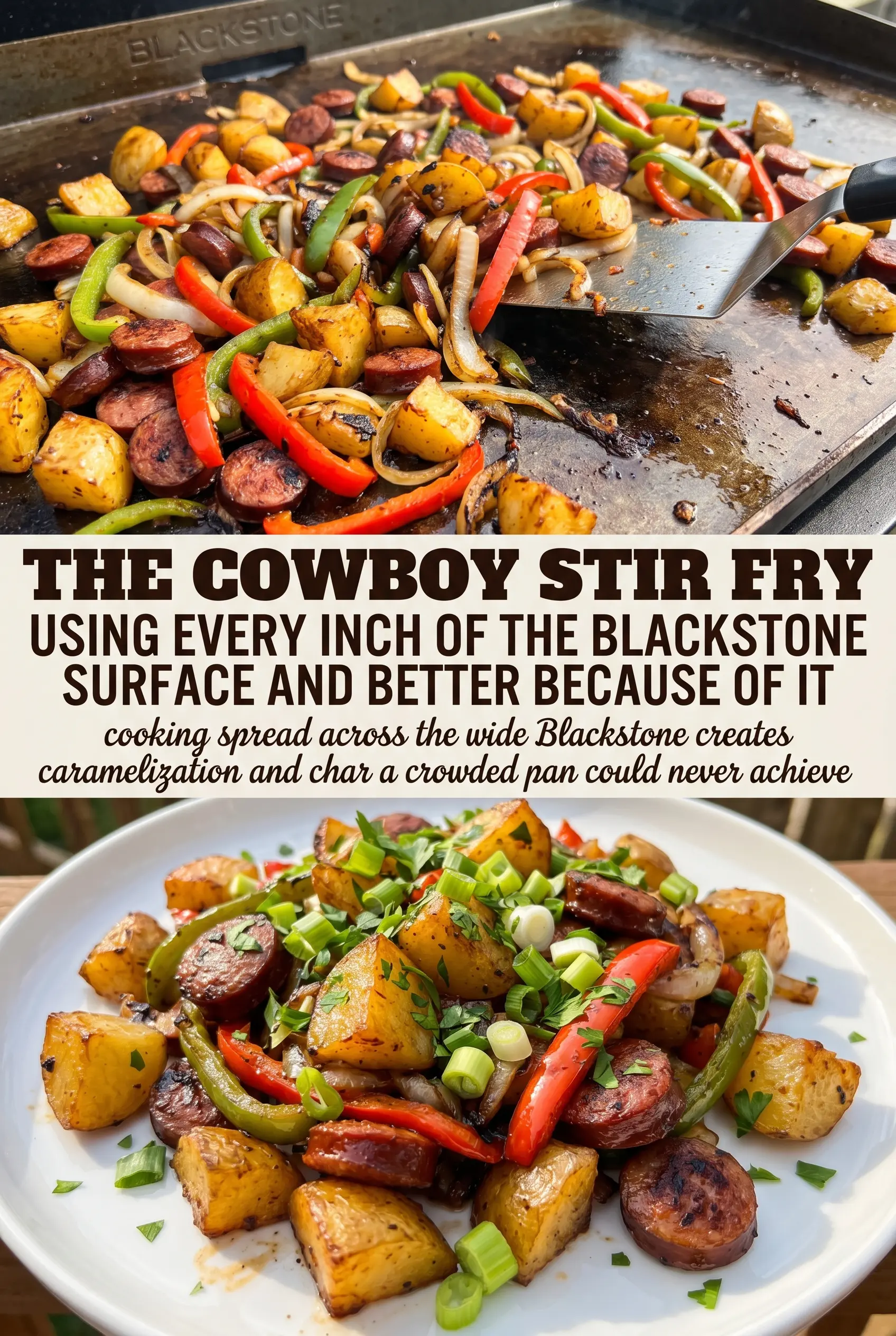
Blackstone Cowboy Stir Fry
Ingredients
Equipment
Method
- Heat Blackstone griddle to high heat and add oil. Let the surface heat up until the oil shimmers.
- Season steak with salt and pepper and cook for 3-4 minutes until seared, then set aside. Look for browned edges and a quick crust on the strips.
- Add peppers and onions to griddle, cooking for 5-6 minutes until softened. Stir occasionally so they blister lightly.
- Add corn and garlic, cooking for another 2 minutes. Watch for fragrant garlic and hot, lightly toasty corn.
- Combine soy sauce, BBQ sauce, Worcestershire sauce, and brown sugar, then pour over vegetables. Stir to dissolve the sugar and coat everything evenly.
- Return steak to griddle, toss everything together for 2-3 minutes, and keep moving. Cook until the steak is warmed through and the sauce looks glossy.
- Garnish with green onions. Serve immediately while vegetables are vibrant.