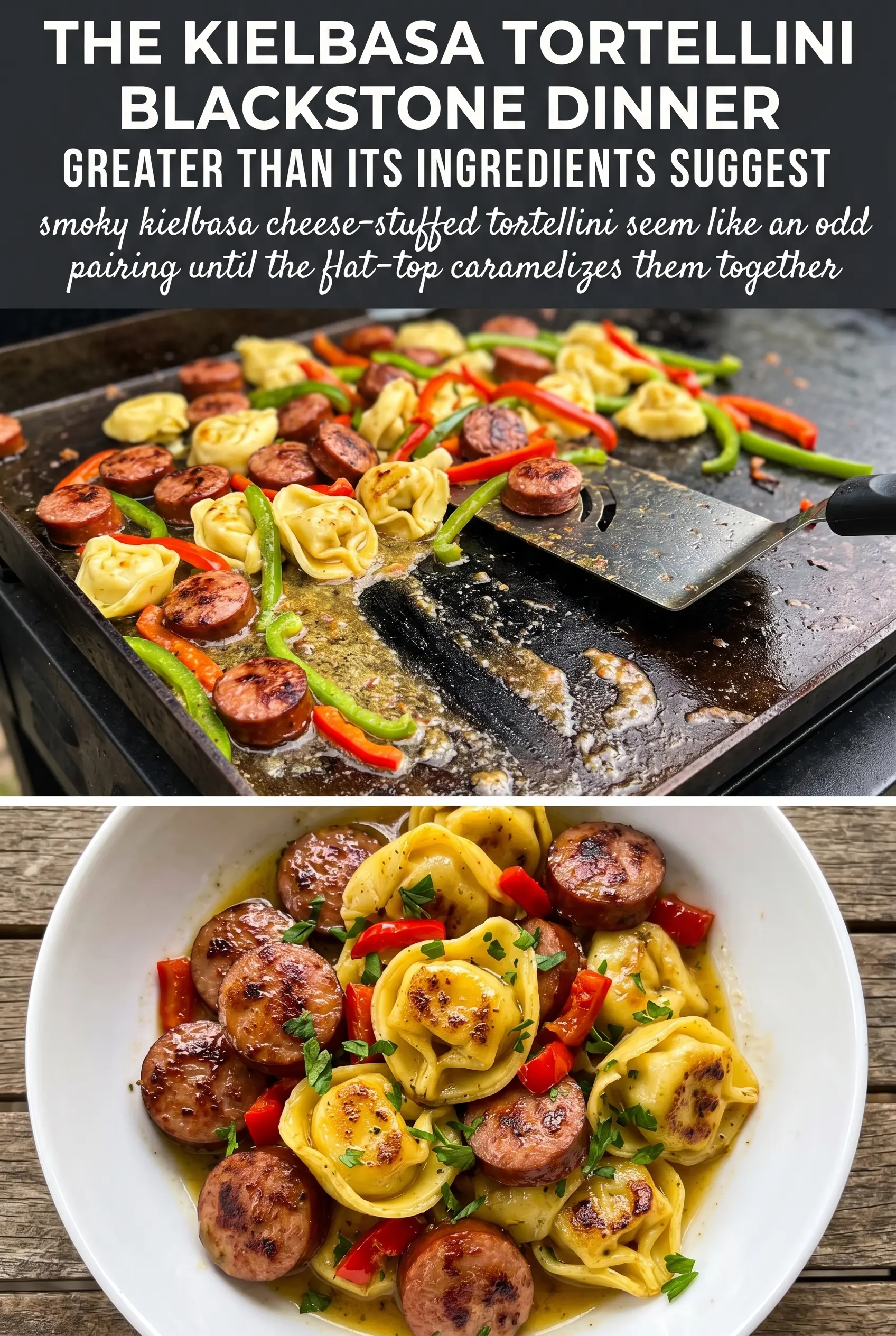
Sliced kielbasa, golden tortellini, and sweet peppers hit a hot Blackstone and turn into the kind of dinner that disappears fast. The sausage gets crisp at the edges, the pasta picks up a little char, and the tomatoes burst just enough to coat everything in a light, savory gloss. It eats like a full skillet meal, but it has the energy of something made outside with almost no cleanup.
What makes this version work is timing. The kielbasa goes first so it can brown properly, then the vegetables cook in the rendered fat and oil, and the cooked tortellini goes in last so it heats through without tearing apart. That order keeps the pasta intact and gives the whole dish a better mix of crisp, soft, and juicy textures.
Below you’ll find the small details that matter most on a flat-top: how hot the griddle should be, when the tortellini should go on, and the easiest way to keep the cheese from clumping when you finish it with Parmesan and basil.
The kielbasa got those perfect crispy edges and the tortellini held up instead of turning mushy. I added extra basil at the end and the whole pan tasted bright and smoky at the same time.
Save this Blackstone Grilled Kielbasa and Tortellini for the nights when you want smoky sausage, crispy pasta edges, and a one-pan dinner that comes together fast.
The Step That Stops the Tortellini From Going Soft
The biggest mistake in a griddle pasta like this is adding everything at once. Tortellini needs less time than people think, and once it sits on a hot flat-top too long, the filling can burst and the pasta turns gummy. Cooking the kielbasa first gives you flavor in the pan, and cooking the vegetables next builds a base that tastes seasoned before the tortellini even hits the griddle.
Another thing that matters here is surface moisture. If the tortellini is wet from the pot, it steams before it browns. Drain it well and let it sit for a minute so the outside dries slightly; that tiny pause is what helps it pick up color instead of clinging to the griddle in a soft pile.
What Each Ingredient Is Actually Doing in the Skillet
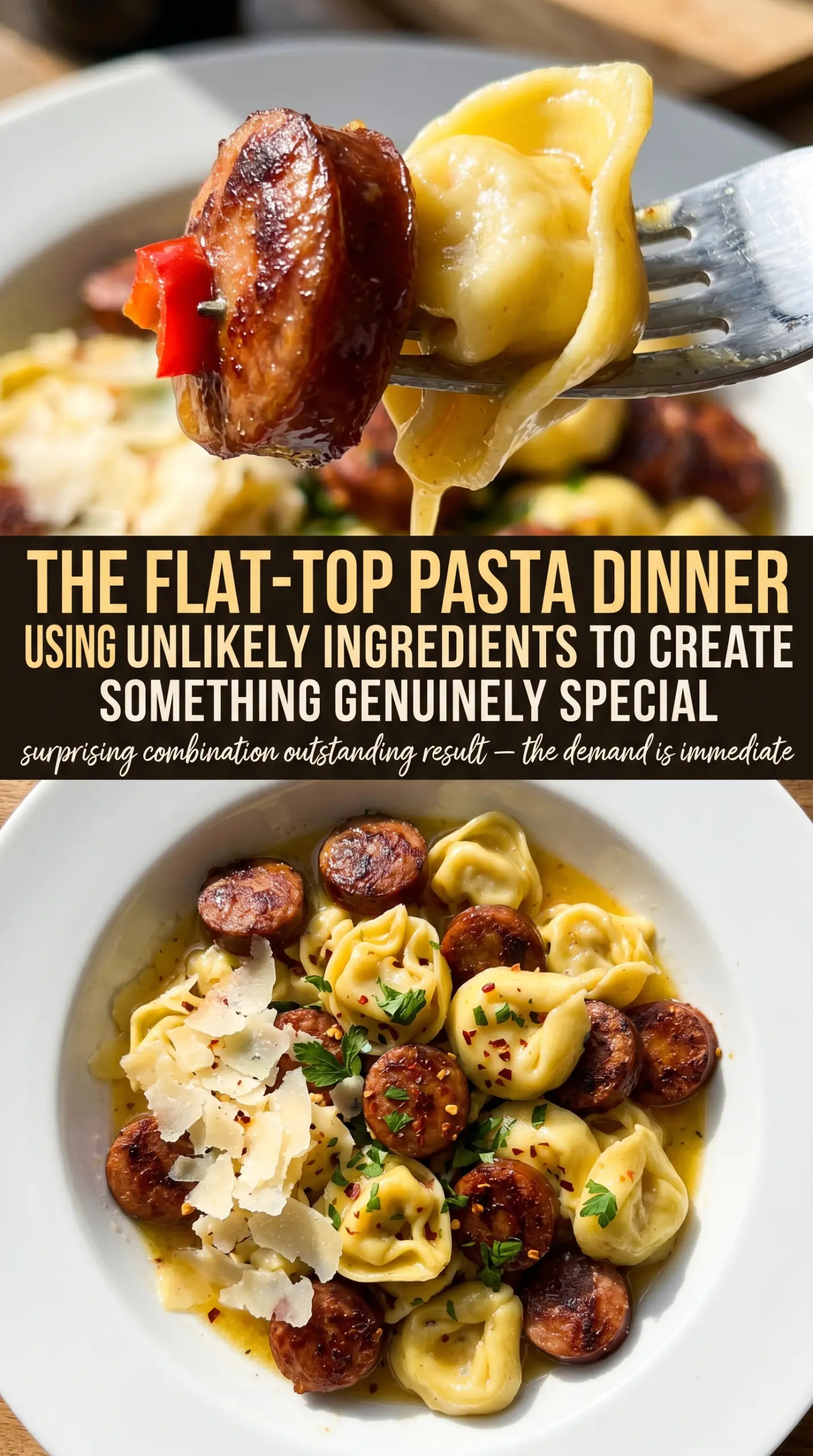
- Kielbasa — This brings the smoky, salted backbone of the dish and renders enough fat to help the vegetables brown. A good-quality kielbasa matters here because the flavor is carrying a lot of the meal; use smoked sausage if you need to, but you’ll lose some of the signature snap and depth.
- Cheese tortellini — Fresh or refrigerated tortellini works best because it stays tender while still holding its shape on the griddle. If you use frozen tortellini, cook it first and drain it well; straight-from-frozen pasta will throw off the timing and leave you with uneven texture.
- Bell peppers and onion — These add sweetness and keep the pan from tasting heavy. Dice them evenly so they soften at the same rate; large pieces stay crunchy while smaller pieces burn before the tortellini is ready.
- Cherry tomatoes — They burst just enough to make a light sauce without turning the whole dish wet. If your tomatoes are large, cut them smaller so they collapse at the same time as the pasta heats through.
- Garlic and Italian seasoning — Add these after the vegetables have had a minute to cook so the garlic doesn’t scorch. Garlic burns fast on a hot griddle, and once it goes bitter, you’ll taste it in every bite.
Building the Griddle Meal in the Right Order
Getting the Kielbasa Browned First
Heat the Blackstone to medium-high and add the oil before anything else goes down. The kielbasa should sizzle right away and start taking on color within a minute or two; if it sits in a pale puddle, the griddle isn’t hot enough. Let each side cook until you see dark caramelized spots and crisp edges, then move it out of the way so the next ingredients can use that flavor on the surface.
Softening the Vegetables Without Losing Their Shape
Add the peppers and onion to the same area of the griddle and let them pick up a little color before you start stirring constantly. They should soften and smell sweet, not collapse into a watery pile. If the pan looks dry, add a small drizzle of oil instead of turning the heat up too high, because high heat can scorch the onions before the peppers catch up.
Finishing With Tortellini and Tomatoes
Toss in the cooked tortellini, cherry tomatoes, garlic, and Italian seasoning once the vegetables are close to tender. Stir with a gentle hand so the pasta doesn’t split, then let it sit in contact with the hot surface long enough to pick up some crispy spots. The dish is done when the tortellini is heated through, the tomatoes have just started to slump, and everything smells savory and a little smoky.
How to Adapt This for a Different Pantry or Crowd
Gluten-Free Tortellini Swap
Use a gluten-free tortellini that holds its shape after boiling, then handle it gently on the griddle and shorten the final toss a little. Gluten-free pasta can soften faster on the hot surface, so the goal is heating and light browning, not long cooking.
Dairy-Free Version
Skip the Parmesan or use a dairy-free topping at the end. The dish still works because the kielbasa, tomatoes, and browned vegetables carry the flavor, but you’ll lose the salty finish that Parmesan brings, so add a little extra basil and a pinch more salt if needed.
Spicy Kielbasa Upgrade
Use a hot kielbasa or add red pepper flakes with the garlic for a sharper finish. This keeps the same structure but pushes the dish toward a bolder, more savory skillet dinner with a little heat at the end.
Storage and Reheating
- Refrigerator: Store leftovers in an airtight container for up to 3 days. The tortellini will soften a little as it sits, but the flavors stay strong.
- Freezer: Not my first choice. Tortellini can get mealy after freezing, and the peppers lose their best texture.
- Reheating: Warm it in a skillet over medium heat with a splash of water or broth, just until hot. Microwaving works in a pinch, but it can overcook the pasta and make the cheese filling tough.