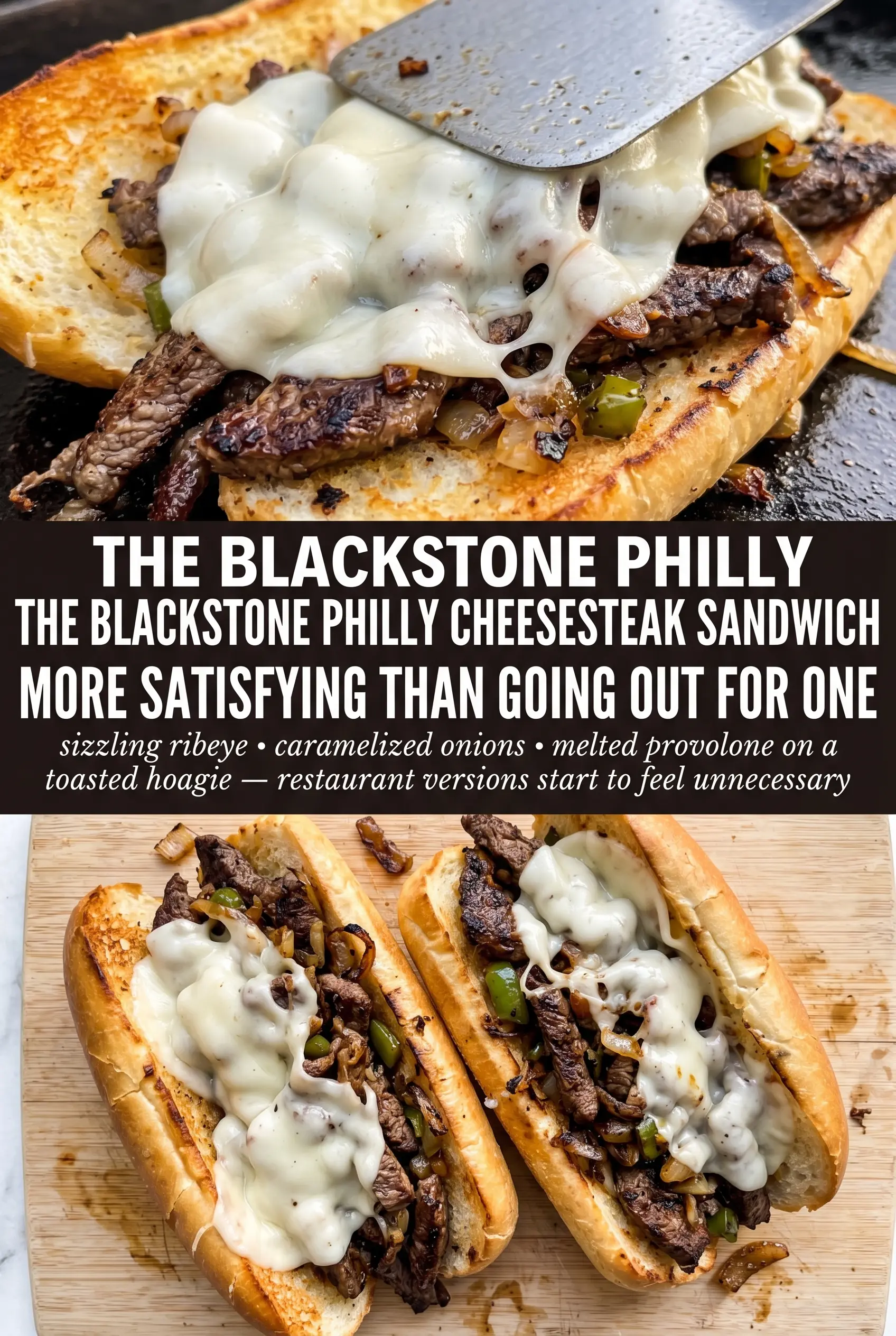
Blackstone Philly cheesesteak sandwiches hit the griddle fast, but the payoff tastes like you spent all afternoon on them. Thin ribeye turns tender and beefy in just a few minutes, the onions and peppers go sweet at the edges, and the provolone melts right into the steak so every bite feels rich and messy in the best way. Toasted hoagie rolls keep the whole thing from falling apart before you get halfway through.
The griddle does the heavy lifting here because it gives you room to cook the vegetables and steak with enough heat to build color instead of steaming everything together. Ribeye matters because it stays juicy even when it’s sliced thin and chopped on the cooktop. If you’ve ever ended up with gray steak or limp bread, the fix is simple: cook the vegetables first, keep the steak moving, and toast the rolls last so they land hot and sturdy.
Below you’ll find the timing that keeps the steak tender, the best way to melt the cheese without overcooking the meat, and a few smart swaps for when you want to change up the peppers or make these fit what’s in your fridge.
The steak stayed tender, the peppers were sweet from the griddle, and the provolone melted into everything without making the rolls soggy. My husband said it tasted like a real cheesesteak shop sandwich.
Save these Blackstone Philly cheesesteak sandwiches for the nights when you want melted provolone, caramelized onions, and a toasted hoagie roll all in one griddle-cooked dinner.
The Steak Needs to Stay Hot, Not Overworked
The biggest mistake with cheesesteaks on a griddle is trying to brown the steak and the vegetables at the same time. That crowds the surface and drops the heat fast, which leaves you with soft onions, pale steak, and no real sear. Cooking the vegetables first solves that problem and gives the steak a clean, hot surface when it hits the griddle.
Thin-sliced ribeye cooks in a blink. Once it goes on, keep it moving and chop it into smaller pieces with the spatulas so it cooks evenly without turning chewy. The goal is tender beef with browned edges, not little dry bits. As soon as the meat is no longer pink, it’s ready for the cheese.
What Each Ingredient Is Actually Doing Here
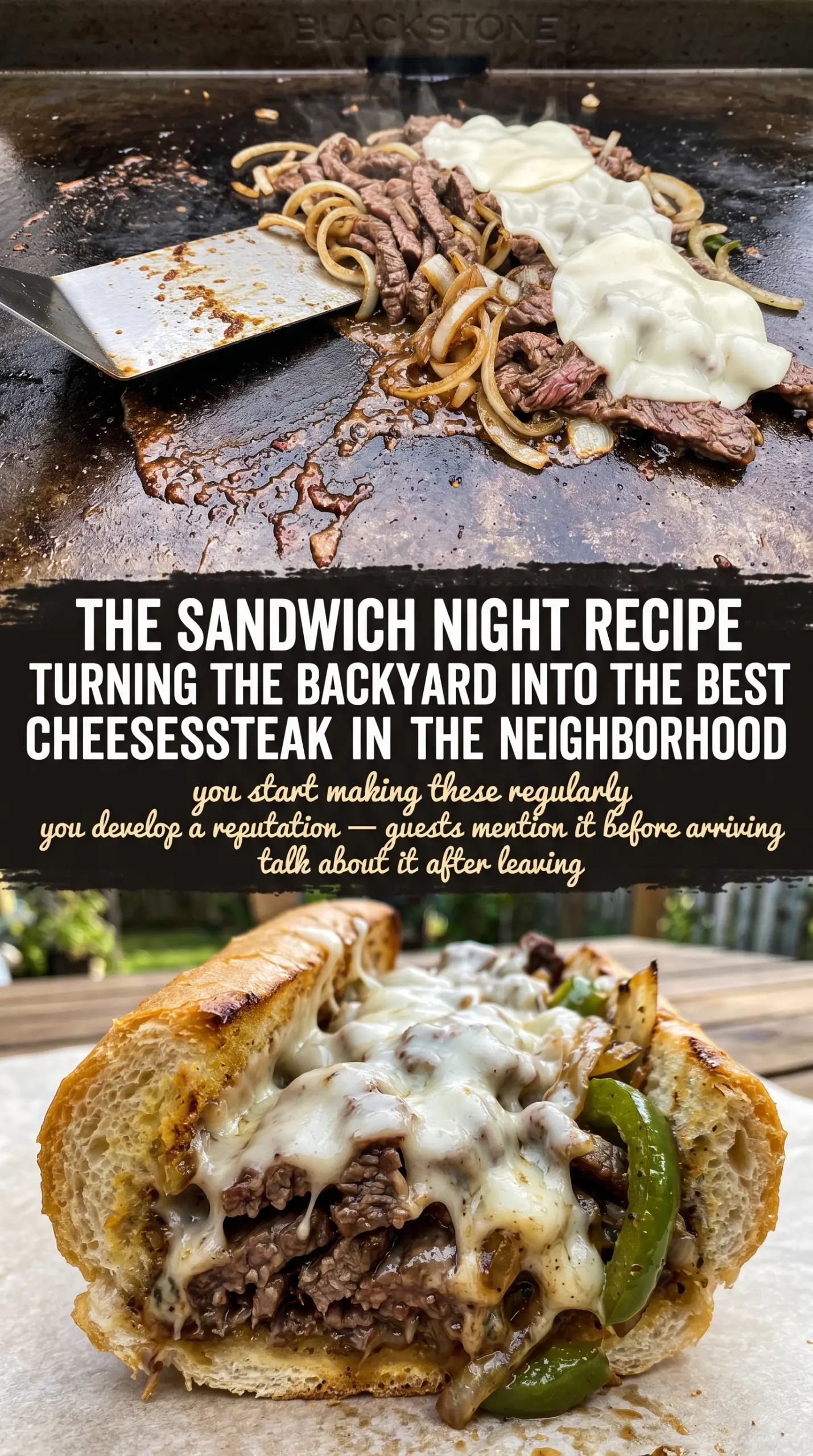
- Ribeye steak — This is the cut that gives you the classic cheesesteak texture: rich, tender, and juicy even when sliced thin. If ribeye is pricey where you live, shaved sirloin works in a pinch, but it won’t have the same buttery bite.
- Onions and green bell peppers — The onions bring sweetness as they soften and brown, while the peppers add that familiar cheesesteak backbone. Slice them evenly so they caramelize at the same pace; thick chunks stay crunchy while the rest overcooks.
- Provolone — Provolone melts smoothly without turning greasy, which matters here because the sandwich is already rich from the steak. If you want a sharper finish, use a mix of provolone and white American cheese.
- Hoagie rolls — A soft roll with enough structure to hold the filling is the whole game. Buttering and toasting them on the griddle keeps the inside from going soggy and gives you a little crunch where the sandwich meets the heat.
- Mayo — Optional, but useful if you want a creamier sandwich. Spread it on the roll after toasting so it doesn’t thin out or disappear into the bread.
Building the Cheesesteak in the Right Order
Get the Vegetables Sweet First
Heat the griddle to medium-high and add the oil, then spread out the onions and peppers in a thin layer. Stir them just often enough to keep them from scorching, but leave them alone long enough to pick up some color. You’re looking for softened onions, tender peppers, and browned edges, not limp vegetables with steam still rising off the surface.
Cook the Ribeye Fast
Move the vegetables off to the side and add the sliced steak to the hot griddle. Season it right away, then chop and turn it with your spatulas so it cooks in small, even pieces. If the pan seems crowded, work in two batches; overcrowding is the fastest way to turn ribeye gray and chewy. When the steak has just lost its pink color, gather it into four portions.
Melt, Toast, and Assemble
Top each portion of steak with the caramelized vegetables and two slices of provolone, then let the cheese soften until it looks glossy and starts to fold over the meat. Butter the rolls and toast them cut-side down until golden. Scoop the filling into the rolls while everything is still hot, add mayo if you want it, and serve immediately so the bread stays crisp and the cheese stays stretchy.
How to Adapt These Sandwiches for Your Griddle, Your Pantry, or Your Diet
Swap in mushrooms for part of the steak
If you want to stretch the filling or lighten the sandwich a little, replace some of the ribeye with sliced mushrooms. They soak up the seasoned oil and pick up good browning on the griddle, but they don’t replace the richness of the steak, so use them as a mix-in rather than a full substitute.
Make it gluten-free with rolls that can handle the filling
Use gluten-free hoagie-style rolls or split sandwich buns with some structure. Toast them well so they don’t crumble once the hot steak and cheese go in. A soft roll without enough structure will fall apart fast under this filling.
Use white American cheese for a classic deli melt
White American melts even more smoothly than provolone and gives you that extra creamy, diner-style finish. It’s softer and a little saltier, so the sandwich tastes richer and less sharp. Combine it with provolone if you want both stretch and that familiar cheesesteak flavor.
Storage and Reheating
- Refrigerator: Store the steak, vegetables, and rolls separately for up to 3 days. The filling stays good, but the bread gets soft if it sits assembled.
- Freezer: The steak and pepper-onion mixture freeze well for up to 2 months. Skip freezing the assembled sandwiches, since the rolls turn soggy after thawing.
- Reheating: Reheat the filling in a skillet or on the griddle over medium heat until hot, then toast fresh rolls and assemble. The common mistake is microwaving the whole sandwich, which makes the bread rubbery and the cheese greasy.
Questions I Get Asked About This Recipe
Recipe Card
Blackstone Philly Cheesesteak Sandwiches
Ingredients
Equipment
Method
- Heat the Blackstone griddle to medium-high and add the oil. Let it shimmer before adding sliced onions and peppers.
- Cook onions and peppers until caramelized, about 8-10 minutes, stirring occasionally until browned and softened. Set the vegetables aside when done.
- Season the thinly sliced ribeye with salt and pepper to taste. Spread it on the griddle so it cooks quickly and evenly.
- Cook the steak for 3-4 minutes, chopping with spatulas as it cooks. Stop when browned with small tender pieces.
- Divide the steak into 4 portions and top each portion with caramelized vegetables and 2 slices of provolone. Cook until the provolone melts and looks glossy over the filling.
- Butter and toast the hoagie rolls on the griddle until golden. Toast cut-sides first for better coverage.
- Scoop the steak mixture into rolls and add mayo if desired. Serve immediately while the cheese is still pulling.