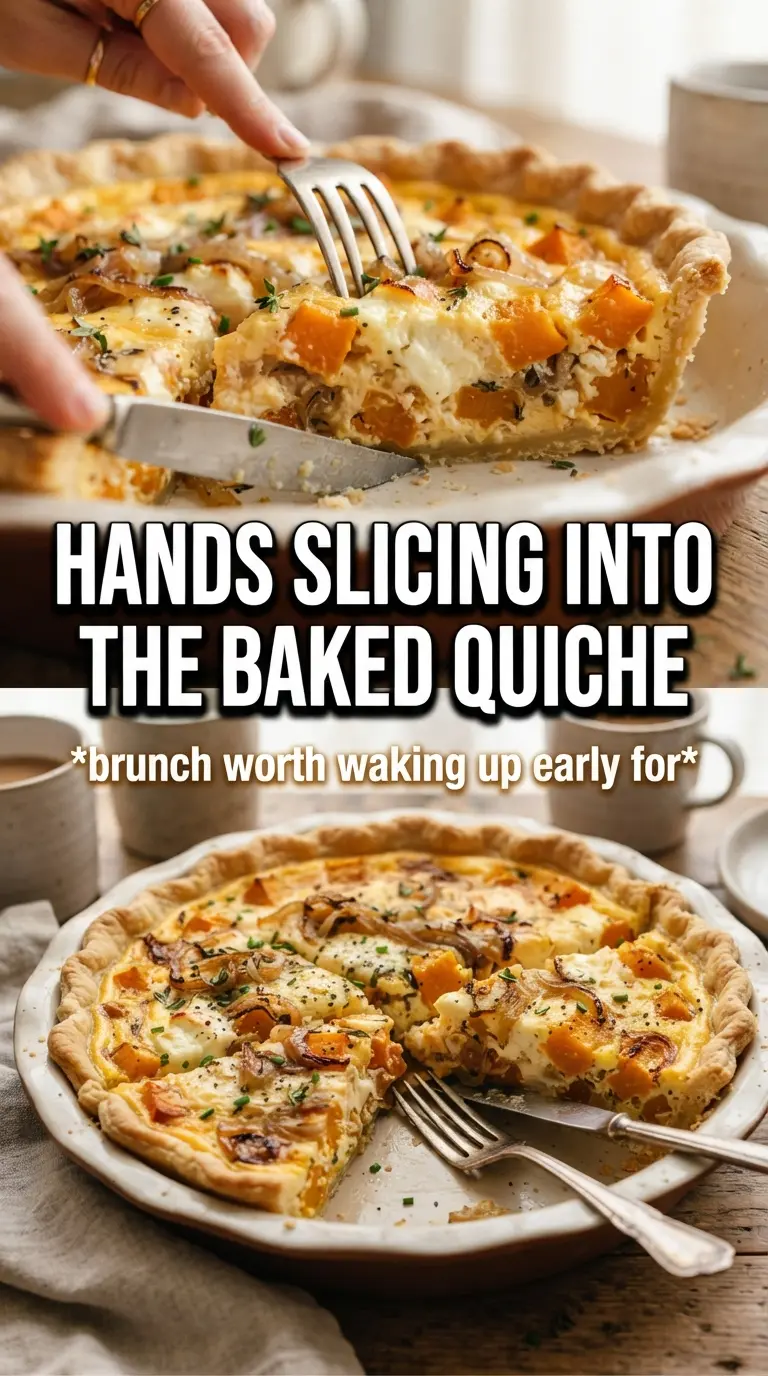
Butternut squash, tangy goat cheese, and slow-cooked onions turn a simple quiche into something with real depth. The custard stays silky, the crust stays crisp, and every slice gives you a little bit of sweetness, salt, and thyme in the same bite. It’s the kind of quiche that looks elegant on the table but still feels like something you’d happily make on a quiet weekend and eat again for lunch the next day.
The key is building each layer with enough restraint that the filling stays balanced. The squash needs to be roasted until tender, not mushy, so it holds its shape in the custard. The onions need to cook all the way down until they’re soft, golden, and sweet, because undercooked onions can taste sharp and swamp the rest of the filling. Goat cheese brings the tang that keeps the quiche from tasting flat, while a mix of cream and milk gives the custard body without making it heavy.
Below, I’ll show you how to keep the crust from going soggy and how to know the quiche is set at exactly the right moment. If you’ve ever pulled a custard pie too early and watched it slump at the first slice, this version will help you avoid that.
The crust stayed crisp, the custard set up cleanly, and the goat cheese gave every slice that little tangy pop. I loved that the onions were sweet all the way through instead of sharp.
Save this butternut squash goat cheese and caramelized onion quiche for a crisp crust, silky custard, and the sweetest onions in every slice.
The Part Most Quiches Get Wrong: A Wet Filling Against a Half-Baked Crust
The biggest failure point in a quiche like this is moisture. Roasted squash and caramelized onions both hold onto more liquid than you’d think, and if they go into the shell steaming hot or undercooked, the custard never gets a clean set. Blind baking the crust gives you a head start, but it only works if the shell is baked long enough to dry out the bottom before the filling goes in.
The other trap is rushing the custard. Eggs set fast once the oven gets involved, and if the filling is overbaked, the texture turns rubbery instead of creamy. Pull it when the center still has a slight wobble; carryover heat finishes the job as it rests.
- Blind baked crust — This keeps the bottom from turning soft under the custard. Don’t skip the short pre-bake unless you want a damp slice that collapses on the plate.
- Roasted butternut squash — Roast it until the edges just begin to caramelize. That deeper flavor matters more here than in a soup, because the squash has to hold its own against the goat cheese.
- Caramelized onions — Cook them slowly in butter until they’re golden and sweet. If they still taste sharp, keep going; sharp onion can take over the whole quiche.
- Goat cheese — Use a fresh, tangy log-style goat cheese if you can. Crumbles from a drier cheese work too, but the fresher version melts into little pockets that taste richer.
What Each Ingredient Is Actually Doing in This Quiche
- Butternut squash — This gives the quiche body and a gentle sweetness that keeps the filling from tasting one-note. Roast it until tender with some color on the edges, because boiled or steamed squash tastes flat here.
- Caramelized onion — The slow cooking is what turns this from ordinary to memorable. If you’re short on time, you can cook the onions a little faster over medium heat, but the flavor won’t be as deep.
- Goat cheese — The tang cuts through the cream and keeps each bite lively. Feta can stand in if needed, but it’s saltier and more crumbly, so use a lighter hand.
- Heavy cream and whole milk — This combination makes a custard that sets tender instead of stiff. All cream makes the quiche heavier; all milk makes it looser and less rich.
- Fresh thyme and nutmeg — Thyme gives the filling an herbal line that works with both squash and onion, while nutmeg adds warmth without calling attention to itself. Dried thyme can work in a pinch, but fresh thyme tastes cleaner.
How to Build the Quiche So the Custard Sets Cleanly
Start with the crust
Fit the crust into the pan and blind bake it until the surface looks dry and just set. You’re not trying to fully brown it here; you’re creating a barrier so the filling doesn’t soak in and soften the base. If the crust puffs during baking, press it down gently with a spoon while it’s still warm.
Cook the onions until they’re sweet, not just soft
Caramelized onions need patience. Keep the heat at medium-low and stir often so they soften evenly instead of scorching at the edges. When they’re ready, they should be deeply golden and taste almost jammy; if they still have a raw bite, the finished quiche will taste unfinished.
Assemble in layers, then pour the custard
Scatter the squash and onions over the crust first, then crumble the goat cheese over the top so it doesn’t all sink into one corner. Whisk the custard until the eggs are fully blended with no streaks of white, then pour it slowly around the fillings so everything settles into place. That even distribution is what gives you neat slices instead of one overloaded wedge and three empty ones.
Watch for the wobble, not the clock
Bake until the edges are set and the center still moves just a little when you nudge the pan. If the middle looks liquid, give it more time; if the whole surface looks firm and puffed, it’s probably gone too far. Let it rest before slicing so the custard can finish setting without leaking across the plate.
How to Adapt This Quiche Without Losing the Balance
Make it gluten-free with a crust you trust
Use a gluten-free pie crust or a sturdy gluten-free shortcrust that can hold the custard without crumbling. Blind baking matters even more here, because gluten-free doughs can turn fragile if they absorb too much moisture.
Go lighter with half-and-half
You can swap the cream and milk for half-and-half if you want a slightly lighter filling. The quiche will still set, but the texture will be a little less luxurious and the custard will be softer around the edges.
Use feta instead of goat cheese
Feta gives you a saltier, firmer bite and a sharper finish. It works well if you want a less creamy, more savory quiche, but use a little less than the goat cheese amount because feta can overwhelm the squash.
Add a little greens without changing the structure
A handful of baby spinach or chopped kale can go in with the squash and onions, but cook off any extra moisture first. Wilted greens left wet in the pan are the fastest way to water down the custard.
Storage and Reheating
- Refrigerator: Store covered for up to 4 days. The crust softens a little, but the flavor stays excellent.
- Freezer: Freeze baked slices wrapped tightly for up to 2 months. Thaw in the fridge before reheating so the custard heats evenly.
- Reheating: Warm slices in a 325F oven until heated through. Microwaving makes the custard rubbery and turns the crust soggy, so use the oven if you want the texture to stay close to fresh.
Questions I Get Asked About This Recipe

Butternut Squash Goat Cheese and Caramelized Onion Quiche
Ingredients
Equipment
Method
- Preheat oven to 375F and fit the crust into a 9-inch tart or pie pan, then blind bake for 12 minutes.
- Remove the crust and let it cool briefly while you prepare the filling.
- Heat unsalted butter over medium-low heat and caramelize the thinly sliced onion for 30 minutes until golden and sweet.
- Set the caramelized onions aside so they can cool slightly before assembling.
- Whisk eggs, heavy cream, whole milk, fresh thyme, nutmeg, salt, and black pepper until smooth.
- Scatter caramelized onions and roasted butternut squash over the blind-baked crust.
- Crumble goat cheese evenly over the filling.
- Pour the custard over everything.
- Bake at 375F for 40 to 45 minutes until just set with a slight wobble.
- Rest the quiche for 10 minutes before slicing so the custard finishes setting.