Crispy-skinned chicken thighs with sticky, smoky BBQ glaze are the kind of dinner that disappear fast, especially when the sauce turns dark and caramelized at the edges. The skin stays shatteringly crisp underneath, while the meat beneath stays juicy enough to pull apart with a fork. This is the version I reach for when I want that backyard-grill flavor without a fussy setup.
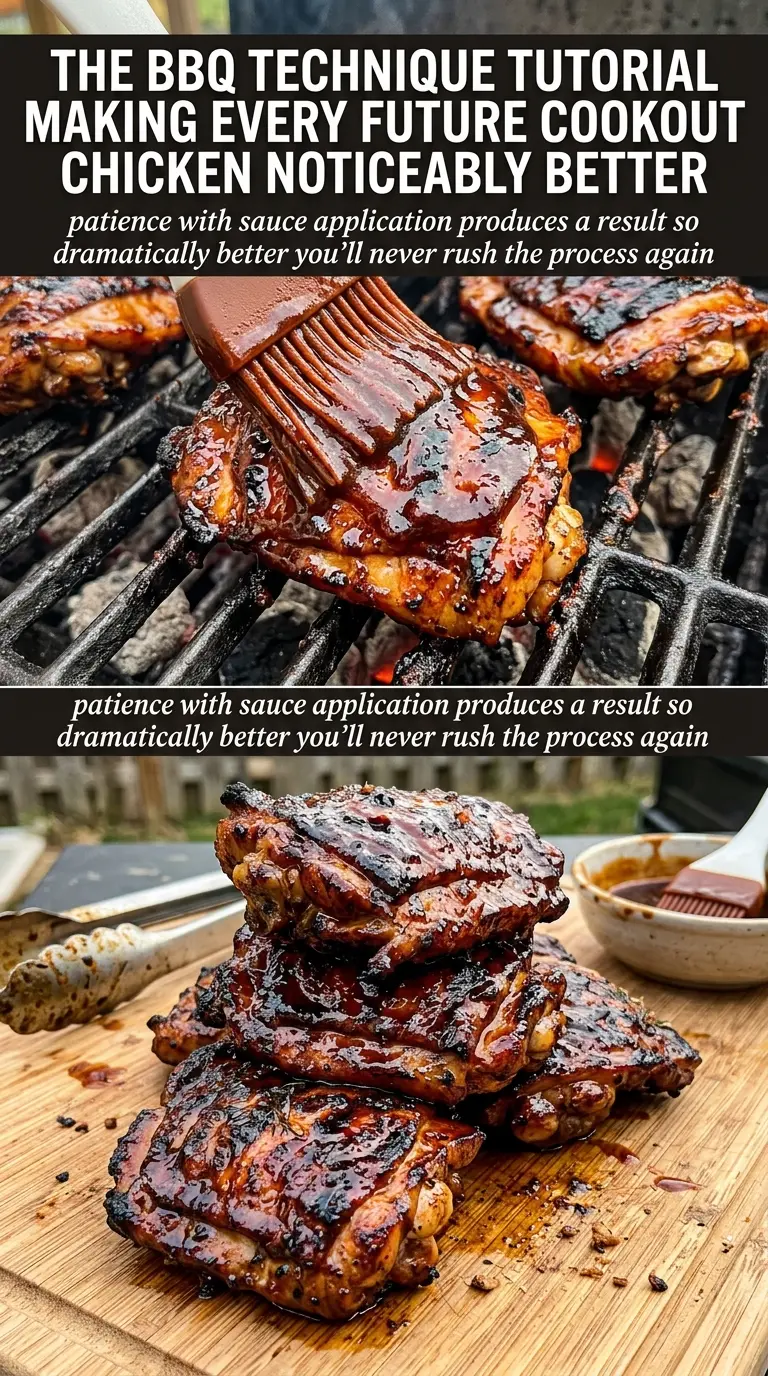
The trick is giving the thighs time on the grill before the sauce goes on. Sugar burns quickly, so the chicken needs to get most of its cooking done first, skin-side down, with the lid managed so the fat renders and the skin crisps instead of steaming. Once the BBQ mixture hits the heat, it should go on in thin layers, not thick puddles, so it can tighten into a lacquer instead of turning gummy.
Below, I’ve included the small timing details that keep the sauce from scorching, plus a few swaps if you want to work with what you already have in the pantry.
The skin crisped up before the sauce went on, and the glaze turned sticky and dark instead of burnt. I used the last few minutes exactly as written, and the thighs came off the grill juicy with that smoky caramelized finish.
Like this caramelized BBQ chicken? Save it to Pinterest for the nights when you want crispy skin, smoky glaze, and easy grilling with almost no cleanup.
The Reason Chicken Thighs Stay Juicy While the Sauce Turns Sticky
Chicken thighs handle direct heat better than breasts because the extra fat and connective tissue protect the meat while the skin renders. That matters here. You need enough time for the skin to crisp and the fat to drip away before the sauce starts to caramelize, or you end up with soft skin under a glossy coating.
The other common failure is saucing too early. BBQ sauce usually contains sugar, and sugar goes from browned to burnt fast over a hot grill. Brush it on only after the thighs are nearly cooked through, then keep the final basting layer thin so each pass tightens into a shiny glaze instead of puddling and scorching.
What the BBQ Sauce, Brown Sugar, and Vinegar Are Actually Doing
- BBQ sauce — This is the backbone of the glaze, so use one you already like the taste of on its own. A thicker sauce caramelizes more predictably than a thin, runny one.
- Brown sugar — This helps the glaze darken and cling, but it also raises the risk of burning, which is why the sauce goes on late. Light or dark brown sugar both work; dark gives a deeper molasses note.
- Apple cider vinegar — The vinegar sharpens the sweetness and keeps the sauce from tasting flat. If you need a swap, use lemon juice, but the result will taste brighter and less rounded.
- Smoked paprika — This adds smoky depth even before the grill does its work. If your grill runs a little cool, this ingredient keeps the finished chicken from tasting one-note.
- Bone-in, skin-on thighs — This cut is doing the heavy lifting. Boneless thighs cook faster, but they won’t give you the same crisp skin or the same insurance against drying out.
Grilling the Thighs So the Skin Crisps Before the Glaze Goes On
Seasoning the Chicken
Pat the thighs dry before seasoning them. Moisture on the skin is the fastest way to get pale, rubbery chicken instead of crisp skin. Salt, pepper, and a light coating of oil help the skin brown evenly and keep the thighs from sticking when they first hit the grate.
Building the Sauce
Stir the BBQ sauce, brown sugar, vinegar, and smoked paprika together until the sugar looks dissolved. If you still see gritty sugar, keep stirring before the sauce goes on the grill, because undissolved sugar melts in hot spots and can scorch unevenly. You want a loose but glossy sauce that brushes on cleanly.
Getting the Skin Crisp
Place the thighs skin-side down over medium heat and leave them alone long enough to build a deep golden crust. If you keep flipping too soon, the skin never gets the chance to render properly. Watch for the fat to drip and the skin to turn taut and crackly at the edges before you turn them over.
Finishing With the Glaze
Once the chicken has cooked on both sides, start brushing on the sauce in thin coats. Keep the lid open or only partially closed if your grill runs hot, because the sugars need gentle heat to caramelize, not aggressive flames. The chicken is done when it reaches 165°F at the thickest part and the sauce looks dark, sticky, and just beginning to char in spots.
How to Change the Finish Without Losing the Caramelized Edge
Bake-Then-Broil for Rainy Days
Bake the thighs at 425°F until nearly cooked through, then brush on the sauce and broil for the last few minutes. You’ll lose a little of the live-grill smoke, but you still get crisp skin and a sticky lacquer without standing over a grill in bad weather.
Spicier BBQ Thighs
Add cayenne, hot sauce, or a spoonful of chipotle paste to the sauce. The heat works best if it’s mixed into the glaze, not sprinkled on top, so every bite gets the same slow burn instead of random hot spots.
Lower-Sugar Version
Cut the brown sugar back by half and use a sweeter BBQ sauce to balance it out. The glaze will be a little less sticky and a bit less dark, but the chicken still caramelizes well if you brush it on late.
Gluten-Free BBQ Thighs
Use a certified gluten-free BBQ sauce and check the label on your smoked paprika blend if it’s a seasoning mix. The grilling method doesn’t change at all, and this is the easiest variation because the texture stays exactly the same.
Storage and Reheating
- Refrigerator: Store leftovers in an airtight container for 3 to 4 days. The skin won’t stay crisp, but the flavor deepens overnight.
- Freezer: The cooked thighs freeze well for up to 2 months. Wrap them tightly and freeze with a little extra sauce so the meat doesn’t taste dry after thawing.
- Reheating: Reheat in a 375°F oven until hot through, uncovered, so the skin can re-crisp a little. The biggest mistake is using the microwave, which makes the skin rubbery and loosens the glaze.
Answers to the Questions Worth Asking
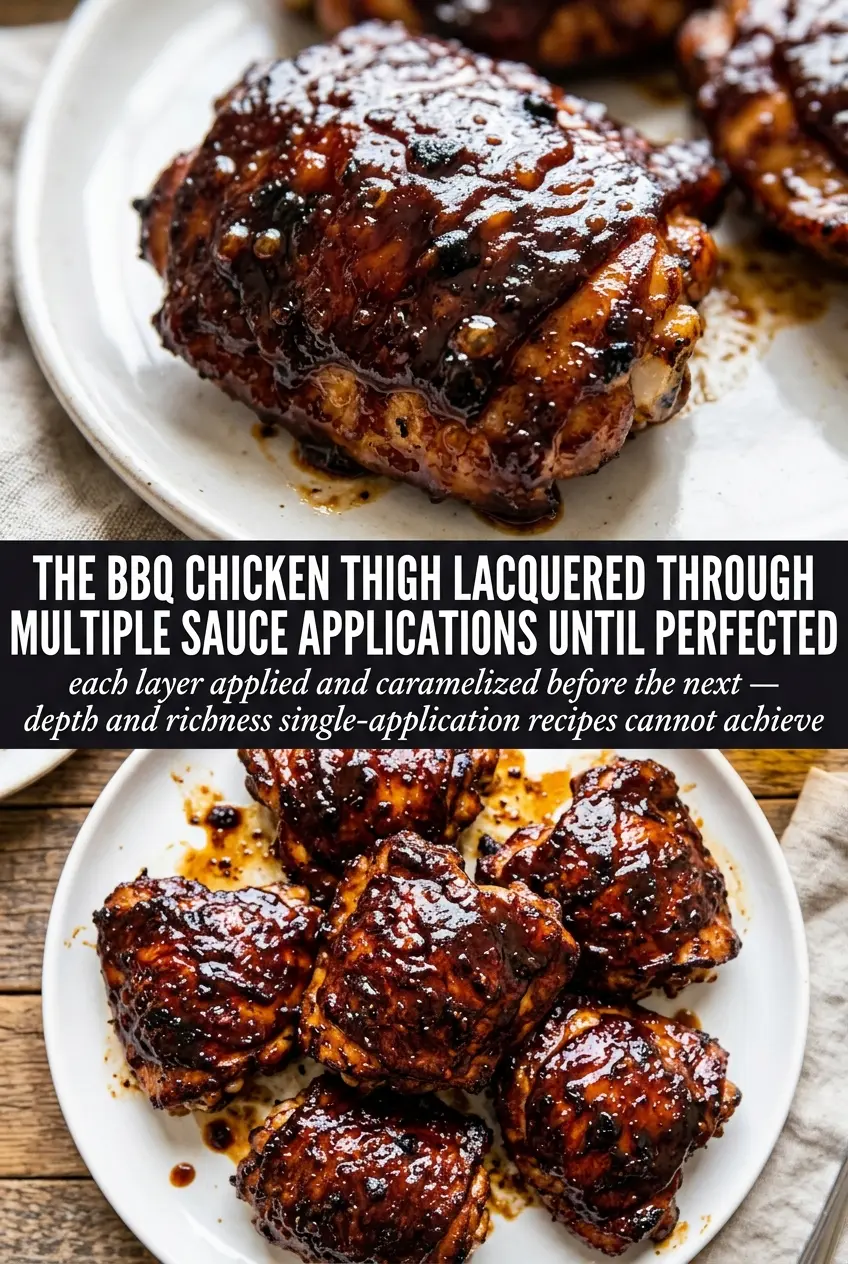
Caramelized BBQ Chicken Thighs
Ingredients
Equipment
Method
- Season the chicken thighs with salt and pepper, then drizzle with olive oil to coat the skin.
- Mix the BBQ sauce, brown sugar, apple cider vinegar, and smoked paprika until the sugar is dissolved.
- Preheat the grill to medium heat and lightly oil the grates.
- Grill the chicken skin-side down for 8-10 minutes, until the skin looks deeply golden and releases easily from the grates.
- Flip and grill for another 8-10 minutes, until the second side has grill marks and the chicken is partway cooked.
- Brush generously with BBQ sauce and grill for 5 minutes per side, basting frequently so the sauce thickens and turns glossy.
- Continue grilling until the internal temperature reaches 165°F and the sauce is caramelized, with dark, sticky spots on the skin.