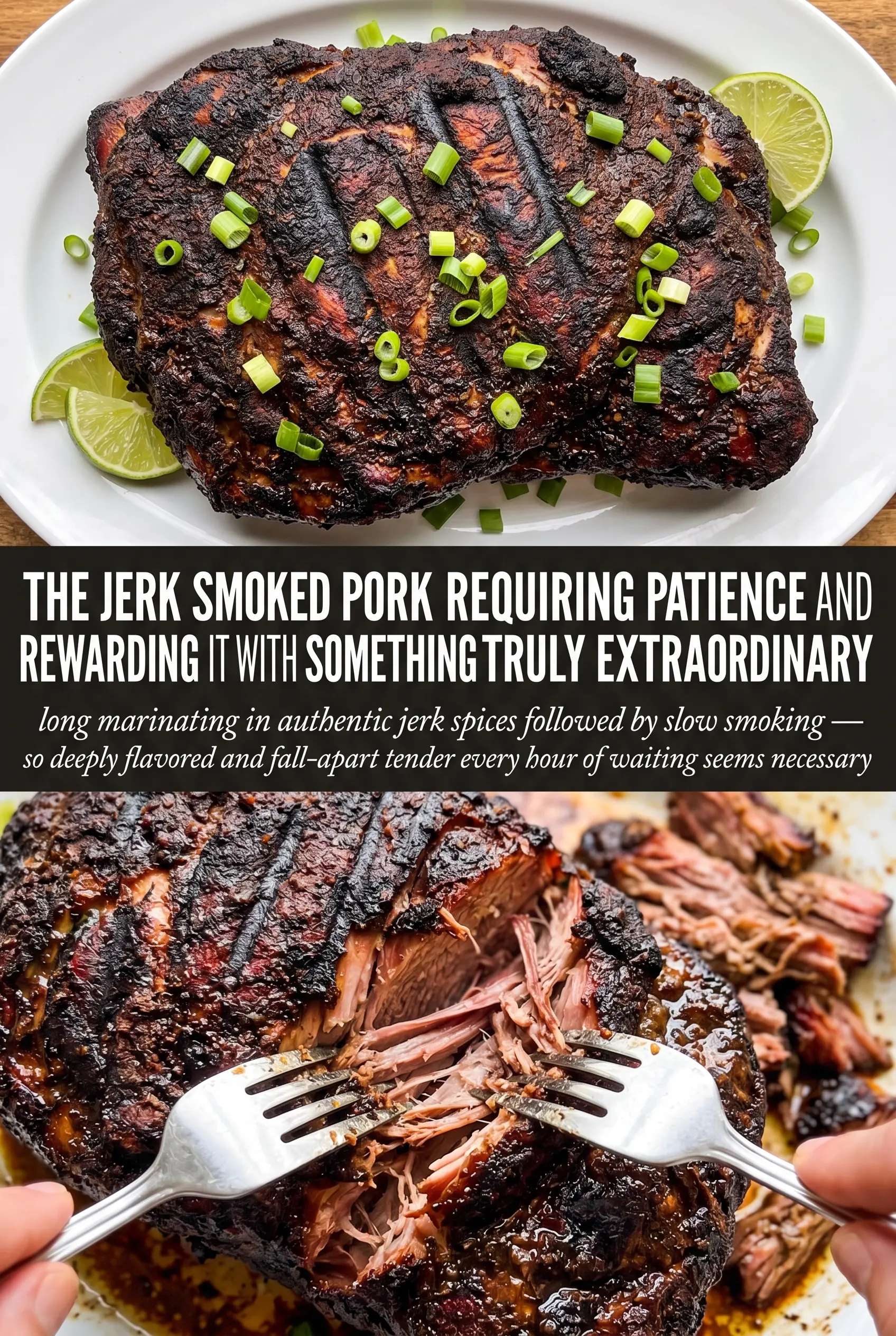
Caribbean jerk smoked pork lands with a deep smoky bark, a tender pull, and that sharp, aromatic heat that keeps you going back for one more bite. Pork shoulder takes the spice paste beautifully, and the smoker turns the outside dark and caramelized while the inside stays juicy enough to shred cleanly. When it’s done right, the meat doesn’t taste like it was coated in seasoning — it tastes like the seasoning got into every layer.
The overnight marinade matters here. Scotch bonnet, thyme, allspice, lime, and soy need time to work past the surface, and the scored pork gives the paste more places to settle in. Brown sugar helps the bark set, but it also means the heat has to stay steady; too hot and the exterior burns before the shoulder has time to soften.
Below, I’ve included the little details that make a big difference: how to keep the marinade balanced, what temperature actually tells you the pork is ready, and how to adapt the recipe if you need a milder version or want leftovers that still taste bold the next day.
The bark set up beautifully and the pork pulled apart in long, juicy strands. I was worried the scotch bonnet would take over, but after the overnight marinade and slow smoke, it came through as heat with real flavor, not just burn.
Pulled Caribbean jerk smoked pork with that dark bark and smoke ring is the kind of recipe worth keeping close for a crowd.
The Part That Keeps Jerk Pork from Tasting Flat
The biggest mistake with jerk pork is treating the marinade like a surface seasoning. This cut needs time, and the smoke needs time too. Pork shoulder is forgiving, but if you rush the rest or crank the smoker too high, you’ll get spice on the outside and bland meat underneath.
Scoring the shoulder helps the marinade move into the fat cap and the seams between muscles. That gives you more flavor in the finished pull and a better bark, because the sugars and oils can cling instead of sliding off. Keep the smoker in the 225 to 250°F range. If it runs hotter, the outside tightens before the collagen has had time to melt.
- Scotch bonnet peppers — They bring the signature jerk heat and fruitiness. If you swap them for habaneros, the pork stays hot, but the flavor is a little less floral and a little more straightforward.
- Fresh thyme — Dried thyme works in a pinch, but fresh thyme gives the marinade its green, savory edge. Crush the leaves lightly before blending so they release more aroma.
- Brown sugar — It helps build that dark bark and balances the heat. Dark brown sugar gives a deeper molasses note if you want a heavier finish.
- Soy sauce and lime juice — Together they add salt, acid, and enough liquid to help the paste blend smoothly. Don’t cut the lime too much; the acid keeps the pork from tasting one-note after a long smoke.
What Each Ingredient Is Doing in the Marinade

- Pork shoulder — This is the right cut because it has enough fat and connective tissue to handle a long smoke without drying out. A leaner cut won’t give you the same pull-apart texture.
- Green onions, garlic, thyme, allspice, cinnamon, nutmeg — These build the aromatic backbone. Allspice is non-negotiable for jerk flavor; if you leave it out, the dish stops tasting like jerk and starts tasting like generic spiced pork.
- Oil — It helps the marinade coat the pork and carry the spices across the surface. Vegetable oil is fine, but a neutral oil keeps the seasoning from fighting with the smoke.
- Lime juice — It brightens the heavy spices and helps the surface take on color. Add it fresh if you can; bottled juice tends to taste dull after a long cook.
Getting the Pork to Smoke, Bark, and Pull the Right Way
Blending the Jerk Paste
Blend everything until the marinade is smooth enough to spread easily, with no big chunks of pepper or garlic left behind. You want a thick paste, not a thin sauce, because a looser mixture runs off the pork before it has a chance to settle into the cuts. If the blender struggles, scrape down the sides and add the oil slowly until it moves. Taste a tiny bit before it goes on the meat; it should be sharp, salty, and hot enough to make you pay attention.
Coating and Resting the Shoulder
Score the pork shoulder across the fat cap and into the thicker sections of meat, then work the marinade into every cut with your hands. That step matters because the flavor has to reach past the surface if you want the slices and pulled pieces to taste seasoned all the way through. Cover it and refrigerate overnight. If you only give it an hour, the outside will be bold and the inside will taste underdeveloped.
Smoking Low and Slow
Set the smoker between 225 and 250°F and use a fruit wood that gives gentle smoke instead of a harsh, bitter edge. Put the pork on and leave it alone long enough for the bark to set before you start checking it too often. The shoulder is done when it reaches 195 to 203°F and a probe slides in with little resistance, almost like warm butter. If it stalls for hours, that’s normal; the connective tissue is breaking down, and rushing this stage only gives you tougher meat.
Resting and Pulling
Let the pork rest for at least 30 minutes before you shred it. That pause keeps the juices in the meat instead of running onto the board the second you cut in. Pull it into large and small pieces, depending on how you want to serve it. If it seems dry at the edges, mix those bits back through the juicier center pieces and spoon any drippings over the top.
How to Adjust This Pork Without Losing the Jerk Character
Milder Heat for More People at the Table
Seed the scotch bonnets carefully and use fewer peppers if you want the marinade to lean fragrant instead of fiery. The pork will still taste like jerk because the thyme, allspice, garlic, and lime do a lot of the work, but the finish will be friendlier for people who don’t want a big burn.
Gluten-Free Version
Swap the soy sauce for a gluten-free tamari or coconut aminos. Tamari keeps the salinity closest to the original, while coconut aminos adds a little sweetness, so you may want to reduce the brown sugar slightly if you use it.
No Smoker, Same Big Flavor
Cook the pork in a covered roasting pan at a low oven temperature until it reaches the same pull-apart range, then uncover it near the end to help the exterior darken. You won’t get a true smoke ring, but the marinade still gives you the jerk character and the pork still shreds cleanly.
Storage and Reheating
- Refrigerator: Store the pulled pork for up to 4 days. The flavor gets even better overnight, though the bark softens a bit once it’s sealed up.
- Freezer: It freezes well for up to 3 months. Pack it with a little of the cooking juices so it reheats juicy instead of stringy.
- Reheating: Warm it gently in a covered pan or low oven with a splash of reserved juices or broth. High heat dries out pulled pork fast, so don’t blast it in the microwave unless you’re only heating a small portion.
Answers to the Questions Worth Asking
Caribbean Jerk Smoked Pork
Ingredients
Equipment
Method
- Blend green onions, scotch bonnet peppers, garlic, fresh thyme, brown sugar, allspice, black pepper, cinnamon, nutmeg, soy sauce, lime juice, and vegetable oil until smooth, scraping down as needed.
- Set the marinade aside so it stays pourable and evenly coats the pork shoulder.
- Score the pork shoulder deeply in a crosshatch pattern so the jerk rub can get into the cuts, then rub the marinade all over thoroughly, pressing it into the scored areas.
- Marinate overnight in the refrigerator so the spice mixture penetrates for maximum flavor and a deeper bark.
- Prepare the smoker to 225-250°F using fruit wood, aiming for steady temperature before adding the pork shoulder.
- Smoke the marinated pork shoulder for 6-8 hours until the internal temperature reaches 195-203°F, with the surface darkening and forming a charred jerk bark.
- Let the pork rest for 30 minutes to redistribute juices, then pull it for pulled jerk pork with visible spice crust.
- Serve the pulled jerk pork, noting the smoke ring and pairing with island sides as desired.