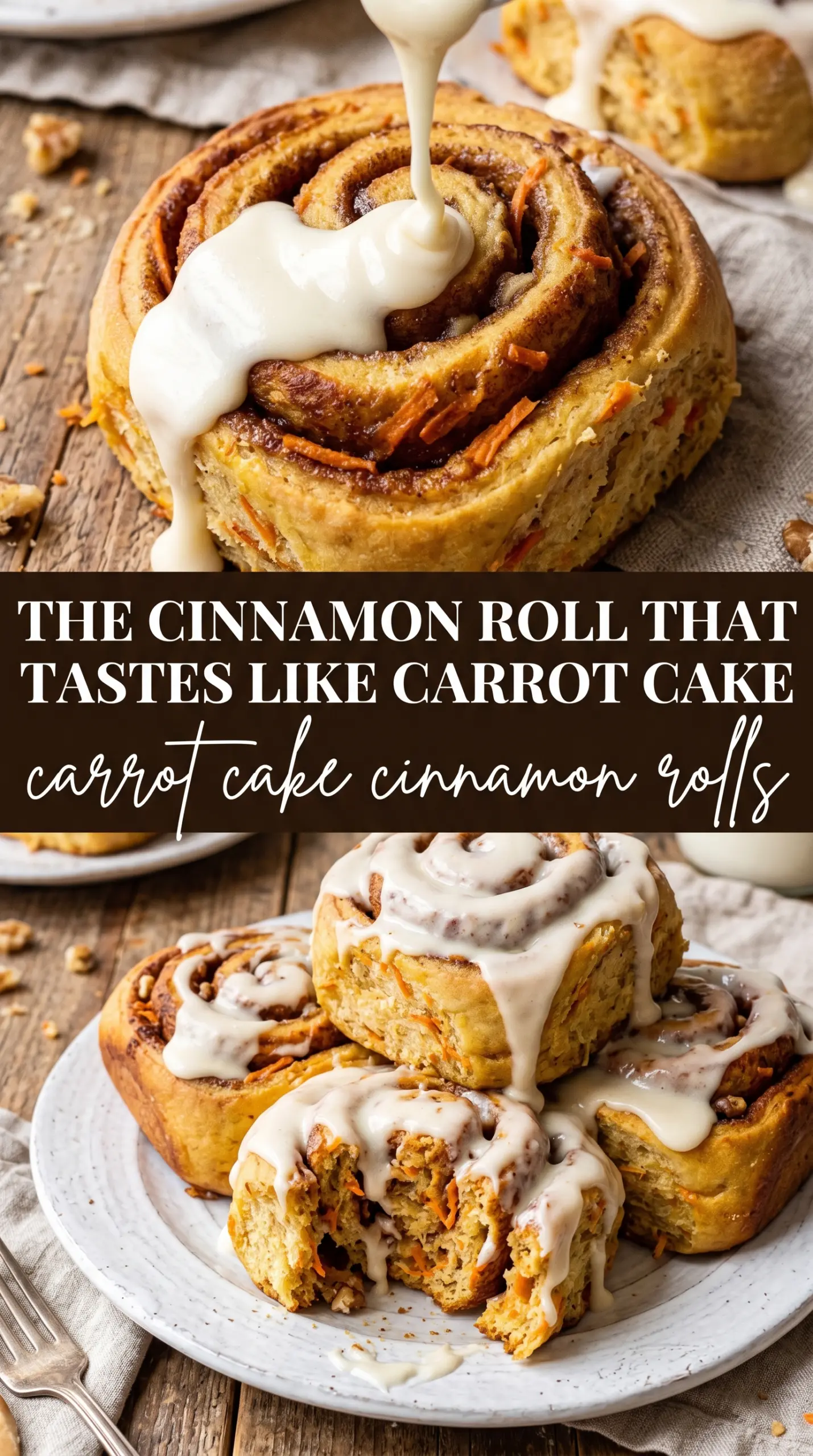
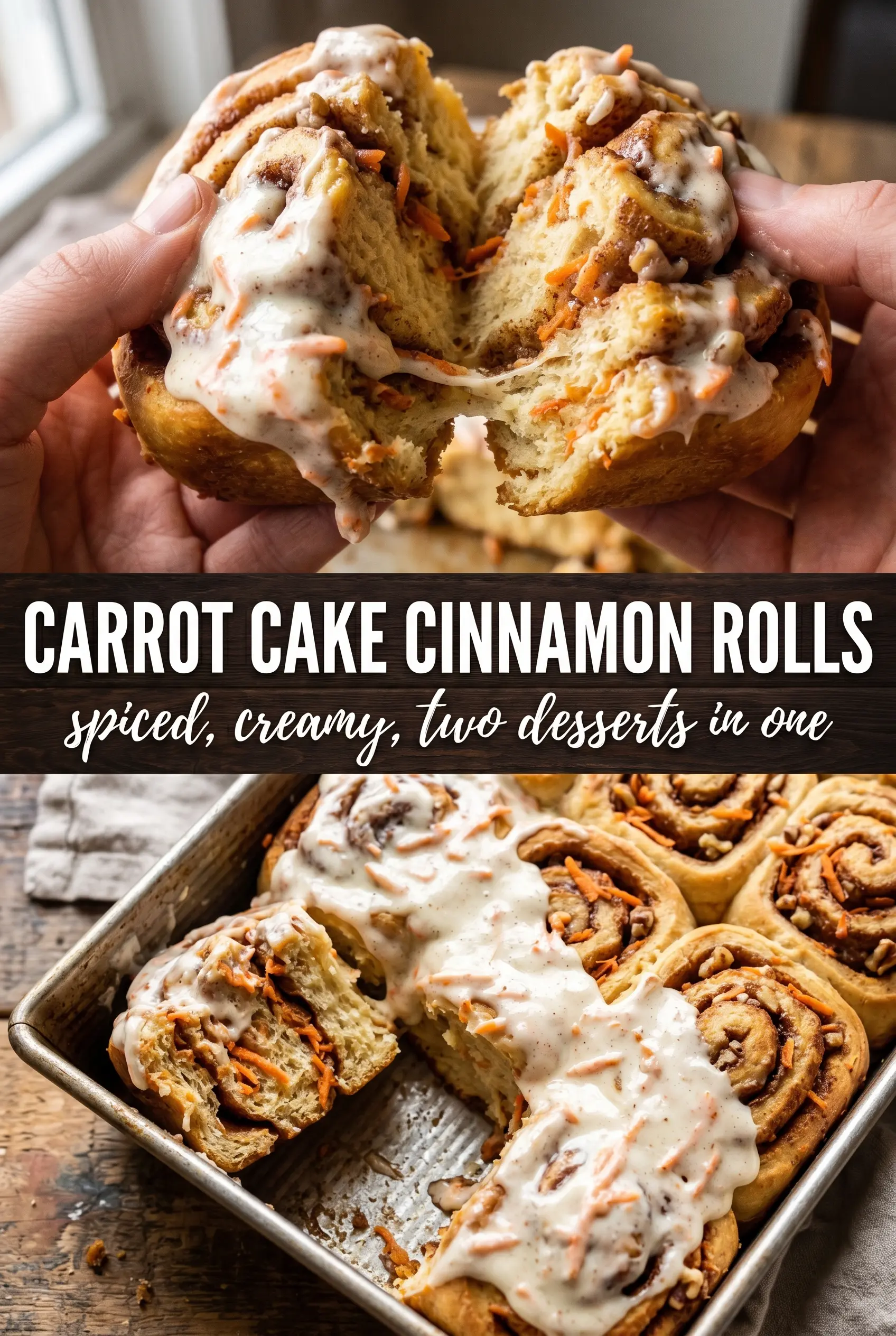
Plump carrot cake cinnamon rolls bring together everything worth craving in a breakfast roll: soft, pillowy dough, warm spice, tender shredded carrot, and a thick cream cheese frosting that melts into every swirl. The carrot stays in the filling instead of disappearing into the dough, which gives each bite a little texture and a true carrot cake feel without turning the rolls heavy or dense.
The dough is enriched just enough with milk, butter, and egg to stay soft after baking, but it still rises into something light and easy to slice cleanly. Brown sugar does the heavy lifting in the filling, while cinnamon, nutmeg, and ginger give the rolls that classic carrot cake warmth. Once the rolls come out of the oven, the frosting goes on while they’re still warm so it softens into the crevices instead of sitting on top like an afterthought.
Below, I’m walking through the part that matters most: how to keep the dough from getting stiff, how to roll the filling evenly, and how to get that frosting situation exactly right. If you’ve had cinnamon rolls collapse into a sticky mess before, this version keeps the structure without losing the softness.
The filling stayed put, the rolls baked up fluffy, and the cream cheese frosting melted into every layer. The shredded carrot gave just enough texture without making them wet.
Save these carrot cake cinnamon rolls for a breakfast that bakes up soft, spiced, and finished with a thick cream cheese frosting.
Why the Carrot Belongs in the Filling, Not the Dough
The biggest mistake with carrot cake-style rolls is mixing the carrot into the dough and expecting the same result. The dough ends up heavy before it ever gets a chance to rise, and the carrot flavor gets muted. Tucking the shredded carrot into the filling keeps the bread fluffy and lets the carrot steam just enough inside the spiral to turn tender without going soggy.
Brown sugar is important here because it melts into the butter and coats the carrot shreds, which keeps the filling from falling out when you roll and slice. If your rolls have ever unspooled in the pan, the filling was probably too dry or the dough was rolled too loosely. A snug roll and a thin, even layer of filling make the difference between neat spirals and a pan full of loose edges.
- Shredded carrots — Use the fine side of a box grater or the shredding disk on a food processor. Long, thick shreds don’t soften as evenly, and they can poke through the dough while rolling.
- Brown sugar — This gives the filling its sticky pull and helps the spices bloom as the rolls bake. Light or dark brown sugar both work; dark brown sugar just leans a little deeper and more molasses-heavy.
- Butter — Softened butter spreads easily across the dough and creates the base that holds the carrot and spice mixture in place. If it’s melted, the filling slides around and leaks into the pan.
What Each Ingredient Is Actually Doing in These Rolls
- Instant yeast — This gives you a reliable rise without proofing first, which keeps the process simple. If you only have active dry yeast, it still works; dissolve it in the warm milk first and give the dough a little extra time to rise.
- Warm milk — Milk softens the crumb and adds just enough richness to keep the rolls tender after baking. It should feel warm, not hot; milk that’s too hot can slow or kill the yeast.
- Egg and butter — These build a richer dough that bakes up soft instead of bready. Softened butter mixes in more evenly than melted butter, which helps the dough stay smooth and easy to knead.
- Cream cheese frosting — This is the finishing move that turns a sweet roll into a carrot cake breakfast roll. Soften the cream cheese fully before beating it, or you’ll end up chasing lumps no matter how long you stir.
- Powdered sugar — It thickens the frosting without graininess. Add the milk gradually; if the frosting gets loose, it will slide off the warm rolls instead of settling into the swirls.
Building the Dough, Filling, and Frosting in the Right Order
Mixing the Dough Until It Turns Smooth
Start by combining the flour, yeast, sugar, and salt, then add the warm milk, softened butter, and egg. The dough should look rough and shaggy at first, then turn smooth and elastic after kneading. If it feels sticky, keep kneading before adding a lot more flour; too much extra flour is what makes sweet rolls dry and tight.
Rolling the Filling for Even Spirals
Roll the dough into a rectangle that’s even from edge to edge, then spread the softened butter all the way across. Sprinkle on the brown sugar, cinnamon, nutmeg, ginger, and shredded carrot in a thin, even layer. Leave a tiny bare edge along one long side so the roll seals closed without squeezing filling out the seam.
Slicing and Proving the Rolls
Roll the dough up tightly from the long side and use a sharp knife or unflavored dental floss to cut 12 rolls. Set them in a greased 9×13 pan with a little space between each one, then let them rise until puffy and touching lightly. If the rolls haven’t relaxed and expanded, they’ll bake into dense spirals instead of soft, pull-apart buns.
Baking Until Golden, Then Frosting While Warm
Bake at 375°F until the tops are golden and the centers are set, about 20 to 25 minutes. The pan should smell like cinnamon and toasted sugar, and the rolls should spring back when you gently press the center one. Beat the cream cheese, powdered sugar, milk, and vanilla until smooth, then spread it over the rolls while they’re still warm so the frosting melts just enough to seep into the swirls.
How to Adapt These Rolls Without Losing the Carrot Cake Character
Dairy-Free Rolls That Still Bake Soft
Swap the milk for an unsweetened dairy-free milk and use a plant-based butter in both the dough and filling. The rolls will still rise and bake up tender, though the frosting won’t have quite the same tang unless you use a dairy-free cream cheese that you already know you like.
Extra-Spiced Carrot Cake Flavor
If you want the rolls to taste more like classic carrot cake, add a pinch of cloves or a little more ginger to the filling. Keep the amount modest; too much spice takes over the sweetness and makes the rolls taste sharper than warm.
Make-Ahead Overnight Rolls
Shape the rolls, place them in the pan, and refrigerate overnight after the second rise is partially done. In the morning, let them sit at room temperature until puffy before baking. Cold dough straight from the fridge usually bakes unevenly in the center, so give it time to finish rising first.
Storage and Reheating
- Refrigerator: Store covered for up to 4 days. The rolls stay soft, though the frosting firms up in the fridge.
- Freezer: Freeze the baked rolls without frosting, tightly wrapped, for up to 2 months. Frost after thawing so the topping stays smooth instead of grainy.
- Reheating: Warm individual rolls in the microwave in short bursts or cover the pan with foil and heat in a low oven. The common mistake is blasting them too long, which dries out the bread and makes the frosting separate.
The Questions I’d Ask Before Making These Again
Carrot Cake Cinnamon Rolls
Ingredients
Equipment
Method
- Mix all-purpose flour, instant yeast, sugar, and salt until evenly combined. Add warm milk, butter, and egg, then knead until the dough is smooth and cohesive.
- Cover the dough and let it rise for 1 hour until noticeably puffy. Use a warm spot so the dough expands well for fluffy layers.
- Roll the dough into a rectangle. Spread softened butter evenly over the surface.
- Sprinkle brown sugar, cinnamon, nutmeg, and ginger over the butter. Scatter shredded carrots across the top so you get visible carrot bits in every swirl.
- Roll up the dough tightly into a log, then pinch the seam to seal. Slice into 12 rolls with even thickness so they bake uniformly.
- Place the rolls into a greased 9x13 pan. Cover and let them rise for 30 minutes until puffed and touching or close together in spots.
- Bake at 375°F for 20–25 minutes until the tops are golden. Pull the pan out when the center looks set and the buns spring back lightly.
- Beat cream cheese, powdered sugar, milk, and vanilla extract until smooth. Spread the frosting over the warm rolls so it melts slightly and spills over the edges.