Chicken pot pie casserole lands on the table with everything people want from the classic version, minus the fiddly crust work. The filling turns creamy and savory, the vegetables stay distinct instead of turning to mush, and the topping bakes into a crisp, golden lid that cracks when you scoop through it. It’s the kind of dinner that feels familiar the first time you make it, which is why it tends to show up again whenever the week gets crowded.
The trick is building the sauce before the chicken goes in. Once the butter, flour, broth, and cream cook together long enough to thicken, the filling holds its shape under the biscuits or pastry instead of spreading out into a thin soup. Using cooked chicken keeps the meat tender, and the frozen peas and corn go in at the end so they keep their color and bite.
Below, I’ve included the cue I watch for when the filling is thick enough, plus the small swaps that matter if you want to use puff pastry instead of biscuits or make this ahead for a busy night.
The sauce thickened up beautifully and stayed creamy under the biscuits. I used rotisserie chicken and it still tasted like I’d spent all afternoon on it.
Save this chicken pot pie casserole for the nights when you want a creamy filling and a golden biscuit topping without rolling out pie dough.
The Part That Keeps the Filling Creamy Instead of Soupy
Most chicken pot pie casseroles fail in the same place: the sauce never gets thick enough before it goes into the oven. If the filling is thin, the topping bakes on top of liquid instead of steam, and the bottom layer can turn loose and watery. The flour needs a full minute in the butter before the broth goes in, because that short cook removes the raw flour taste and starts the thickening process.
The other thing that matters is heat. Once the broth and cream are added, keep the mixture at a gentle simmer until it coats the back of a spoon. If it still looks runny in the pan, it will look runny in the baking dish too. The casserole should move as one thick mass when you stir in the chicken and vegetables, not slosh around like soup.
What Each Ingredient Is Doing in the Casserole

- Cooked chicken — Rotisserie chicken works well here because it’s already seasoned and tender. Any cooked chicken works, but shred it into bite-size pieces so it mixes evenly through the filling instead of clumping in one area.
- Butter and flour — This is the roux, and it’s what gives the casserole its body. Don’t rush this part; the flour needs that quick cook in the butter so the filling thickens cleanly instead of tasting starchy.
- Chicken broth and heavy cream — Broth brings the savory base, while cream gives the filling its velvety finish. Half-and-half can work in a pinch, but the sauce will be a little lighter and less plush.
- Carrots, celery, onion — These build the classic pot pie flavor and give the filling texture. Dice them evenly so they soften at the same pace and don’t leave hard bits behind after baking.
- Biscuits or puff pastry — Biscuits give you a rustic, homey top with plenty of nooks for the filling steam to peek through. Puff pastry bakes a little lighter and flakier, but it needs to go on top of a hot, thick filling so the underside doesn’t turn soggy.
- Frozen peas and corn — Frozen vegetables are the right choice here because they hold their shape and color. Add them straight from the freezer so they warm through in the oven without turning dull.
Building the Filling Before the Topping Goes On
Softening the Vegetables
Cook the onion, carrots, and celery in butter until the onion turns translucent and the carrots just start to lose their raw edge. You’re not looking for browning here. You want the vegetables tender enough that they finish in the oven without tasting crunchy. If the pan looks dry before the vegetables soften, the heat is too high and the butter is cooking off instead of coating the vegetables.
Making the Sauce in the Same Pan
Sprinkle the flour over the vegetables and stir constantly for a minute so every piece gets coated. Then add the broth slowly while whisking; if you dump it in all at once, the flour can clump at the bottom. Once the cream goes in, let the sauce simmer until it turns glossy and thick enough to mound briefly on a spoon.
Folding in the Chicken and Vegetables
Stir in the chicken, peas, corn, thyme, and garlic powder after the sauce has thickened. This keeps the chicken tender and the peas bright instead of overcooked. Taste the filling before it goes into the baking dish; it should be slightly more seasoned than you think, because the biscuits or pastry will mellow it out a bit as they bake.
Baking Until the Top Is Deep Golden
Spread the filling in a 9×13 dish and top it evenly with biscuits or puff pastry. Bake until the topping is deeply golden and the filling is bubbling around the edges, which tells you the center is hot enough too. If the top browns too quickly, cover it loosely with foil for the last few minutes and keep baking until the filling is still actively bubbling.
How to Adapt This for Different Kitchens and Different Nights
Use puff pastry instead of biscuits
Puff pastry gives you a lighter, flakier top with more of a true pot pie feel. Lay it over the filling in a single sheet and cut a few vents so steam can escape; if you skip the vents, the pastry can turn soft on top while the underside stays gummy.
Make it dairy-free
Use a good unsweetened plant cream and a dairy-free butter substitute. The filling won’t have the same richness as the original, but it will still thicken well if you keep the simmer gentle and give the flour time to cook in the fat.
Swap the vegetables to match what’s in the fridge
Green beans, diced potatoes, or mushrooms all fit here. Potatoes need to be cooked until just tender before they go in, while mushrooms should be sautéed first so they don’t leak extra liquid into the sauce.
Storage and Reheating
- Refrigerator: Keep leftovers covered for up to 4 days. The topping softens a bit as it sits, but the filling stays rich and spoonable.
- Freezer: It freezes well if you cool it completely first and wrap it tightly. For best texture, freeze before baking, then bake from thawed so the topping stays crisp.
- Reheating: Reheat in a 350F oven until hot all the way through. The common mistake is using the microwave, which makes the topping rubbery and the filling separate at the edges.
Answers to the Questions Worth Asking
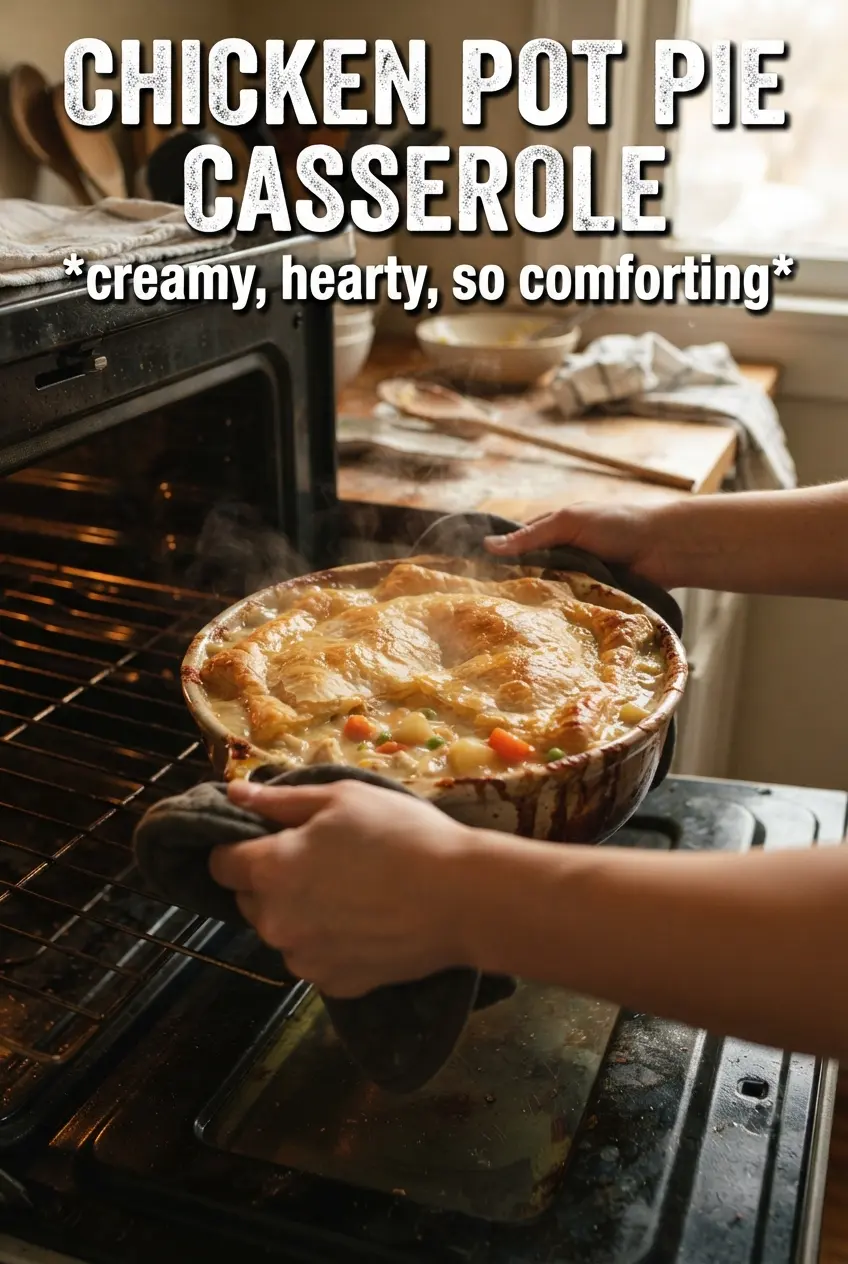
Chicken Pot Pie Casserole
Ingredients
Equipment
Method
- Preheat oven to 400F. Sauté onion, carrots, and celery in butter over medium heat for 5 minutes, stirring until softened and fragrant.
- Whisk in flour and cook for 1 minute at a steady simmer, until it smells lightly toasted. Gradually add chicken broth and heavy cream, then simmer until the sauce thickens enough to coat a spoon.
- Stir in shredded chicken, peas, corn, fresh thyme, and garlic powder, then season with salt and pepper to taste. Pour the filling into a 9x13 dish and top with refrigerated biscuits or puff pastry.
- Bake at 400F for 25-30 minutes until the top is golden and the filling is bubbling, with visible steam rising around the edges.