Charred chicken thighs and a bright, punchy chimichurri are a hard combination to beat. The chicken stays juicy under the grill, while the sauce cuts through the richness with garlic, vinegar, and enough herbs to make every bite taste fresh. This is the kind of dinner that looks lively on the plate and eats even better than it looks.
What makes this version work is the split use of the chimichurri. Half goes on before marinating, which seasons the chicken from the outside in and helps the herbs cling to the meat. The rest gets spooned over at the end, where the raw garlic, vinegar, and olive oil keep their sharp edge instead of cooking down into something muted.
Below, I’ll walk through the one detail that keeps grilled chicken thighs from drying out, plus a few swaps that still respect the balance of the sauce. If you’ve ever had chimichurri turn muddy or chicken that tasted flat under all that green, this method fixes both.
The chimichurri stayed bright and the chicken picked up just enough flavor after a 45-minute marinate. I grilled the thighs on medium-high and they came off with crisp edges and juicy centers, not dry at all.
Juicy chimichurri chicken thighs with that crisp-edged grill finish? Save this one for the nights when you want bold herb sauce and minimal cleanup.
The Mistake That Makes Chimichurri Chicken Taste Flat
The biggest failure with chimichurri chicken is treating the sauce like a marinade only. Chimichurri is at its best when it stays divided: some to season the chicken, some to finish it after grilling. If all of it gets cooked hard from start to finish, the herbs lose their brightness and the garlic turns harsh instead of lively.
The second mistake is crowding the grill. Chicken thighs need direct heat and enough space for the skin to render and brown instead of steaming in their own moisture. You want a steady sizzle, not a flare-up or a weak hiss. If the outside is browning too fast before the center cooks through, the heat is too high and the chicken will dry out before it reaches temperature.
- Bone-in thighs hold onto moisture better and tolerate a little extra grill time, which is helpful if your heat runs hot.
- Boneless thighs cook faster and are easier to serve, but they need closer attention because they can go from juicy to dry in a hurry.
- Red wine vinegar gives the sauce its sharp lift. Lemon works in a pinch, but the flavor shifts from savory and earthy to brighter and more citrusy.
- Fresh parsley and oregano are what make the sauce taste like chimichurri instead of a generic herb dressing. Dried herbs won’t give you the same raw, green finish.
What Each Ingredient Is Actually Doing in This Dish
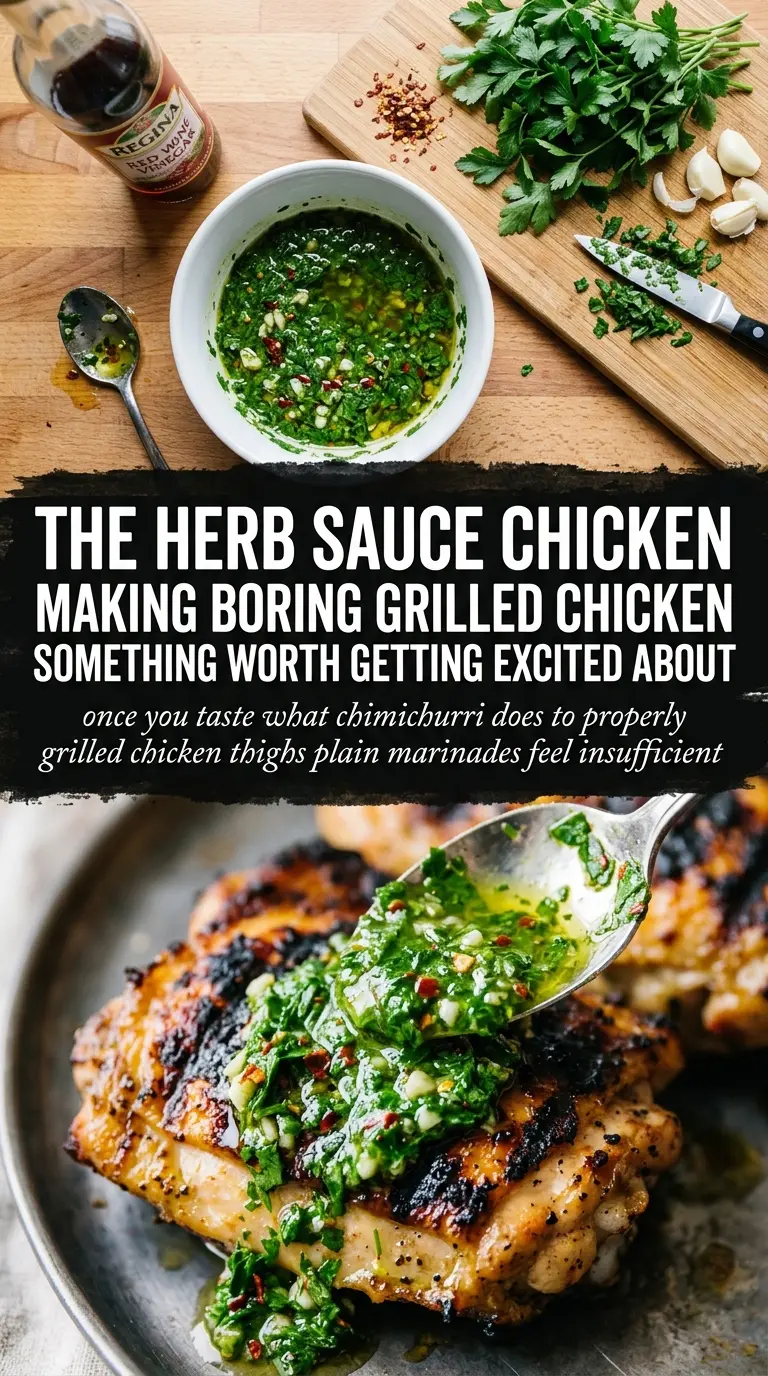
- Chicken thighs stay tender over direct heat better than breasts, which makes them the right cut here. Use bone-in if you want the most forgiving cook, or boneless if you want faster grilling and easier slicing.
- Parsley is the backbone of the sauce. Flat-leaf parsley blends best because it has more flavor and less bitterness than curly parsley.
- Oregano gives chimichurri its distinct Argentine character. Fresh is worth using here because the dried version reads dusty and one-note once blended.
- Garlic should be fresh and peeled well. If it’s old or sprouting, the sauce turns sharp in the wrong way and can taste bitter.
- Olive oil and red wine vinegar work together to make the sauce spoonable and balanced. Use a decent olive oil, but you don’t need the most expensive bottle on the shelf.
- Red pepper flakes bring gentle heat without taking over. If you like more fire, add a pinch more after blending instead of loading it all in upfront.
Grilling the Thighs Without Losing the Juiciness
Building the Chimichurri First
Blend the parsley, oregano, garlic, vinegar, olive oil, red pepper flakes, and salt until the sauce is mostly smooth but still has a little texture. That slight chunkiness matters because it clings to the chicken instead of sliding off. If you blend it into a puree, it starts to taste dull and oily instead of fresh and sharp.
Marinating for Flavor, Not For Hours and Hours
Season the chicken with salt and pepper, then brush on about half the chimichurri. Let it sit for 30 minutes to 2 hours. Longer isn’t better here because the vinegar can start to tighten the outside of the meat and the herbs lose their brightness before they ever hit the grill.
Getting the Grill Heat Right
Preheat the grill to medium-high so the chicken sears instead of slowly drying out. When the thighs hit the grates, you should hear an immediate sizzle. If the grill is too hot, the outside will char before the center reaches 165°F; if it’s too cool, you lose the crispy edges that make this dish work.
Finishing With the Sauce That Stays Fresh
Grill the thighs for 6 to 7 minutes per side, depending on thickness, until the skin is crisp and the internal temperature reaches 165°F. Let them rest for 5 minutes so the juices settle back into the meat. Spoon the remaining chimichurri over the top right before serving so the herbs stay vivid and the vinegar still has bite.
How to Adapt This for Different Grills and Dinner Tables
Bone-in for the most forgiving version
Bone-in thighs handle a little extra grill time without drying out, which makes them the safest choice if your fire runs uneven or your chicken pieces vary in size. They also give you a deeper, meatier bite that stands up well to the assertive sauce.
Boneless for faster weeknight grilling
Boneless thighs cook quicker and are easier to serve, but they need a shorter, more attentive grill time. Pull them as soon as they hit 165°F, because the extra few minutes it takes to get a dark crust can push them past juicy.
Dairy-free and gluten-free as written
This recipe already fits both diets without any special swaps, which is one reason it works so well for mixed crowds. Just double-check that your red pepper flakes and vinegar are plain, with no added seasoning blends.
Broiler or grill pan when you can’t grill outside
A grill pan or broiler gives you the charred edges you want, even if the smoke from the chimichurri is too much for an outdoor setup. Keep the chicken close enough to brown quickly, then finish with fresh sauce after resting so the top still tastes bright.
Storage and Reheating
- Refrigerator: Store cooked chicken in an airtight container for up to 4 days. Keep extra chimichurri separate so the herbs stay bright.
- Freezer: The chicken freezes well for up to 2 months, but the chimichurri is best made fresh. Freeze the chicken without the sauce, then add a new batch when reheating.
- Reheating: Warm the chicken gently in a 325°F oven, covered loosely with foil, until just heated through. High heat dries out thighs fast, and the sauce should be added after reheating so it doesn’t turn dull or oily.
Questions I Get Asked About This Recipe
Chimichurri Chicken Thighs
Ingredients
Equipment
Method
- Blend fresh parsley, fresh oregano, garlic cloves, red wine vinegar, olive oil, red pepper flakes, and salt until smooth but slightly chunky, scraping down as needed to keep the texture visible.
- Set aside half of the chimichurri for serving and brush the other half over the chicken thighs, coating both sides with a thin, even layer.
- Marinate the brushed chicken thighs for 30 minutes to 2 hours in the refrigerator, covering the tray or bowl so the herb sauce stays in contact.
- Preheat the grill to medium-high heat and lightly oil the grates to prevent sticking.
- Grill the chicken thighs for 6-7 minutes per side until the internal temperature reaches 165°F and the skin is crispy, watching for charred grill marks.
- Rest the grilled chicken thighs for 5 minutes off the heat so juices settle before plating.
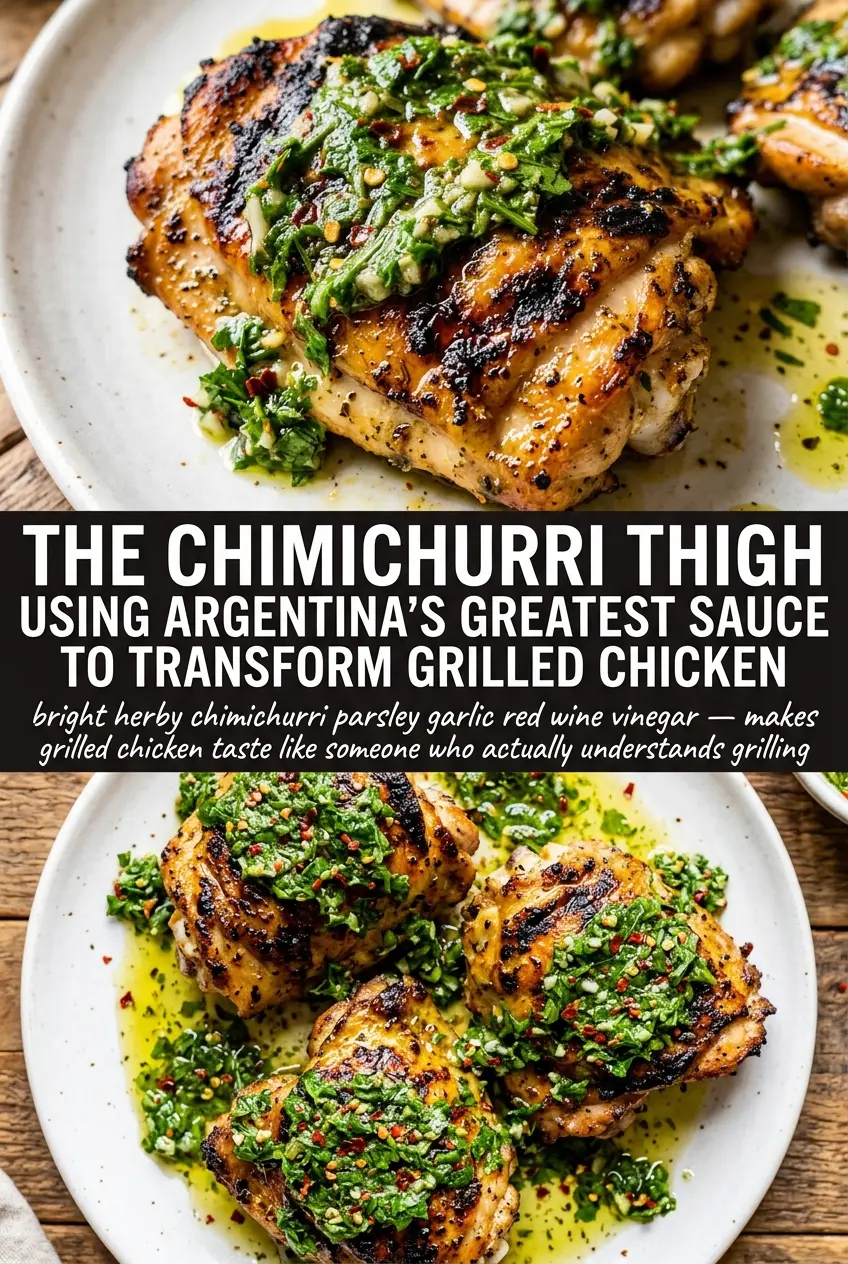
- Serve the chicken topped with the remaining chimichurri so the vibrant green sauce looks fresh and herby over the charred thighs.