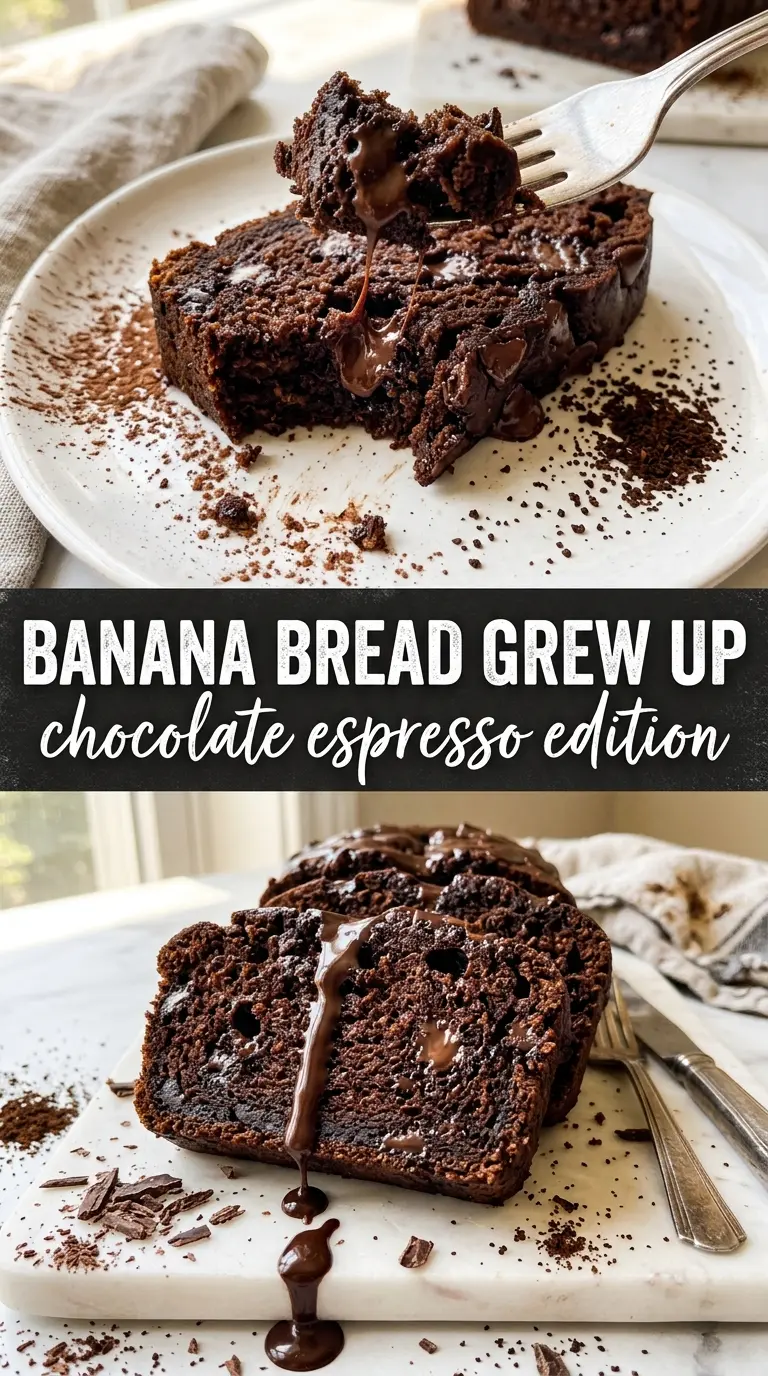
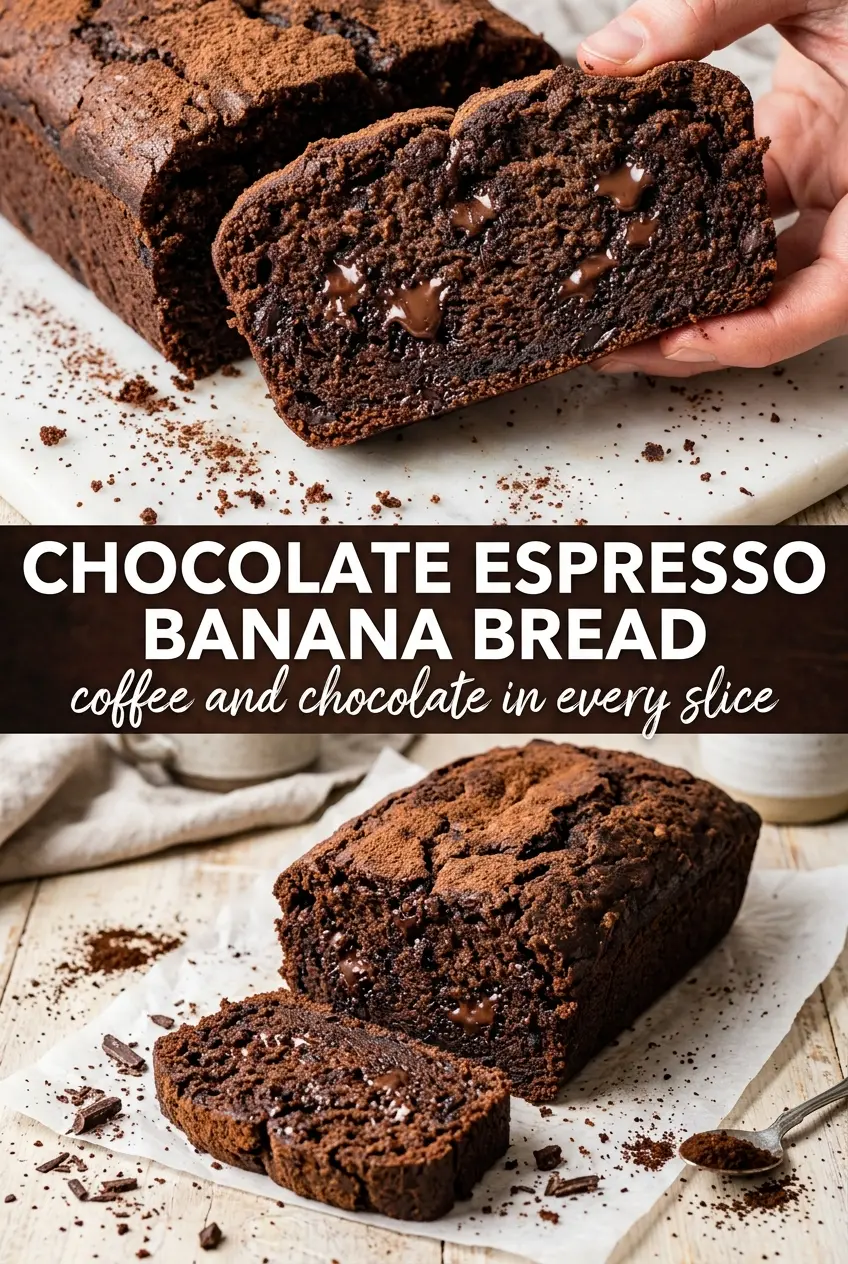
Chocolate espresso banana bread bakes up with a dark, fudgy crumb, a soft center, and a crust that picks up just enough chew around the edges. The mashed bananas keep it tender, the cocoa gives it that deep chocolate color, and the espresso sharpens everything without turning it into a coffee loaf. When it’s done right, each slice tastes rich and balanced instead of heavy.
The key here is restraint. The bananas bring plenty of moisture, so the batter only needs a gentle fold once the dry ingredients go in. Overmixing makes banana bread tough and tight, especially with cocoa in the batter. The dissolved espresso powder does its best work when it’s fully blended into the wet ingredients, where it can spread evenly and deepen the chocolate flavor instead of leaving a bitter pocket.
Below, I’ve included the exact cues I watch for in the oven, the ingredient swaps that still keep the loaf moist, and the small timing detail that keeps the center from collapsing after baking.
The loaf came out unbelievably moist and the espresso made the chocolate taste deeper, not bitter. I baked it 58 minutes and it sliced cleanly once cooled, with chocolate chips still melted on top.
Love the dark, fudgy crumb and espresso-kissed chocolate chips? Save this chocolate espresso banana bread for the next time your bananas are overripe and you want a loaf with real coffeehouse depth.
The Cocoa and Espresso Need to Be Evenly Distributed
Cocoa powder and espresso both have a way of clumping if they aren’t handled early, and that’s where banana bread turns uneven. Sifting the dry ingredients together breaks up the cocoa so it disappears into the batter instead of streaking through the loaf. Dissolving the espresso powder in hot water first does the same thing for the coffee flavor; it blends into the wet mixture cleanly and keeps the chocolate note from landing in one sharp bite.
This loaf also leans on brown sugar instead of white sugar because the molasses note plays nicely with chocolate and helps the crumb stay moist. If your bananas are on the smaller side, the batter will still work, but the loaf may bake a few minutes faster and the texture will be a little less plush. The goal is a batter that looks thick but still folds without fighting you.
What Each Ingredient Is Actually Doing Here
- Bananas — Three ripe bananas give this loaf its moisture and natural sweetness. Brown-speckled bananas are ideal because they mash smoothly and taste deeper, which helps the chocolate flavor read richer. If your bananas are only halfway ripe, the bread will still bake, but it won’t have the same softness or aroma.
- Instant espresso powder — This is the ingredient that makes the chocolate taste more intense instead of making the bread taste like coffee. Instant espresso dissolves quickly and distributes evenly; brewed coffee won’t give you the same strength without thinning the batter. If you only have instant coffee, use it in a pinch, but expect a milder result.
- Cocoa powder — Unsweetened cocoa gives the loaf its dark color and that fudgy, almost brownie-like crumb. Dutch-process cocoa will make it darker and smoother, while natural cocoa brings a slightly sharper chocolate edge. Either works here as long as the baking soda is fresh.
- Chocolate chips — Folding some into the batter and scattering the rest on top creates pockets of melted chocolate inside and that glossy finish on the crust. Dark chocolate chips hold up best because they balance the sweetness of the bananas and sugar. Semi-sweet chips are fine if that’s what you keep on hand.
- Brown sugar — This adds moisture and a deeper sweetness than white sugar would. It also helps the loaf stay tender for a couple of days. Light brown sugar is enough; dark brown sugar will make the flavor a little more caramel-like.
Folding the Batter Without Beating the Air Out of It
Mashing the Bananas First
Mash the bananas until they’re mostly smooth, but don’t chase every tiny lump. A few small bits melt into the loaf as it bakes and help the crumb stay soft. Once the bananas are mashed, whisk in the melted butter, brown sugar, eggs, vanilla, and dissolved espresso until the mixture looks glossy and well blended. If the butter is too hot, it can start to scramble the eggs, so let it cool for a minute before mixing.
Bringing the Dry Ingredients In
Sift the flour, cocoa powder, baking soda, and salt together, then fold them into the wet mixture just until no dry streaks remain. Stop as soon as the flour disappears. Overmixing develops gluten and turns banana bread dense instead of tender, and cocoa batter shows that toughness fast. The batter should look thick and a little loose at the same time, not smooth like cake batter.
Getting the Chocolate on Top
Fold in most of the chocolate chips, then pour the batter into the loaf pan and scatter the rest over the top. Those top chips melt into little pools and give the loaf its bakery-style look. Bake until a toothpick in the center comes out with a few moist crumbs, not wet batter. If the top browns before the middle is done, tent it loosely with foil for the last 10 to 15 minutes.
Cooling Before the First Slice
Let the bread rest in the pan for 15 minutes before turning it out. That short rest gives the structure time to set so the loaf doesn’t tear when you remove it. Cool it completely before slicing if you want clean edges and a fudgy interior that holds together. Warm banana bread tastes wonderful, but it can look gummy if you cut it too soon.
How to Adapt It When You Want a Different Kind of Loaf
Make it dairy-free
Swap the butter for melted coconut oil or a neutral oil in the same amount. Coconut oil gives the loaf a slightly firmer crumb once cool, while neutral oil keeps it a touch softer. The chocolate and espresso still come through the same way, so this is an easy swap if you need the recipe dairy-free.
Make it gluten-free
Use a 1:1 gluten-free baking blend that includes xanthan gum. The loaf will still be moist, but it may need the full bake time and a little extra patience before slicing. Let it cool completely, because gluten-free banana bread sets up more as it cools than a wheat-based loaf does.
Make it more chocolate-forward
Add another 2 to 3 tablespoons of chocolate chips on top or swap half the chips for chopped dark chocolate. Chopped chocolate melts into bigger pockets than chips do, which makes every slice feel a little richer. Don’t add extra cocoa unless you’re willing to lose some softness, because too much dry ingredient can make the loaf taste dusty.
Storage and Reheating
- Refrigerator: Store for up to 4 days wrapped tightly or in an airtight container. The crumb gets a little firmer in the fridge, but the flavor stays deep.
- Freezer: Freeze slices or the whole loaf for up to 3 months. Wrap well in plastic and then foil so the chocolate chips don’t pick up freezer odors.
- Reheating: Warm slices in the microwave for 10 to 15 seconds or in a low oven until just warmed through. Don’t overheat it or the chocolate chips will harden again and the crumb will dry out.
Questions I Get Asked About This Recipe
Chocolate Espresso Banana Bread
Ingredients
Equipment
Method
- Preheat the oven to 350°F and grease a 9x5 loaf pan.
- Mash the bananas, then whisk in the melted butter, brown sugar, eggs, vanilla, and dissolved espresso until smooth.
- Sift together the all-purpose flour, cocoa powder, baking soda, and salt.
- Fold the dry mixture into the banana mixture until just combined, stopping as soon as no dry streaks remain.
- Fold in 3/4 cup of the dark chocolate chips and pour the batter into the loaf pan.
- Scatter the remaining chocolate chips over the top of the batter.
- Bake for 55–65 minutes at 350°F, until a toothpick inserted in the center comes out with just a few moist crumbs.
- Cool the loaf in the pan for 15 minutes before turning it out.
- Slice only once fully cooled so the interior stays fudgy.