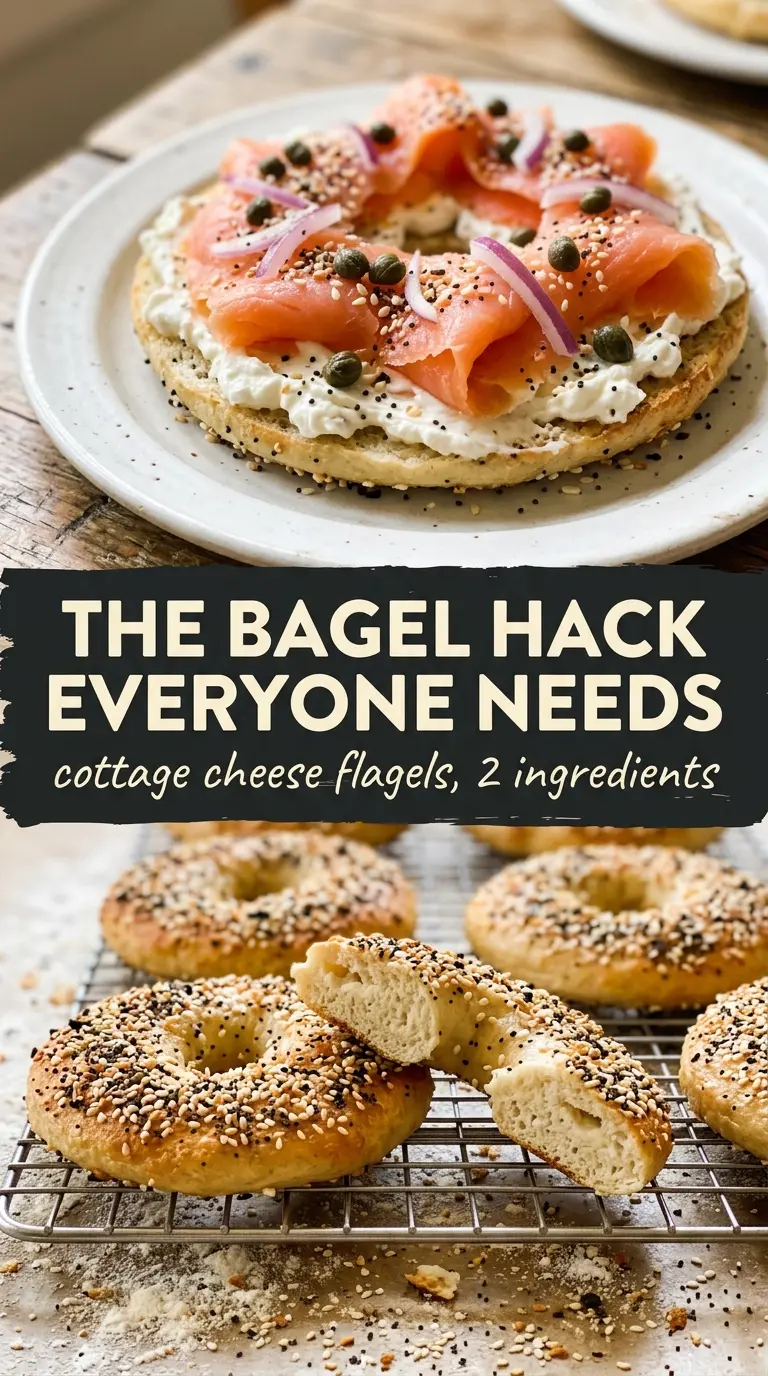
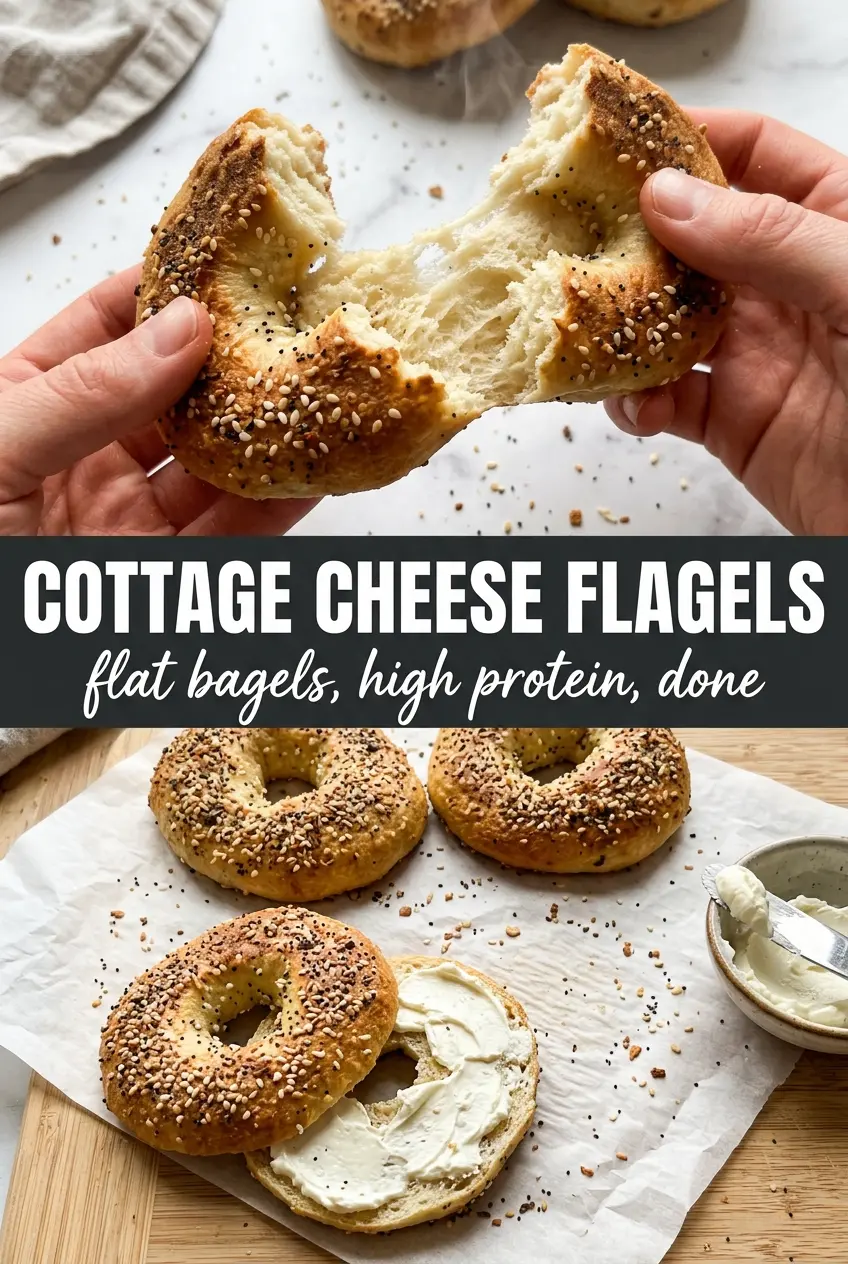
Golden cottage cheese flagels land somewhere between a bagel and a thick, chewy flatbread, with a crisped top, a tender middle, and just enough structure to hold cream cheese without turning heavy. They bake up with that bakery-style look people want from homemade bagels, but the method stays simple enough for a weekday breakfast.
The cottage cheese does more than add protein. It brings moisture and a mild tang that keeps the crumb from feeling dry, while self-rising flour gives the dough its lift without a long proof. The key is stopping as soon as the dough comes together. Overmixing makes these tough, and too much extra flour turns them bready instead of chewy.
Below, I’ll walk through the small choices that matter most: how sticky the dough should feel, why flattening these before baking changes the texture, and how to switch them up if you want a different topping or need to work with what’s in the pantry.
The dough came together fast and baked into the best chewy texture. I flattened mine a little thinner and the centers stayed soft while the tops got perfectly golden.
Love these chewy cottage cheese flagels? Save them to Pinterest for a high-protein breakfast that bakes up golden and ready for cream cheese.
The Trick to Chewy Flagels Without a Boil
Classic bagels rely on a boil for that dense chew, but these flagels get there a different way. Flattening the dough into discs before baking increases surface area, so the tops brown faster while the centers stay substantial instead of puffing into a soft roll. That shape is what gives flagels their character.
The other part that matters is restraint. If you keep adding flour until the dough feels dry and tidy, the finished bagels will bake up floury and dull. A slightly sticky dough is a good sign here because the cottage cheese brings its own moisture, and that moisture helps the crumb stay tender after baking.
- Self-rising flour — This does the work of flour, baking powder, and salt in one move, which keeps the recipe fast. If you use all-purpose flour, the baking powder gives the lift and the small amount of salt keeps the flavor from falling flat.
- Cottage cheese — Full-fat cottage cheese gives the best texture because the fat keeps the crumb soft and the curds melt into the dough as it bakes. Low-fat will work, but the interior is a little less rich and can feel drier.
- Egg wash — This is what gives the tops that glossy, bronzed finish and helps the seasoning stick. Skipping it leaves you with a paler top and a weaker crust.
- Everything bagel seasoning — Use it generously. The dough itself is mild, so the topping carries the flavor and gives every bite that classic bagel-shop finish.
What Each Ingredient Is Actually Doing in This Recipe
- Primary ingredient (the star) — Quality matters most. Choose the best you can find.
- Cooking medium (oil, butter, or broth) — This carries flavors and prevents dryness.
- Seasonings (salt, pepper, spices, herbs) — Layer flavors so nothing overpowers. Build depth gradually.
- Aromatics (garlic, onion, herbs) — Cook with fat to bloom flavors. Become the foundation.
- Supporting ingredients — Complement the main ingredient without overpowering it.
- Sauce or liquid (if applicable) — Brings flavors together. Balance richness with acid.
- Acid (lemon, vinegar, wine, or other) — Brightens and prevents flat-tasting results.
- Final finish (garnish, glaze, or sauce) — Prevents one-dimensional taste and adds visual appeal.
Mix the Dough Just Enough, Then Get It Straight Into the Oven
Bringing the Dough Together
Stir the cottage cheese and flour until you see a shaggy dough, then stop. It won’t look perfectly smooth, and that’s fine. The curds should mostly disappear into the dough, but a few small bits are normal and help the texture once baked. If the dough feels too wet to handle, dust in a spoonful of flour at a time; if you add too much at once, the flagels turn heavy.
Shaping the Flat Discs
Divide the dough into four pieces and shape each one into a disc about half an inch thick. This thickness matters because it gives you the dense center of a bagel without the long bake time. If you make them too thick, the middle can stay gummy while the outside browns. Wet hands or lightly floured hands both work better than wrestling with sticky dough.
Baking to a Deep Gold
Brush the tops with beaten egg, then add the seasoning while the surface is still wet so it actually clings. Bake at 400°F until the tops are deeply golden and the bottoms release cleanly from the parchment, usually 22 to 25 minutes. If they’re pale in the center or still feel soft and squishy when lifted, give them a few more minutes. Let them cool for a minute before slicing so the crumb sets instead of tearing.
How to Adapt These Cottage Cheese Flagels for Different Mornings
Gluten-Free Version
Use a cup-for-cup gluten-free flour blend that already includes xanthan gum, then work the dough gently because gluten-free dough gets pasty fast. The texture will be a little more tender and less chewy, but the flagels still brown nicely and hold up well with toppings.
Dairy-Free Swap
These depend on cottage cheese for both moisture and protein, so a dairy-free swap changes them a lot. If you need a dairy-free breakfast bread, this exact recipe isn’t the right place to force it; you’ll get a better result with a different dough built for non-dairy ingredients.
Extra Savory Topping
Swap the everything seasoning for sesame seeds, poppy seeds, or a mix of dried onion and garlic. The base dough stays mild, so the topping decides whether these lean classic, oniony, or a little more toasted and nutty.
Make-Ahead Breakfast Sandwich Base
Bake the flagels a few minutes less if you plan to toast them later with egg or bacon. That keeps the centers softer after reheating, and the second round of heat finishes the crust without drying out the crumb.
Storage and Reheating
- Refrigerator: Store in an airtight container for up to 4 days. The crust softens a little in the fridge, but a quick toast brings it back.
- Freezer: They freeze well. Wrap individually, then stash in a freezer bag for up to 2 months so you can toast one at a time.
- Reheating: Split and toast them straight from the fridge or freezer. The biggest mistake is microwaving, which makes the crumb rubbery and the top soggy instead of restoring that chewy edge.
Answers to the Questions Worth Asking
Cottage Cheese Flagels (2-Ingredient Flat Bagels)
Ingredients
Equipment
Method
- Preheat oven to 400°F and line a sheet pan with parchment paper, so the flagels bake evenly without sticking.
- Mix full-fat cottage cheese and self-rising flour together until a dough forms; it will be slightly sticky.
- Divide the dough into 4 equal pieces and shape each into a flat disc about 1/2 inch thick for a dense, chewy center.
- Place the discs on the prepared sheet pan, brush each with beaten egg, and sprinkle generously with everything bagel seasoning or sesame seeds.
- Bake at 400°F for 22–25 minutes until golden and cooked through, with edges that look set and lightly browned.
- Slice each flagel and serve immediately with cream cheese, smoked salmon, or your favorite toppings.