Crazy Banana Cake has that old-fashioned, no-fuss charm that makes it stick around long after the bananas on the counter are past their best. The crumb bakes up light and tender, almost pudding-soft in the middle, with just enough structure to hold a glossy glaze that sinks in a little at the edges. It’s the kind of cake that disappears in slices at the kitchen counter before anyone has the chance to act formal about dessert.
What makes this version work is the unusual mixing method. Dry ingredients go straight into the pan, then the wet ingredients are added in wells and stirred just enough to bring everything together. That keeps the batter simple and the cake airy instead of dense. The vinegar and baking soda also do important work here, giving the cake lift without eggs, while the ripe bananas bring moisture and enough sweetness to make the whole thing taste complete.
Below, I’ve included the small details that matter most: how ripe the bananas should be, why you don’t want to overmix, and the best way to glaze the cake while it’s still warm so the topping melts into the crumb instead of sitting on top like frosting.
The cake stayed unbelievably soft even the next day, and the chocolate glaze soaked into the top just enough without making it soggy. I baked mine right at 30 minutes and it came out perfect.
Save this Crazy Banana Cake for the days when you want a soft banana cake with a pour-over chocolate glaze and almost no cleanup.
The Reason This Cake Stays Light Without Eggs
The big risk with an egg-free banana cake is ending up with something heavy and gummy in the center. This one avoids that by keeping the batter loose and using baking soda with vinegar for lift. That reaction starts immediately, so the cake needs to go into the oven as soon as it’s mixed. If you let it sit around, some of that rise disappears before it ever hits the heat.
The other thing that matters is the pan method. Mixing the dry ingredients right in the baking pan keeps the recipe true to its wacky-cake roots, but it also prevents overworking the batter. Once the bananas and water go in, a fork is enough. A whisk can get the job done too, but a fork gives you better control and makes it easier to stop as soon as the flour disappears.
What the Bananas, Vinegar, and Oil Are Each Doing
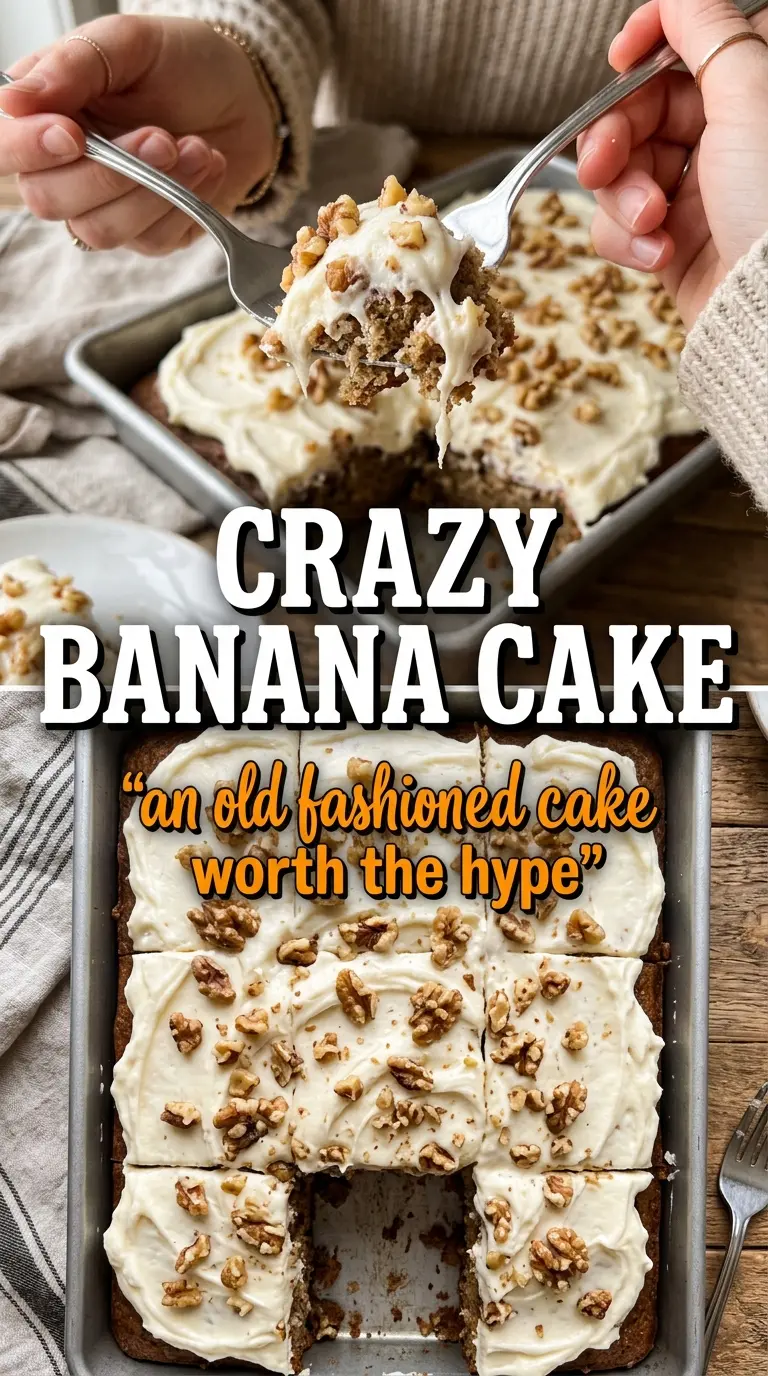
- Ripe bananas — These do more than flavor the cake. The softer and spottier they are, the more moisture and natural sweetness they bring. Under-ripe bananas will leave the cake bland and a little chalky, so use bananas that are heavily speckled or nearly black.
- Apple cider vinegar — You won’t taste it, but it reacts with the baking soda and helps the cake rise. White vinegar works in a pinch, though apple cider vinegar gives a slightly rounder background flavor.
- Vegetable oil — Oil keeps the crumb plush even after the cake cools. Butter will make the cake taste richer, but it can also make the texture a little firmer. For the softest result, stick with a neutral oil.
- Chocolate glaze — This is more than decoration. Poured over the warm cake, it settles into the top layer and gives each bite a fudgy finish. If you want a thinner glaze, add milk a teaspoon at a time until it drizzles easily.
Stir It Just Enough, Then Get It in the Oven
Building the Dry Base
Start by mixing the flour, sugar, baking soda, salt, and cinnamon directly in the prepared pan. Break up any clumps with your fingers or a fork so the leavening is evenly distributed. If the baking soda isn’t mixed through well, the cake can rise unevenly and taste a little off in patches. The pan should look evenly coated with dry ingredients before you move on.
Making the Wells
Use a spoon to make three shallow wells in the dry mixture, then pour the oil, vinegar, and vanilla into each one. This keeps the wet ingredients from pooling in one corner and helps them spread more evenly when you stir. Don’t worry if the wells collapse a little; they only need to give the liquids a place to start. The goal is distribution, not precision.
Finishing the Batter
Pour the mashed bananas and water over everything, then stir with a fork just until no dry flour remains. The batter will look loose and a little rough, and that’s exactly right. If you keep mixing until it looks perfectly smooth, the cake can turn dense. Scrape the corners of the pan so no flour is hiding there, then stop.
Baking and Glazing
Bake until the top springs back lightly and a toothpick comes out clean or with a few moist crumbs. Pull it before the center starts to look dry; overbaking is what turns this cake from tender to tired. While the cake is still warm, whisk the glaze until smooth and pour it over the top. It should spread easily and sink slightly into the cake instead of sitting in a thick layer.
Three Ways to Change the Cake Without Losing What Makes It Good
Dairy-Free Chocolate Glaze
Use unsweetened almond milk, oat milk, or any other plain non-dairy milk in the glaze. The texture stays glossy and pourable, and the cake remains fully dairy-free. Just start with a little less liquid, because some non-dairy milks thin the glaze faster than regular milk.
Vanilla Glaze Instead of Chocolate
Swap the cocoa powder for more powdered sugar and keep the vanilla. You’ll get a sweeter, lighter finish that lets the banana and cinnamon come forward more clearly. This version looks especially good with a dusting of extra cinnamon on top.
Gluten-Free Version
Use a 1:1 gluten-free baking flour that includes xanthan gum. The cake will still bake up soft, though it may be a touch more delicate when sliced warm. Let it cool for at least 20 minutes before glazing if you want cleaner cuts.
Chocolate Chip Banana Sheet Cake
Fold 1/2 cup mini chocolate chips into the batter after the bananas go in. Mini chips work best because they distribute more evenly in the thin batter and don’t sink as much. The cake becomes a little richer and more dessert-like without losing its easy, one-pan feel.
Storage and Reheating
- Refrigerator: Store covered for up to 4 days. The crumb stays moist, though the glaze may absorb a little more into the top.
- Freezer: Freeze individual slices tightly wrapped for up to 2 months. The cake freezes well, but wait to glaze until after thawing if you want the best texture.
- Reheating: Warm slices briefly in the microwave for 10 to 15 seconds or let them come to room temperature on the counter. Heating too long makes the cake dry out fast, especially once it’s glazed.
Answers to the Questions Worth Asking
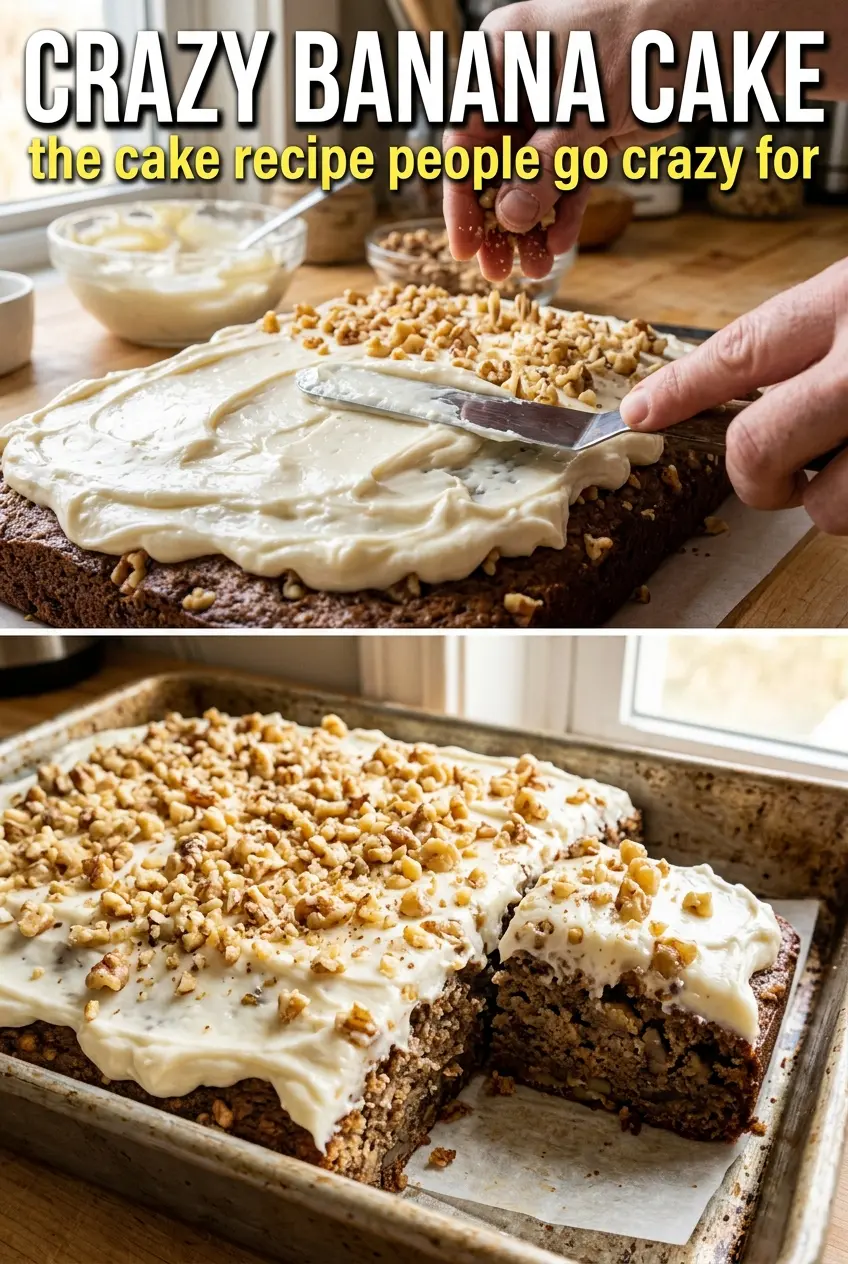
Crazy Banana Cake
Ingredients
Equipment
Method
- Preheat the oven to 350°F and grease a 9x13 pan. Make sure the pan is ready so the batter goes in right away.
- Mix the flour, sugar, baking soda, salt, and cinnamon directly in the pan. Spread the dry ingredients evenly for consistent baking.
- Make three wells in the flour and add the vegetable oil, apple cider vinegar, and vanilla extract to each well. Keep the wells separate so the liquids absorb quickly.
- Pour the mashed bananas and water over everything, then stir with a fork until just combined. Stop as soon as there are no dry pockets and the batter looks slightly lumpy.
- Bake at 350°F for 25–30 minutes until a toothpick comes out clean, without overbaking. Look for a lightly golden top and set center.
- Whisk the glaze ingredients until smooth, then pour it over the warm cake. The glaze should flow across the surface and soak in while the cake is hot.