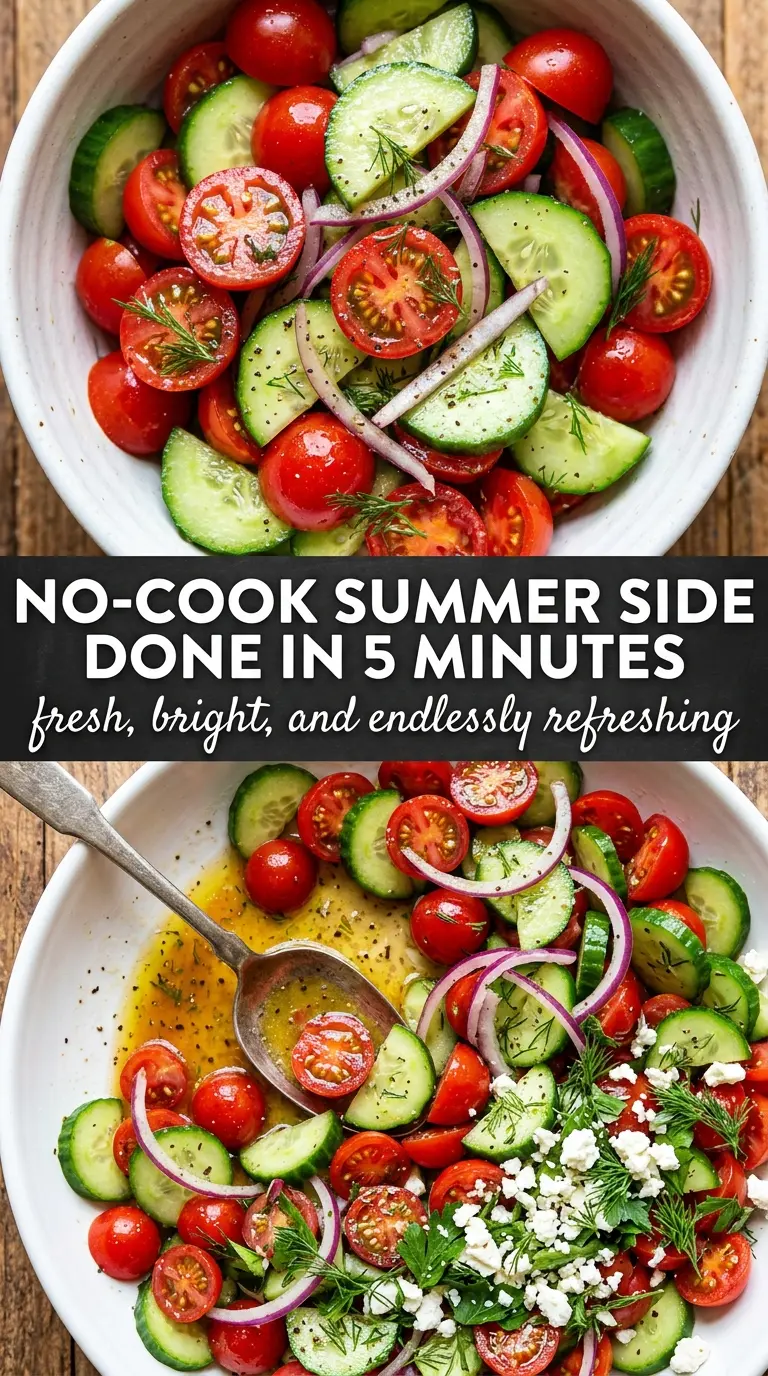
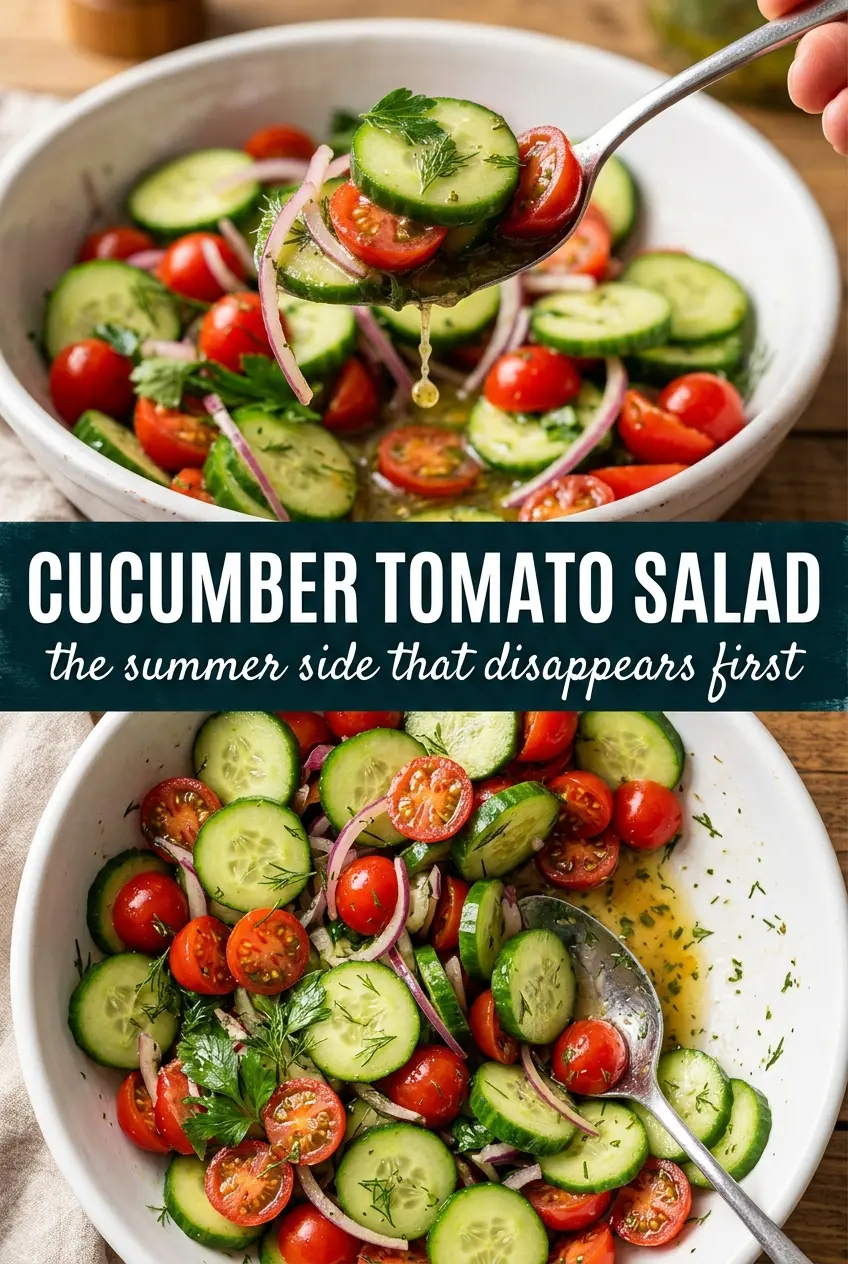
Glossy cucumber rounds and juicy cherry tomatoes are what make cucumber tomato salad worth repeating all summer long. The vegetables stay crisp, the dressing turns bright and tangy, and the herbs wake everything up without burying the fresh flavor underneath. When it’s done right, the bowl ends up full of clean, lively bites with just enough salt and acid to make the tomatoes taste even sweeter.
This version works because the dressing is sharp enough to season the vegetables, but not so heavy that it pools into something watery and flat. English cucumbers are the best choice here since they’re less seedy and don’t dump as much moisture into the bowl, and the short rest time gives the salt a chance to pull out just enough juice to season everything without turning the salad soggy. The red onion softens in the vinegar as it sits, which takes the edge off and folds it into the salad instead of leaving it harsh and raw.
Below, I’m walking through the part that matters most: how to keep the vegetables crisp while still letting the dressing do its job. I’ve also included a few swaps and storage notes, because this is the kind of side dish you’ll want to put next to grilled chicken, sandwiches, or anything that needs something fresh on the plate.
The cucumbers stayed crisp even after the 15-minute rest, and the dressing mellowed the onion just enough without making the salad watery. I added a little extra dill at the end and it tasted like the kind of side dish you’d expect at a good cookout.
Cucumber Tomato Salad is even better after a short marinade, when the dressing clings to every crisp bite and the herbs stay bright.
The Reason This Salad Stays Crisp Instead of Turning Watery
The biggest mistake with cucumber tomato salad is dressing it too far ahead and walking away. Cucumbers and tomatoes both release juice once they hit salt and acid, which is great for flavor but not great if you want a salad that still looks fresh in the bowl. The short marinating window in this recipe gives you the best middle ground: enough time for the dressing to season the vegetables, not enough time for everything to collapse into a puddle.
English cucumbers help because their thinner skin and smaller seed cavity mean less excess water. Cherry tomatoes also hold their shape better than large slicing tomatoes, which tend to break down fast once they’re tossed. If your salad ends up soggy, it’s usually because the vegetables were salted too early or the bowl sat longer than intended before serving.
- English cucumbers — These stay firmer and taste cleaner than standard cucumbers. If you only have regular cucumbers, peel them and scoop out some of the seeds to keep the salad from watering down.
- Red onion — Thin slices soften in the vinegar and turn from sharp to mellow. Slice it as thin as you can so it blends into the salad instead of dominating each bite.
- Fresh dill and parsley — Use both if you can. Dill gives the salad its classic garden-salad feel, while parsley keeps the flavor from leaning too heavily in one direction.
- Red wine vinegar — This gives the dressing its clean tang. Lemon juice works in a pinch, but it tastes brighter and less rounded, so the salad will read a little sharper.
What Each Ingredient Is Actually Doing in This Recipe
- Primary ingredient (the star) — Quality matters most. Choose the best you can find.
- Cooking medium (oil, butter, or broth) — This carries flavors and prevents dryness.
- Seasonings (salt, pepper, spices, herbs) — Layer flavors so nothing overpowers. Build depth gradually.
- Aromatics (garlic, onion, herbs) — Cook with fat to bloom flavors. Become the foundation.
- Supporting ingredients — Complement the main ingredient without overpowering it.
- Sauce or liquid (if applicable) — Brings flavors together. Balance richness with acid.
- Acid (lemon, vinegar, wine, or other) — Brightens and prevents flat-tasting results.
- Final finish (garnish, glaze, or sauce) — Prevents one-dimensional taste and adds visual appeal.
How to Toss It So the Vegetables Stay Bright and Fresh
Building the Bowl
Start with the cucumbers, tomatoes, and onion in a large bowl so everything can move easily when you toss it. If the bowl is cramped, the vegetables bruise and the dressing never coats evenly. The cucumber slices should look glossy and the tomatoes should hold their shape; if either one looks crushed before the dressing goes in, the salad will feel tired before it even sits.
Whisking the Dressing Until It Lingers
Whisk the olive oil, vinegar, honey, garlic powder, salt, and pepper until the honey disappears and the mixture looks a little thickened. That tiny bit of body helps the dressing cling instead of sliding straight to the bottom of the bowl. If the dressing tastes flat, it needs more salt, not more oil. The acid should taste sharp but not harsh.
Letting the Marinade Do Its Work
Pour the dressing over the vegetables and toss gently but thoroughly, then leave the salad at room temperature for 15 minutes. That rest time softens the onion and seasons the cucumbers without stripping away their crunch. If you chill it right away, the flavor stays a little disconnected; if you let it sit too long, the tomatoes start to collapse and the bowl fills with juice.
Finishing With Herbs and a Final Taste
Toss the salad once more before serving, because some dressing will settle at the bottom during the rest. Taste a cucumber slice, not just the liquid in the bowl, then adjust with a pinch of salt or a small splash of vinegar if needed. Add the dill and parsley at the end so they stay bright and fragrant instead of going dark and limp in the marinade.
How to Adapt This for Different Tables
Make it dairy-free and naturally gluten-free
This salad already fits both of those needs without any changes. That’s part of why it works so well for cookouts and potlucks: it brings freshness to the table without needing a special ingredient list or any last-minute substitutions.
Swap the herb mix to match what’s in the fridge
If you don’t have dill and parsley together, use one or the other, but keep the total herb amount about the same. Dill gives the classic cucumber-salad taste, while parsley keeps the flavor cleaner and more neutral. Basil can work too, though it pushes the salad in a sweeter direction.
Turn it into a heartier side
Add crumbled feta, chickpeas, or diced avocado right before serving if you want the salad to feel more substantial. Feta gives salt and creaminess, chickpeas add heft, and avocado makes the dish richer but softer, so it’s best when you’re serving it immediately.
Storage and Reheating
- Refrigerator: Store leftovers in an airtight container for up to 2 days. The cucumbers will soften and release more liquid, so the salad is best within the first day.
- Freezer: Don’t freeze this salad. The cucumbers and tomatoes lose their texture completely once thawed.
- Reheating: No reheating needed. If the salad has been chilled, let it sit at room temperature for 10 to 15 minutes and drain off excess liquid before serving again.
Questions I Get Asked About This Recipe
Cucumber Tomato Salad
Ingredients
Method
- Add the English cucumbers, cherry tomatoes, and red onion to a large bowl.
- Whisk together olive oil, red wine vinegar, honey, garlic powder, salt, and black pepper until the honey dissolves and the mixture looks glossy.
- Pour the vinaigrette over the vegetables and toss well to coat each piece.
- Let the salad marinate at room temperature for 15 minutes so the juices start to mingle and the cucumbers look slightly glossy.
- Toss again, taste, and adjust seasoning so the flavor balances tangy vinegar with sweetness.
- Top with fresh dill and fresh parsley before serving for a fresh green-and-red finish.