Sticky, charred Grilled Huli Huli Chicken earns its place fast because it hits that rare middle ground between sweet, salty, smoky, and tangy without tasting cloying. The glaze clings to the chicken in glossy layers, and every flip on the grill builds a little more caramelization at the edges. It’s the kind of dinner that looks like you fussed, even though the work is mostly in the marinade and the basting.
The balance matters here. Soy sauce brings the salt, brown sugar gives the lacquer, pineapple juice adds acidity and a gentle fruitiness, and the ginger-garlic base keeps the whole thing from tasting flat. Reserving a little marinade before the chicken goes in is what gives you a safe basting sauce, and grilling over medium heat instead of high keeps the sugars from burning before the chicken cooks through.
Below, I’ll walk through the one grill habit that keeps this chicken juicy, the ingredient that gives the sauce its signature Hawaiian character, and a few smart variations if you want to work with what you have on hand.
The marinade made the chicken taste amazing, and turning it often kept the sugars from burning. I got those sticky charred edges without drying out the thighs.
Like this sticky, caramelized Huli Huli Chicken? Save it to Pinterest for your next grill night when you want big Hawaiian barbecue flavor.
The Part That Keeps the Glaze From Burning Before the Chicken Is Done
Huli Huli Chicken can go sideways when the sugar-heavy marinade meets too much heat too early. The outside starts to darken fast, and the chicken still needs time on the grill. Medium heat is the sweet spot here because it gives the glaze time to thicken and caramelize instead of turning bitter.
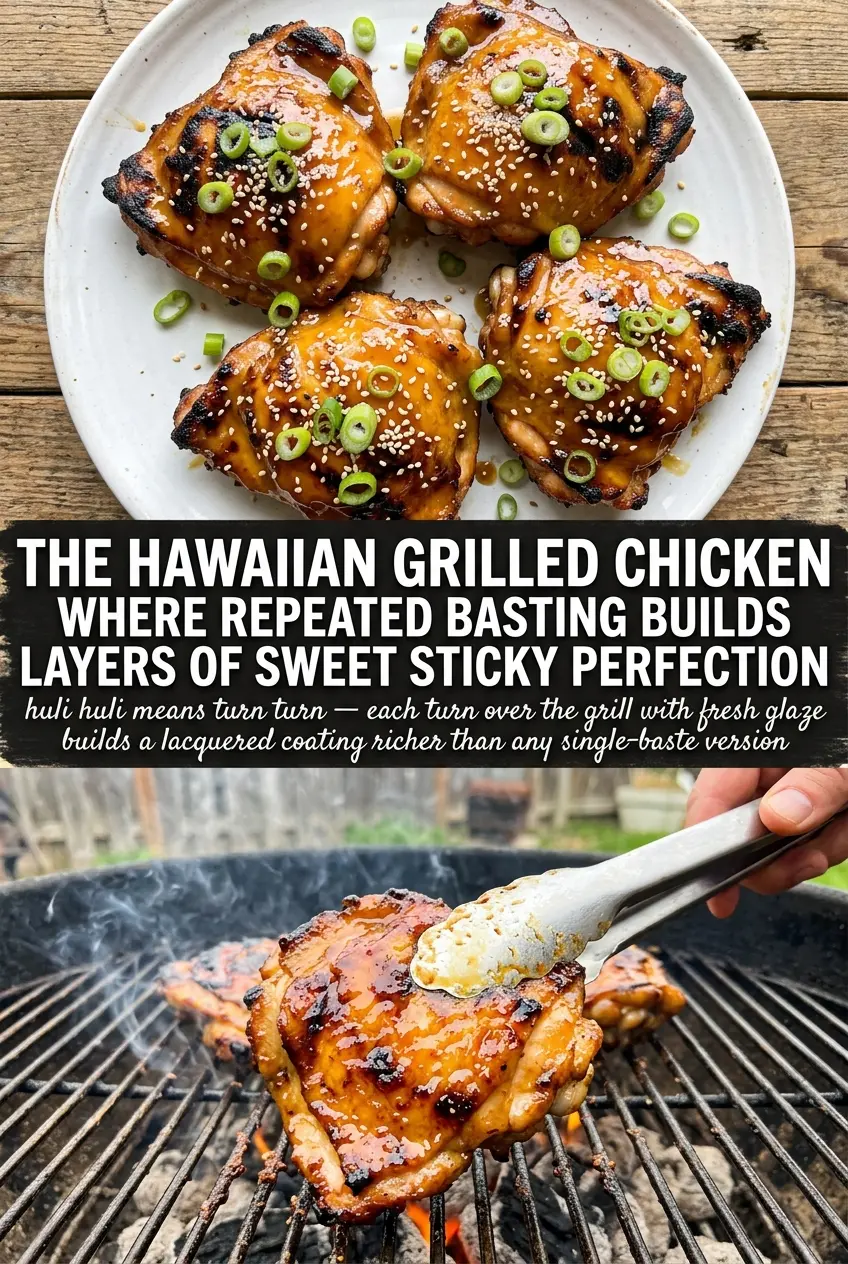
Turning the chicken frequently is part of the method, not a nuisance. You’re building layers of color a little at a time, which is what gives huli huli its sticky lacquered finish. If you leave it sitting in one place too long, the sugar will scorch on the hottest spots before the inside is cooked through.
- Frequent turning — This is what keeps the glaze glossy instead of blackened. Move the chicken around the grill every few minutes so no side sits over direct heat long enough to burn.
- Reserved marinade — The basting sauce needs to be set aside before the raw chicken goes in. Once meat has touched the marinade, it’s no longer safe to brush onto cooked chicken unless you boil it first.
- Medium heat — High heat sounds efficient, but it cooks the sugar faster than the meat. Keep the grill steady and patient so the chicken finishes juicy and the glaze turns sticky instead of bitter.
What the Pineapple Juice and Brown Sugar Are Doing in the Marinade
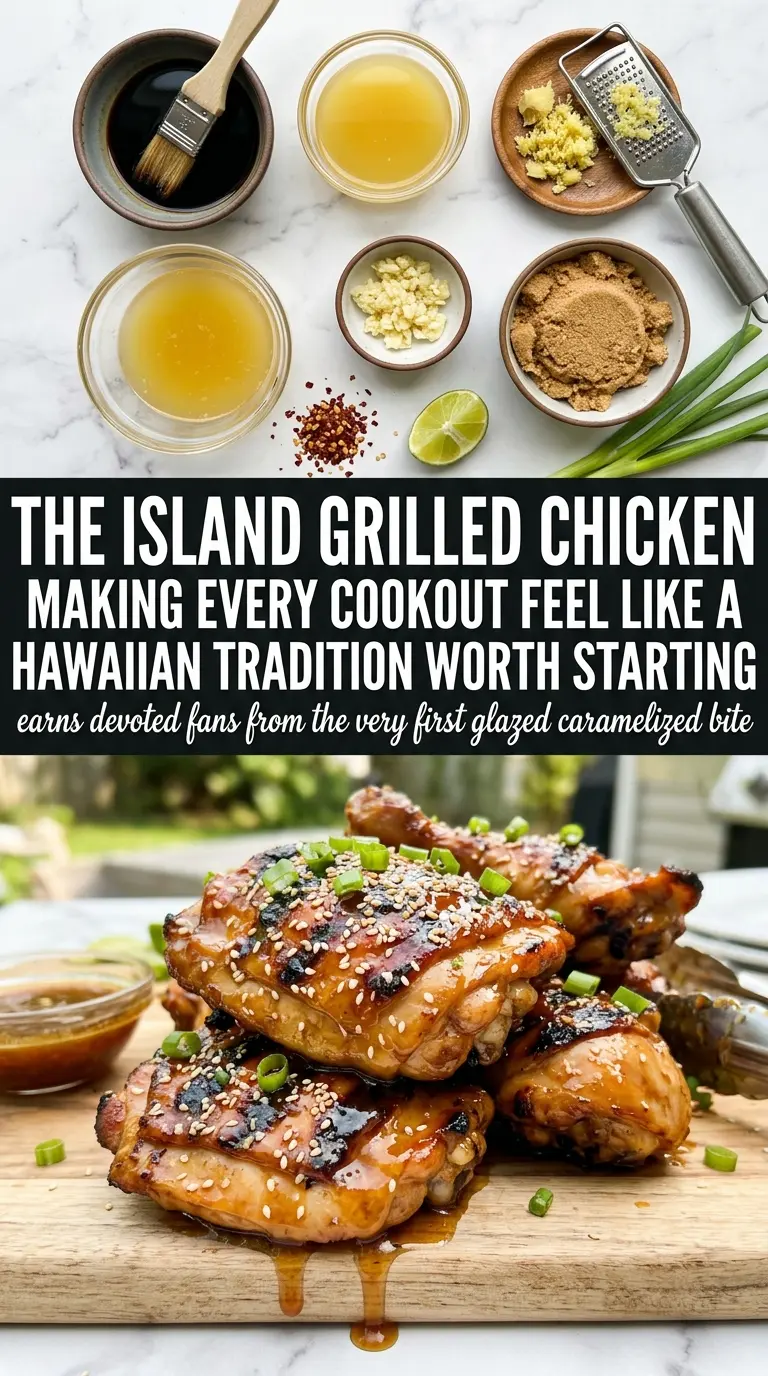
The pineapple juice isn’t just there for tropical branding. It adds brightness and a soft fruity acidity that helps the marinade taste layered instead of one-note. If you don’t have pineapple juice, orange juice can work in a pinch, but the result will lean sweeter and less distinctly Hawaiian.
Brown sugar matters more than plain white sugar because it gives the glaze a deeper molasses note and helps the sauce cling. Ketchup adds body and a little tomato tang, which sounds odd until you taste how well it rounds out the soy sauce. Ginger and garlic keep the sweetness from taking over, and sesame oil gives the marinade a subtle savory finish that reads as grilled, not candy-like.
- Chicken thighs or legs — These cuts stay juicier on the grill than breasts and handle the repeated basting better. If you use breast meat, shorten the cook time and pull it as soon as it reaches 165°F so it doesn’t dry out.
- Pineapple juice — Fresh or canned both work. Just use 100% juice, not a sweetened drink, or the marinade can get syrupy before it ever hits the grill.
- Sherry or chicken broth — Sherry adds a little depth and warmth, while broth keeps the marinade savory if you want to skip alcohol. Either one thins the mixture enough to coat evenly and help it soak into the chicken.
- Ginger and garlic — Fresh is worth it here because the sharpness helps cut through the sugar. Jarred garlic can taste flat once it’s grilled, and that softness shows in the finished glaze.
Building the Layers on the Grill Without Losing the Juiciness
Mixing the Marinade
Whisk the marinade until the brown sugar dissolves as much as possible and the mixture looks glossy, not grainy. That helps it coat the chicken evenly instead of leaving sandy sugar behind in the bowl. If the sugar stays clumped, it tends to burn in patches on the grill.
Marinating the Chicken
Let the chicken sit in the marinade for at least 2 hours and up to 8. Less time gives you surface flavor; more time starts to push the seasoning deeper into the meat, especially with thighs and legs. Don’t go much past 8 hours, or the soy and ginger can begin to dominate and the texture can get a little tight.
Grilling and Basting
Place the chicken over medium heat and turn it often, brushing on the reserved marinade as you go. You should hear a steady sizzle, not a hard crackle. If the glaze is darkening too fast, move the chicken to a cooler spot on the grill and let it finish there; the best Huli Huli Chicken has a deep caramel color, not a charred shell.
Checking for Doneness
Cook until the thickest part reaches 165°F and the juices run clear when pierced. The glaze should look sticky and burnished, clinging to the chicken instead of sliding off. Let the chicken rest a few minutes before serving so the juices settle and the coating stays put when you cut into it.
How to Adapt This for Different Grills, Diets, and Leftovers
Gluten-Free Version
Use tamari or a certified gluten-free soy sauce in place of standard soy sauce. The flavor stays salty and savory, but tamari usually tastes a touch smoother, so the glaze may read a little rounder at the finish.
No-Alcohol Marinade
Use chicken broth instead of sherry. You lose the slight sharpness and depth that sherry brings, but the broth still gives the marinade enough body to carry the ginger, garlic, and pineapple cleanly.
Using Chicken Breasts Instead
Breasts work, but they need gentler heat and a shorter cook. Pound them to an even thickness so the thicker end doesn’t overcook while the thinner end finishes, and pull them the moment they hit 165°F. The glaze will still caramelize, but you’ll want to watch them closely because breasts dry out faster than thighs.
Storage and Reheating
- Refrigerator: Store leftovers in an airtight container for up to 4 days. The glaze will thicken and set more firmly as it chills.
- Freezer: This freezes well for up to 2 months, especially if you freeze the chicken with a little extra sauce. Thaw it overnight in the fridge before reheating.
- Reheating: Warm it covered in a 325°F oven until heated through, or reheat gently in a skillet with a splash of water. Don’t blast it in the microwave on high, or the sugar can turn sticky in a bad way and the chicken can dry out.
Questions I Get Asked About This Recipe
Grilled Huli Huli Chicken
Ingredients
Equipment
Method
- Whisk together soy sauce, brown sugar, ketchup, pineapple juice, sherry, ginger, garlic, and sesame oil until the sugar dissolves and the mixture looks smooth.
- Reserve 1/2 cup of the marinade for basting and set it aside while you marinate the chicken.
- Place chicken in a nonreactive container and coat with the remaining marinade, then cover and marinate for 2-8 hours.
- Preheat the grill to medium heat and arrange the chicken on the grates.
- Grill the chicken for 25-30 minutes, turning (huli) frequently, and baste with the reserved marinade so the surface becomes glossy and sticky.
- Continue grilling until the internal temperature reaches 165°F and the chicken is caramelized with charred edges, then rest briefly before serving.