Tender salmon, charred at the edges and still silky in the center, is one of those meals that feels special without asking much from you. These grilled salmon kebabs bring that balance into a weeknight-friendly format: quick marinade, colorful vegetables, and a fast cook on the grill that keeps the fish juicy instead of dry. The lemon and dill give the salmon a bright, clean finish, and the vegetables pick up just enough smoke to make the whole skewer taste layered and complete.
The part that matters most here is restraint. Salmon only needs a short marinade, because the lemon starts changing the texture if it sits too long. Thirty minutes is enough to season the fish without turning the surface mushy. Cutting the salmon into even cubes helps it cook at the same pace as the zucchini, pepper, and onion, so you get one skewer with everything done at the same moment instead of overcooked fish waiting on underdone vegetables.
Below, I’ll walk through the small details that keep the salmon from sticking and the kebabs from falling apart, plus a few smart swaps if you want to change up the vegetables or adapt the dish for different diets.
The salmon stayed moist and the vegetables had just enough char. I loved that the marinade was bright but not overpowering, and the kebabs held together perfectly on the grill.
Save these lemon-dill grilled salmon kebabs for the nights when you want fast seafood with a little char and no heavy sauce.
The Shortcut That Keeps Salmon From Turning Dry on the Grill
Most grilled fish goes wrong in one of two ways: it sticks, or it dries out before the vegetables are even tender. Salmon is forgiving, but only if you give it a hot grill, even pieces, and a marinade that seasons without going too far. The lemon here does its job fast. It brightens the fish and helps the surface pick up flavor, but it shouldn’t sit long enough to start curing the salmon.
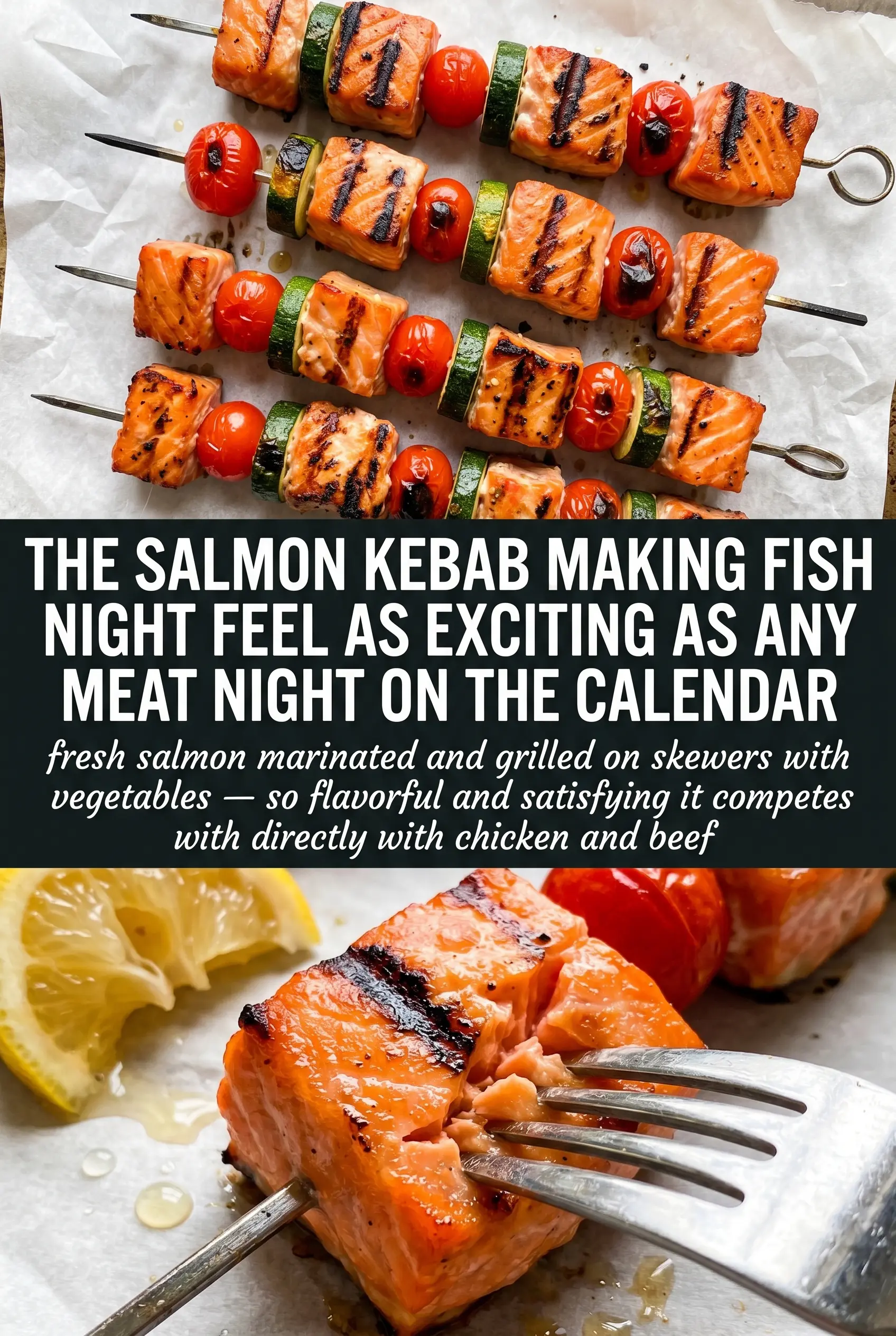
The other mistake is crowding the skewers too tightly. Leave a little space between the salmon and vegetables so the heat can move around the food instead of steaming it. You want visible grill marks, opaque edges, and a center that still looks moist when you pull it off the heat. By the time the fish flakes with a fork, it should already be off the grill.
What the Marinade Is Doing to the Fish and Vegetables
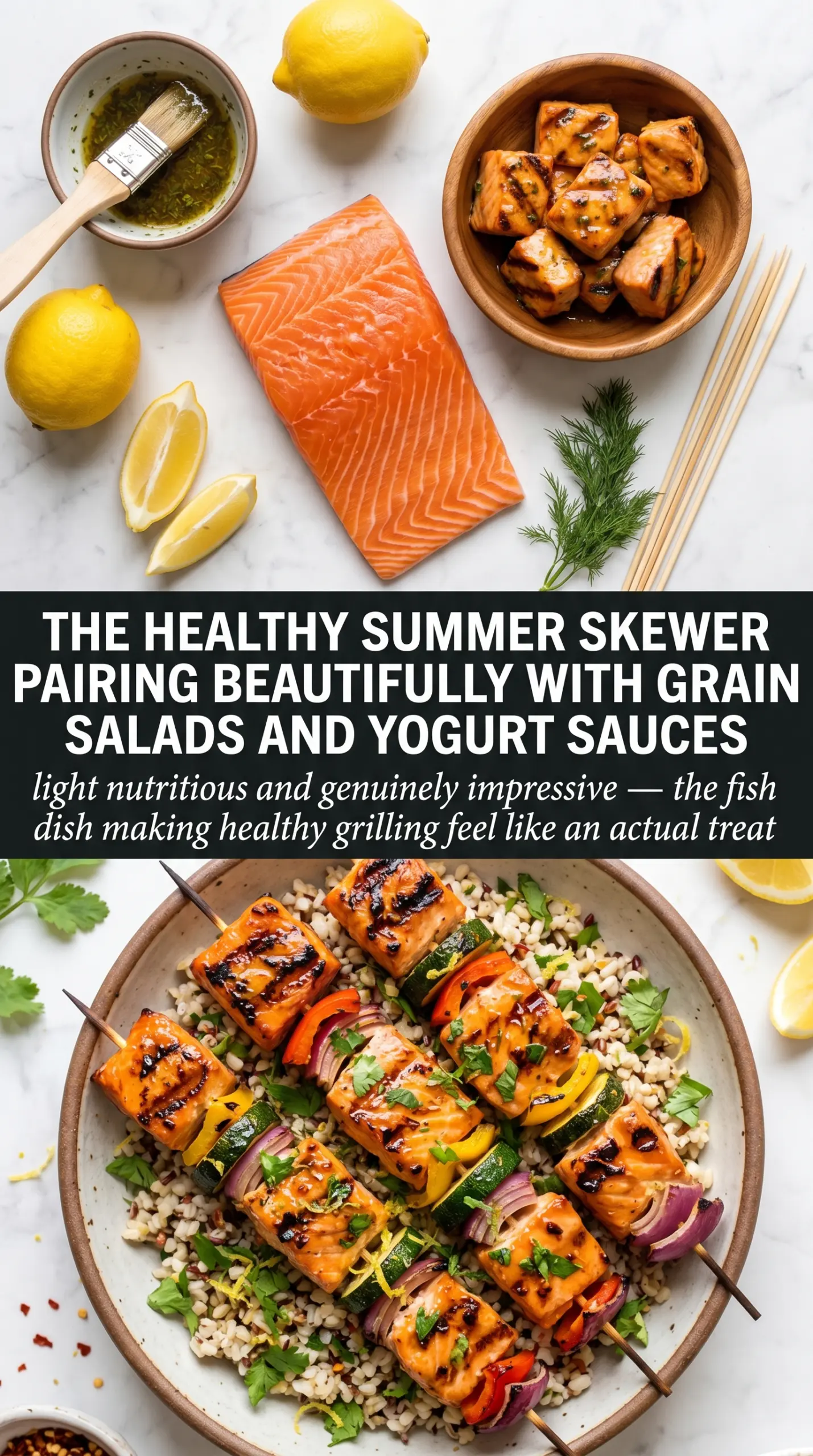
- Salmon fillets — Use fillets with enough structure to cube cleanly. Skinless works best for skewers, because the skin tends to tighten and curl over direct heat. If you only have skin-on salmon, remove the skin before cutting so the cubes cook evenly.
- Olive oil — This carries the marinade across the fish and helps the vegetables char instead of drying out. A good everyday olive oil is fine here; save the expensive finishing oil for serving.
- Lemon juice — This is the sharp edge that makes the salmon taste fresh, but it’s also the ingredient that can change the texture if you overdo the marinating time. Thirty minutes is the limit. Longer than that and the surface starts to turn firm and chalky.
- Fresh dill — Dried dill won’t give the same clean herbal note. Fresh dill folds into the lemon in a way that feels natural with salmon, and it gives the finished kebabs the right Mediterranean lift.
- Zucchini, bell pepper, and red onion — These vegetables hold up well on the grill and cook in roughly the same window as the fish. Cut them into similar-sized chunks so one piece doesn’t collapse while another is still raw in the center.
- Wooden skewers — Soak them long enough that they stay intact over medium-high heat. Dry skewers scorch fast, especially if the grill is running hot or the ends sit over a flame.
Building the Skewers and Grilling Them Without Breaking the Fish
Whisking the marinade
Mix the olive oil, lemon juice, garlic, dill, salt, and pepper until the marinade looks slightly emulsified and the garlic is evenly dispersed. You’re not making a sauce here; you’re coating the salmon with enough flavor to carry it through a very short cook. If the lemon sits in the bowl for a long time before the fish goes in, that’s fine, but once the salmon is added, start the clock.
Marinating with a timer, not instinct
Let the salmon sit for 30 minutes and no longer. The cubes should look lightly glossy when they come out, not pale or tightened at the edges. If they sit too long, the acid starts to cure the fish and the texture goes from tender to firm in a way you can’t fix on the grill.
Threading for even cooking
Alternate salmon and vegetables on the skewers so the heat has a chance to move between different textures. Keep the pieces snug, but not smashed together; packed too tightly, they steam instead of char. If your salmon cubes are especially soft, thread them gently and keep the sharpest edges facing out so they hold their shape better.
Grilling to the right doneness
Set the kebabs over medium-high heat and cook for 3 to 4 minutes per side. The salmon should release with a little encouragement and develop light grill marks before you turn it. If the fish sticks hard, it’s not ready yet; give it another moment and it will usually release cleanly when the surface has seared.
How to Change the Vegetables, Marinade, or Method Without Losing the Point
Make It Dairy-Free Without Changing Anything
This recipe is naturally dairy-free, so there’s nothing to remove. The clean lemon-dill marinade already gives you brightness without cream or butter, which is part of why the salmon tastes light instead of heavy.
Swap the Vegetables for What’s in the Crisper
Broccoli florets, cherry tomatoes, and mushrooms all work well, but they change the timing. Mushrooms and tomatoes cook faster, while broccoli needs a little more time, so cut everything to a size that matches the salmon and keep an eye on the grill. The goal is still the same: tender fish with vegetables that have a bit of char.
Use a Broiler When the Grill Isn’t Available
Set the skewers on a foil-lined sheet pan and broil them close to the heat source, turning once halfway through. You’ll lose the smoke from the grill, but you’ll still get browned edges and juicy salmon. Watch closely, because broilers can take the fish from perfect to overdone in under a minute.
Add a Grain Bowl Base for a Bigger Meal
Serve the kebabs over rice, couscous, or quinoa if you want to stretch them into a fuller dinner. The lemony salmon works especially well with something plain underneath, since the juices from the skewer become part of the bowl instead of ending up on the plate.
Storage and Reheating
- Refrigerator: Store leftovers in an airtight container for up to 2 days. The salmon stays tasty, but the vegetables soften a little.
- Freezer: I don’t recommend freezing cooked kebabs. The salmon and vegetables both lose texture after thawing, and the skewers turn a little watery.
- Reheating: Warm gently in a low oven or a covered skillet over low heat until just heated through. High heat dries the salmon fast, so skip the microwave if you want the fish to stay tender.
Answers to the Questions Worth Asking
Grilled Salmon Kebabs
Ingredients
Equipment
Method
- Whisk olive oil, lemon juice, minced garlic, chopped dill, salt, and black pepper until evenly combined.
- Marinate the salmon for 30 minutes in the refrigerator, keeping it no longer so the lemon acid doesn’t overcook the fish.
- Thread salmon cubes and vegetable chunks alternately onto soaked wooden skewers so each bite has fish and color.
- Preheat the grill to medium-high heat and grill the kebabs for 3-4 minutes per side, turning until the salmon is cooked through and just beginning to char at the edges.
- Serve the grilled salmon kebabs with lemon wedges and a sprinkle of fresh dill.