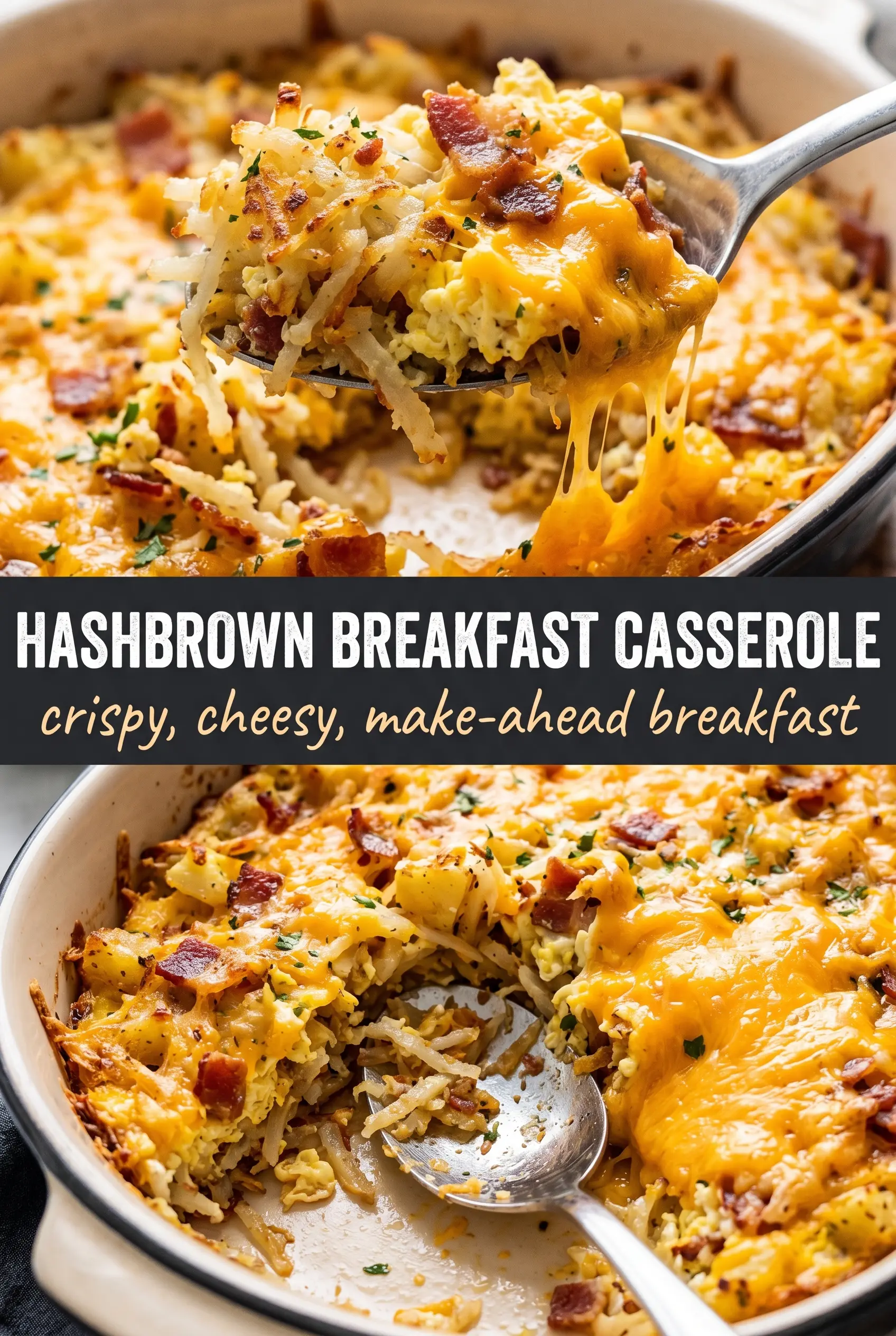
Golden-crusted hashbrown breakfast casserole is the kind of dish that disappears fast because it hits every note people want at brunch: crisp potato edges, a soft savory middle, and a cheddar top that turns bubbly and bronzed in the oven. The best part is that it serves like comfort food but bakes like something you actually planned ahead. It slices cleanly, stays creamy in the center, and holds up on the plate instead of sliding apart.
What makes this version work is the way the potatoes are mixed with the creamy base before the eggs go on. That gives the hash browns a chance to soak up flavor and keeps the casserole from baking up watery underneath. Using thawed hash browns matters here too; frozen shreds or cubes straight from the bag can throw off the texture and leave you with steam instead of that crisp-edged finish.
Below, I’ll walk through the part that keeps the casserole from turning soggy, plus a few swaps that still give you that same cheesy breakfast-bake comfort.
The top came out beautifully browned and the center set without getting rubbery. I thawed the hash browns overnight, and the casserole sliced neatly instead of turning mushy.
Save this hashbrown breakfast casserole for a make-ahead brunch bake with crisp edges, cheesy layers, and an easy slice-and-serve finish.
The Potatoes Need to Be Thawed Before They Bake
The biggest reason hashbrown casseroles turn gummy is excess moisture. Frozen hash browns carry ice, and that water ends up trapped under the egg custard instead of baking off. Thawing the potatoes first gives you a drier, more even base, which is what lets the edges brown and the center stay tender instead of wet.
Press the potato mixture lightly into the dish, but don’t pack it down hard. A tight, compressed layer blocks the custard from moving through the casserole, and you get uneven baking. A gentle press is enough to level it without turning the whole thing dense.
What Each Ingredient Is Actually Doing in This Casserole

- Thawed diced hash browns — These give the casserole its structure and that crisp potato bite around the edges. Diced hash browns hold up a little better than shredded in this style of bake because they keep a more noticeable potato texture after baking.
- Sour cream — This adds body and tang, and it helps the potato layer stay creamy instead of dry. There isn’t a perfect one-to-one substitute for the richness it brings, but full-fat Greek yogurt will work if you want a slightly sharper finish.
- Cream of chicken soup — This is the glue that ties the potato layer together. It adds salt, fat, and thickness in one move, which is why the casserole slices instead of collapsing. If you want to swap it, use cream of mushroom for a meatless version.
- Eggs and milk — This is the custard layer that sets everything in place. Whole milk gives you the softest texture; lower-fat milk works, but the casserole won’t taste as plush.
- Sharp cheddar — Sharp cheddar matters here because it stands up to the potatoes and cream instead of disappearing. Pre-shredded cheese works in a pinch, but block-grated melts smoother and browns more evenly on top.
- Chives — They’re not just garnish. The fresh oniony finish cuts through the richness and makes the whole casserole taste brighter right at the end.
Building the Layers So the Center Sets and the Top Browns
Mix the potato base first
Stir the thawed hash browns with sour cream, soup, seasonings, and one cup of cheddar until every piece looks coated. That first mix is doing the heavy lifting, because it seasons the potatoes before the eggs go in. If you see dry pockets, keep folding until the mixture looks evenly creamy; dry spots bake up bland and crumbly.
Spread it, then press it lightly
Spoon the potato mixture into a greased 9×13 dish and nudge it into the corners. Press just enough to create an even layer. If you smash it down, the custard has a harder time settling through the casserole and you lose that soft middle against the crisp edge.
Pour the egg mixture over the top
Whisk the eggs and milk until the mixture looks uniform and pale, then pour it slowly over the potato layer. Pouring around the dish instead of all in one spot helps the liquid travel through the casserole evenly. If the eggs pool on top, gently tap the pan on the counter a few times so the custard settles into the gaps.
Bake until the center is set
The casserole is done when the top is deeply golden and the center no longer sloshes when you move the pan. A little softness in the middle is fine as long as it doesn’t look wet; it will finish setting as it rests. If the top browns before the center is ready, lay a loose piece of foil over it for the last stretch of baking.
Make It Meatier with Breakfast Sausage
Brown 1/2 to 1 pound of breakfast sausage first, drain it well, and stir it into the potato mixture before baking. It adds a saltier, more savory base and makes the casserole feel heartier, but you’ll want to keep an eye on the seasoning because the sausage brings plenty of salt on its own.
Swap in Cream of Mushroom for a Vegetarian Version
Use cream of mushroom soup instead of cream of chicken and the casserole stays just as creamy, with a slightly earthier flavor. That swap keeps the texture intact, which is what matters most here, and it makes the dish fit a vegetarian brunch table without changing the method.
Use Gluten-Free Soup if Needed
The only ingredient that usually needs a gluten check is the condensed soup. Swap in a gluten-free version and the casserole still bakes up with the same creamy structure. The potatoes and eggs don’t need any other changes.
Storage and Reheating
- Refrigerator: Store leftovers covered for up to 4 days. The top softens a little, but the flavor holds up well.
- Freezer: This freezes better after baking than before. Cut into portions, wrap tightly, and freeze for up to 2 months; the potatoes will be a touch softer after thawing.
- Reheating: Reheat in a 325°F oven until warmed through so the edges can crisp again. The microwave works for a quick lunch, but it softens the casserole fast and takes away the best texture.
Questions I Get Asked About This Recipe
Hashbrown Breakfast Casserole
Ingredients
Equipment
Method
- Preheat oven to 350°F and grease a 9x13 dish for easy release.
- Mix thawed frozen diced hash browns with sour cream, cream of chicken soup, garlic powder, onion powder, salt, black pepper, and 1 cup shredded cheddar until evenly combined.
- Spread the mixture into the prepared dish and press lightly to form an even, crispy potato base.
- Whisk eggs and whole milk together until smooth, then pour over the potato mixture to coat it evenly.
- Top with the remaining cheddar so the surface bakes into a bubbly, golden crust.
- Bake for 45–50 minutes at 350°F until the eggs are set and the top is golden, with bubbling cheddar visible.
- Garnish with fresh chives right after baking for a fresh pop of color.