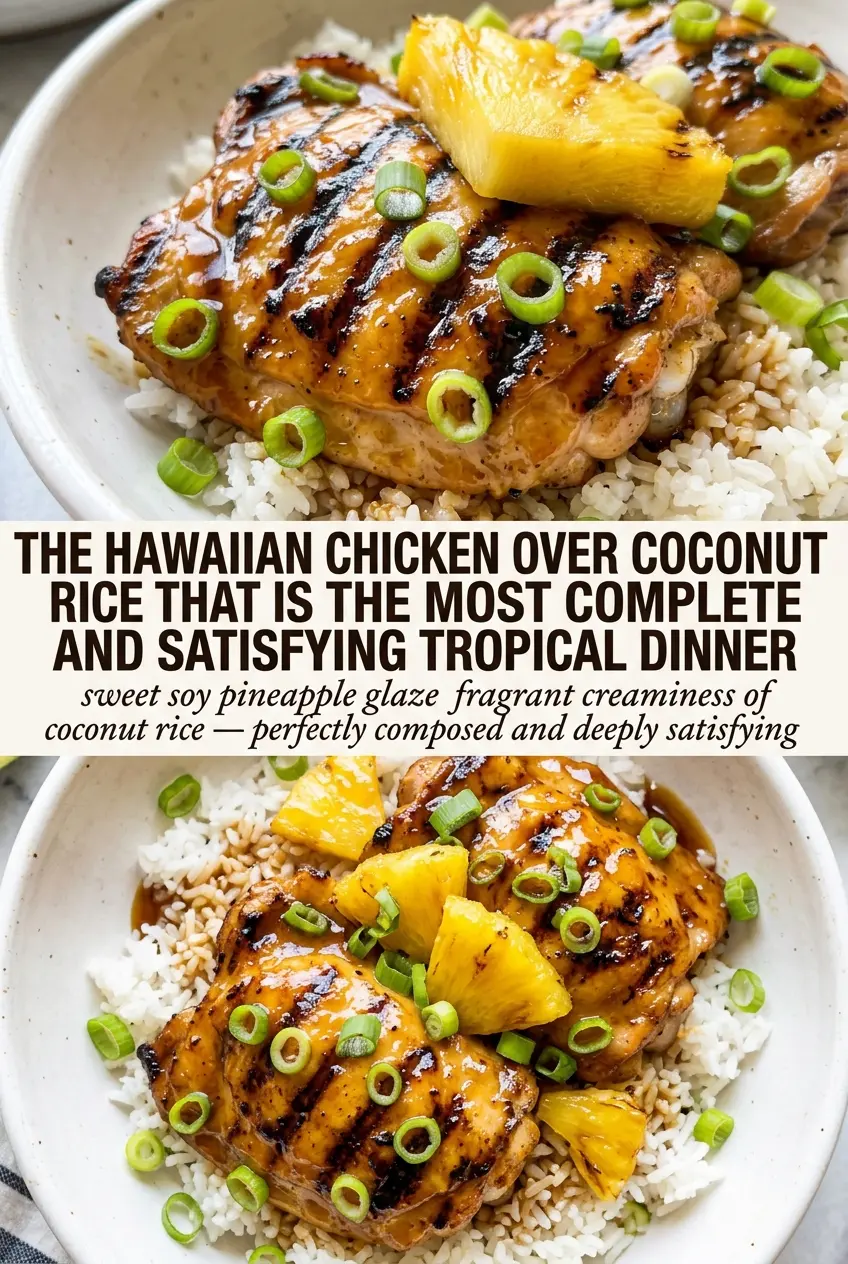
Teriyaki-glazed Hawaiian chicken over coconut rice hits that sweet-savory balance that keeps people coming back for seconds. The chicken turns glossy and caramelized on the grill, while the rice underneath stays creamy and fragrant instead of plain and forgettable. Add grilled pineapple and you get the kind of plate that tastes bright, layered, and a little special without asking for much more than a good marinade and steady heat.
What makes this version work is the way the marinade leans on pineapple juice and ginger to give the teriyaki a little lift before it ever reaches the grill. Brown sugar helps the surface lacquer instead of drying out, but the real trick is not rushing the cook: the sugars need enough time over medium-high heat to brown without burning. The coconut rice does its own quiet work in the background, soaking up richness so the chicken and pineapple have something soft and mellow to sit on.
You’ll find the timing that keeps the chicken juicy, the rice from turning gummy, and a few smart variations if you want to change the heat, the sweetness, or the way you serve it.
The marinade caramelized beautifully on the grill and the coconut rice came out fluffy with just the right amount of creaminess. My husband kept going back for more pineapple slices because they picked up such a good smoky edge.
Save this Hawaiian chicken with coconut rice for the nights when you want a glossy grilled main, creamy rice, and smoky pineapple on one plate.
The Part People Rush: Letting the Marinade Actually Work
The biggest mistake with teriyaki-style chicken is treating the marinade like a quick coating instead of a flavor builder. Pineapple juice brings sweetness and acidity, and ginger sharpens the whole thing, but the chicken still needs time in that mixture so the surface seasons all the way through. One hour gives you a solid result; four hours gives you deeper flavor without crossing into mushy territory.
Chicken thighs earn their keep here because they stay juicy on a hot grill and handle the sugar in the marinade better than lean cuts do. If you swap in chicken breasts, pull them early and keep the thickness even so the outside doesn’t dry out before the center reaches temperature. The marinade also works best when you don’t overdo the salt elsewhere, since teriyaki sauce already carries plenty of it.
What the Chicken, Coconut Milk, and Pineapple Are Each Doing

- Chicken thighs — Thighs stay tender even if the grill runs a little hot, which gives you a bigger margin for error than breasts. Boneless thighs are the easiest choice here because they cook evenly and pick up marinade fast.
- Teriyaki sauce — This is the backbone of the glaze, so use one you actually like the taste of on its own. If yours is very thick or very sweet, the pineapple juice keeps it from feeling sticky-heavy.
- Pineapple juice — It adds brightness and helps the marinade taste tropical instead of one-note. Fresh juice is nice, but bottled is fine as long as it isn’t loaded with extra sugar.
- Brown sugar — This helps the chicken caramelize on the grill and gives the glaze that glossy finish. If you reduce it too much, you lose the charred-sweet edges that make the dish.
- Jasmine rice and coconut milk — Jasmine rice keeps its shape and stays fragrant under the coconut milk, which is what makes the base taste lush instead of heavy. Full-fat coconut milk gives the best texture; light coconut milk works, but the rice will be less rich.
- Grilled pineapple — The pineapple isn’t just garnish. Grilling concentrates the sugars and adds a smoky edge that cuts through the sweet sauce and creamy rice.
Building the Grill Marks Without Burning the Glaze
Mixing and Marinating
Stir the teriyaki sauce, pineapple juice, brown sugar, and ginger until the sugar dissolves as much as it can. Coat the chicken thoroughly, cover it, and refrigerate it for at least an hour. If you leave it much longer than four hours, the pineapple juice can start to soften the meat too much, especially if the chicken pieces are thin.
Cooking the Coconut Rice
Combine the rice, coconut milk, water, and salt in a pot and bring it to a boil before lowering the heat and covering it. Once it simmers, leave the lid alone for 15 minutes so the steam can finish the job. If you lift the lid too often, the rice dries unevenly and turns patchy instead of creamy.
Grilling the Chicken and Pineapple
Cook the chicken over medium-high heat for 6 to 7 minutes per side, depending on thickness, until the outside is bronzed and the juices run clear. If the glaze starts to char before the center is done, move the pieces to a cooler part of the grill and finish them there. Grill the pineapple slices for about 2 minutes per side until they have dark marks and a softened edge.
Bringing It All Together
Spoon the coconut rice onto each plate first, then set the chicken on top so the juices run into the rice. Add the pineapple and finish with green onions for freshness and color. The chicken should look glossy, the rice should hold a soft mound, and the pineapple should bring a little smoky sweetness to each bite.
How to Change the Plate Without Losing What Makes It Good
Make it dairy-free as written
This recipe is naturally dairy-free as long as your teriyaki sauce doesn’t contain hidden milk ingredients. Coconut milk gives the rice its creaminess, so you don’t need to change anything to keep it suitable for a dairy-free table.
Use chicken breasts instead of thighs
Chicken breasts work, but they need more attention because they dry out faster over direct heat. Pound them to an even thickness and start checking early; once they hit temperature, take them off right away so the glaze stays on the meat instead of turning leathery.
Turn it into a weeknight bowl
Slice the cooked chicken and serve it over the rice with extra pineapple and green onions. This keeps the same flavors but makes it easier to portion, and the chopped pieces pick up a little more of the sauce from the plate.
Skip the grill and use a hot skillet
A cast-iron skillet gives you good browning when the grill isn’t an option. The sauce may look darker faster in the pan, so keep the heat at medium-high rather than blasting it, and turn the chicken once a deep brown crust has formed.
Storage and Reheating
- Refrigerator: Store the chicken and rice separately for up to 4 days. The rice firms up a little, but it loosens again when reheated with a splash of water.
- Freezer: The chicken freezes well for up to 2 months. The coconut rice can freeze, but the texture gets a little less silky after thawing, so I prefer making that fresh.
- Reheating: Reheat the chicken gently in a covered skillet or in the oven with a spoonful of water or leftover marinade until warmed through. Microwave the rice covered with a damp paper towel and stir once halfway through so it doesn’t dry out in spots.
Questions I Get Asked About This Recipe
Hawaiian Chicken with Coconut Rice
Ingredients
Equipment
Method
- Mix teriyaki sauce, pineapple juice, brown sugar, and grated fresh ginger in a bowl until the sugar dissolves and the mixture looks glossy.
- Add chicken thighs to the marinade, cover, and refrigerate for 1-4 hours to marinate, turning once halfway through for even coating.
- In a pot, combine jasmine rice, coconut milk, water, and salt, then bring the mixture to a boil over high heat.
- Reduce heat to low, cover, and simmer for 15 minutes until the rice is tender and the liquid is absorbed.
- Keep the pot covered off the heat for 5 minutes, then fluff the rice so it stays creamy and fluffy.
- Preheat the grill to medium-high heat, then grill the marinated chicken for 6-7 minutes per side until cooked through and nicely glazed.
- Grill pineapple slices for 2 minutes per side until you see light grill marks and the fruit turns slightly caramelized.
- Spoon creamy coconut rice onto plates, top with the grilled chicken, and finish with grilled pineapple slices.
- Sprinkle green onions over the top right before serving for a bright, fresh garnish.