Glossy chicken, charred edges, and sweet-savory glaze make these kabobs the kind of dinner people start hovering around the grill for. The honey cooks down into a lacquer that clings to the chicken and vegetables, while the pineapple keeps the skewers bright instead of heavy. Every bite gets a little smoke, a little sweetness, and enough salt from the soy sauce to keep the whole thing balanced.
What makes this version work is the marinade ratio. Honey brings shine and caramelization, but it needs soy sauce, rice vinegar, and ginger to keep it from tasting flat or sticky in the wrong way. The reserved marinade is used only for basting, which means you get extra glaze on the grill without brushing raw chicken juices back onto finished food.
Below you’ll find the trick for keeping the kabobs juicy, not dried out, plus a few smart swaps if you want to use different vegetables or make them work on a busy weeknight.
The marinade made the chicken taste like it had been on the grill all day, and the pineapple stayed juicy instead of turning mushy. I basted at the end and got that shiny sticky coating everyone kept reaching for.
Save these honey garlic Asian chicken kabobs for the nights when you want glossy grilled skewers with barely any cleanup.
The Marinade Needs to Be Glaze, Not Just Flavor
With kabobs, the mistake is treating the marinade like a background seasoning. If it isn’t balanced for caramelization, the chicken can taste salty but still feel one-note after grilling. Honey gives you that sticky finish, but the soy sauce and vinegar keep it from turning cloying, and sesame oil adds a nutty depth that reads like takeout in the best way.
The other thing that matters is heat control. Chicken breast cooks fast on skewers, so the goal is charred edges and a juicy center, not a long grill session. If you push the heat too high, the sugars in the marinade burn before the chicken is cooked through, and the vegetables turn limp while you chase the center with the grill lid open.
What the Chicken, Pineapple, and Sesame Oil Are Doing Here
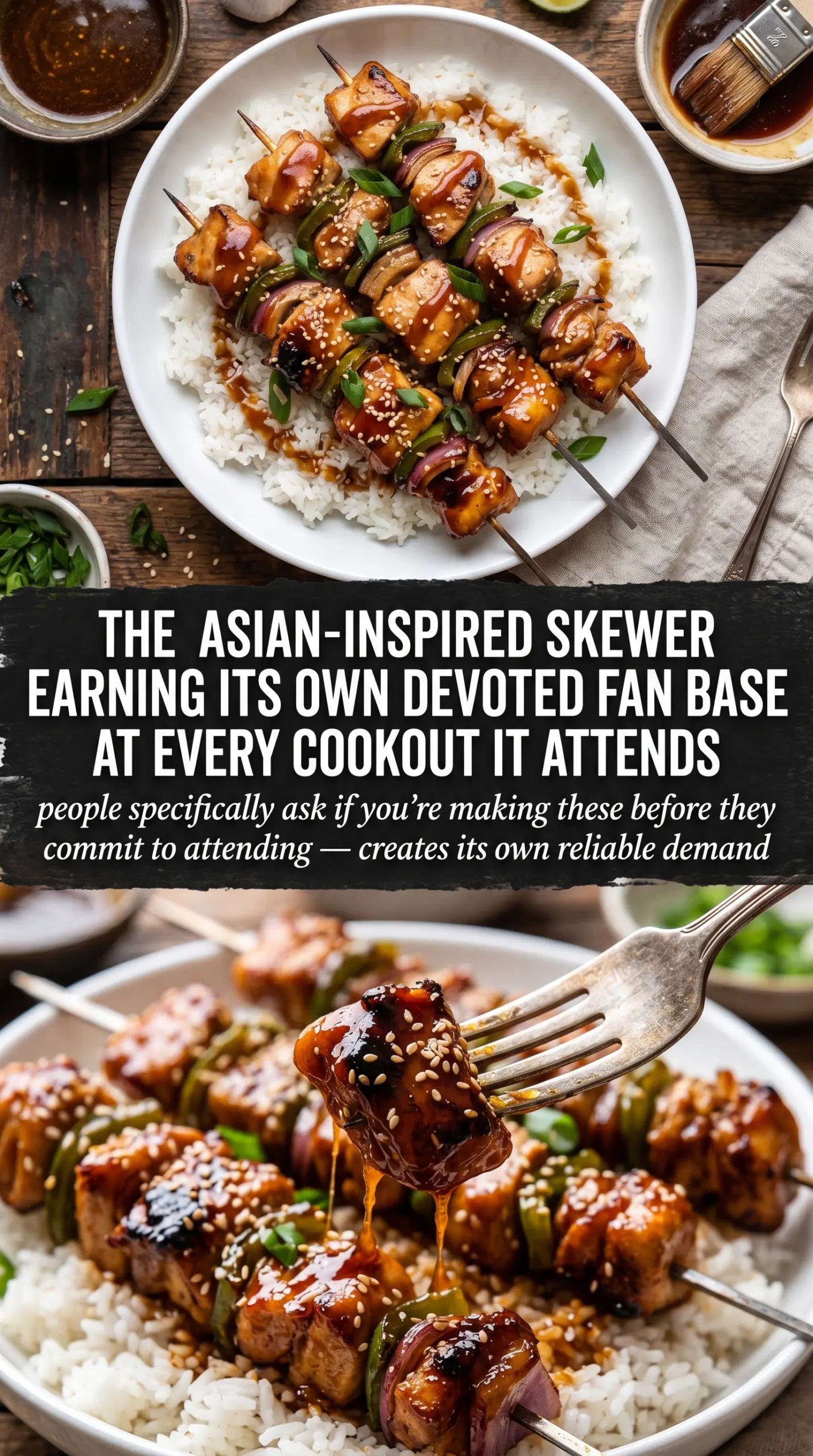
- Chicken breasts — Cubing the chicken into even pieces is what keeps the kabobs cooking at the same pace. Thighs work too and stay a little juicier, but breasts give you a cleaner, leaner bite and take on the glaze well when you don’t overcook them.
- Honey — This is the ingredient that turns the marinade into a lacquer on the grill. Brown sugar can stand in if needed, but it won’t give you the same shine or cling, so the finished kabobs will look less glazed and taste a little less polished.
- Soy sauce — This does the heavy lifting for salt and depth. Low-sodium soy works fine if that’s what you keep on hand, and it gives you a little more control over the final balance without losing the savory backbone.
- Rice vinegar — A small amount keeps the glaze from feeling heavy. Lime juice can work in a pinch, but it changes the flavor toward brighter citrus instead of the mellow tang that helps this marinade taste round.
- Sesame oil and ginger — These are small amounts, but they make the whole dish smell and taste intentional. Don’t skip the ginger if you can help it; even a teaspoon sharpens the sweetness and keeps the marinade from tasting like plain honey soy.
- Pineapple, peppers, and onions — These aren’t just filler between the chicken pieces. Pineapple adds acidity and helps the skewers stay juicy, while peppers and onions hold their shape over high heat and give you sweet, charred edges.
How to Keep the Kabobs Glossy Without Burning the Glaze
Building the Marinade
Whisk the honey, soy sauce, garlic, rice vinegar, sesame oil, and ginger until the honey loosens and the mixture looks smooth and glossy. If the honey is stubborn, warm it for a few seconds first, then whisk again. Reserve part of the marinade before it touches the raw chicken; once the chicken goes in, that leftover liquid is only useful as a flavor boost while grilling, not as a sauce.
Marinating the Chicken
Let the chicken sit in the marinade for at least an hour so the surface picks up salt and sweetness. Four hours is the upper range I like with breast meat because the acid is mild but still working, and leaving it much longer can make the texture a little soft. If you’re short on time, even 30 minutes helps, but the chicken won’t have the same depth of flavor.
Threading for Even Cooking
Build the skewers with pieces that are close in size, and keep the chicken snug but not packed tight. A crowded skewer steams instead of browns. If the vegetables are much smaller than the chicken, they burn before the chicken is done, so cut the peppers and onions into similar chunks and keep the pineapple pieces large enough to hold on the skewer.
Grilling to the Finish
Cook over medium-high heat and turn the kabobs every few minutes so the sugar in the glaze can caramelize without scorching. Brush on the reserved marinade during the last few minutes, not from the start, or the sugars will burn before the chicken is cooked through. Pull the skewers when the chicken is just cooked and the edges look deeply browned; resting them for a couple of minutes helps the juices settle and keeps the glaze glossy.
How to Adjust These Kabobs for What You Have on Hand
For a gluten-free version
Use gluten-free tamari in place of standard soy sauce. The kabobs still taste savory and balanced, but tamari usually brings a slightly deeper, rounder finish, so the glaze may taste a touch richer.
For a lower-sugar grill night
Cut the honey back a little and add a spoonful of pineapple juice for sweetness. You lose some of the thick sticky sheen, but the kabobs still caramelize nicely and taste less dessert-like.
For chicken thighs instead of breasts
Thighs stay juicier and forgive a little extra grill time, which makes them a great choice if you’re worried about drying out the meat. They won’t slice quite as cleanly, but the flavor is a touch richer and more forgiving on the grill.
Storage and Reheating
- Refrigerator: Store leftovers in an airtight container for up to 3 days. The glaze will thicken and the vegetables soften a little, but the flavor stays good.
- Freezer: Freeze the cooked chicken and vegetables separately from any extra garnish for up to 2 months. The texture of the peppers and pineapple softens after thawing, so the best freezer use is for wraps, rice bowls, or quick lunches.
- Reheating: Reheat gently in a skillet over medium-low heat or in a 300°F oven until warmed through. High heat will dry out the chicken and scorch the glaze before the center is hot.
Questions I Get Asked About This Recipe

Honey Garlic Asian Chicken Kabobs
Ingredients
Equipment
Method
- Whisk honey, soy sauce, garlic, rice vinegar, sesame oil, and ginger until smooth and glossy.
- Reserve 1/4 cup marinade for basting, then set it aside.
- Marinate the chicken for 1-4 hours, covered, until the pieces look evenly coated.
- Soak the wooden skewers before grilling so they don’t char.
- Thread chicken, bell peppers and onions, and pineapple chunks onto the soaked skewers with pieces packed tightly.
- Grill the kabobs over medium-high heat for 5-6 minutes per side, basting with the reserved marinade during grilling until you see a caramelized, glossy glaze.
- Garnish with sesame seeds and green onions so the kabobs have visible color and shine.