Sticky, glossy honey garlic chicken skewers hit that sweet spot between fast weeknight cooking and the kind of grill food people hover over before the platter even lands on the table. The chicken cooks up juicy, the edges pick up a little char, and the glaze turns lacquered and clingy instead of sliding off into the fire.
The trick is keeping the marinade balanced enough to season the chicken without turning it mushy or too sugary on the grill. Honey brings the shine, soy sauce brings salt and depth, and lemon juice keeps the whole thing from tasting flat. Reserving part of the marinade for basting gives you that layered glaze without risking raw marinade brushed onto finished chicken.
Below, I’ll walk through the marinating window that gives the best flavor, the grill cues that keep the chicken tender, and a few smart swaps if you need to work around what’s in the pantry.
The chicken stayed juicy and the glaze caramelized perfectly on the grill. I marinated it for about 3 hours and the garlic came through without burning.
Honey Garlic Chicken Skewers with that sticky grilled glaze deserve a spot in your Pinterest dinner rotation.
The Marinade That Glazes Instead of Burning
The biggest mistake with honey-based grilled chicken is putting too much sweetness on the grill too early. Honey burns fast, and if the marinade is thick or the heat is too aggressive, you get blackened spots before the chicken has time to cook through. This version works because the honey is stretched with soy sauce, oil, lemon juice, and garlic, so it seasons the meat and still behaves on the grill.
Reserving part of the marinade is the other smart move here. You brush on clean sauce while the chicken cooks, which builds layers of glaze instead of scorching the same coating again and again. If the skewers are over the hottest part of the grill the whole time, move them to a slightly cooler spot after the first side develops color. That’s how you get caramelization without bitter edges.
- Chicken breasts — Cut them into even chunks so they finish at the same time. Larger pieces stay juicier on the grill than tiny ones, which dry out fast.
- Honey — This is what gives you the sticky finish, and there isn’t a substitute that behaves the same way. Maple syrup can work in a pinch, but it tastes darker and won’t glaze quite as tightly.
- Soy sauce — It brings salt and umami, and it also keeps the marinade from tasting one-note sweet. Low-sodium soy sauce works fine if that’s what you keep on hand.
- Lemon juice — Just enough acidity brightens the glaze and helps the garlic taste fresh instead of heavy. Bottled lemon juice is acceptable here if that’s what you have, since it’s not the dominant flavor.
- Wooden skewers — Soak them long enough to prevent scorching, then thread the chicken with a little space between pieces. Packed-together pieces steam instead of browning.
What Each Ingredient Is Actually Doing in Honey Garlic Chicken Skewers
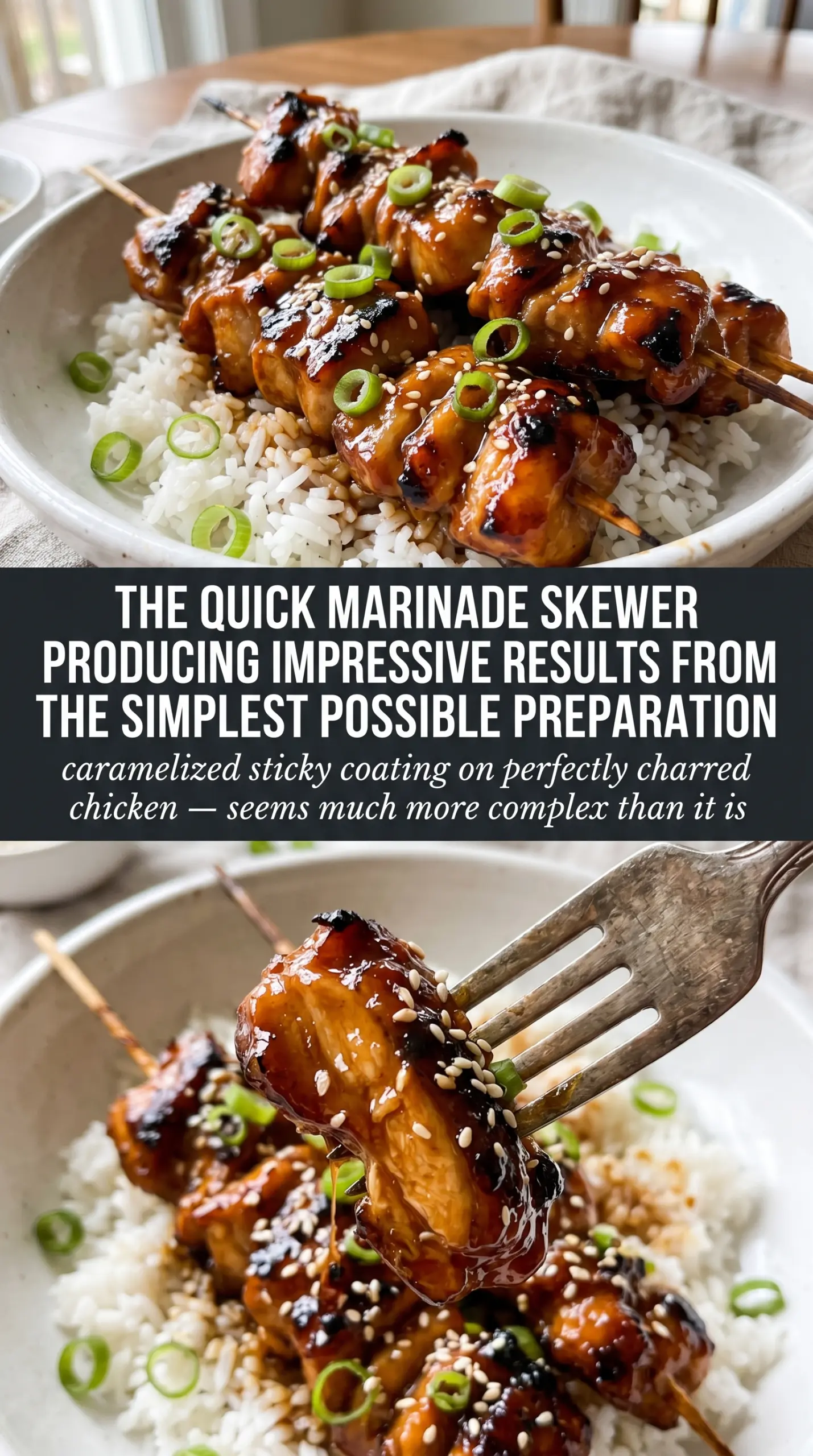
- Protein (quality, proper thickness) — Good quality protein tastes better. Even thickness ensures even cooking.
- Seasoning (bold, distributed throughout) — Don’t be shy with salt and pepper. Quality seasoning elevates everything.
- Oil or fat (protective and flavorful) — The fat helps develop crust and carries flavors. Use generously.
- Heat management (appropriate temperature for the protein) — Too high and the outside burns before the inside cooks. Too low and it steams.
- Technique (sear, then finish based on thickness) — Proper technique creates flavor. Sear for crust, then cook through gently.
- Aromatics and seasonings (garlic, herbs, spices) — These add complexity and depth. Distribute them throughout the cooking process.
- Resting time (let it rest before serving) — Resting allows juices to reabsorb. This keeps the protein moist and tender.
- Optional: finishing sauce or glaze — A light sauce adds richness without overwhelming. Apply at the very end.
Getting the Skewers Off the Grill With Juicy Centers and Caramelized Edges
Building the Marinade
Whisk the honey, soy sauce, olive oil, garlic, lemon juice, and black pepper until the mixture looks smooth and glossy. If the honey is stiff, warm it for a few seconds first so it blends instead of clumping. Reserve one-quarter cup before the chicken goes in; that portion stays clean for basting later. The marinade should smell sharp, sweet, and garlicky, not flat or greasy.
Marinating the Chicken
Toss the chicken chunks in the remaining marinade and coat every side. One hour is enough to season the outside well, while up to four hours gives you a deeper honey-garlic flavor without pushing the texture in a mushy direction. Much longer than that and the lemon starts to work against the chicken instead of helping it. Keep it chilled while it marinates.
Threading and Grilling
Slide the chicken onto soaked skewers with small gaps between pieces so heat can move around each chunk. Grill over medium-high heat for 5 to 6 minutes per side, turning once the first side releases with some color and the edges look opaque halfway up the pieces. Baste with the reserved marinade during the last part of cooking, not at the very start, or the sugars can darken before the chicken is done. The chicken is ready when it’s cooked through and the glaze is sticky with browned spots.
Finishing and Serving
Let the skewers rest for a couple of minutes off the grill, then scatter parsley over the top. That short rest keeps the juices where they belong instead of running onto the platter. Serve them hot, while the glaze is still tacky and the edges are crisped from the grill.
How to Adapt These Honey Garlic Chicken Skewers Without Losing the Glaze
Use chicken thighs for a juicier result
Boneless skinless thighs work well if you want a richer bite and a little more forgiveness on the grill. They can take a touch more browning before drying out, though they also bring a slightly heavier texture than breasts.
Make it gluten-free with tamari
Swap the soy sauce for tamari in a one-to-one amount. You’ll keep the same salty backbone and glossy finish without changing the way the marinade clings to the chicken.
Bake them when grilling isn’t an option
Arrange the skewers on a lined sheet pan and bake them in a hot oven until the chicken is cooked through, then broil for a minute or two to deepen the color. You won’t get the same smoky edge from the grill, but the glaze still turns sticky and caramelized.
Turn the marinade into a heat-forward version
Add a pinch of red pepper flakes or a little grated fresh ginger to the marinade if you want more bite. Ginger plays nicely with the honey and garlic, while chili gives the glaze a sharper finish without changing the core method.
Storage and Reheating
- Refrigerator: Store leftovers in an airtight container for up to 3 days. The glaze will thicken and the chicken may pick up a firmer texture once chilled.
- Freezer: The cooked skewers freeze, but the texture softens a bit after thawing. Freeze the chicken off the skewers if you want easier portioning later.
- Reheating: Warm gently in a 325°F oven covered loosely with foil, or reheat in a skillet with a splash of water to keep the glaze from tightening too much. High heat is what dries out the chicken and makes the honey taste scorched.
Questions I Get Asked About This Recipe
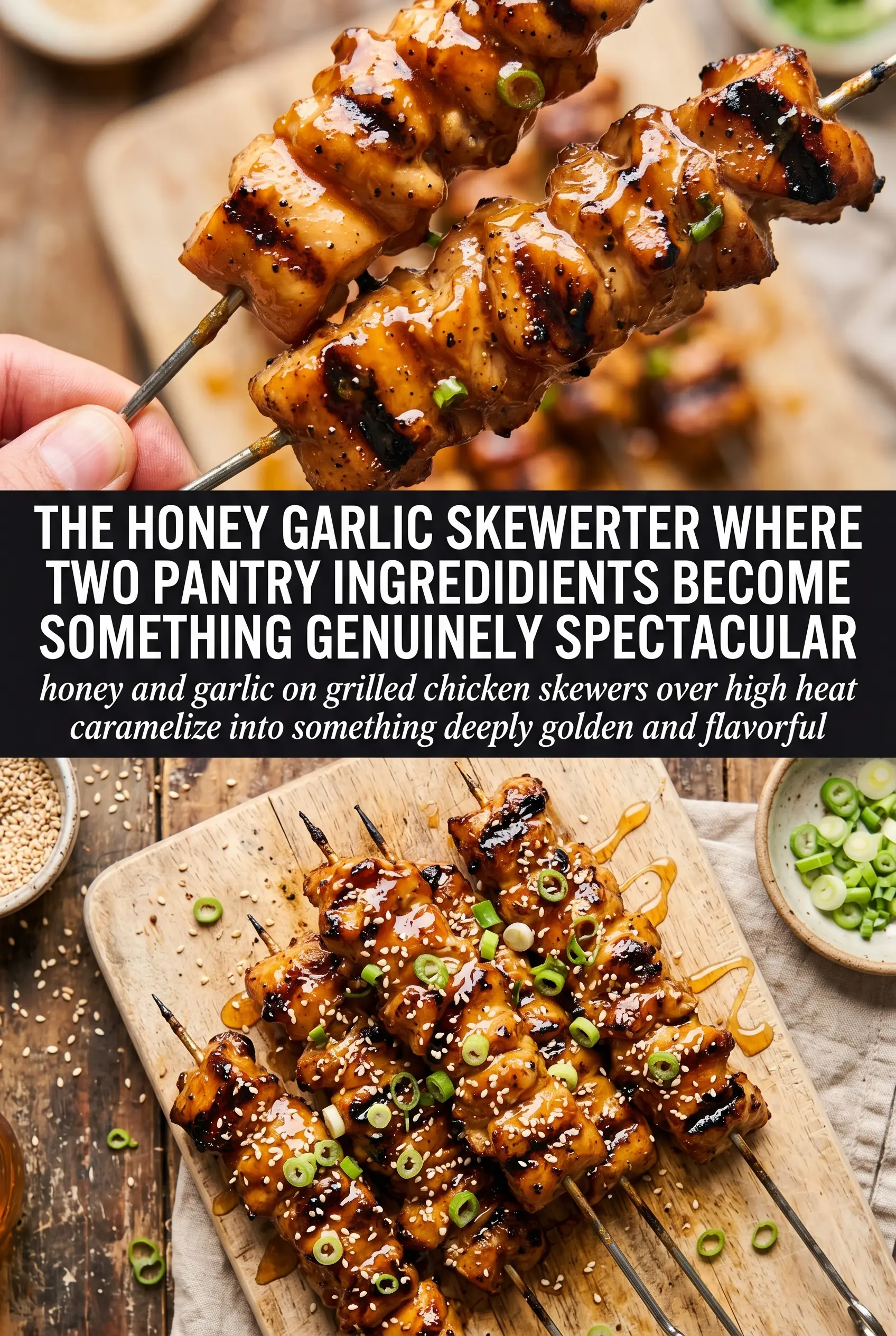
Honey Garlic Chicken Skewers
Ingredients
Equipment
Method
- Whisk together honey, soy sauce, olive oil, garlic, lemon juice, and black pepper until uniform. The mixture should look glossy and well combined.
- Reserve 1/4 cup marinade for basting and set it aside. Keep it separate so it’s ready to brush during grilling.
- Marinate the chicken in the remaining marinade for 1-4 hours. Cover and refrigerate so the chicken stays cold while it absorbs flavor.
- Thread chicken onto soaked wooden skewers. Arrange the chunks so they sit close together for even grilling and visible glaze.
- Grill the skewers over medium-high heat for 5-6 minutes per side, basting with the reserved marinade as they cook. Watch for caramelized, golden edges and a sticky honey glaze.
- Garnish with fresh parsley and serve hot. Letting the heat set the glaze briefly helps it cling to the chicken.