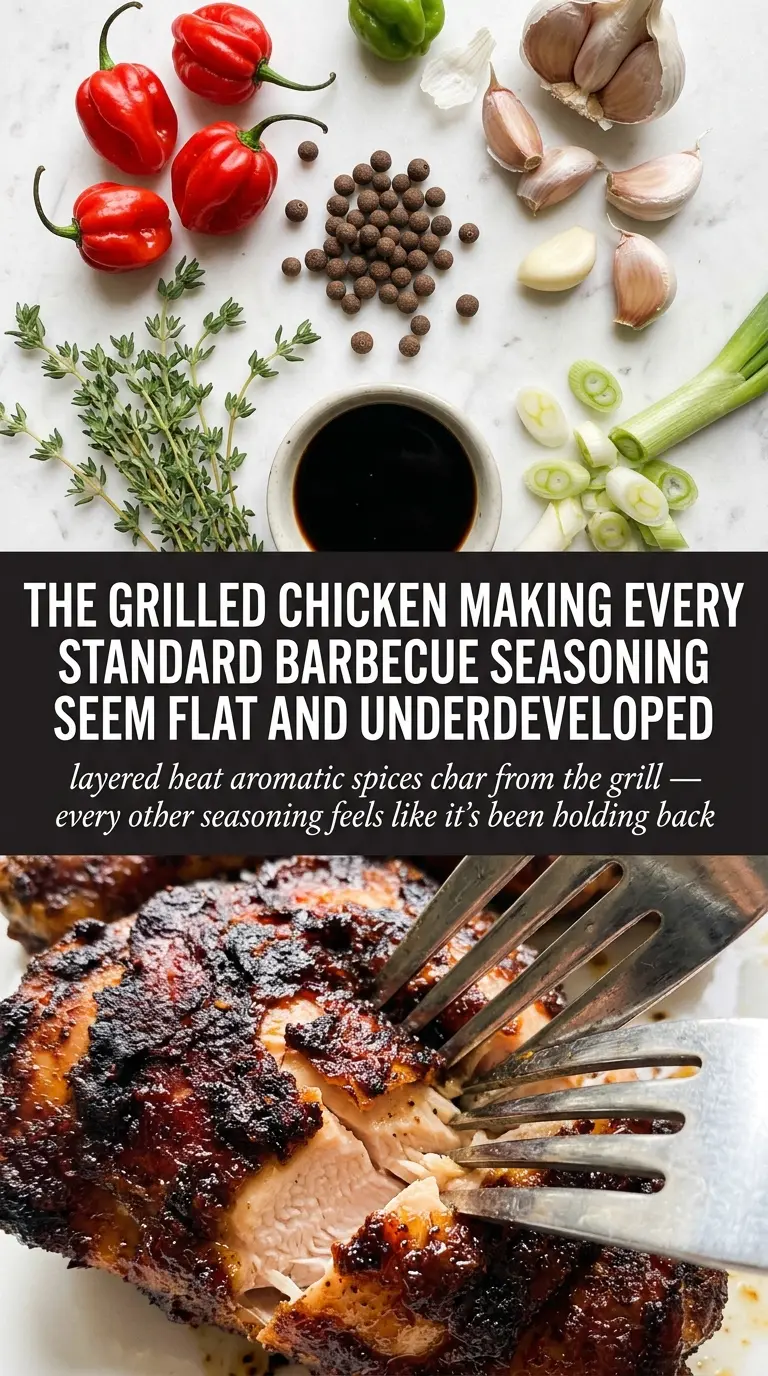
Charred, spicy Jamaican jerk chicken earns its place in the regular dinner rotation because the flavor goes deep before it ever hits the grill. The outside turns sticky and bronzed, the edges pick up a little smoke, and the meat stays juicy underneath instead of drying out under all that heat. It’s the kind of chicken that tastes like it spent all day working for that crust, even though the hands-on part is short.
The marinade does the heavy lifting. Green onion, thyme, allspice, cinnamon, nutmeg, lime, and peppers build that classic jerk backbone, while a little brown sugar helps the surface caramelize instead of just scorching. Scoring the chicken matters here because it gives the marinade a way in, not just over the top. That’s what makes the flavor taste seasoned all the way through.
Below, you’ll find the parts that matter most: how to keep the chicken from burning before it cooks through, why the marinade needs time, and the small swaps that still keep the jerk character intact.
The marinade blended into a smooth paste and the chicken came off the grill with that perfect charred edge without drying out. I left it overnight and the flavor went all the way through.
Save this Jamaican jerk chicken for the nights when you want smoky char, bold spice, and a marinade that does the hard work for you.
The Marinade Has to Taste Aggressive Before It Meets the Heat
Jerk chicken fails when people underseason the marinade and expect the grill to finish the job. It won’t. The spice paste should taste bold, salty, sharp, and a little sweet before it touches the chicken because grilling dulls the edges of flavor. If the marinade tastes polite in the bowl, the finished chicken will taste flat on the plate.
Scoring the chicken is the other piece that gets skipped too often. Those shallow cuts let the marinade reach beyond the skin and into the meat, which is what keeps the flavor from sitting on the surface only. The long rest matters because the lime, allspice, thyme, and chiles need time to work into the chicken and settle down into something rounded instead of harsh.
- Scotch bonnet peppers — These bring the real jerk heat and a fruity sharpness that habaneros can mimic if that’s what you can find. Seed them if you want the chicken hot but not punishing.
- Allspice — Don’t swap this out if you can help it. It’s one of the flavors that makes jerk taste like jerk, and the warm clove-cinnamon note is central to the dish.
- Fresh thyme — Dried thyme works in a pinch, but fresh gives the marinade a cleaner, greener edge. If you use dried, cut the amount in half because it reads louder once blended.
- Brown sugar — This isn’t there to make the chicken sweet. It helps the surface caramelize and balance the heat, especially over a grill.
What Each Ingredient Is Actually Doing in Jamaican Jerk Chicken
- Protein (quality, proper thickness) — Good quality protein tastes better. Even thickness ensures even cooking.
- Seasoning (bold, distributed throughout) — Don’t be shy with salt and pepper. Quality seasoning elevates everything.
- Oil or fat (protective and flavorful) — The fat helps develop crust and carries flavors. Use generously.
- Heat management (appropriate temperature for the protein) — Too high and the outside burns before the inside cooks. Too low and it steams.
- Technique (sear, then finish based on thickness) — Proper technique creates flavor. Sear for crust, then cook through gently.
- Aromatics and seasonings (garlic, herbs, spices) — These add complexity and depth. Distribute them throughout the cooking process.
- Resting time (let it rest before serving) — Resting allows juices to reabsorb. This keeps the protein moist and tender.
- Optional: finishing sauce or glaze — A light sauce adds richness without overwhelming. Apply at the very end.
Getting the Char Without Burning Off the Spice
Blend the Marinade Until It’s Smooth Enough to Coat
Blend the onions, peppers, garlic, thyme, sugar, soy sauce, lime juice, and spices until the mixture turns into a thick, spoonable paste. You want it smooth enough to cling to the chicken, not watery and thin. If it’s too loose, it slides off in the refrigerator and leaves the meat unevenly seasoned. A brief scrape down of the blender helps catch the fibers from the green onions and thyme so they don’t end up in clumps.
Work the Marinade Into the Scored Chicken
Cut a few shallow slashes into the chicken pieces, then rub the marinade into every curve and cut. Get under the skin where you can, because that’s where a lot of the payoff lives. The chicken should look heavily coated and almost stained by the marinade. If it looks patchy, keep massaging; the goal is a thick, even layer, not a quick toss.
Grill Over Medium Heat and Turn Often
Set the grill to medium heat and start the chicken skin-side down if there is skin. Jerk chicken needs time to cook through, and the sugar in the marinade will char fast if the flame is too hot. Turn the pieces frequently so the outside darkens in layers instead of blackening in one spot. If the edges are browning too quickly, move the chicken to a cooler part of the grill and let the heat finish the middle.
Cook Until the Juices Run Clear and the Meat Feels Set
Go by texture as much as time. The chicken is done when it feels firm at the thickest part, the juices run clear, and the deepest pieces reach safe temperature. If you pull it too early, the center stays pink and the marinade tastes raw and sharp. Let it rest a few minutes before serving so the juices settle back into the meat instead of running onto the cutting board.
How to Adjust the Heat, the Sweetness, and the Smoke
Milder Jerk Chicken
Use one pepper instead of two, and seed it well. You’ll still get the fruity chile flavor and the signature jerk bite, but the heat lands in the background instead of lingering hard at the front.
Oven-Finished Jerk Chicken
Brown the chicken on the grill for color, then finish it in a 400°F oven until cooked through. This helps if your grill runs hot in spots or you’re using large bone-in pieces that need more even heat without burning the spice paste.
Dairy-Free and Naturally Gluten-Free
This recipe is already dairy-free and can be gluten-free if you use a gluten-free soy sauce. That swap keeps the marinade’s salt and depth without changing the way it clings to the chicken.
Air Fryer Jerk Chicken
An air fryer gives you crisp edges, but it won’t build the same smoky char you get from the grill. It’s the right move when you want speed and a good crust, just not the same island-style finish.
Storage and Reheating
- Refrigerator: Keep leftovers in an airtight container for up to 4 days. The spice stays strong, and the chicken often tastes even better the next day.
- Freezer: Freeze cooked chicken for up to 2 months. Wrap it well so the marinade doesn’t pick up freezer burn, which dulls the charred flavor.
- Reheating: Reheat covered in a 325°F oven until warmed through, or use a skillet with a splash of water to keep it from drying out. The common mistake is blasting it in the microwave until the edges turn rubbery and the spices taste harsh.
Questions I Get Asked About This Recipe

Jamaican Jerk Chicken
Ingredients
Equipment
Method
- Blend green onions, scotch bonnet peppers (or habaneros), garlic, fresh thyme, brown sugar, soy sauce, and lime juice until smooth, scraping down the blender as needed.
- Add allspice, black pepper, cinnamon, nutmeg, and salt to taste, then blend again until fully combined and glossy.
- Score chicken pieces deeply on both sides, then rub the marinade all over, pressing it into cuts for full coverage.
- Cover and marinate in the refrigerator for 4-24 hours, until the chicken looks evenly coated and deeply fragrant.
- Preheat the grill to medium heat, letting grates heat until you see a light sizzle when a drip of marinade hits.
- Grill chicken, turning frequently, for 30-40 minutes, until charred on the outside and cooked through.
- Serve the charred jerk chicken with rice and peas and add lime wedges on the side for bright finish.