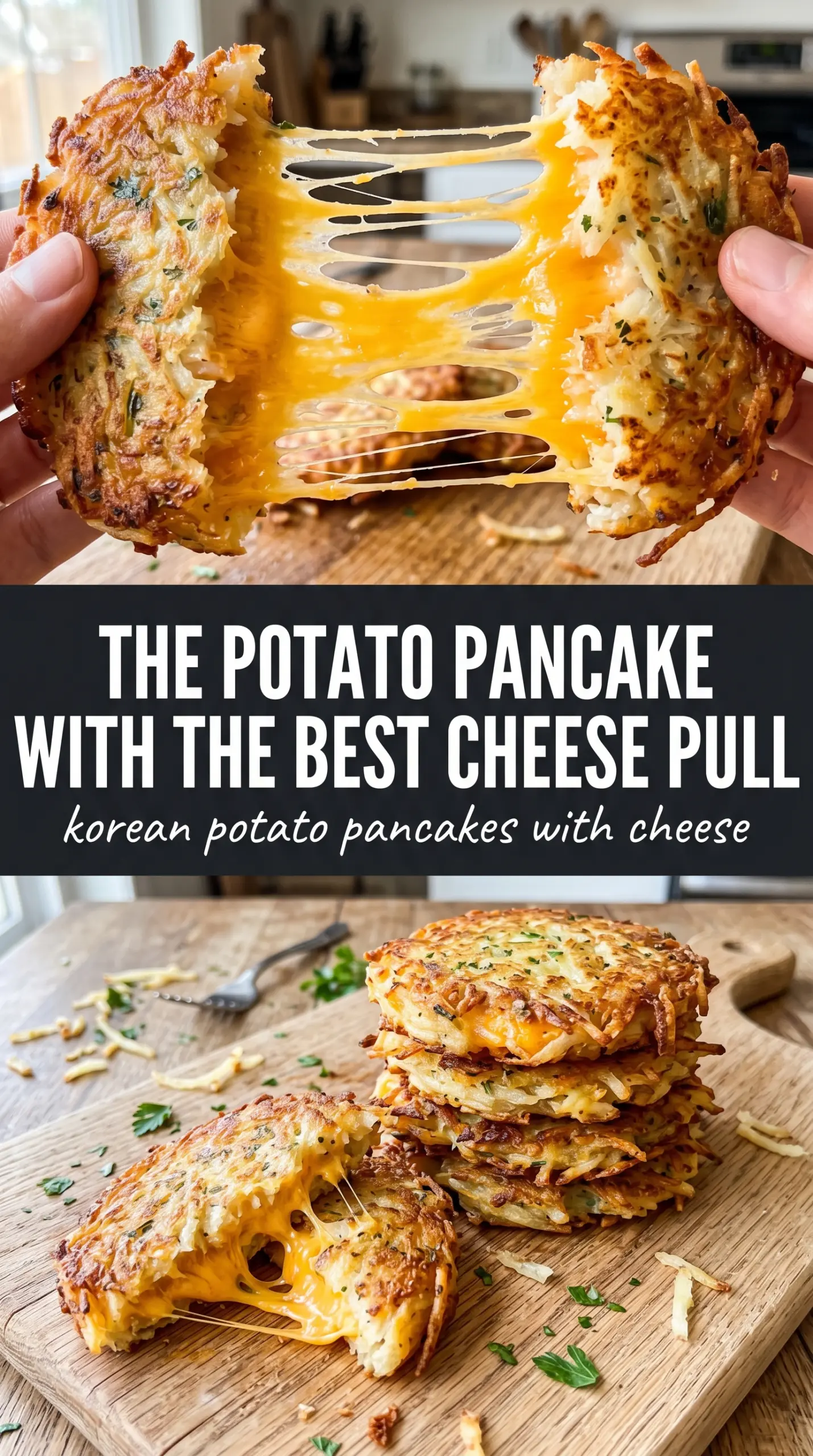
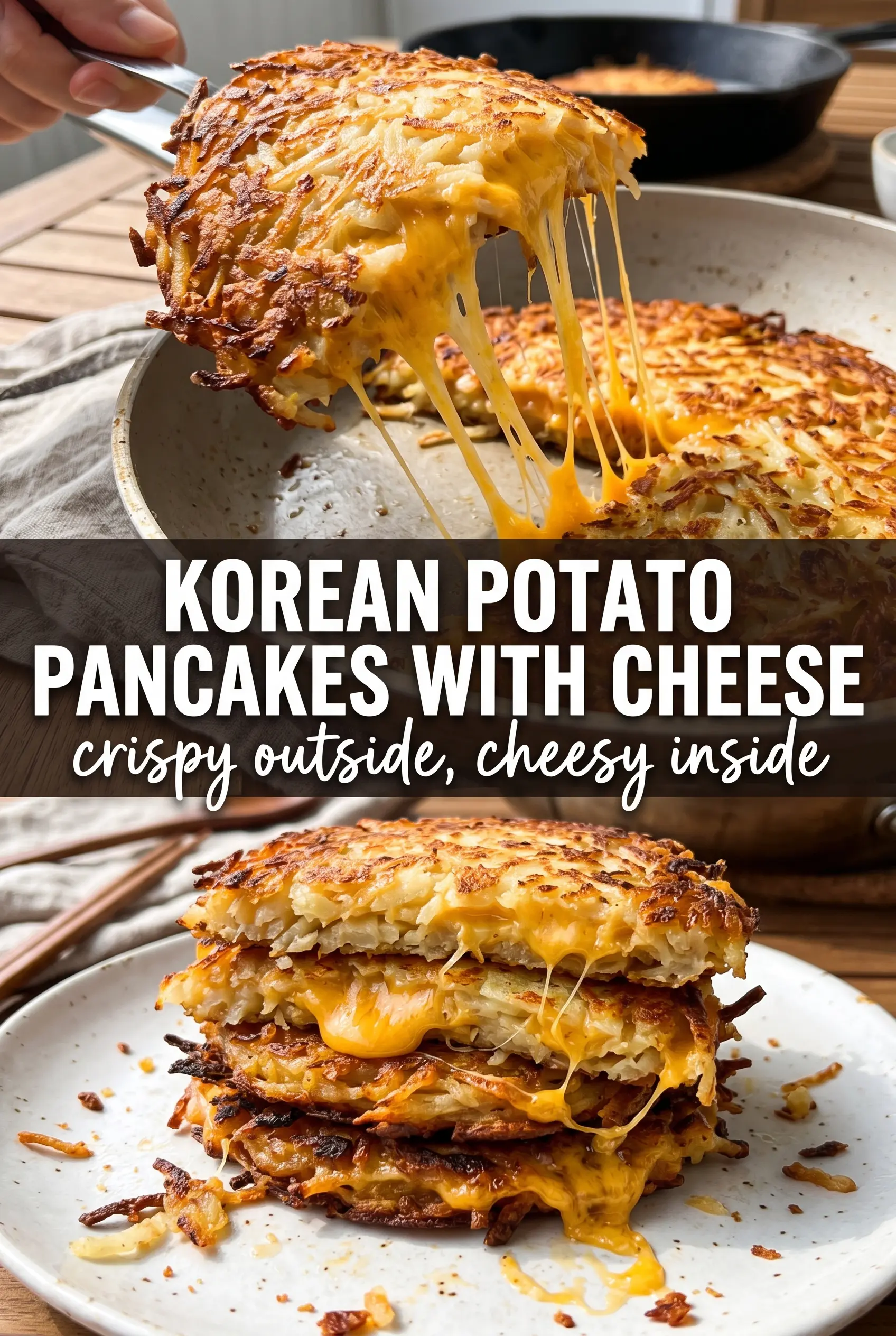
Thin Korean potato pancakes with cheese hit the pan with a sizzle, then turn into crisp, lacy rounds with a soft mozzarella pull in the middle. The edges go deeply golden before the center dries out, which is exactly what you want here: a pancake that crunches first and stays tender inside. When they’re hot, they taste like a cross between gamja jeon and the kind of cheese-stuffed snack you can’t leave alone.
The key is getting the potatoes dry enough before anything else touches the bowl. Russets are the right potato because they’re starchy, not waxy, so they bind better and crisp up instead of turning dense. Potato starch gives the pancakes a cleaner, snappier crust than flour, and the mozzarella melts through the shreds without making the mixture greasy. A hot skillet and enough oil matter just as much as the ingredients.
Below I’ll show you the one prep step that makes the biggest difference, what to expect from the cheese as it melts, and how to keep the pancakes crisp between batches. The dipping sauce is fast, sharp, and worth making while the first round fries.
I squeezed the potatoes until they felt almost dry, and the pancakes came out shatter-crisp around the edges with the cheese melted all the way through. The dipping sauce balanced the salt and made the whole batch disappear fast.
Crispy Korean potato pancakes with cheese are the kind of snack worth pinning for a fast breakfast or a savory weekend bite.
Why These Pancakes Crisp Instead of Turning Watery
The difference between a crisp gamja jeon and a soggy one comes down to how much moisture you leave in the potatoes. Grating releases a lot of liquid, and if that liquid stays in the mixture, the pancakes steam before they brown. That’s when they go pale, soft, and heavy instead of crisp and lacy.
Potato starch helps, but it can’t rescue wet potatoes on its own. You want the mixture loose enough to spread in the pan, yet dry enough that it holds together when pressed flat. If the batter looks glossy or pools liquid at the bottom of the bowl, it needs another squeeze before it ever hits the skillet.
- Russet potatoes — These are starchy enough to give you a crisp crust and a fluffy interior. Waxy potatoes hold more water and make the pancakes tougher to brown.
- Potato starch or cornstarch — Potato starch gives the cleanest crunch, but cornstarch works in a pinch. Use the full amount so the shredded potato binds and fries up into a tighter lattice.
- Mozzarella — Low-moisture shredded mozzarella melts into the potato without flooding the pan. Fresh mozzarella adds too much water and softens the edges.
- Green onions and garlic — These bring the savory bite that keeps the pancakes from tasting flat. Chop them fine so they disperse through the shreds instead of falling out in the pan.
What Each Ingredient Is Doing in the Bowl
The egg helps the mixture set, but it’s not there to make the pancakes cakey. It acts like a light binder so the shreds stay together long enough to brown. Use one egg only; too much egg turns the texture from crisp and lacy to omelet-like.
The dipping sauce matters more than it looks on paper. Soy sauce gives salt and depth, rice vinegar cuts through the richness, sesame oil adds a nutty finish, and sugar softens the sharp edges. If you like heat, the red pepper flakes belong in the sauce, not the pancake mixture, because that keeps the pancakes themselves clean and crisp.
Getting the Pan Hot Enough Before the First Pancake
Dry the potatoes first
Grate the potatoes, then squeeze them hard in a clean kitchen towel or cheesecloth until almost no liquid drips out. You’ll see starch collecting at the bottom of the bowl; that’s useful, so don’t wash it away. If you skip this step, the pancakes release steam in the pan and never get those crisp, browned edges.
Mix just until the shreds cling
Combine the drained potatoes with mozzarella, egg, potato starch, salt, garlic, and green onions. Stir until every shred looks lightly coated and the cheese is evenly scattered. Don’t overwork it into a paste — you still want visible strands of potato so the pancakes fry up with texture.
Press thin and fry in plenty of oil
Heat a generous layer of oil over medium-high heat until it shimmers. Drop in about 1/4 cup of mixture, then press it flat with a spatula into a thin round. Thin pancakes crisp faster and cook through before the cheese leaks out; if the oil is too cool, they absorb it and turn greasy instead of lacy.
Flip when the first side releases cleanly
Cook for 4 to 5 minutes on the first side, until the edges look deeply golden and the underside lifts without sticking. Flip once and cook the second side until it matches the first. If the pancakes break when you turn them, the pan wasn’t hot enough or you moved them too early.
Keep the batch warm without softening it
Set finished pancakes on a wire rack in a low oven while you fry the rest. Paper towels trap steam underneath and soften the crust, which is the last thing you want here. Serve them right away with the dipping sauce while the cheese is still stretchy.
How to Adapt These Cheesy Korean Potato Pancakes
Gluten-Free Without Losing the Crunch
This recipe is already naturally gluten-free if you use cornstarch or potato starch and a gluten-free soy sauce for the dip. Keep an eye on the sauce label, because standard soy sauce often contains wheat. The texture stays crisp and the flavor stays the same.
Dairy-Free Version
Skip the mozzarella and add an extra tablespoon of potato starch so the pancakes still hold together. You’ll lose the melty center, but the edges get even crisper and the potato flavor comes through more clearly. A little more green onion helps replace the richness you’re removing.
Extra-Cheesy, Stretchier Pancakes
Use a mix of mozzarella and a small handful of cheddar for a stronger cheese flavor, but keep mozzarella as the main cheese because it melts cleanly. Too much sharp cheese can make the pancakes oily and the flavor can overpower the potato. The texture stays best when the cheese is shredded fine.
Making Them Ahead for a Crowd
Fry them until just golden, then re-crisp them in a hot oven for a few minutes before serving. They’ll stay crisp longer if you hold them on a rack instead of stacking them. This is the move for brunch, because the pancakes taste best when they go from skillet to plate with almost no waiting.
Storage and Reheating
- Refrigerator: Store leftovers in an airtight container for up to 3 days. They soften as they sit, but the flavor holds up well.
- Freezer: Freeze the cooked pancakes in a single layer, then stack with parchment once solid. They freeze well, though the cheese won’t be quite as stretchy after reheating.
- Reheating: Reheat in a skillet over medium heat or in a 400°F oven until the edges crisp again. Don’t use the microwave unless you want limp pancakes; it drives the steam back into the crust.
Answers to the Questions Worth Asking
Korean Potato Pancakes with Cheese (Gamja Jeon)
Ingredients
Equipment
Method
- Grate the peeled russet potatoes and squeeze out as much liquid as possible; this step is essential for crispiness. Keep squeezing until the shreds look noticeably drier, indicating less moisture in the batter.
- Mix the drained grated potatoes with shredded mozzarella, egg, potato starch, salt, minced garlic, and chopped green onions. Stir until evenly combined and the mixture looks cohesive enough to spread into thin rounds.
- Heat a generous layer of vegetable oil in a skillet over medium-high heat. The oil is ready when it shimmers and actively sizzles on contact with a small bit of potato mixture.
- Spread about 1/4 cup of the potato mixture into the pan and press flat into a thin pancake. Aim for a wide, even circle so it cooks into crisp, lacy edges.
- Cook for 4–5 minutes per side until deeply golden and crispy. Flip when the underside is dark-golden with crisp edges and continue until the second side matches.
- Work in batches, keeping finished pancakes warm in the oven. Arrange them so they stay hot and crisp rather than steaming.
- Mix soy sauce, rice vinegar, sesame oil, sugar, and red pepper flakes in a small bowl. Stir until the sugar dissolves and the sauce looks uniform.
- Serve the hot crispy potato pancakes with the dipping sauce alongside them. Add a visual check that the mozzarella is melted throughout and the edges are golden and lacy.