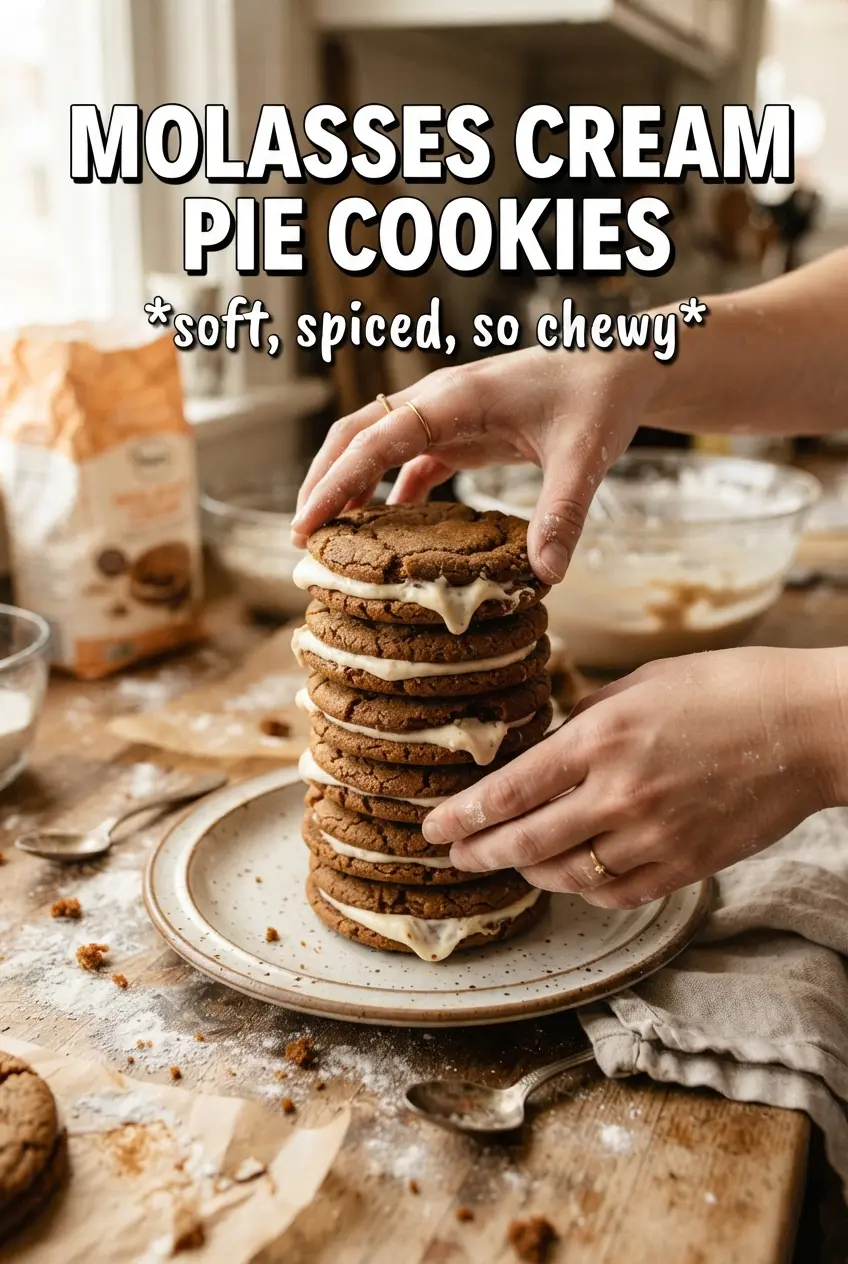
Molasses cream pie cookies land in that sweet spot between soft spice cookies and a bakery-style sandwich cookie, with edges that stay tender and a filling that tastes like a cross between vanilla frosting and pie cloud. The molasses brings depth instead of just sweetness, and the black pepper gives the spices a tiny bit of sharpness that keeps each bite from tasting flat. Once the cookies cool and the filling goes in, they soften just enough to turn almost cake-like without losing their chew.
What makes this version work is balance. The dough has enough baking soda to lift and crackle at the edges, but not so much that the cookies puff into domes and slide when you sandwich them. The cream filling uses cream cheese plus marshmallow creme, which gives it body, sweetness, and a light finish that holds its shape better than whipped cream alone. You get clean, generous sandwich cookies instead of a filling that squishes out the sides.
Below, I’ve included the one place people usually go wrong with molasses cookies, plus the small filling trick that keeps these neat when you stack them up for serving.
The cookies baked up soft with just the right amount of chew, and the vanilla cream stayed fluffy without sliding out the sides. I let them cool completely before filling, and that made all the difference.
Save these molasses cream pie cookies for the days when you want soft spice cookies with a fluffy vanilla center.
The Small Mistake That Makes Molasses Cookies Spread Too Much
Molasses cookies only look forgiving. The dough can seem soft enough to handle, but if the butter is too warm or the flour gets undermeasured, the cookies spread into thin, shiny discs instead of staying thick and sandwichable. That matters here because the filling needs a sturdy base. You want cookies that settle into soft ovals with set edges and a slightly domed center, not a flat cookie that collapses as soon as you add cream.
The other detail that changes the outcome is the spice mix. Ginger, cinnamon, cloves, allspice, and a little black pepper give these cookies depth, but the pepper should stay in the background. It sharpens the molasses without making the cookie taste spicy in a peppery way. If you leave it out, the cookie still works; it just tastes rounder and sweeter, which is fine if that’s what you want.
- Butter temperature — Softened butter should press easily but not look greasy. If it’s melting at the edges of the bowl, the dough will spread more in the oven.
- Molasses — Use unsulphured molasses for the cleanest, richest flavor. Blackstrap is too bitter here and can overpower the cream filling.
- Baking soda — This gives the cookies their lift and those lightly crinkled tops. Without it, the cookies bake up denser and flatter.
- Flour — Spoon and level it instead of packing it. Too much flour makes the cookies dry and tough instead of soft.
What the Cream Filling Is Actually Doing Here

The filling is built from three jobs at once: flavor, structure, and texture. Cream cheese adds tang so the cookie doesn’t taste like pure sugar, marshmallow creme gives the filling body and that smooth bakery-style stretch, and butter makes it fluffy enough to spread without tearing the cookies. If you skip the cream cheese, the filling tastes flatter and sweeter; if you skip the marshmallow creme, it loses the light, stable texture that makes these sandwiches hold their shape.
Powdered sugar thickens the filling, but the trick is beating it until it looks light and aerated before you add more if needed. A stiff filling looks tidy in the bowl, but it can squeeze out once the cookies are pressed together. You want spreadable and fluffy, not pipeable cement.
- Cream cheese — Use full-fat cream cheese for the best structure. Lower-fat versions can turn loose and tangy in a way that fights the cookie.
- Marshmallow creme — This is what keeps the filling airy and sweet without needing heavy whipping. It also helps the filling stay stable at room temperature.
- Powdered sugar — Add it gradually so you can stop when the filling is fluffy and holds soft ridges. Too much makes it gritty and dense.
- Cinnamon — Just a little ties the filling to the spice cookie without making it taste like frosting from another recipe.
Mix, Scoop, Bake, and Cool Before You Even Think About Filling
Building the dough
Cream the butter and brown sugar until the mixture looks lighter and a little fluffy, then add the egg, molasses, and vanilla. The dough should look glossy before the dry ingredients go in. Once you add the flour and spices, stop mixing as soon as the last streaks disappear. Overmixing at this stage makes the cookies tougher and can make them spread unevenly.
Scooping for sandwich-sized cookies
Use a 2-tablespoon scoop or spoon the dough into even ovals so the cookies pair up easily later. These cookies bake best when they’re all roughly the same size, because uneven cookies make the sandwiches wobble. Leave room on the pan for spreading, but don’t flatten the dough before baking. The oven will take care of that.
Baking until just set
Bake at 350°F for 10 to 12 minutes, and pull them when the edges look set but the centers still feel soft. They’ll finish setting on the pan as they cool. If you wait until they look fully firm in the oven, they’ll overbake and turn dry by the time they’re cool enough to fill. Let them sit on the baking sheet for a few minutes before moving them to a rack so they don’t break.
Making the filling and assembling
Beat the filling ingredients until the mixture turns pale, fluffy, and smooth with no cream cheese lumps left. That texture matters because cold lumps never disappear once the filling is in the cookies. Match cookies by size, spread a generous layer on one side, then press the top cookie on gently. The filling should reach almost to the edge without oozing out in thick ribbons.
How to Adjust These Without Losing the Cookie
Make them a little more molasses-forward
Use the full 1/3 cup of molasses and keep the black pepper in place. That gives the cookie a deeper, darker flavor and a slightly more old-fashioned edge without changing the texture. If you want them even bolder, add a pinch more ginger instead of more molasses so the dough doesn’t get too loose.
Gluten-free version
A 1:1 gluten-free baking blend usually works here because the cookies rely more on butter, molasses, and the leavening than on any tricky dough shaping. Chill the dough for 20 to 30 minutes if it feels too soft, since gluten-free flour can make it spread a little faster. The cookies will still be soft and sandwich-friendly.
Dairy-free filling option
Use a plant-based butter and dairy-free cream cheese in the filling, then beat it a little longer to help it whip up light. The texture will be softer and a bit less tangy, but it still makes a good sandwich cookie. Keep the cookie dough itself the same if you’re only avoiding dairy in the filling.
Storage and Reheating
- Refrigerator: Store filled cookies in an airtight container for up to 4 days. The cookies soften a bit more as they sit, which is part of the appeal.
- Freezer: The baked cookies freeze well without filling for up to 2 months. Freeze the filling separately only if you’re willing to rewhip it after thawing.
- Reheating: These are best served at room temperature, not warmed. If they come straight from the fridge, let them sit for 15 to 20 minutes so the filling loosens and the spice flavor comes through.
Answers to the Questions Worth Asking
Molasses Cream Pie Cookies
Ingredients
Equipment
Method
- Beat the softened unsalted butter and packed brown sugar together until smooth, then add the egg, molasses, and vanilla and beat again until evenly combined. The mixture should look glossy and cohesive, with no streaks of butter.
- Fold in the all-purpose flour mixture of baking soda, cinnamon, ginger, cloves, allspice, black pepper, and salt until a thick dough forms. Stop mixing as soon as no dry flour is visible, and the dough should be uniform and dark brown.
- Scoop the dough into 2-tablespoon ovals and arrange them on a sheet pan with space between. The cookies should be similar in size so they bake evenly.
- Bake at 350F for 10–12 minutes, until the edges look set and the centers still look slightly soft. A light spring-back when touched is the visual cue.
- Cool the cookies completely on the sheet pan before filling. This prevents the vanilla cream from melting or sliding.
- Beat the softened unsalted butter and softened cream cheese until smooth, then beat in the marshmallow creme. Continue until the mixture looks thick and very smooth.
- Gradually beat in the powdered sugar, then add vanilla and cinnamon and beat until very fluffy. The filling should hold shape when you lift the beaters.
- Match the cookies in pairs by size, then spread the filling generously on one cookie and press together with the other. Use a slightly domed filling layer so the sandwich resembles a “cream pie” filling.