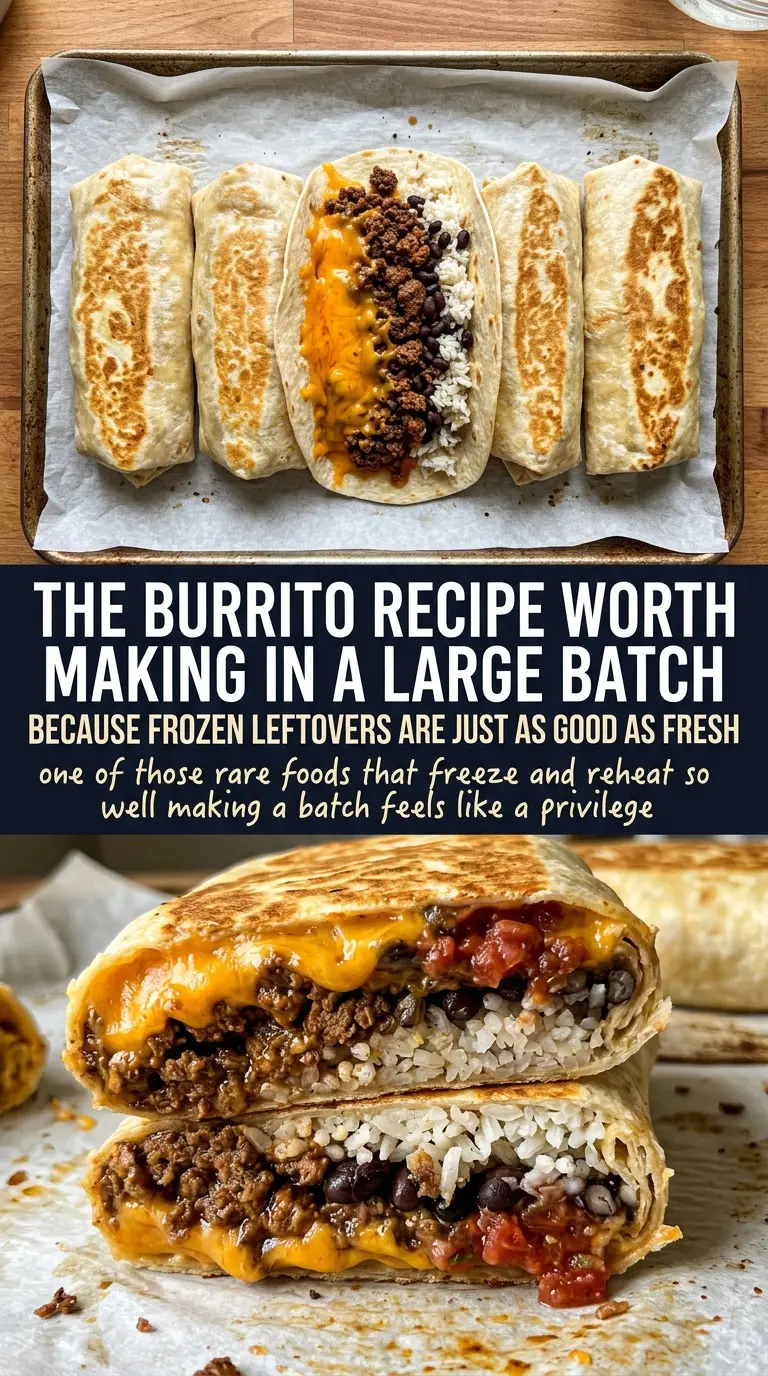
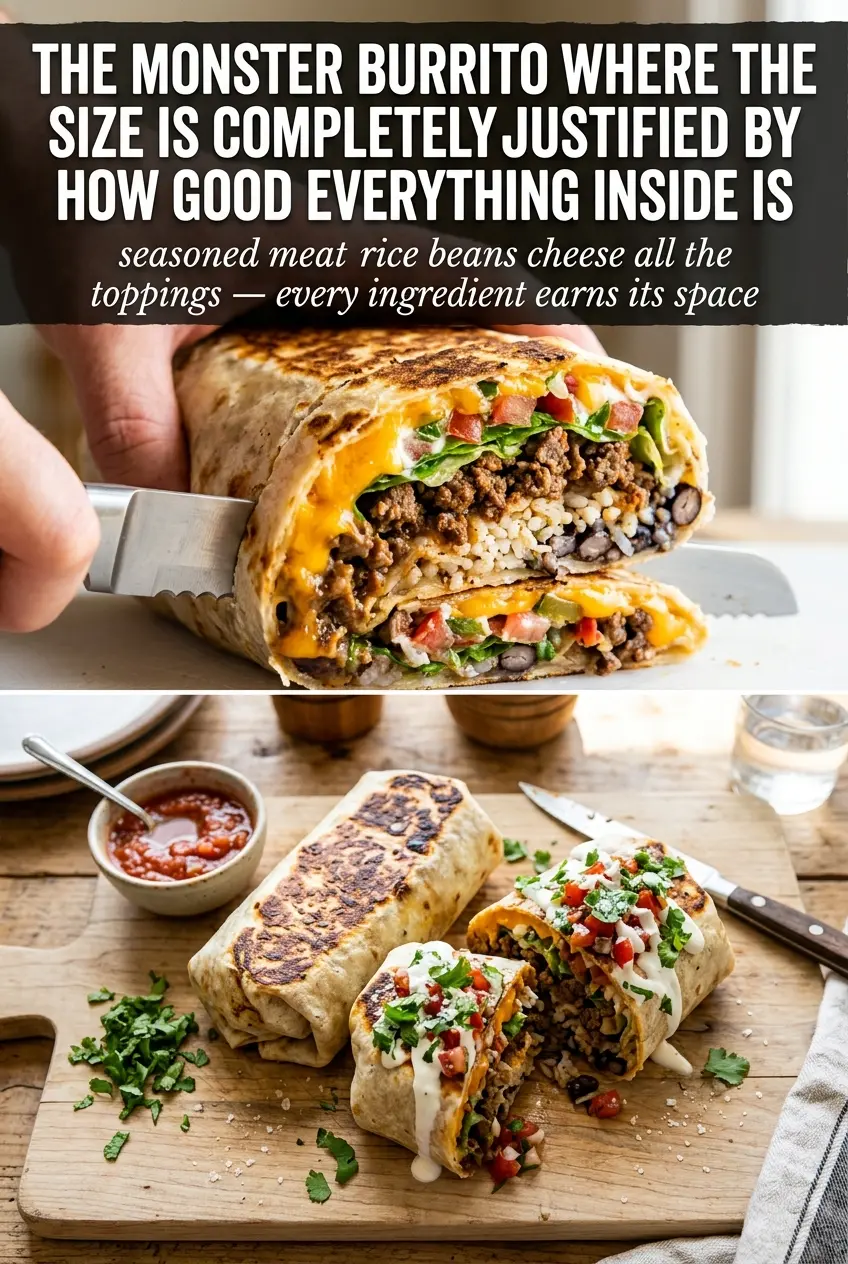
Monster burritos earn their name the first time you pick one up and realize it’s heavier than a normal dinner plate. The outside goes crisp and toasted on the griddle, while the inside stays packed with seasoned beef, fluffy eggs, beans, rice, and enough cheese to glue everything together. When they’re rolled tight and cooked seam-side down first, they hold their shape instead of collapsing into a messy pile on the cutting board.
What makes this version work is the balance. The rice keeps the filling from feeling too dense, the refried beans act like edible cement, and the eggs soften the sharper edges of the taco-seasoned beef. I like warming the tortillas just enough to make them flexible before filling them, because cold tortillas crack the second you try to roll a truly oversized burrito. A quick finish on the griddle is what gives you that deep golden exterior and the kind of crunch that makes the cross-section look as good as it tastes.
Below, I’ve included the small details that matter most: how to keep the fillings from sliding out, which swaps still hold up in a burrito this size, and the best way to get that crisp finish without drying out the center.
The burritos held together beautifully after that quick griddle toast, and the seam sealed up instead of splitting when I cut them in half. The beef, eggs, and beans had the perfect ratio too.
Big, crispy Monster Burritos with beef, eggs, beans, and that griddle-toasted finish are worth saving for the next busy night.
The Reason Big Burritos Fall Apart on the Griddle
The failure point in oversized burritos isn’t the filling. It’s the roll. If the tortilla is cold, overloaded, or filled edge to edge, the seam opens before the outside has a chance to toast and seal. This version gives you enough structure to work with: beans and cheese help bind the filling, and the griddle finish locks the seam in place before anything can spill out.
- Warm tortillas first. A pliable tortilla folds around a heavy filling without cracking. A cold one tears the second you tuck the sides in.
- Keep the filling in the center third. Leaving a border at the edges gives you room to fold cleanly and prevents a split seam.
- Seam-side down goes first. That first minute or two on the griddle is what seals the burrito shut.
- Don’t overstuff the wet ingredients. Salsa and sour cream belong on the side if you want the burrito to stay crisp instead of turning soggy.
What Each Ingredient Is Actually Doing in Monster Burritos
- Protein (quality, proper thickness) — Good quality protein tastes better. Even thickness ensures even cooking.
- Seasoning (bold, distributed throughout) — Don’t be shy with salt and pepper. Quality seasoning elevates everything.
- Oil or fat (protective and flavorful) — The fat helps develop crust and carries flavors. Use generously.
- Heat management (appropriate temperature for the protein) — Too high and the outside burns before the inside cooks. Too low and it steams.
- Technique (sear, then finish based on thickness) — Proper technique creates flavor. Sear for crust, then cook through gently.
- Aromatics and seasonings (garlic, herbs, spices) — These add complexity and depth. Distribute them throughout the cooking process.
- Resting time (let it rest before serving) — Resting allows juices to reabsorb. This keeps the protein moist and tender.
- Optional: finishing sauce or glaze — A light sauce adds richness without overwhelming. Apply at the very end.
What Each Filling Is Doing Inside the Burrito
- Extra-large flour tortillas — You need the stretch and surface area. Smaller tortillas can work for a lighter wrap, but they won’t handle this amount of filling without tearing or splitting open during the sear.
- Ground beef and taco seasoning — This is the savory backbone. The seasoning should coat the meat evenly, and if it looks dry, a splash of water from the packet directions helps the spices cling instead of tasting dusty.
- Eggs — Scrambled eggs add softness and richness, and they cool into a filling that helps cushion the beef and rice. Pull them when they’re just set; overcooked eggs get rubbery once they’re inside the burrito.
- Refried beans — These are the glue. They help the burrito stay together and add creaminess without making the tortilla soggy the way loose beans can.
- Rice, cheese, salsa, and toppings — Rice gives bulk, cheese melts into the layers, and salsa adds brightness. Keep salsa light inside if you want a crisp finish, and use extra at the table instead.
Building the Layers So the Burrito Stays Tight
Cooking the Beef
Brown the ground beef on the griddle until there’s no pink left and the edges start to pick up a little color. Drain off excess fat if the pan looks greasy, then add the taco seasoning with the amount of water the packet calls for. You want the meat moist but not soupy, because a wet filling is what turns the tortilla gummy from the inside out.
Scrambling the Eggs
Cook the eggs on the griddle until they’re fluffy and just set. Pull them before they look dry; they’ll finish carrying over a bit as they sit. If you cook them until they’re firm in the pan, they turn tight and chalky once rolled into the burrito.
Warming and Rolling
Warm each tortilla on the griddle until it bends without resistance. Spoon the fillings down the center, keeping them compact rather than spread edge to edge, then fold in the sides and roll firmly from the bottom up. If the tortilla fights you, it’s still too cold. Give it another few seconds on the griddle and try again.
Toasting the Seam
Place each burrito seam-side down on the hot griddle first. Press it lightly with a spatula and let it cook until golden and crisp, then turn and toast the second side. That first seam-side-down sear is the difference between a burrito that stays closed and one that unravels the second you slice it.
How to Adapt Monster Burritos Without Losing the Big-Bite Feel
Make it breakfast-heavy
Swap some or all of the beef for extra eggs, breakfast potatoes, or crumbled cooked breakfast sausage. The burrito will taste softer and more morning-style, but it still needs the same center-weighted layering and seam-side-down toast to hold together.
Go vegetarian
Replace the beef with seasoned black beans, sautéed peppers, or scrambled tofu. Keep the refried beans in the mix, because they do the structural work that holds the burrito together when you remove the meat.
Make it gluten-free
Use large gluten-free tortillas that are meant for wrapping, not taco shells. They’re usually more fragile, so warm them gently and keep the filling slightly smaller than usual to avoid splitting when you fold and toast them.
Storage and Reheating
- Refrigerator: Store wrapped burritos for up to 3 days. The tortilla softens a bit, but the filling stays sturdy.
- Freezer: These freeze well. Wrap each burrito tightly in foil, then place in a freezer bag for up to 2 months.
- Reheating: Reheat from thawed or straight from frozen in a skillet or on a griddle over low to medium heat until heated through. The common mistake is blasting them over high heat, which burns the tortilla before the center warms.
Answers to the Questions Worth Asking
Monster Burritos
Ingredients
Equipment
Method
- Heat a cast iron skillet on the griddle until hot. Cook the ground beef until browned, then stir in taco seasoning and cook according to the package directions.
- In the same hot griddle area, scramble the eggs until fluffy and set. Transfer the scrambled eggs to a plate and keep warm.
- Warm the tortillas on the griddle until pliable. Move them to a work surface so they’re ready for assembling.
- Layer each tortilla with refried beans, cooked rice, beef, scrambled eggs, shredded cheese, salsa, sour cream, and desired toppings like diced onions and jalapeños, guacamole, and hot sauce.
- Fold in the sides and roll tightly into burritos, then place seam-side down on the griddle.
- Cook for 2-3 minutes per side until golden and crispy, flipping once. Slice each burrito in half and serve.