Mushroom Gruyere pasta lands in that perfect middle ground between rustic and elegant: deep-browned mushrooms, a silky sauce, and just enough Gruyere to make every bite taste rich without turning heavy. The best versions don’t drown the pasta; they coat it. That balance is what keeps this dish on repeat.
The key is giving the mushrooms enough heat to release their moisture and then brown instead of steam. Once they’re deeply golden, the shallot, garlic, and thyme go in briefly so they perfume the pan without burning. The wine lifts all those browned bits off the skillet, and the Gruyere melts into the cream in a way that stays smooth as long as the heat stays gentle.
Below, I’m walking through the one step that matters most for flavor, plus the ingredient choices that make the sauce taste rounded instead of flat. There’s also a couple of practical swaps if you need to work with what’s already in the kitchen.
The mushrooms got beautifully browned instead of soggy, and the Gruyere sauce came together silky smooth. I added a splash of pasta water at the end and it coated the rigatoni perfectly.
Save this Mushroom Gruyere Pasta for the night you want a glossy mushroom sauce and tender pasta without a long ingredient list.
The reason the mushrooms need high heat before anything else
Mushrooms carry a lot of moisture, and if the pan isn’t hot enough they’ll dump it, then sit there steaming until they go limp and gray. That’s how you end up with a sauce that tastes fine but never gets that deep, savory edge. High heat changes the entire dish because the mushrooms start to brown before they soften completely, which concentrates their flavor and gives the sauce a richer base.
Let them sit untouched for the first few minutes. That stillness is what builds color. Once you stir, you’re just finishing the cooking and catching the last bits of gold in the pan. If the skillet looks dry before the mushrooms are done, the butter can go in early, but don’t add extra liquid. The mushrooms need contact with the hot surface, not a bath.
What each ingredient is doing in the sauce
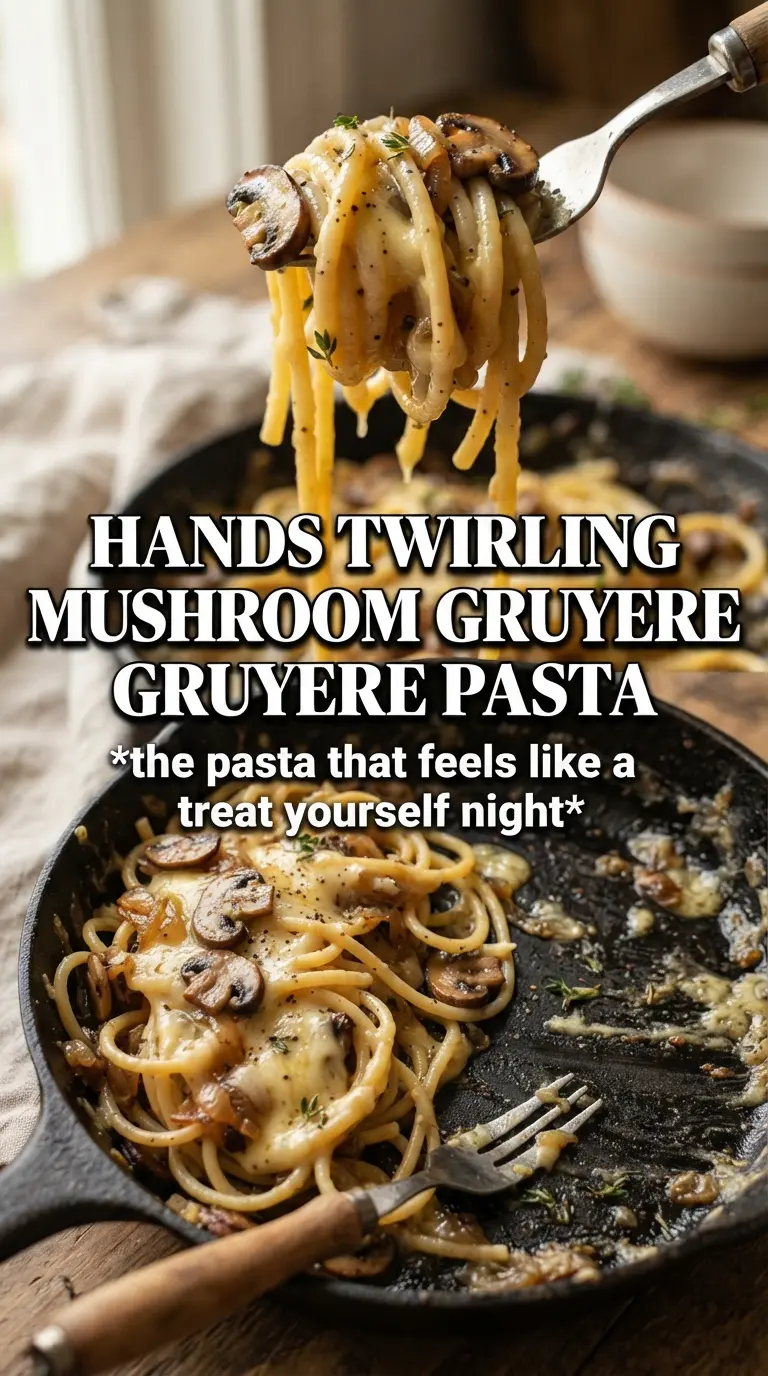
- Mixed mushrooms — A mix of cremini, shiitake, and oyster gives you more than one kind of savory depth. Cremini bring body, shiitake add a meatier note, and oyster mushrooms soften into tender edges that catch the sauce. If you only have cremini, the dish still works, but the flavor will be a little flatter.
- Gruyere — This is the cheese that makes the sauce taste nutty and round instead of sharp or stringy. Shred it yourself if you can; pre-shredded cheese often has anti-caking agents that make melting less smooth. If you substitute Swiss, the sauce will still melt well, but it won’t have quite the same depth.
- Dry white wine — The wine loosens the browned bits in the pan and gives the cream sauce a brighter finish. Use something dry and clean-tasting, not sweet. If you’d rather skip alcohol, use extra broth plus a small squeeze of lemon at the end for lift.
- Pasta water — This is what turns a loose sauce into one that clings. The starch helps emulsify the cream and cheese, so add it a splash at a time until the pasta looks glossy and coated. Don’t dump in all of it at once unless the sauce is clearly too tight.
Building the sauce so it stays silky
Brown the mushrooms first
Melt the butter in a large skillet, then add the mushrooms in as even a layer as you can manage. Don’t crowd them if your pan is small; that’s the fastest way to steam them. Leave them alone for 4 to 5 minutes until the undersides look deeply browned, then stir and keep cooking until the second side picks up color too.
Wake up the aromatics
Once the mushrooms are browned, add the shallot, garlic, and thyme. The pan should smell nutty and fragrant within a minute or two, but the garlic shouldn’t brown. If it starts catching too fast, lower the heat right away. Burnt garlic turns the whole sauce bitter, and there’s no coming back from that.
Deglaze and finish gently
Pour in the wine and scrape the pan until the browned bits dissolve into the liquid. Let it simmer for a minute so the sharp alcohol smell cooks off, then add the cream and broth. Keep the heat at a steady simmer, not a boil. High heat can split the cream and make the Gruyere seize later, which is exactly what you don’t want.
Emulsify with cheese and pasta water
Turn the heat lower before the Gruyere goes in, then stir until it melts smoothly. Add the drained pasta and toss well, using reserved pasta water a little at a time until the sauce glosses the noodles instead of pooling underneath them. Finish with parsley and black pepper. Taste at the end, because Gruyere brings salt of its own and the final seasoning usually needs less than you think.
How to adapt this without losing the point of the dish
Make it gluten-free without changing the sauce
Use your favorite gluten-free pasta shape with some ridges or curves so the sauce has something to cling to. Cook it just shy of tender, because gluten-free pasta can go soft fast once it meets the sauce. Reserve extra pasta water if your brand tends to drink up liquid quickly.
Make it vegetarian with one simple swap
Use vegetable broth instead of chicken broth and the dish stays just as savory. The mushrooms and Gruyere already do most of the heavy lifting, so you won’t lose much depth. If the sauce tastes a little quiet at the end, an extra pinch of salt and a crack of black pepper usually bring it back.
Swap the pasta shape for a different texture
Rigatoni gives you sauce in the tubes, while pappardelle gives you broad ribbons of cream and mushrooms in every bite. If you use a smoother shape like spaghetti, the sauce will still taste good, but it won’t hold onto the mushrooms as well. Short, ridged pasta is the safest choice for maximum sauce coverage.
Storage and Reheating
- Refrigerator: Store in an airtight container for up to 3 days. The sauce thickens as it chills, so it won’t look as silky straight from the fridge.
- Freezer: I don’t recommend freezing this pasta. Cream sauces and mushrooms both change texture after thawing, and the sauce can separate.
- Reheating: Warm gently on the stovetop over low heat with a splash of broth, cream, or water. Don’t blast it in the microwave on high, or the cheese can turn oily and the pasta can dry out before the center heats through.
Questions I get asked about Mushroom Gruyere Pasta
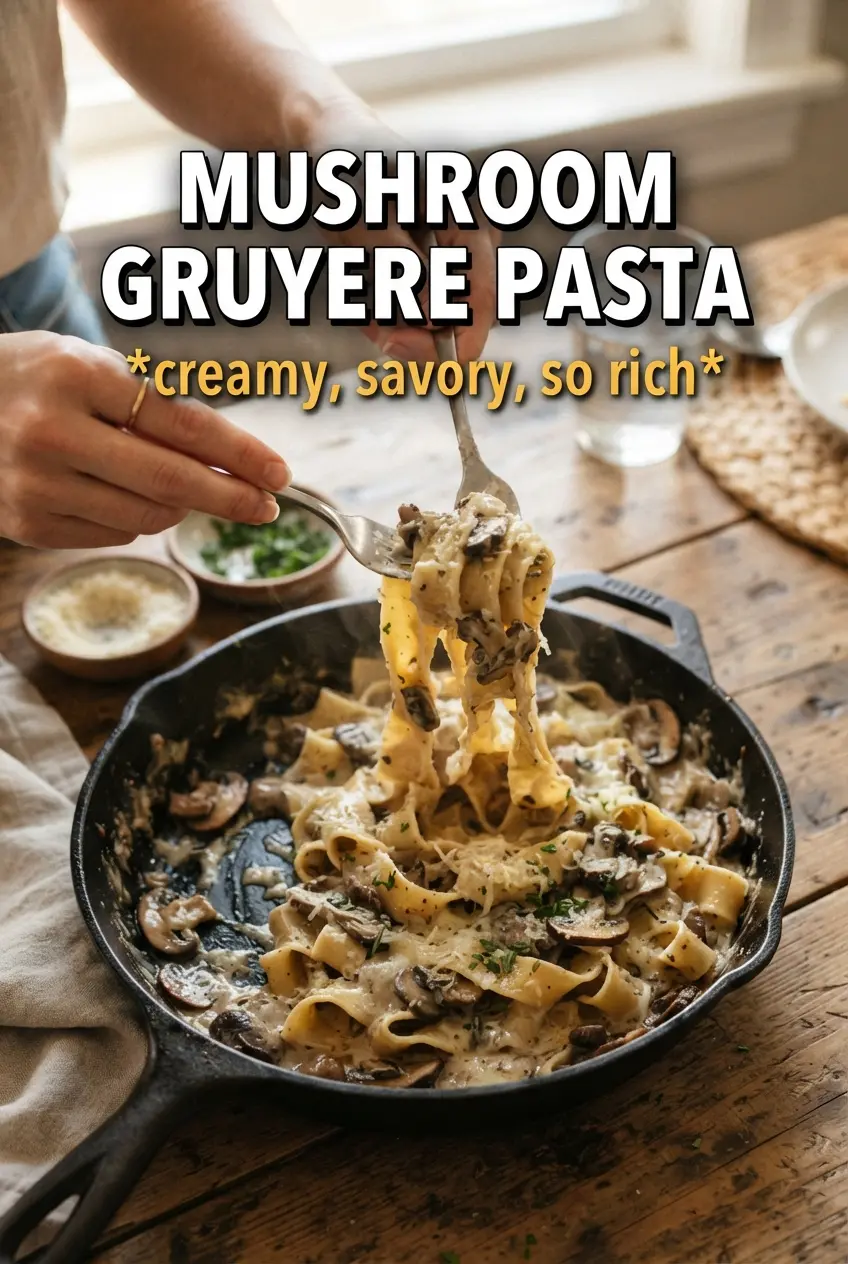
Mushroom Gruyere Pasta
Ingredients
Equipment
Method
- Cook the rigatoni or pappardelle in salted water until al dente, then reserve 1 cup pasta water for the sauce.
- Slice the mixed mushrooms and mince the shallot and garlic, so they’re ready to cook once the pasta finishes.
- Melt the butter in a large skillet over high heat, then add the mushrooms and cook without stirring for 4-5 minutes until deeply golden.
- Stir the mushrooms and cook for 3 more minutes, then add the shallot, garlic, and fresh thyme and cook for 2 minutes while fragrant.
- Deglaze the pan with the dry white wine, scraping up browned bits, then let it reduce slightly and simmer.
- Add the heavy cream and chicken or vegetable broth, then simmer for 5 minutes to thicken the sauce.
- Stir in the Gruyere until fully melted and glossy, then toss in the pasta and add pasta water as needed to make it silky.
- Season with salt and pepper to taste, then top with fresh parsley and serve while hot.