Silky scrambled eggs with mushrooms and spinach are the kind of breakfast that feels calm and satisfying without asking much of you. The mushrooms bring a deep, savory edge, the spinach melts right into the eggs, and the goat cheese softens everything with little tangy pockets that turn creamy as soon as it hits the warm pan. Served on toasted sourdough, the whole thing lands between homey and a little bit special.
What makes this version work is the order. The vegetables cook first so they don’t water down the eggs, and the eggs themselves stay over low heat long enough to form soft curds instead of dry ones. A small splash of milk or cream helps, but the real trick is pulling the pan off the heat before the eggs look fully set. They keep cooking from the residual heat, and that’s how you get that soft, custardy finish.
Below, you’ll find the timing that keeps the mushrooms browned, the eggs tender, and the goat cheese from disappearing into the pan. There’s also a simple way to adapt this if you want to switch the cheese or make it dairy-free.
The mushrooms browned instead of steaming, and the eggs stayed soft and creamy even after I folded everything together. I used sourdough like suggested and my husband said it tasted like a cafe breakfast.
Like these mushroom spinach scrambled eggs? Save them to Pinterest for a fast breakfast with soft curds, browned mushrooms, and melty goat cheese.
The Reason the Eggs Stay Soft Instead of Going Rubbery
The biggest mistake with scrambled eggs like this is cooking everything together from the start. Mushrooms throw off moisture, spinach collapses fast, and that extra liquid turns the eggs pale and loose instead of rich and tender. Cooking the vegetables first gives them a chance to brown and concentrate before they ever meet the eggs.
The second thing that matters is heat. Eggs set best over medium-low, not high, because high heat tightens the proteins too quickly and leaves you with small curds and a dry finish. Pulling the pan off the burner while the eggs still look a little too soft is the move that keeps them creamy on the plate.
What Each Ingredient Is Actually Doing Here
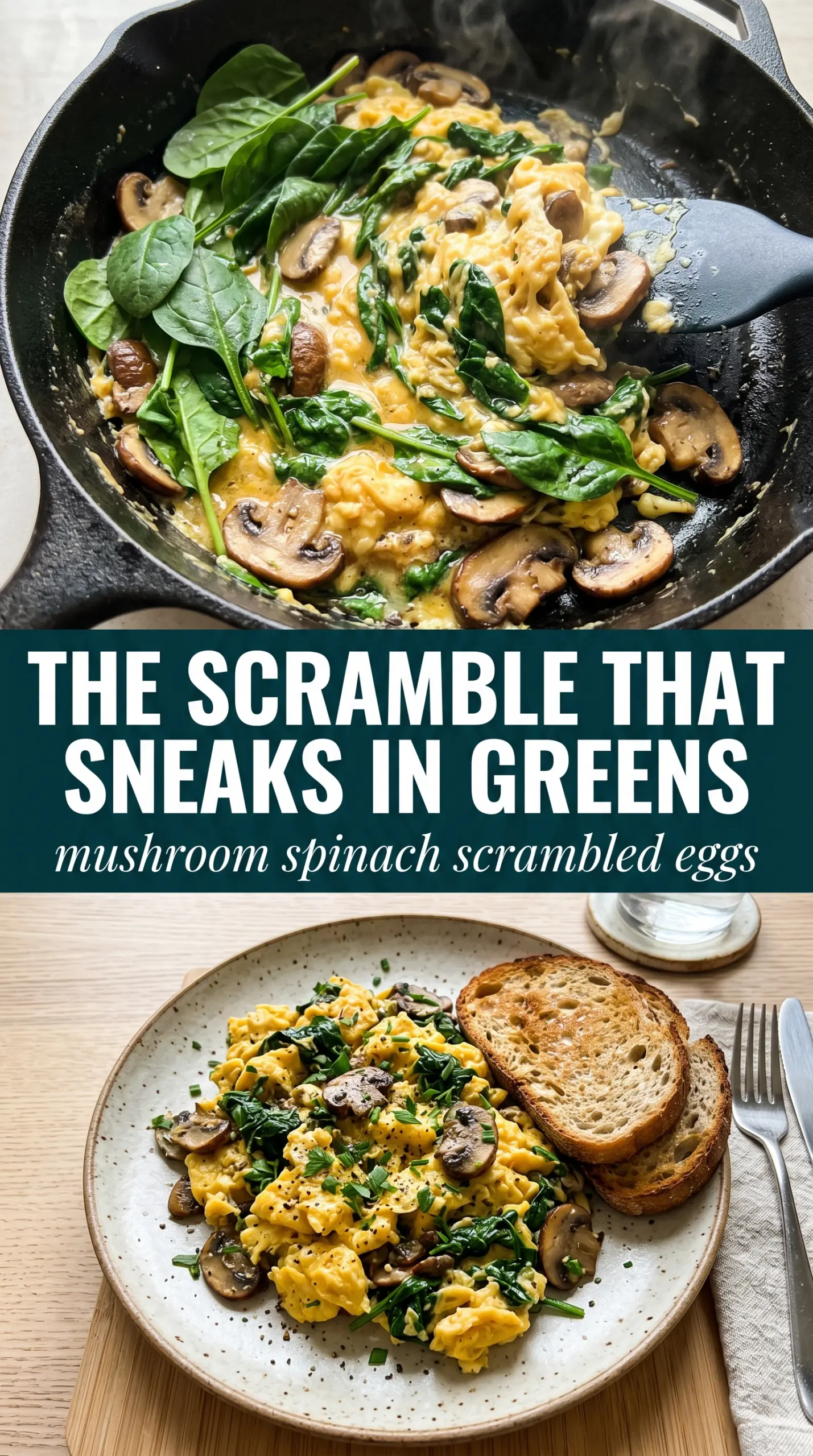
- Cremini mushrooms — These bring the savory backbone of the dish. White button mushrooms work in a pinch, but cremini have a deeper flavor and brown better, which matters because the eggs themselves are mild.
- Baby spinach — Spinach disappears into the eggs without making the texture heavy. If you use mature spinach, chop it first and cook it a touch longer so the stems don’t stay tough.
- Goat cheese — This is the ingredient that makes the eggs taste finished. Feta will give you a saltier, brinier result, while cream cheese makes the eggs richer but less bright. Add it at the end so it softens instead of melting away.
- Whole milk or cream — A small amount helps the eggs stay tender, but it isn’t doing the heavy lifting. If you want the richest texture, use cream; if you’re keeping breakfast lighter, milk still works well.
- Butter — Butter gives the mushrooms better color and keeps the eggs from sticking while adding flavor you can’t fully replace with oil. If you need to use oil, choose a neutral one and add a little extra salt at the end to make up for the lost richness.
Building the Vegetables Before the Eggs Hit the Pan
Brown the mushrooms first
Melt one tablespoon of butter in a skillet over medium-high heat and add the sliced mushrooms in a single layer. Let them sit long enough to take on color before stirring, because constant movement steams them and leaves them soft instead of browned. When the edges darken and the moisture cooks off, they’re ready for garlic.
Wilt the spinach and season the filling
Add the minced garlic and spinach, then cook just until the greens collapse and the garlic smells fragrant, about a minute. If the garlic turns brown, the heat is too high and it’ll taste sharp in the finished eggs. Season this mixture before moving it out of the pan so the vegetables taste complete on their own.
Cook the eggs slowly
Whisk the eggs with milk, salt, and pepper until the mixture looks uniform and slightly foamy. Melt the remaining butter in the same skillet over medium-low heat, then pour in the eggs and let them sit for a few seconds before pushing them gently with a spatula. The curds should stay soft and glossy; if the eggs start to bubble hard, the pan is too hot and they’ll tighten up fast.
Finish off the heat
Take the pan off the burner while the eggs still look a little underdone and fold in the mushroom-spinach mixture. The residual heat finishes the eggs without drying them out, and that’s what gives you those soft, custardy curds. Add the goat cheese at the end so you get creamy pockets instead of a fully melted sauce.
How to Adapt These Scrambled Eggs Without Losing the Texture
Dairy-Free Version
Use olive oil instead of butter and skip the goat cheese, or finish with a dairy-free feta-style cheese if you like a tangy note. The eggs will still be soft, but they won’t have the same velvety finish, so keep the heat low and pull them early.
Swap the Goat Cheese
Feta gives a saltier, sharper bite, while shredded cheddar melts more fully and makes the eggs feel heavier. If you want the same creamy pockets, stick with a soft cheese and add it right at the end.
Make It Heartier
A handful of diced ham or cooked crumbled bacon works well here, but add it with the mushrooms so it warms through and doesn’t distract from the soft eggs. The dish turns more brunchy and less light, which is a good trade if you’re serving it as a full meal.
Storage and Reheating
- Refrigerator: Store leftovers for up to 2 days. The eggs will firm up a little, but the flavor stays good.
- Freezer: I don’t recommend freezing scrambled eggs with spinach and mushrooms. The texture turns watery after thawing.
- Reheating: Warm gently in a skillet over low heat with a small pat of butter, stirring just until heated through. The microwave tends to overcook the eggs and make them rubbery.
Questions I Get Asked About This Recipe

Mushroom Spinach Scrambled Eggs with Goat Cheese
Ingredients
Equipment
Method
- Melt 1 tablespoon butter in a skillet over medium-high heat, add sliced cremini mushrooms, and cook for 4–5 minutes until golden, stirring occasionally with a steady contact pattern. Add minced garlic and baby spinach and cook until the spinach is wilted and glossy.
- Season the mushroom-spinach mixture with salt and black pepper to taste, then transfer it to a plate so the eggs won’t overcook.
- In a bowl, whisk the eggs with whole milk or cream, salt, and black pepper until uniform, keeping bubbles minimal. Heat the same skillet over medium-low and melt the remaining butter.
- Add the eggs to the skillet and cook slowly, pushing the eggs gently with a spatula every 30 seconds for very soft, silky curds. Remove from heat while still slightly underdone to prevent dry curds, then fold in the mushroom-spinach mixture.
- Top the scrambled eggs with crumbled goat cheese and fresh chives or thyme so the cheese melts slightly from the residual heat. Serve immediately on toasted sourdough.