Grilled salmon earns its place on the table when the skin turns crisp, the flesh stays juicy, and the fillet lifts off the grates in one clean piece. The trick is not fussy seasoning or a long marinade. It’s dry fish, a hot grill, and enough time on the first side to form a crust that keeps the salmon from sticking and tearing.
This version leans on a short 15-minute rest with olive oil, lemon juice, and garlic, which seasons the fish without overwhelming it. The lemon brightens the richness of the salmon, while the oil helps the exterior brown instead of drying out. Skin-on fillets matter here because the skin acts like a shield and gives you that crisp, restaurant-style finish if you leave it alone long enough.
Below, I’ll show you how to keep the fish from sticking, when to flip it, and how to tell when it’s done before it goes from silky to dry. If grilled salmon has ever fallen apart on you, the problem is usually in the first few minutes, not the last.
The skin got crisp without sticking, and the salmon stayed flaky and moist all the way through. I followed the timing exactly and it came off the grill in perfect fillets.
Save this grilled salmon technique for juicy fillets, crisp skin, and a clean flip every time.
The Reason Salmon Sticks, and How to Stop It
Salmon sticks when the surface is damp, the grill isn’t hot enough, or you try to move it before the skin has had time to release. That first side needs uninterrupted contact with the grates. If you nudge it too soon, the skin tears and the flesh stays glued to the metal.
The fix is simple: dry the fillets well, oil the grates, and let the salmon cook skin-side down until it loosens naturally. You should see the color change climbing up the sides of the fillet and the edges turning opaque before you even think about flipping. That’s the moment the crust has formed and the fish can move.
- Dry salmon — Patting the fillets dry is not optional. Moisture on the surface creates steam, which keeps the skin soft and makes sticking more likely.
- Oiled grates — Brush the grill grates with oil after preheating. Don’t pour oil on the fish instead and expect it to solve the sticking problem.
- Skin-on fillets — Skin gives you a built-in buffer against direct heat and makes the first flip much more forgiving.
What the Garlic, Lemon, and Olive Oil Are Really Doing
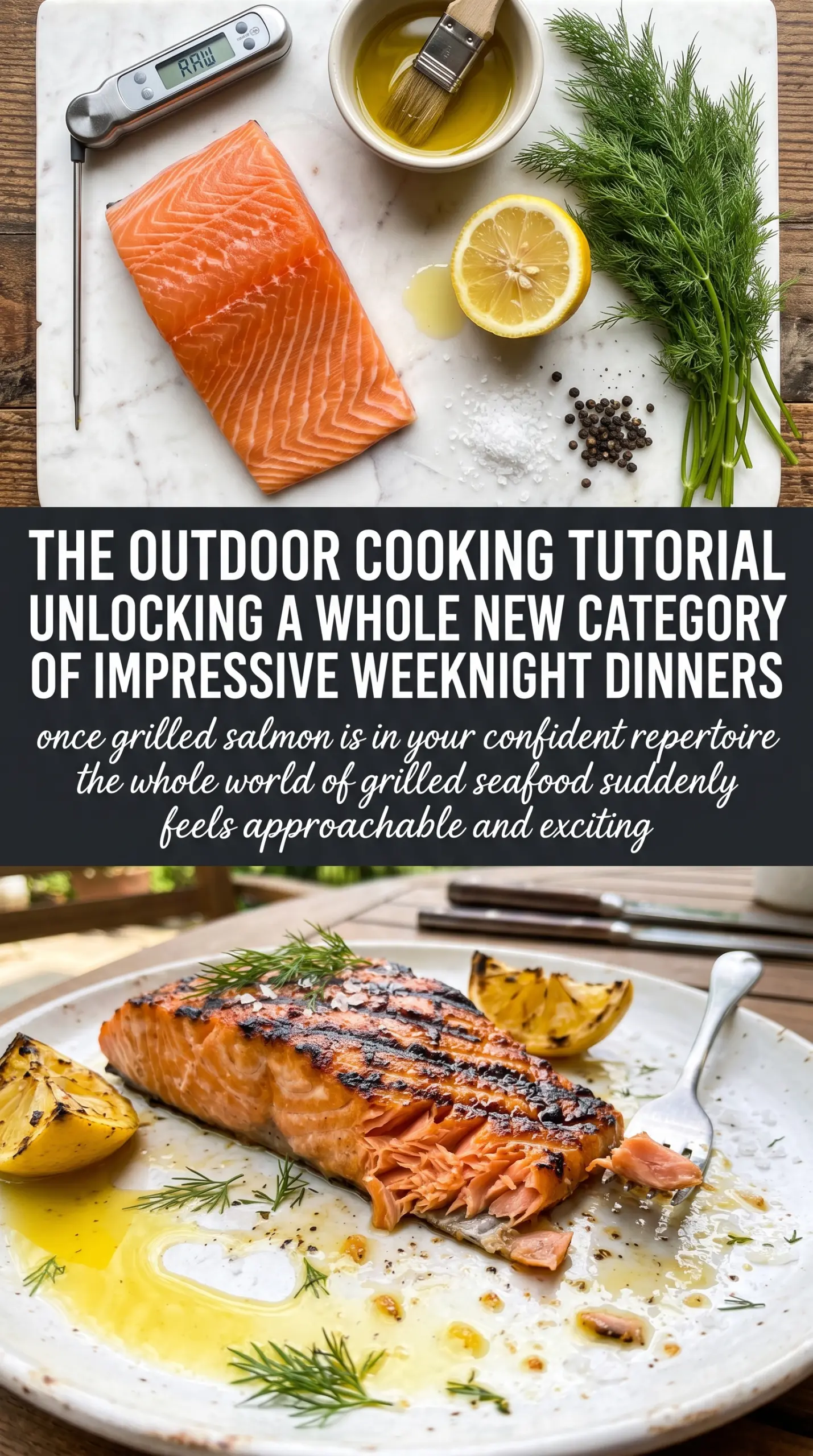
- Salmon fillets — Use skin-on fillets that are close in size so they finish at the same time. Thicker pieces hold up better on the grill and stay moist in the center.
- Olive oil — This helps the seasonings cling and supports browning. A neutral oil works too, but olive oil adds a little richness that fits the fish.
- Lemon juice — The acid brightens the salmon, but it should stay brief. If you leave the fish in lemon too long, the outer layer starts to cure and can turn a little chalky.
- Garlic — Minced garlic adds punch, but keep it on the fish, not the grates. Large pieces can burn fast, so mince it fine or wipe off any clumps before grilling.
- Dill and lemon wedges — These finish the dish with freshness. Dill works especially well because it mirrors the clean, oceanic flavor of the salmon instead of fighting it.
Getting the Grill Marks Without Overcooking the Center
Seasoning the Fillets
Pat the salmon dry first, then brush it with olive oil, lemon juice, and garlic. Season it generously with salt and pepper so the surface tastes balanced after grilling. Let it sit for 15 minutes, just long enough for the seasoning to settle in without giving the acid time to change the texture. If the fillets start to look wet again, blot them lightly before they go on the grill.
Starting Skin-Side Down
Preheat the grill to medium-high and oil the grates well. Place the salmon skin-side down and don’t move it for 6 to 8 minutes. You’re waiting for the fish to release on its own; if it resists when you lift a corner, give it another minute. The skin should look crisp and the top of the fillet should be mostly opaque before you flip.
The Quick Finish on the Second Side
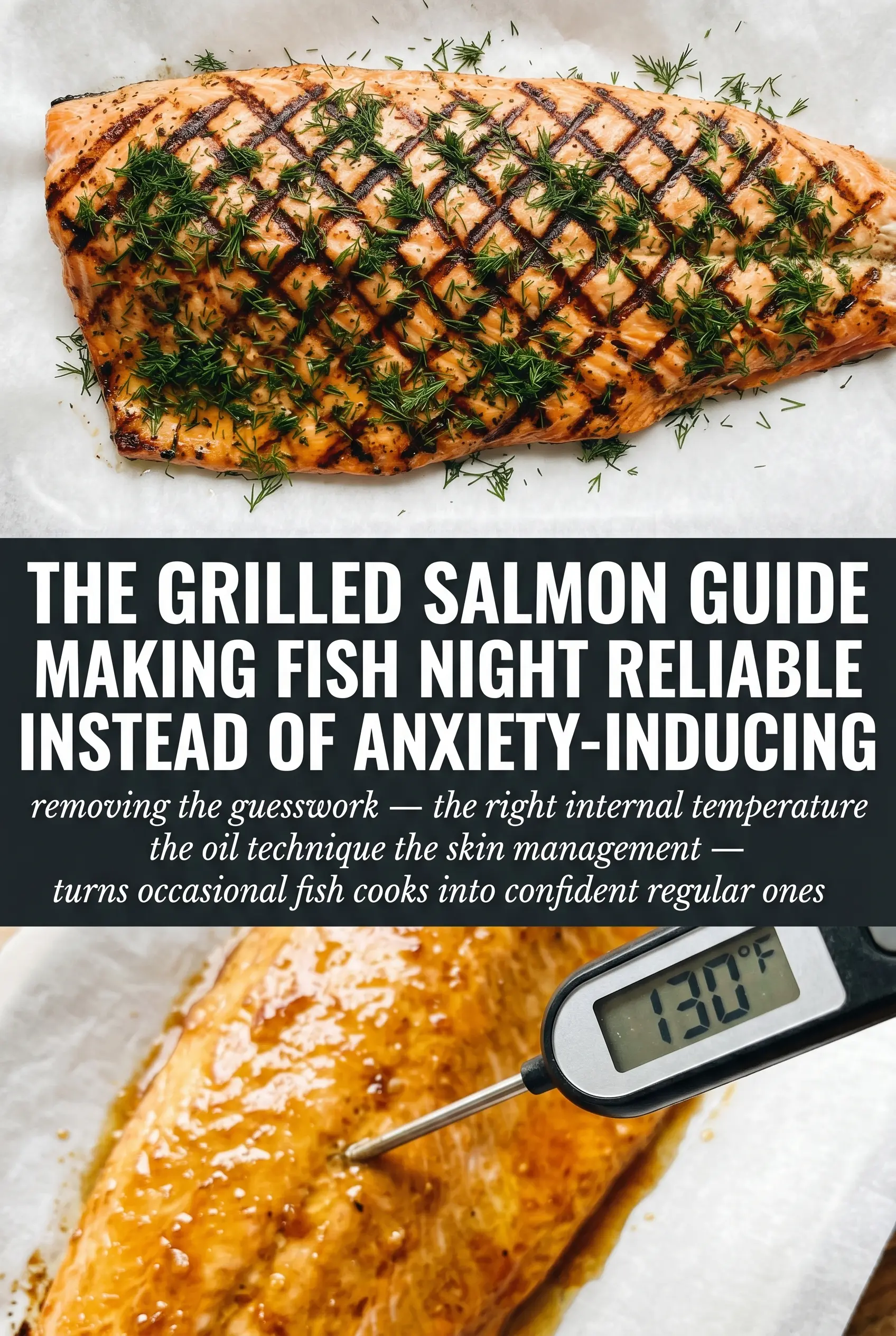
Flip the salmon carefully and cook it for 2 to 3 minutes more, just until it reaches your preferred doneness. For medium, 145°F is the target, but you can pull it a little earlier if you like the center more tender and translucent. If the fish is already close to done after the first side, shorten the second side even more. Overcooking happens fast here, and a minute too long takes the salmon from silky to dry.
Serving It Hot and Clean
Move the fillets to a platter and serve them right away with fresh dill and lemon wedges. The salmon should flake when pressed with a fork but still look moist in the center. If it clings to the spatula, it needs another moment; if it falls apart in the pan, it probably went too long before you flipped it. Grill marks are nice, but clean texture matters more.
How to Adapt This Grilled Salmon Without Losing the Texture
Dairy-Free and Naturally Gluten-Free
This recipe already fits both dairy-free and gluten-free eating as written, which is part of why it’s such a dependable weeknight main. Keep the seasoning simple and skip any bottled glaze that contains thickeners or hidden sugar if you want the cleanest result.
No Grill, Same Technique
A grill pan or cast-iron skillet works when the weather or equipment gets in the way. Heat it until very hot, add a thin film of oil, and use the same skin-side-down timing. You won’t get the exact smoky flavor, but you’ll still get crisp skin and tender flesh if you leave the fillets alone.
Swap the Herbs
Dill is classic, but parsley, chives, or tarragon also work well. Parsley keeps the flavor clean, chives add mild onion bite, and tarragon brings a light anise note that pairs nicely with lemon. Use one herb, not a heavy mix, so the salmon stays the center of the plate.
Storage and Reheating
- Refrigerator: Store leftovers in an airtight container for up to 3 days. The skin softens, but the fish still holds up well for lunch or salad.
- Freezer: Cooked salmon freezes, but the texture gets a little softer after thawing. Wrap tightly and freeze for up to 2 months if you need to save it.
- Reheating: Warm it gently in a low oven or covered skillet just until heated through. High heat dries salmon out fast, and the goal is to take the chill off without cooking it again.
Questions I Get Asked About This Recipe
How To Make The Best Grilled Salmon
Ingredients
Equipment
Method
- Pat the salmon dry and brush with a mixture of olive oil, lemon juice, and minced garlic. Make sure the seasoning coats the surface evenly for even flavor.
- Season generously with salt and pepper, then let the salmon sit for 15 minutes. Keep it at room temperature while it marinates.
- Preheat the grill to medium-high and oil the grates well. The surface should be hot enough to sizzle on contact for crisp skin.
- Place the salmon skin-side down and grill for 6-8 minutes without moving. Look for the skin to turn crisp and the edges to look opaque.
- Carefully flip the salmon and grill for 2-3 minutes more until desired doneness, 145°F for medium. The flesh should flake easily and remain tender in the center.
- Serve the grilled salmon with fresh dill and lemon wedges. Garnish right before eating for the brightest lemon flavor.