Pineapple banana bread bakes up with a tender, almost candied crumb and that warm banana aroma that makes people wander into the kitchen before it’s even cool enough to slice. The crushed pineapple keeps the loaf moist for days, but it also does something better than plain banana bread: it gives the crumb a little chew and a brighter, fruitier finish that keeps each slice from tasting heavy.
The trick is draining the pineapple well enough that the batter doesn’t turn watery, then using a few spoonfuls of the reserved juice to deepen the tropical flavor without loosening the structure. Mashed ripe bananas bring sweetness and body, while melted butter keeps the loaf rich and soft instead of cakey. The result is a quick bread with a golden top, a dense but tender crumb, and just enough fruit in every bite to make it feel special.
Below, I’ve included the part that matters most with this loaf: how to keep it from sinking in the center, why the pineapple needs to be handled a certain way, and the best swaps if you want to add coconut or nuts.
The loaf stayed incredibly moist for three days, and the pineapple kept the banana flavor from tasting flat. I liked that the crumb held together cleanly instead of getting gummy, which usually happens with fruit breads in my kitchen.
Love the moist, tropical crumb in this pineapple banana bread? Save it to Pinterest for the next time you have ripe bananas and a can of pineapple to use up.
The Pineapple Trick That Keeps This Loaf Moist, Not Wet
Fruit breads go wrong when the batter gets overloaded with liquid before the flour has a chance to build structure. Pineapple banana bread needs a little restraint. The crushed pineapple brings moisture and texture, but it has to be drained first or the loaf bakes up dense in the wrong way — heavy and gummy instead of tender and sliceable.
The reserved pineapple juice earns its place in the bowl because it adds concentrated fruit flavor without dumping a full can of extra liquid into the batter. That small amount is enough to brighten the bananas and keep the loaf from tasting one-note. If your bananas are speckled and soft, you already have enough sweetness. The pineapple is there to deepen that flavor, not to drown it.
- Crushed pineapple — Drain it well, then press out a little extra juice with the back of a spoon. You want the fruit, not the excess liquid. A few stubborn moist pockets are fine; a wet can is not.
- Ripe bananas — The browner the peel, the better the loaf. Under-ripe bananas won’t mash smoothly or bring enough sweetness, and the bread will taste flatter.
- Reserved pineapple juice — Two tablespoons is enough to sharpen the tropical flavor. More than that starts to loosen the batter, which can make the center collapse.
- Butter — Melted butter gives this bread a richer, silkier crumb than oil. Oil works in a pinch, but the flavor won’t be as rounded.
What Each Ingredient Is Doing in the Batter
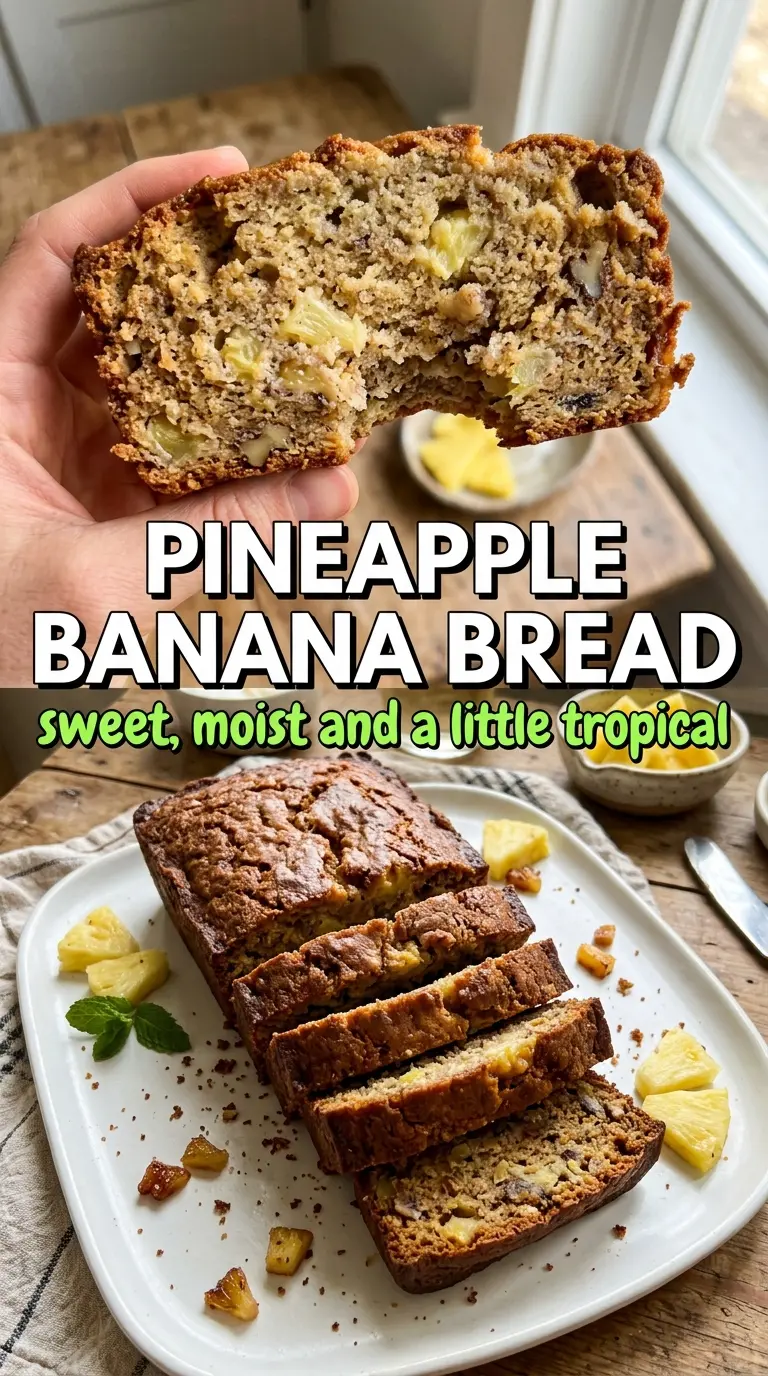
- Mashed bananas — They provide the backbone of the loaf’s sweetness and moisture. Mash them until mostly smooth, but a few small bits are fine and add texture.
- Eggs — They set the crumb so the bread slices cleanly. Use large eggs at room temperature if you can; cold eggs can make the melted butter seize slightly.
- All-purpose flour — This keeps the loaf sturdy enough to hold the pineapple. Bread flour would make it too chewy, and cake flour would make it fragile.
- Baking soda and baking powder — Banana and pineapple both need lift, but they’re also heavy ingredients. The combination gives enough rise without making the loaf puff up and then fall.
- Shredded coconut or macadamia nuts — Coconut leans the loaf farther into the tropical direction, while macadamias add buttery crunch. Either one is optional, but if you use them, fold them in at the very end so they stay distributed instead of sinking.
How to Mix It So the Center Bakes Through
Building the wet base first
Start by whisking the melted butter, sugar, eggs, vanilla, pineapple juice, and mashed bananas until the mixture looks thick and glossy. The sugar won’t fully dissolve, and that’s fine. What matters is that the eggs disappear and the bananas break down enough to coat the flour later. If the butter looks streaky or clumpy, the eggs were too cold; keep whisking and it will usually smooth out.
Bringing in the pineapple at the right moment
Stir in the drained crushed pineapple before the flour goes in. That gives the fruit a chance to spread evenly through the batter, which keeps you from ending up with a wet pocket in one corner of the loaf. Don’t beat it hard at this stage. Too much mixing crushes the pineapple into the batter and can make the crumb pasty.
Finishing with a light hand
Fold in the flour, baking soda, baking powder, and salt just until the dry streaks disappear. The batter should look thick and a little lumpy, not smooth like cake batter. Overmixing is the fastest way to make quick bread tough and tunnelled. If you’re adding coconut or nuts, fold them in after the flour is almost incorporated so you don’t overwork the batter trying to distribute them.
Knowing when the loaf is done
Bake until the top is deeply golden and a toothpick comes out clean or with a few moist crumbs, not wet batter. Because this loaf is dense with fruit, the center can look done before it actually is. If the top is browning too quickly while the middle still needs time, tent it loosely with foil for the last 10 to 15 minutes.
Add Coconut for a Sweeter Tropical Loaf
Stir in the shredded coconut with the dry ingredients for a loaf that tastes a little more like a vacation dessert than plain banana bread. It adds chew and a mild sweetness, but it also drinks up moisture, so don’t go overboard with the amount. The result is a slightly more textured crumb that stays interesting even when cold.
Use Macadamias for a Richer, Toastier Finish
Fold in chopped macadamia nuts if you want a little crunch against the soft fruit crumb. They add a buttery, almost creamy flavor that works especially well here. Toast them first for a deeper flavor, but let them cool before adding so they don’t warm the batter.
Make It Dairy-Free
Swap the butter for melted coconut oil or a neutral plant-based butter. Coconut oil pushes the bread even farther into tropical territory, while a neutral butter substitute keeps the flavor closer to the original. The texture stays tender, though coconut oil can firm up a bit more once the loaf cools.
Make Mini Loaves or Muffins
This batter works well in smaller pans or muffin tins, but the bake time drops fast. Start checking much earlier so the edges don’t dry out before the centers set. Smaller portions give you more caramelized edges and a slightly lighter crumb, which is handy if you want grab-and-go breakfast slices.
Storage and Reheating
- Refrigerator: Store slices in an airtight container for up to 5 days. The crumb stays moist, but the flavor is best at room temperature.
- Freezer: Freeze tightly wrapped slices or the whole loaf for up to 3 months. Wrap first in plastic, then foil, so the fruit doesn’t pick up freezer odors.
- Reheating: Warm slices in a toaster oven or a low oven until just heated through. Microwaving too long makes the crumb rubbery and can make the pineapple taste flat.
Questions I Get Asked About This Recipe
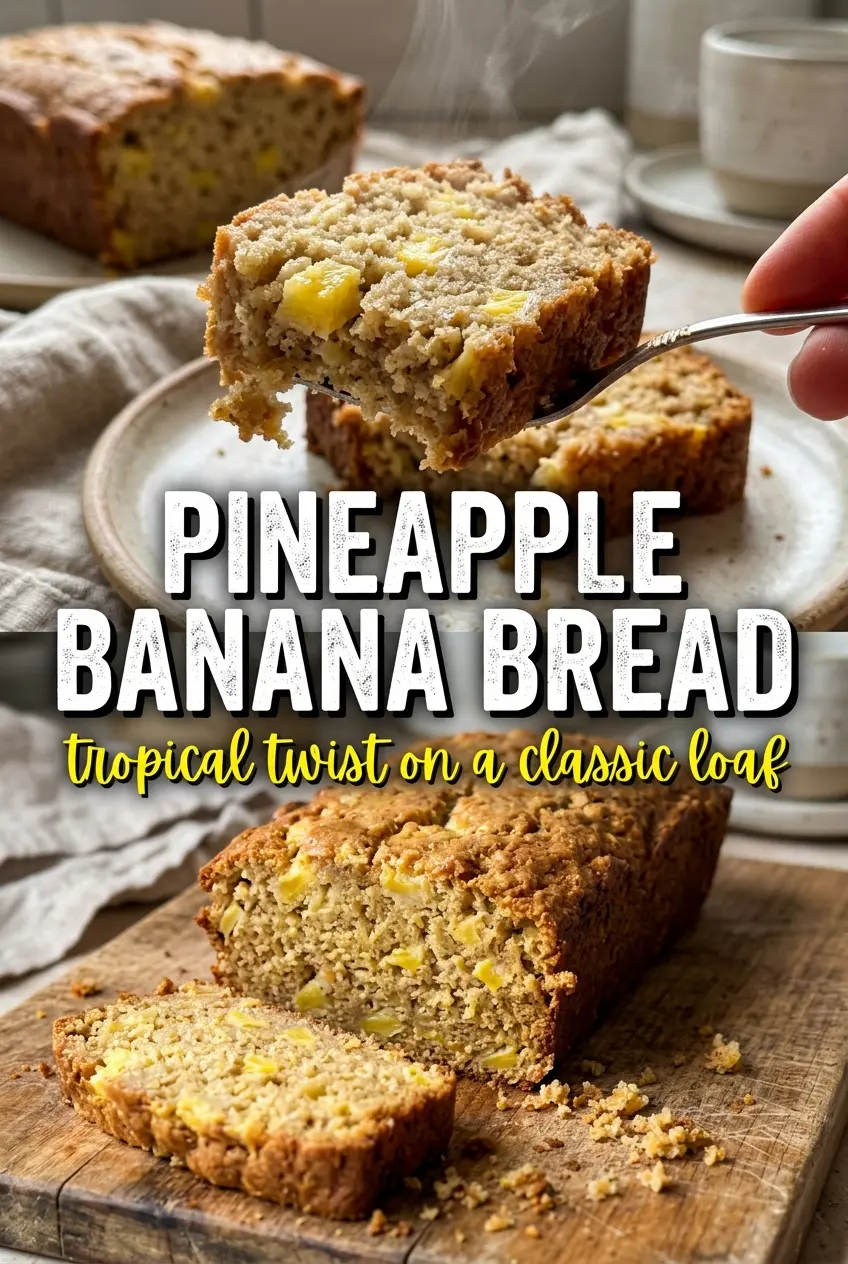
Pineapple Banana Bread
Ingredients
Equipment
Method
- Preheat oven to 350°F and grease a 9x5 loaf pan.
- Mash the ripe bananas until mostly smooth, keeping a few small lumps for texture.
- Whisk melted butter, sugar, eggs, vanilla extract, and reserved pineapple juice into the mashed bananas until combined.
- Stir in drained crushed pineapple.
- Fold in all-purpose flour, baking soda, baking powder, and salt until just combined, stopping as soon as no dry streaks remain.
- Fold in shredded coconut or macadamia nuts if using.
- Pour batter into the prepared loaf pan and bake for 60–70 minutes until deeply golden and a toothpick comes out clean.
- Cool in the pan for 15 minutes, then turn out so the moist crumb sets.