Pineapple chicken kabobs come off the grill with the kind of sweet-savory balance that keeps people hovering near the platter. The chicken picks up a glossy teriyaki-style glaze, the pineapple turns caramelized at the edges, and the peppers stay just crisp enough to give each bite some snap. It’s the kind of meal that looks like extra work and eats like you planned ahead.
What makes these kabobs work is the marinade: soy sauce for depth, pineapple juice for brightness, honey for browning, and garlic to keep the sweetness from taking over. The chicken needs enough time to absorb that flavor, but not so long that the acid starts to mess with the texture. Threading the pineapple with the chicken also matters, because the fruit bastes the meat as it cooks and helps the whole skewer stay juicy.
Below, I’ve included the timing that keeps the pineapple from turning mushy, the grill cue that tells you when the kabobs are ready to flip, and a few smart swaps if you need to work with what’s already in your kitchen.
The marinade gave the chicken a great gloss and the pineapple caramelized instead of steaming. I grilled them for about 6 minutes per side and the pieces stayed juicy all the way through.
Save these pineapple chicken kabobs for the nights when you want caramelized grill flavor, juicy chicken, and a fast tropical dinner on repeat.
The Reason These Kabobs Stay Juicy Instead of Drying Out
The biggest mistake with chicken kabobs is treating them like they need a long grill session to get there. Small cubes of chicken cook fast, and once they go past 165°F, they lose the tenderness that makes skewers worth making in the first place. The pineapple helps with moisture and flavor, but it can’t rescue overcooked chicken.
The other thing that changes the outcome is spacing. If you pack the pieces too tightly, the grill can’t kiss each surface with enough heat, and the vegetables start steaming instead of picking up color. Leave a little room between pieces so the edges char and the glaze can tighten without burning.
- Chicken breast — Breasts stay lean and clean-tasting here, but they only stay good if you cut the pieces evenly. Bigger chunks won’t cook at the same pace as the pineapple and peppers.
- Pineapple juice — This gives the marinade its bright sweetness. Fresh or canned both work, but use 100% juice, not a syrupy drink.
- Honey — It helps the glaze cling and caramelize. Swap in brown sugar if needed, but dissolve it well so you don’t end up with grainy spots.
- Wooden skewers — Soaking them matters. Dry skewers can scorch before the chicken is done, especially over medium-high heat.
What Each Piece Is Doing on the Skewer
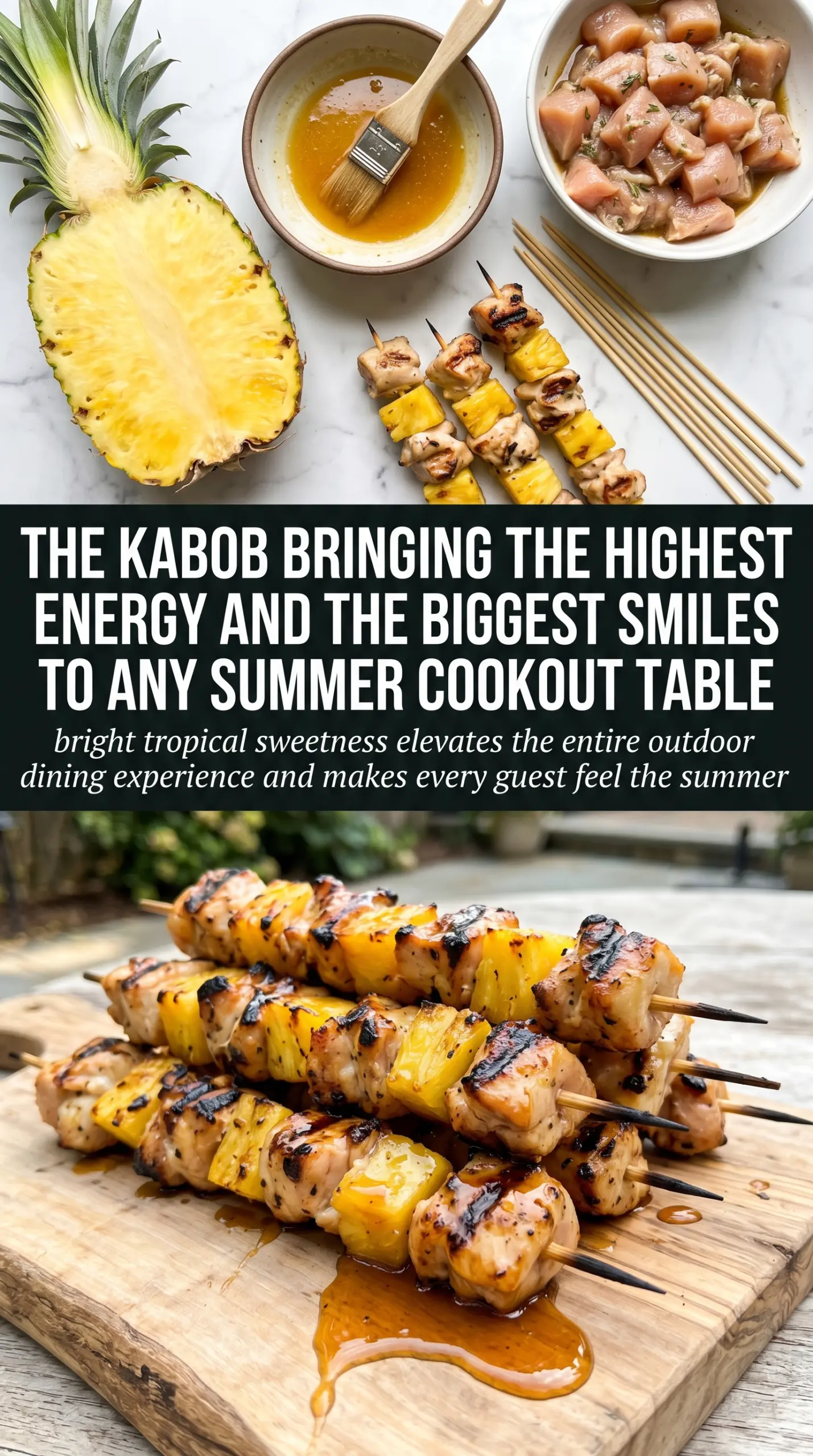
- Chicken breasts — Cubing them into even pieces keeps the grill time predictable. If your pieces vary a lot in size, the small ones will dry out before the big ones are safe.
- Pineapple — Fresh pineapple gives the best caramelized edges and the cleanest sweetness. Canned works in a pinch, but drain it well so it doesn’t flood the skewers.
- Bell peppers and onion — They bring color, crunch, and a little bitterness to balance the glaze. Cut them large enough that they won’t collapse over the fire.
- Soy sauce — This is the salty backbone of the marinade. Use regular soy sauce for the best balance; low-sodium works if that’s what you keep on hand, but the final flavor will be a touch softer.
How to Grill the Skewers Without Losing the Glaze
Mixing the Marinade
Stir the soy sauce, pineapple juice, honey, olive oil, and garlic until the honey is fully dissolved and the marinade looks glossy. If the honey sits in streaks at the bottom, it won’t coat the chicken evenly. The garlic should be minced fine enough that it clings to the meat without burning in big pieces later.
Marinating the Chicken
Let the chicken sit in the marinade for 1 to 4 hours. Less than an hour and the flavor stays on the surface; much longer than 4 hours and the texture can start to turn a little soft from the pineapple juice. Keep it chilled the whole time, and don’t reuse the raw marinade unless you boil it hard first or reserve some before adding the chicken.
Threading and Arranging the Skewers
Thread the chicken, pineapple, peppers, and onion in a pattern that keeps the pieces close but not smashed together. The goal is even heat, not a packed skewer. If the pieces are crowded, the vegetables steam and the chicken can trap moisture instead of browning.
Grilling to the Right Finish
Grill over medium-high heat for 5 to 6 minutes per side, basting with the marinade as they cook. You want caramelized edges on the pineapple and a golden surface on the chicken, not heavy black char. Pull the skewers when the chicken hits 165°F in the center and let them rest for a couple of minutes so the juices settle back in.
Three Ways to Work These Kabobs Around What You Have
Dairy-Free and Naturally Gluten-Free
These kabobs already fit both of those needs as written if you use a gluten-free soy sauce or tamari. That swap keeps the same savory backbone without changing the grilling method or the glaze.
Chicken Thighs Instead of Breasts
Boneless, skinless thighs bring a little more fat and stay juicier if you get distracted on the grill. They can take a minute or two longer than breasts, so watch the temperature instead of the clock.
No Grill, Use a Broiler
Set the kabobs on a foil-lined sheet pan and broil them close to the heat, turning once halfway through. The pineapple will still caramelize, but the browning happens faster, so stay nearby and watch for hot spots.
Make the Sweetness More Savory
Cut the honey back to 1 tablespoon and add a splash of rice vinegar or lime juice for a sharper finish. That version leans less sticky and more bright, which works well if you’re serving the kabobs with rice or a heavier side dish.
Storage and Reheating
- Refrigerator: Store leftovers in an airtight container for up to 3 days. The pineapple softens a bit, but the flavor holds up well.
- Freezer: The cooked kabobs freeze, but the vegetables lose their best texture after thawing. If you want to freeze ahead, pull the chicken and pineapple off the skewers and freeze them separately.
- Reheating: Warm gently in a skillet over medium-low heat or in a 300°F oven until heated through. High heat dries out the chicken fast and can turn the pineapple stringy.
Answers to the Questions Worth Asking
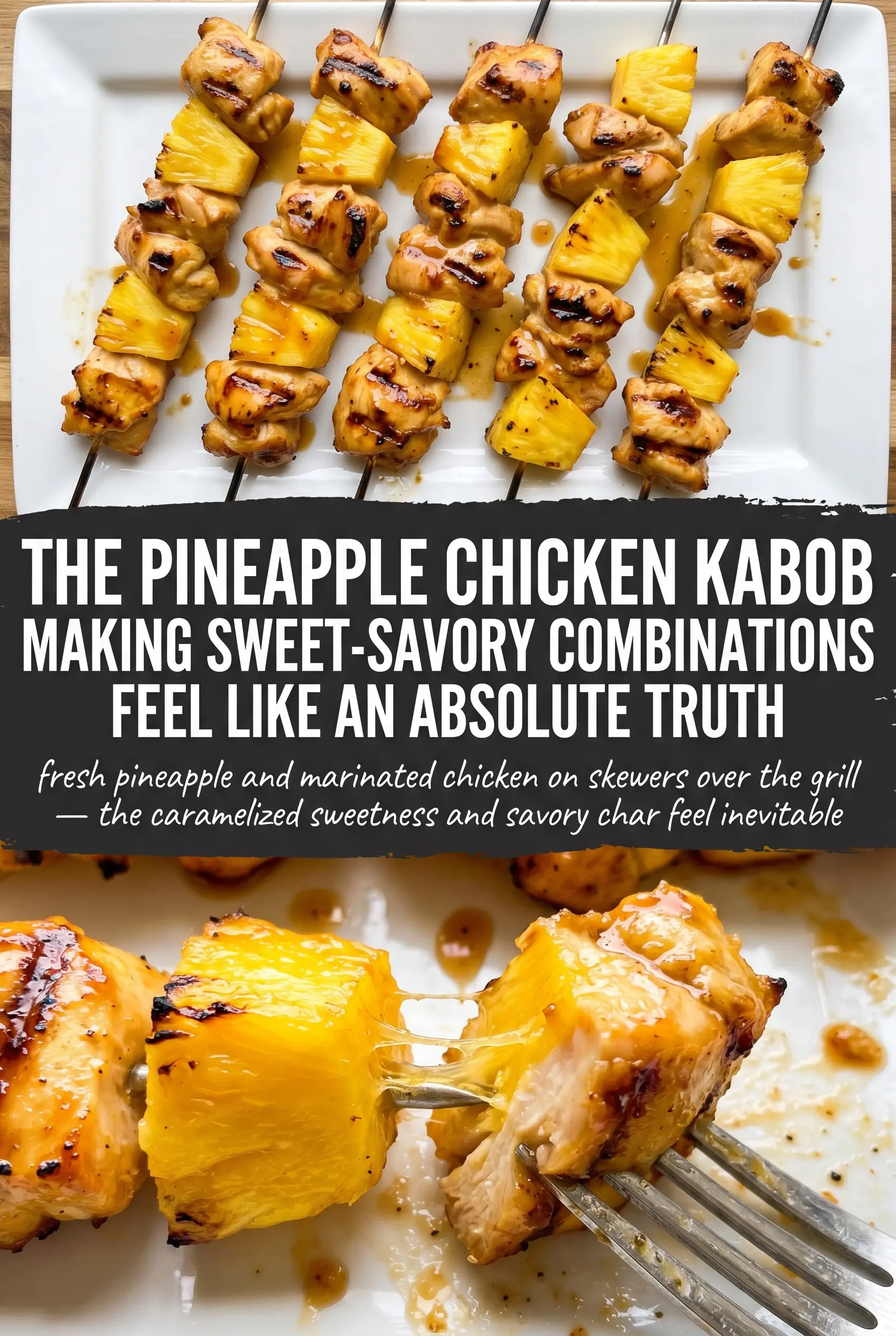
Pineapple Chicken Kabobs
Ingredients
Equipment
Method
- Mix soy sauce, pineapple juice, honey, olive oil, and garlic until fully combined and glossy. The mixture should look smooth enough to coat chicken cubes evenly.
- Add the chicken breasts to the marinade and turn to coat well. Marinate for 1-4 hours at refrigerator temperature, so the surface looks thoroughly stained and moist.
- Thread chicken, pineapple, peppers, and onion onto soaked wooden skewers in an alternating pattern. Arrange pieces so they touch lightly for caramelization, leaving small gaps so they char instead of steaming.
- Preheat the grill to medium-high heat and place the kabobs on the grates. Grill for 5-6 minutes per side, basting with the marinade as they cook so the glaze clings.
- Continue grilling until the chicken reaches 165°F and the pineapple is caramelized. Look for golden-brown grill marks and deeper amber color on the pineapple before removing.