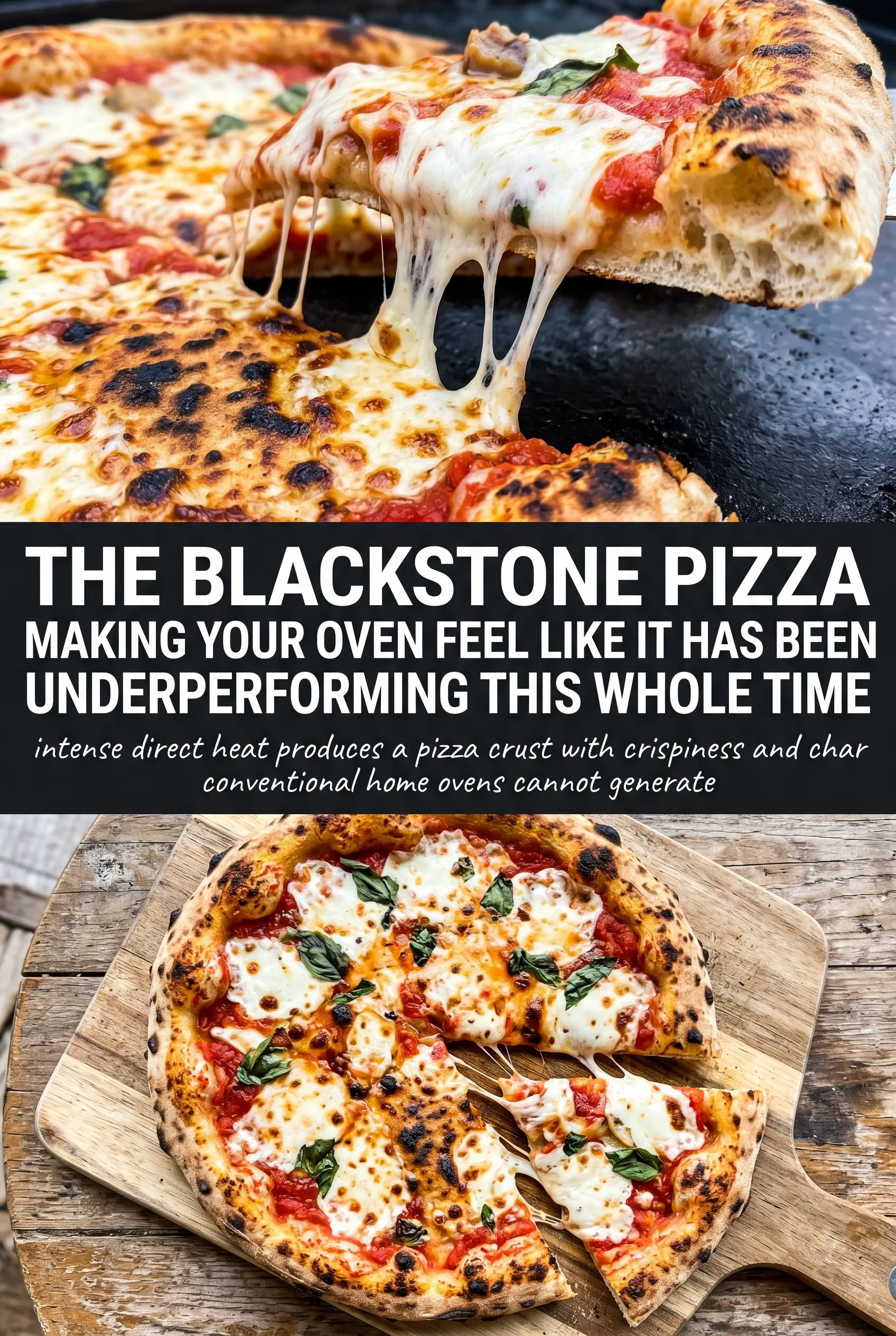
Pizza on a Blackstone griddle gives you something a regular oven can’t quite match: a crisp bottom, bubbling cheese, and those little charred spots that make the crust taste baked in all the right ways. The dough cooks fast on the hot steel, so the pizza stays thin, sturdy, and easy to slice without turning heavy or soggy.
The trick is to treat the griddle like a live surface, not a static pan. The first side needs enough time to set and brown before you flip it, and the toppings go on the cooked side so the dough can finish underneath without burning. A dome or inverted pan traps heat over the top, which melts the cheese quickly and keeps the crust from overcooking while you wait.
Below you’ll find the small details that make the difference, from stretching the dough without tearing it to knowing exactly when the bottom has enough color to flip. Once you get the rhythm, this becomes one of the easiest ways to make pizza for a crowd.
The crust got those perfect crispy edges on the griddle, and flipping it before adding the toppings kept the middle from getting soggy. My kids ate theirs before I even got mine cut.
Save this Blackstone pizza method for the nights you want a crisp crust, quick melt, and that charred griddle finish.
The Flip Is What Keeps the Crust Crisp, Not Soggy
Most griddle pizzas go wrong when the toppings hit dough that hasn’t set yet. The first side needs time to build structure and color, because once you flip it, that cooked surface becomes the base for sauce and cheese. If you add everything too early, the dough steams under the toppings and turns soft before it ever has a chance to crisp.
The other mistake is trying to cook the whole pizza on one side like a skillet pizza. A Blackstone works better when you use both sides of the dough: one side gets the initial crust, the second side gets the sauce and toppings while the heat finishes the bottom. That’s how you get a pizza that holds together when you slice it but still stays light in the center.
What the Dough, Oil, and Cheese Are Each Doing Here
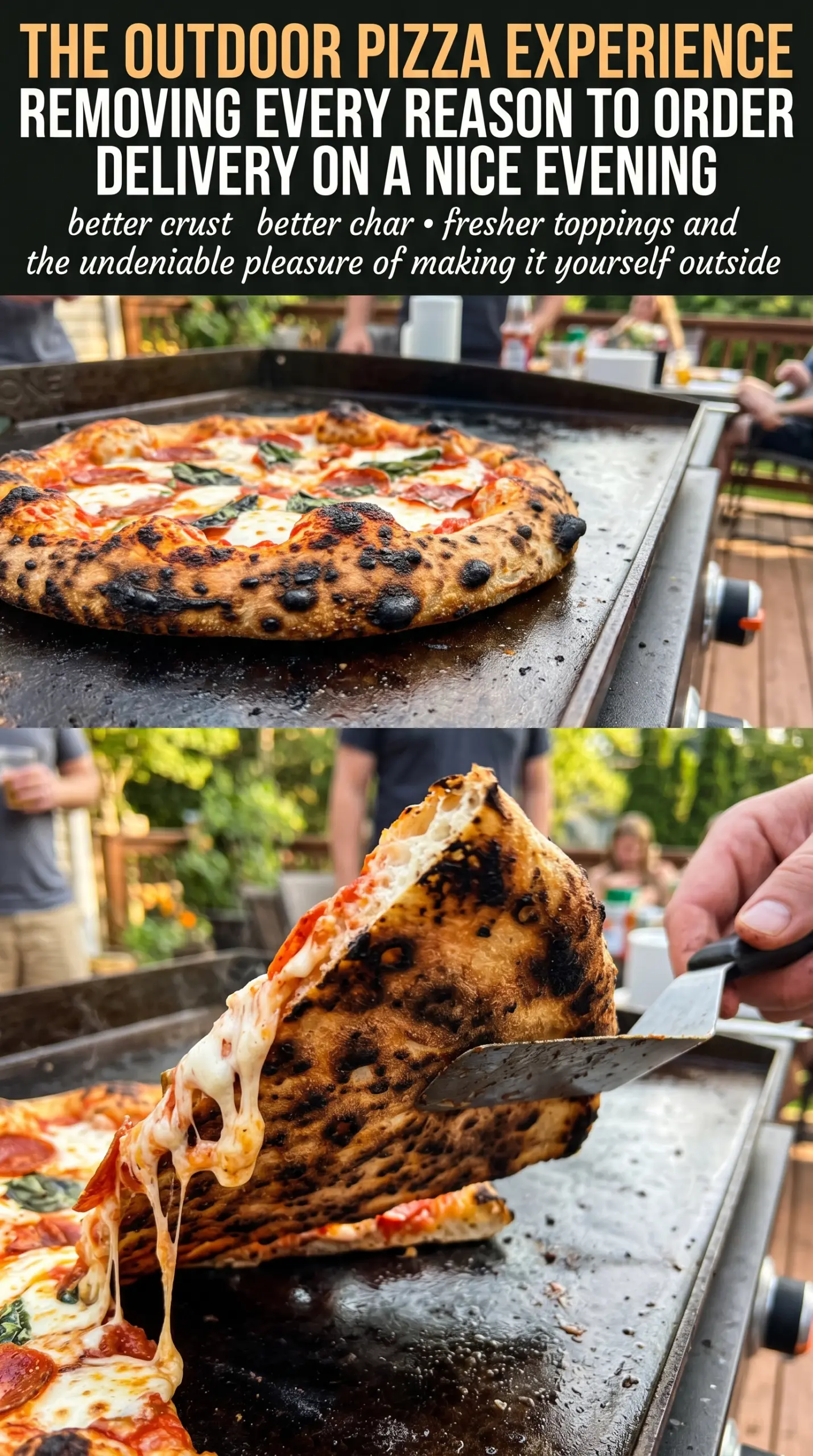
- Pizza dough — A dough with decent gluten strength stretches thin without ripping and crisps instead of collapsing. Store-bought dough works fine here as long as it has time to come to room temperature before you shape it; cold dough fights you and snaps back. If it keeps shrinking, let it rest for 10 minutes and try again.
- Olive oil — The oil helps the griddle release the dough and encourages browning on the surface that touches the steel. Don’t skip it, and don’t flood the griddle either; a thin film is enough. Too much oil can fry the crust instead of giving it that clean, toasted finish.
- Mozzarella cheese — Low-moisture shredded mozzarella melts evenly and gives you the stretchy, browned top you want. Fresh mozzarella tastes great, but it carries more water and can make the center sloppy unless you blot it well and use less of it. Pre-shredded is fine here and often the easier choice.
- Flour for dusting — A light dusting keeps the dough from sticking while you stretch and move it. Use just enough to handle the dough cleanly; too much flour on the griddle can leave a bitter, dusty taste on the crust. Shake off any heavy excess before the dough hits the heat.
Getting the Dough Set Before the Toppings Go On
Heating the Griddle Surface
Bring the Blackstone to medium heat and let the surface warm evenly before the dough touches it. If the griddle is too cool, the crust dries out before it browns; if it’s too hot, the bottom scorches before the center has time to set. A light slick of oil should shimmer, not smoke. That’s the cue that the surface is ready.
Stretching and Placing the Dough
Divide the dough into four portions and stretch each one into a thin round with your hands, using flour only as needed to prevent sticking. Press from the center outward so the middle stays thinner than the rim and cooks through at the same pace. If the dough springs back, stop and let it rest for a few minutes instead of forcing it. Tearing usually comes from pulling cold dough too hard.
Cooking the First Side
Lay the dough directly on the griddle and leave it alone until the bottom turns golden and releases cleanly, about 2 to 3 minutes. You’re looking for a set surface with browned spots, not a hard crust that’s already getting dark. If it sticks when you try to lift it, give it another 30 seconds. Pulling too soon is what rips the dough.
Flipping and Finishing Under the Dome
Flip the crust and work fast: sauce first, then cheese, then toppings. The cooked side is now the top, so keep the layer even and don’t pile on so much that the center stays wet. Cover with a dome or large pan for 3 to 5 minutes until the cheese is fully melted and the bottom has crisped again. Finish with basil and Parmesan after it comes off the heat so the herbs stay bright.
How to Change the Toppings Without Losing the Crust
Dairy-Free Griddle Pizza
Use a good melting dairy-free mozzarella and keep the layer thinner than you would with regular cheese. Many plant-based cheeses brown less aggressively, so the dome becomes even more important for melting. The crust and sauce still carry the pizza, so the result stays satisfying even if the cheese pulls differently.
Gluten-Free Dough on the Griddle
Use a gluten-free pizza dough that’s meant to be stretched or pressed, not a batter-style crust. It usually needs a bit more oil and a gentler flip because it won’t have the same elasticity as wheat dough. The payoff is still a crisp exterior, but the texture will be more tender and less chewy.
Meat Lover’s Version
Use toppings that are already cooked, like pepperoni, cooked sausage, or chopped ham, because the pizza finishes too quickly on the griddle for raw meat to cook safely. Drain any greasy toppings before they go on or the center will turn slick. This version gets extra savory without adding much more work.
Make-Ahead Dough for a Crowd
Portion the dough and let it sit covered at room temperature before you start cooking so every round stretches evenly. You can also pre-shape the rounds and stack them with parchment if you’re cooking for a group, which makes the griddle workflow much smoother. The pizzas come off fastest when all your toppings are measured and ready before the first dough hits the heat.
Storage and Reheating
- Refrigerator: Store leftovers in an airtight container for up to 3 days. The crust softens a bit in the fridge, but it still reheats well.
- Freezer: Freeze slices wrapped individually for up to 2 months. Reheat from frozen for the best texture instead of thawing first, which can make the crust go limp.
- Reheating: Warm slices in a skillet or on a dry griddle over medium-low heat until the bottom crisps and the cheese melts again. The oven works too, but the microwave will soften the crust and undo the best part of the pizza.
Questions I Get Asked About This Recipe
Pizza on a Blackstone Griddle
Ingredients
Equipment
Method
- Heat your Blackstone griddle to medium heat, then lightly oil the surface so the dough releases easily.
- Keep the griddle at medium heat as you portion the dough for consistent browning.
- Divide the pizza dough into 4 portions and stretch each into a thin round, dusting with flour as needed to prevent sticking.
- Place the first round directly on the griddle and cook for 2-3 minutes until the bottom is golden.
- Flip the crust and quickly add pizza sauce, shredded mozzarella cheese, and your choice of toppings to the cooked side.
- Cover with a dome or large pan and cook for 3-5 minutes until the cheese melts and looks bubbling.
- Remove the pizza from the griddle and top with fresh basil leaves and grated Parmesan cheese for a fresh finish.
- Slice and serve immediately while the crust is crisp and the cheese stays stretchy.