Ranch garlic Parmesan chicken skewers land with the kind of salty, savory crust that makes people reach for a second skewer before they’ve finished the first. The chicken stays juicy inside, the edges pick up a little char, and the Parmesan clings just enough to build those golden, flavor-packed spots on the grill.
What makes this version work is the balance in the marinade. Ranch dressing brings tang and fat, olive oil helps the coating spread, and the Parmesan gives you more than flavor — it helps the chicken brown instead of drying out. The garlic and ranch seasoning do the heavy lifting, but the short marinating time keeps the texture clean instead of muddy.
Below, I’ve included the small details that matter most: how to keep the cheese from burning too fast, why soaked skewers help, and the best way to get those skewers off the grill at exactly the right moment.
The ranch and Parmesan made this so flavorful, and the chicken stayed juicy even after 6 minutes per side on the grill. I served it with extra dip and there wasn’t a skewer left.
Save these Ranch Garlic Parmesan Chicken Skewers for a grilled dinner with a salty Parmesan crust and extra ranch for dipping.
The Marinade That Browns Instead of Slipping Off
The biggest mistake with cheesy chicken skewers is loading them up with too much dairy and too little structure. If the coating is too loose, it drips off the chicken before the grill can do any work. This version uses ranch dressing, olive oil, and grated Parmesan in a ratio that clings to the chicken instead of pooling at the bottom of the bowl.
Let the chicken sit long enough to pick up the seasoning, but not so long that the surface gets wet and slippery. Thirty minutes is enough for flavor to settle in, and two hours is the outer edge I’d use before the texture starts to lose its clean bite. The Parmesan helps with browning, but it also burns if the grill is too hot, so medium-high heat is the sweet spot.
What Each Ingredient Is Actually Doing in the Skewers
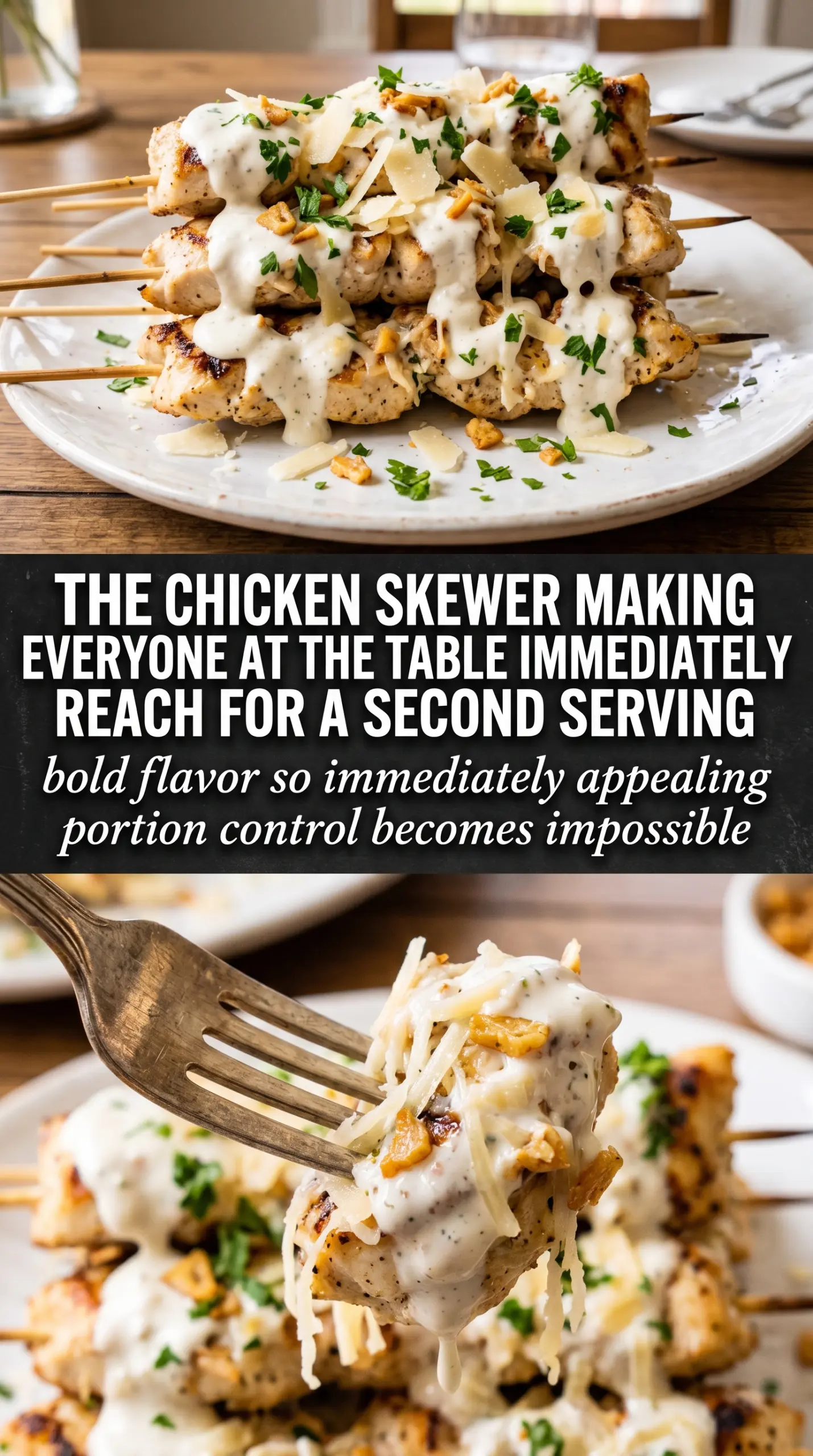
- Chicken breasts — Cut them into even chunks so they cook at the same pace. Chicken thighs work too if you want a little more forgiveness on the grill, but breasts give you a cleaner bite and hold the ranch-Parmesan coating well.
- Ranch dressing — This is the moisture and tang in the marinade. A thicker bottled ranch sticks better than a thin homemade version, so use the full-fat kind if you want the coating to stay on the meat instead of running off.
- Parmesan cheese — Grated Parmesan gives the skewers their savory crust and helps with browning. Use finely grated Parmesan here, not big shreds, because the smaller pieces spread more evenly and don’t fall off as easily.
- Ranch seasoning mix — This intensifies the ranch flavor without adding extra liquid. If you only have a smaller packet or a low-sodium version, keep the salt in the marinade modest and adjust after grilling.
- Garlic and Italian seasoning — The garlic gives the marinade bite, and the Italian seasoning keeps the flavor from tasting flat. Fresh minced garlic works best, but if you use jarred garlic, use a little less because it can read sharper after grilling.
- Olive oil — This loosens the marinade just enough to coat the chicken evenly and helps the grill marks form. Don’t skip it; without the oil, the cheese and seasonings can clump and scorch.
- Soaked wooden skewers — They keep the sticks from burning before the chicken is done. If you’re using metal skewers, you can skip the soak, but with wood, the soak is worth the 20 minutes.
Grilling the Chicken So the Cheese Stays Golden
Building the Coating
Mix the ranch dressing, olive oil, Parmesan, garlic, ranch seasoning, Italian seasoning, salt, and pepper until the marinade looks thick and speckled. It should cling to a spoon and coat the chicken in a thin layer, not sit like a puddle at the bottom of the bowl. If it looks too thick to spread, add a small splash of olive oil. If it looks watery, the cheese won’t stay on long enough to brown.
Letting the Chicken Take on Flavor
Toss the chicken chunks in the marinade until every side is coated, then cover and refrigerate for 30 minutes to 2 hours. That window gives the seasoning time to settle without turning the surface soft. Longer than that and the ranch can start to dull the texture instead of helping it. If you’re short on time, even 20 minutes is worth doing.
Skewering for Even Cooking
Thread the chicken pieces onto the soaked skewers with a little space between each chunk. Crowding them too tightly traps steam, and steam is the enemy of a good grilled crust. Leave just enough room for heat to move around the meat. If the pieces are packed edge to edge, the outside will brown before the centers are done.
Grilling to 165°F
Preheat the grill to medium-high heat and oil the grates lightly so the cheese doesn’t weld itself to the bars. Grill the skewers for 5 to 6 minutes per side, turning once the first side releases easily and shows deep golden patches. Pull them when the thickest piece hits 165°F in the center. If the Parmesan is darkening too fast, move the skewers to a slightly cooler spot on the grill and finish them there.
The Finish
Let the skewers rest for a few minutes before serving with extra ranch. That short pause keeps the juices in the chicken instead of running onto the plate the second you cut into it. A squeeze of lemon or a sprinkle of chopped herbs works well if you want a fresher finish, but the skewers are strong enough to stand on their own.
How to Adapt These Skewers for Different Nights
Dairy-Free Version
Use a dairy-free ranch and skip the Parmesan, then add 2 to 3 tablespoons of nutritional yeast for a savory note. You’ll lose the salty crust that Parmesan gives, but the skewers will still taste ranchy and grill up nicely. Brush the chicken lightly with oil before grilling so the seasoning doesn’t dry out.
Chicken Thigh Skewers
Boneless, skinless thighs give you a juicier result and forgive a little overcooking, which is useful if your grill runs hot. Cut them into the same size as the breast pieces and expect a slightly richer bite with more browned edges.
Oven or Broiler Method
If you don’t have a grill, bake the skewers on a lined sheet pan at 425°F or broil them close to the heat source, turning once. The broiler gives the best color, but watch closely because the Parmesan can go from golden to burnt fast. Baking takes a few minutes longer and gives a softer crust.
Storage and Reheating
- Refrigerator: Store leftover skewers in an airtight container for up to 3 days. The coating softens a bit as it sits, but the flavor holds well.
- Freezer: Freeze the cooked chicken off the skewers for up to 2 months. The texture is a little less juicy after thawing, so freezing works best for quick lunches or chopped salads.
- Reheating: Reheat in a 350°F oven or air fryer until warmed through. Avoid the microwave if you want to keep the edges from turning rubbery and the coating from separating.
Answers to the Questions Worth Asking
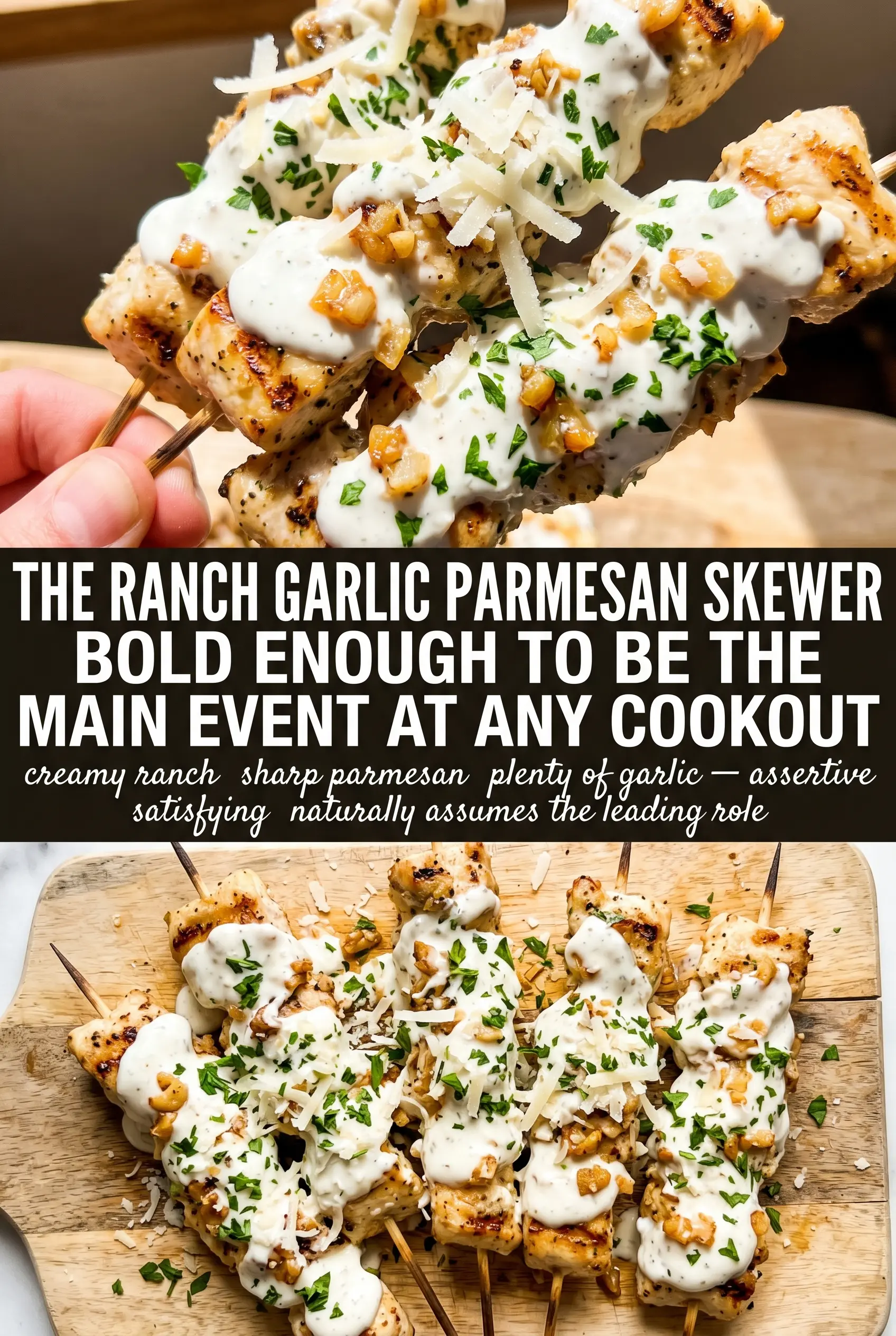
Ranch Garlic Parmesan Chicken Skewers
Ingredients
Equipment
Method
- Mix ranch dressing, olive oil, Parmesan, garlic, ranch seasoning mix, Italian seasoning, salt, and pepper until combined.
- Add chicken chunks and stir to coat completely, then cover and refrigerate.
- Marinate the chicken for 30 minutes to 2 hours in the refrigerator so the flavors soak in.
- Thread the chicken onto soaked wooden skewers, leaving small gaps so heat can reach all sides.
- Preheat the grill to medium-high heat.
- Grill skewers for 5-6 minutes per side, turning once, until chicken reaches 165°F with visible golden parmesan crust.
- Serve hot with extra ranch for dipping, alongside the skewers for easy party-style snacking.