Juicy tomatoes, creamy mozzarella, and sweet blueberries make this Red, White & Blue Caprese Salad more than a pretty platter. The mix of ripe, savory, milky, and tart flavors works because each bite lands a little differently: one bite is soft and rich, the next is bright and fresh, and the blueberries keep the whole thing from tasting flat. It’s the kind of appetizer people lean toward first, then go back for again because it feels light but still has enough substance to matter.
The key is using tomatoes and mozzarella that are both sliced thick enough to hold their shape. Thin slices go limp fast and start leaking onto the plate before you even get to the table. A good balsamic glaze gives you concentrated sweetness without watering down the salad, and the basil should go on at the end so it stays fragrant instead of bruised.
Below, I’ve included the small details that make this platter look polished and taste balanced, plus a few smart swaps if you need to adjust for what’s in the fridge.
The wreath looked gorgeous on the table, and the blueberries with the balsamic glaze were the part everyone kept asking about. The tomatoes stayed juicy but not soggy, which made the whole salad feel fresh right up to the last bite.
Save this red, white, and blue Caprese wreath for the kind of appetizer that looks festive, tastes fresh, and comes together in 15 minutes.
The Reason This Wreath Stays Crisp Instead of Getting Watery
The biggest mistake with a Caprese-style platter is stacking everything too early and letting the tomatoes sit in their own juice. Once the salt hits, moisture starts moving fast, and that liquid will puddle under the mozzarella if the plate is already dressed and waiting around. This version works best when the tomatoes and mozzarella are cut to the same thickness, arranged with a little breathing room, and finished right before serving.
The wreath shape helps more than people think. It keeps the blueberries from rolling everywhere, gives the drizzle somewhere to land, and makes the salad look full without having to overload the platter. If your tomatoes are especially juicy, let the slices drain briefly on paper towels before assembling. That one small step keeps the whole thing neat instead of slippery.
What Each Ingredient Is Doing in the Salad
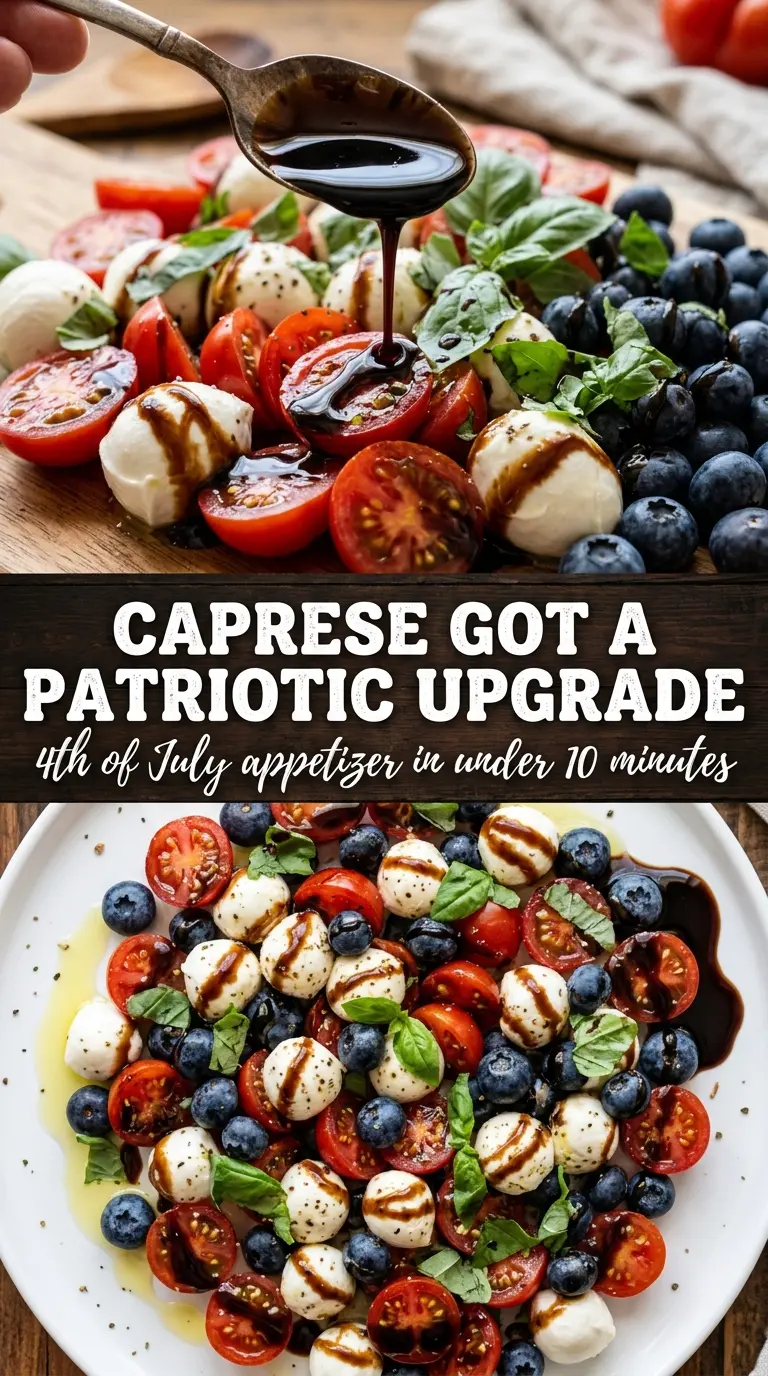
- Heirloom or beefsteak tomatoes — These are the backbone of the dish, so use tomatoes with real flavor, not just a pretty color. Heirlooms bring more character, but beefsteaks work well if they’re ripe and heavy for their size. Slice them thick enough to hold the wreath shape without collapsing.
- Fresh mozzarella — This gives the salad its creamy, milky contrast. Pre-sliced mozzarella tends to be firmer and less delicate, so I’d only use it if that’s what you have. Fresh mozzarella packed in water is the best choice because it stays soft and tastes clean against the tomatoes and basil.
- Fresh blueberries — The blueberries are more than decoration here. They add a sweet, juicy pop that wakes up the whole platter and makes the red-white-blue idea work without turning the salad into a gimmick. Use firm berries so they hold up against the drizzle and don’t bleed onto the cheese.
- Fresh basil — Basil is what pulls everything back toward classic Caprese territory. Tear the leaves only if they’re large; otherwise leave them whole so they don’t blacken or bruise before serving.
- Balsamic glaze — This is different from regular balsamic vinegar. Glaze clings to the salad instead of running off, so you get sweetness and acidity in every bite without making the plate watery. If you only have balsamic vinegar, reduce it first until syrupy.
- Extra virgin olive oil — A good olive oil softens the edges of the tomatoes and mozzarella and helps the salt spread across the platter. This is a place where quality matters, since you’ll taste it directly.
Building the Wreath So the Platter Holds Together
Layer the slices with overlap
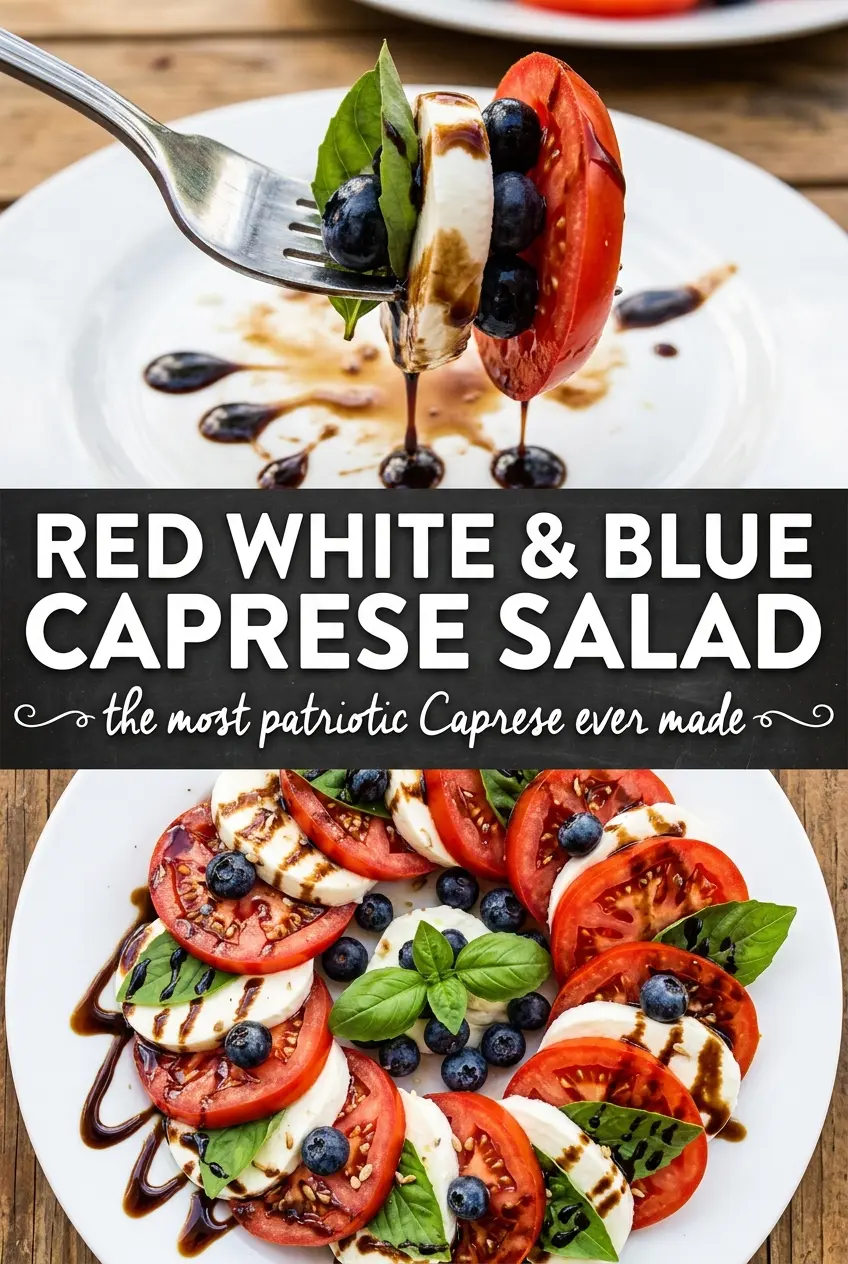
Start with the tomato and mozzarella slices arranged in a loose circle, alternating them as you go. Let each slice overlap the next by about a third so the platter looks full and the pieces support each other. If the slices are too far apart, the blueberries will crowd the gaps in an uneven way and the whole salad will look scattered instead of intentional.
Tuck the blueberries into the open spaces
Once the base ring is set, nestle the blueberries between the slices and around the outer edge. Don’t dump them on top; they should look tucked in, like they belong there. If the berries are especially large, use fewer of them so they don’t overpower the cheese and tomatoes.
Finish after the platter is assembled
Drizzle the olive oil and balsamic glaze over the salad only after everything is arranged. If you do it too soon, the slices slide and the basil wilts before the plate reaches the table. Finish with flaky salt and black pepper at the very end so the seasoning stays on the surface instead of dissolving into the juices.
How to Adapt This for Different Tables and Diets
Make It Dairy-Free
Swap the mozzarella for thick slices of avocado or a plant-based mozzarella that slices cleanly. You’ll lose the classic milky bite, but you’ll keep the creamy texture that balances the tomatoes and blueberries. Use a little extra olive oil and a touch more salt to make up for the missing richness.
Turn It Into a True Gluten-Free Appetizer Board
The salad itself is already gluten-free, but serving it on a board with crackers or crostini turns it into a fuller appetizer spread. Keep the dressing light so the bread stays crisp for scooping. If you’re serving a crowd, put the bread on the side instead of under the salad so it doesn’t go soggy.
Use Strawberries for a Sweeter, More Dessert-Like Version
If you want a softer sweet note, swap the blueberries for halved strawberries. The result is less sharp and a little more playful, but the strawberries need to be dry and ripe so they don’t water down the plate. This version works especially well when the tomatoes are at their peak and you want the fruit to feel deliberate rather than extra.
Storage and Reheating
- Refrigerator: Best eaten right away. If you have leftovers, store them covered for up to 1 day, but expect the tomatoes to release more juice and the basil to darken.
- Freezer: Don’t freeze this salad. Fresh mozzarella and tomatoes both change texture in a way that turns the dish mushy after thawing.
- Reheating: No reheating needed. If the leftovers are cold from the fridge, let them sit at room temperature for 10 to 15 minutes so the olive oil loosens and the flavors come back to life.
Answers to the Questions Worth Asking
Red, White & Blue Caprese Salad
Ingredients
Method
- Arrange alternating slices of tomato and mozzarella in an overlapping circle or wreath pattern on a large serving platter.
- Tuck fresh blueberries in between and around the slices to fill gaps and add the blue element.
- Scatter fresh basil leaves throughout.
- Drizzle with extra virgin olive oil and balsamic glaze evenly across the whole platter.
- Finish with flaky sea salt and cracked black pepper and serve immediately.