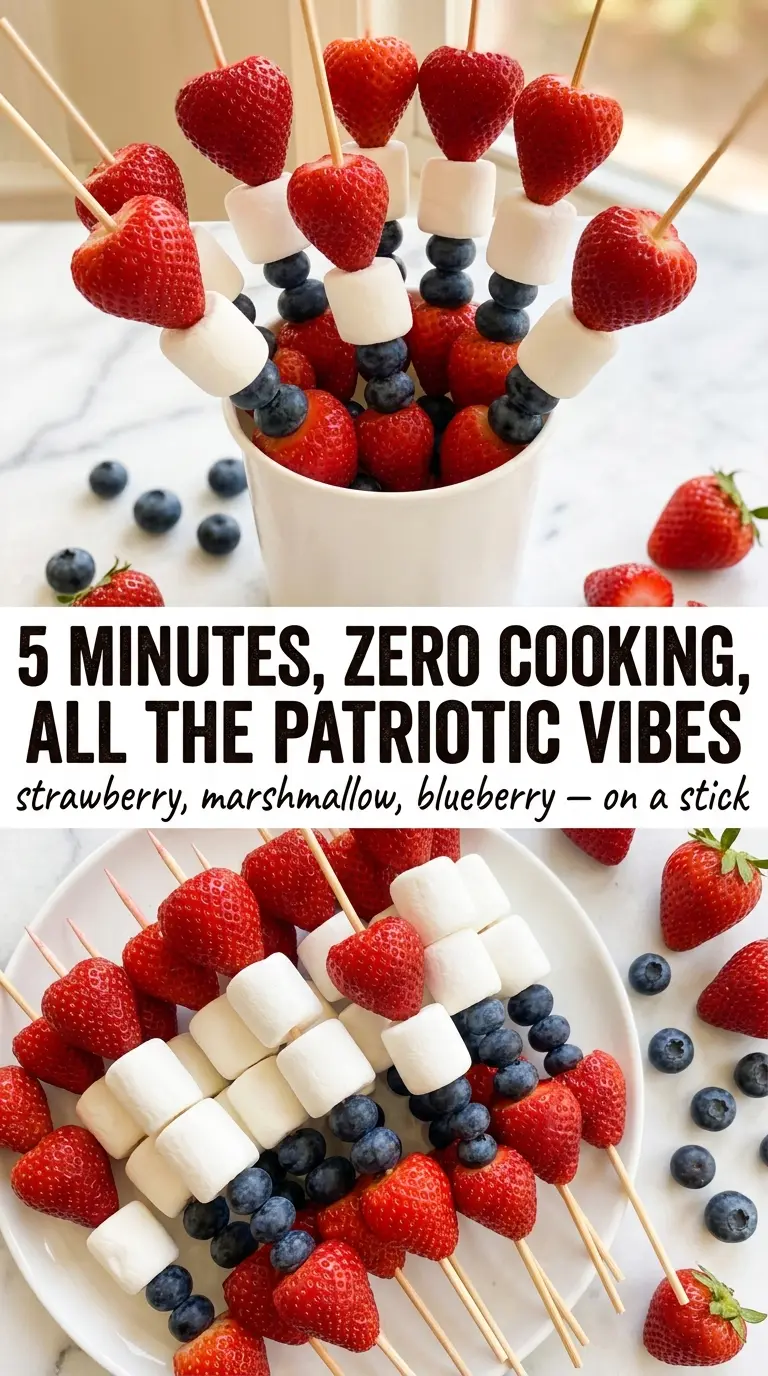
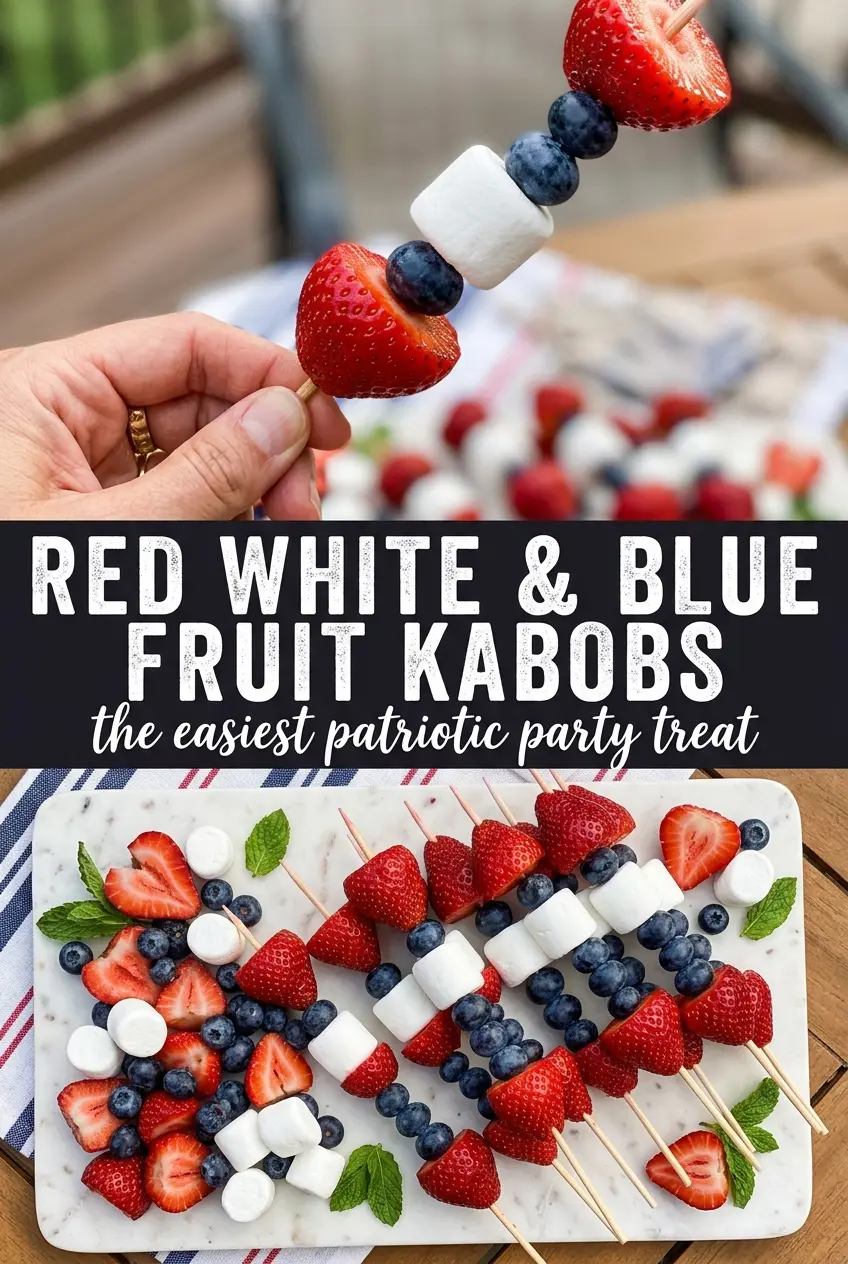
Red, white, and blue fruit kabobs disappear fast because they hit the sweet spot between playful and practical. They look festive on a platter, but they also solve the easiest kind of party food problem: one-handed, no-mess bites that guests can grab without hovering around a bowl. The pattern matters here. When the strawberries, marshmallows, and blueberries are threaded in a repeating sequence, each skewer looks intentional instead of tossed together at the last minute.
This version works because the fruit is chosen for contrast as much as color. Strawberries bring juiciness, blueberries stay neat and firm, and the marshmallows give the kabobs a soft, candy-like middle that makes the whole thing feel a little more fun than plain fruit salad. Halving the strawberries when they’re large keeps the skewers balanced and helps them stay put. If you use grapes instead of marshmallows, you get a fresher, less sweet version that still reads clearly on the platter.
Below, I’ve included the small details that keep the kabobs looking tidy and tasting their best, plus a few swaps that make them work for different crowds.
The strawberries stayed bright, the blueberries didn’t bleed, and the marshmallows held everything together without sliding around. I made these two hours ahead and they still looked perfect on the tray.
Save these Red, White & Blue Fruit Kabobs for a patriotic platter that stays bright, neat, and easy to grab.
The Trick to Keeping Fruit Kabobs Neat Instead of Slipping Apart
The biggest issue with fruit kabobs isn’t the flavor. It’s the build. Soft fruit and marshmallows can slide around if the skewer is packed too loosely, and that’s when the platter starts looking messy instead of festive. The fix is simple: thread each piece snugly enough that it sits flush against the next one, but don’t smash the strawberries so hard they split.
Blueberries help anchor the pattern because they’re firm and round. Marshmallows add visual contrast, but they’re the piece most likely to tear if the skewer is dull or the fruit underneath is overhandled. If your strawberries are very large, halving them gives you a flatter surface and keeps the finished kabobs from rolling all over the tray.
- Strawberries — These carry the red color and the freshest flavor. If they’re oversized, halve them so the kabobs stay balanced and easier to eat.
- Blueberries — Small blueberries look best here because they stay tidy and give the skewer a clean, dotted rhythm. Bigger berries work, but the kabobs can start to feel bulky.
- Marshmallows or grapes — Marshmallows make the kabobs feel more like party food and soften the fruit-only sweetness. White grapes are the best swap if you want something less sugary and a little firmer.
- Wooden skewers — Standard skewers are fine, but blunt bamboo picks are easier for kids and less likely to split delicate fruit. If you’re using longer skewers, repeat the pattern more times instead of leaving a lot of empty stick at the end.
What Each Ingredient Is Actually Doing in This Recipe
- Primary ingredient (the star) — Quality matters most. Choose the best you can find.
- Cooking medium (oil, butter, or broth) — This carries flavors and prevents dryness.
- Seasonings (salt, pepper, spices, herbs) — Layer flavors so nothing overpowers. Build depth gradually.
- Aromatics (garlic, onion, herbs) — Cook with fat to bloom flavors. Become the foundation.
- Supporting ingredients — Complement the main ingredient without overpowering it.
- Sauce or liquid (if applicable) — Brings flavors together. Balance richness with acid.
- Acid (lemon, vinegar, wine, or other) — Brightens and prevents flat-tasting results.
- Final finish (garnish, glaze, or sauce) — Prevents one-dimensional taste and adds visual appeal.
Thread the Pattern Before the Fruit Starts Warming Up
Washing and Drying the Fruit
Wash the strawberries and blueberries, then dry them well. Any extra moisture makes the skewers slippery and can make the marshmallows stick in a way that tears them when people grab the kabobs. Hull the strawberries and halve the larger ones so every piece is close to the same size. That keeps the finished line even and easier to thread.
Building the Red, White, and Blue Sequence
Start each skewer with a blueberry, then a marshmallow, then a strawberry, and repeat the pattern two or three times depending on skewer length. Pushing the fruit close together gives the kabob structure without crushing anything. If you leave gaps, the pieces drift around and the whole skewer looks less polished. Keep the exposed tip of the skewer visible so guests can handle it comfortably.
Chilling for the Cleanest Presentation
Lay the finished kabobs on a tray in a single layer and refrigerate until serving. Cold fruit holds its shape better, and the marshmallows stay firmer instead of getting sticky. Don’t stack them on top of each other or the colors can smear and the fruit can bruise. If you’re making them ahead, stop at the two-hour mark for the best texture.
How to Adapt These Kabobs for Different Crowds
Use White Grapes Instead of Marshmallows
Swap the marshmallows for seedless white grapes if you want a less sweet, more fruit-forward kabob. Grapes hold their shape better in warmer weather and make the whole tray feel fresher, but they lose that soft, playful candy-shop contrast. This is the best version when you’re serving alongside savory appetizers and want the platter to lean lighter.
Make Them Kid-Size
Use shorter bamboo picks and thread just one blueberry, one marshmallow, and one strawberry half on each stick. Smaller kabobs are easier for little hands to manage and don’t fall apart as quickly. You lose some of the dramatic striped look, but you gain a party snack that gets eaten without much help.
Go Fully Fruit-Only
Replace the marshmallows with more grapes or cubes of firm pineapple if you want a naturally sweet, dairy-free, vegetarian-friendly version that still keeps the patriotic color pattern. The result is less dessert-like and a little more refreshing. Pineapple adds a sharper bite; grapes keep the flavor mellow and the texture uniform.
Storage and Reheating
- Refrigerator: Store assembled kabobs covered in the fridge for up to 2 hours before serving. After that, the fruit stays safe but the marshmallows can start to sweat and soften.
- Freezer: Don’t freeze these. The strawberries and blueberries turn soft and watery once thawed, and the marshmallows lose their texture completely.
- Reheating: No reheating needed. Serve them chilled straight from the refrigerator for the cleanest texture and best presentation.
Questions I Get Asked About This Recipe
Red, White & Blue Fruit Kabobs
Ingredients
Method
- Wash and prep all fruit by hulling the strawberries and leaving the blueberries whole, then pat everything dry for clean threading.
- Thread each skewer in a repeating pattern of 1 blueberry, 1 marshmallow, and 1 strawberry, repeating 2–3 times per skewer depending on skewer length.
- Line the completed skewers on a serving platter or tray so they stay uniform and easy to grab.
- Refrigerate the kabobs until ready to serve, up to 2 hours ahead, keeping them covered to prevent drying.
- Serve chilled as a grab-and-go party appetizer or dessert.