Roasted tomato basil soup lands with a deeper, sweeter tomato flavor than the stovetop version most people know. Roasting the vegetables first coaxes out the natural sugars in the tomatoes and onions, and the garlic turns mellow and almost spreadable instead of sharp. The result is a soup with body, not just brightness, and it tastes like the tomatoes actually had time to become themselves.
The balsamic vinegar matters here because it keeps the soup from tasting flat after the cream goes in. A small spoonful of sugar isn’t there to make the soup sweet; it rounds off the acid from the tomatoes and vinegar so the finish stays balanced. I also like using fresh basil at the end instead of cooking it from the start, since that keeps the flavor clean and grassy instead of muted.
Below, I’ve laid out the part that makes the biggest difference in the texture, plus the substitutions I’d actually use if I had to work with what was in the kitchen. The grilled cheese croutons are worth the extra minute, too.
The soup blended up silky and the roasted garlic took the sharp edge off the tomatoes. I added the cream at the end like suggested and it stayed smooth, not grainy.
Save this roasted tomato basil soup for the nights when you want a silky, roasted-tomato bowl with basil and grilled cheese croutons.
The Roast That Gives This Soup Its Depth
The biggest mistake with tomato soup is trying to build all the flavor in the pot. Tomatoes need time under high heat to concentrate, and that’s what gives this soup its deep color and roasted edge instead of a thin, canned-tomato taste. Once the vegetables are caramelized, the soup only needs a short simmer before blending.
Watch the edges of the tomatoes and onion, not the clock. You want browned spots and some char on the cut surfaces, but not blackened vegetables that taste bitter. The garlic should be soft enough to squeeze out of the skins with no resistance. If the pan looks dry near the end, that’s normal; the olive oil and tomato juices are doing the work.
- Roma or vine tomatoes — Roma tomatoes give you less water and a denser, smoother soup. If you use very juicy tomatoes, roast them a few minutes longer so the flavor concentrates before blending.
- Olive oil — This carries the roast and helps the vegetables brown instead of steam. Use a good everyday extra-virgin oil here; the flavor shows up in the final bowl.
- Balsamic vinegar — This isn’t just for acidity. It gives the soup a darker, rounder finish that plain lemon juice won’t replicate. Add it before blending so it gets fully integrated.
What Each Ingredient Is Actually Doing in the Pot
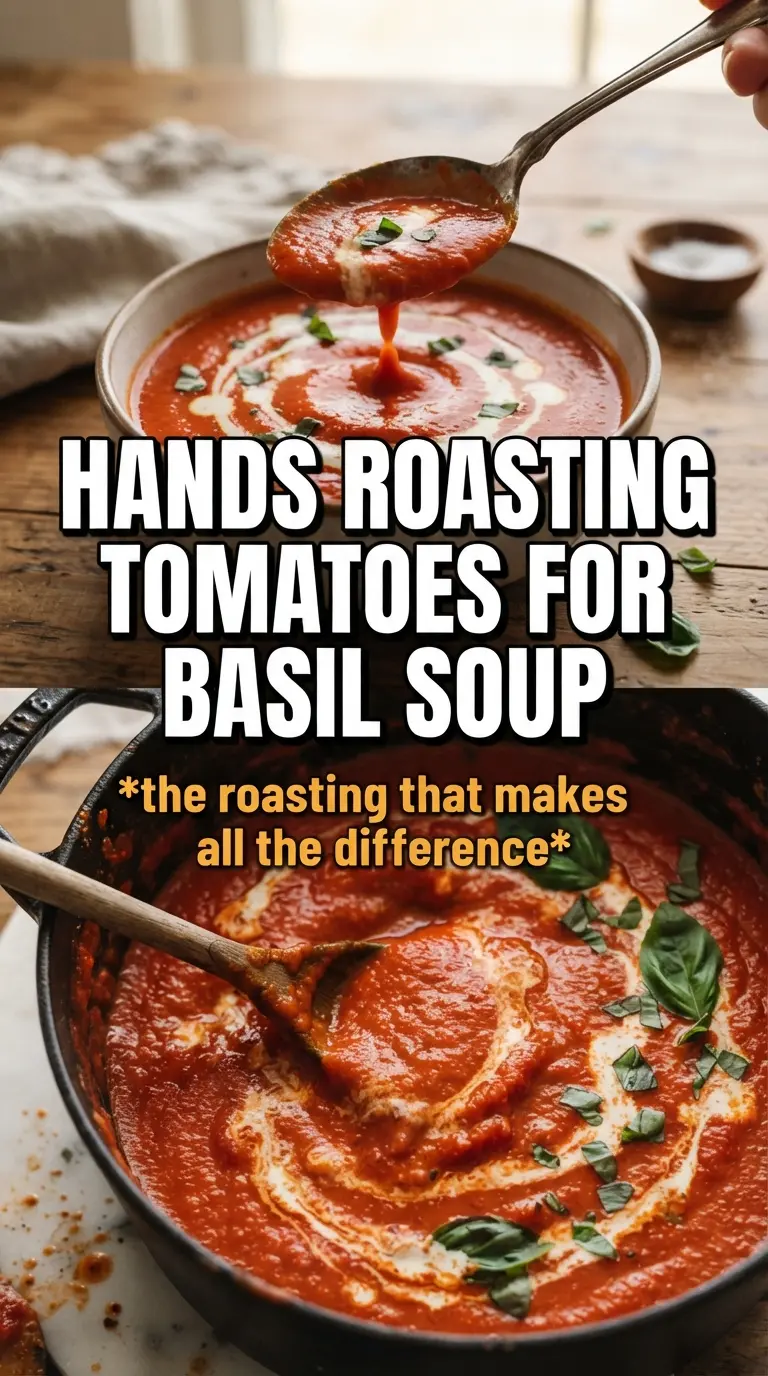
- Heavy cream — This softens the sharp edges and makes the soup feel full, not thin. If you need a lighter version, half-and-half works, but the finish will be less plush and a little less stable.
- Fresh basil — Add it at the end so the flavor stays bright. If basil cooks too long, it turns dark and loses that clean, peppery note that makes tomato soup taste fresh.
- Dried oregano — This adds a background savory note that plays well with roasted tomatoes. Don’t skip it unless you’re replacing it with another herb, because the soup needs that extra layer once the cream goes in.
- Sugar — Use it as a balance tool, not a sweetener. A little can smooth out tart tomatoes or a sharper balsamic, especially if your tomatoes weren’t peak-ripened.
Blending, Finishing, and Keeping the Soup Silky
Roasting Until the Edges Brown
Spread the tomatoes, onion, and garlic in a single layer so they roast instead of steam. The tomatoes should collapse a bit, the onion should pick up browned edges, and the garlic should feel soft when you press the paper skins. If the pan is crowded, you’ll get watery vegetables and a flatter soup.
Building the Base in the Pot
Transfer everything to a large pot, then add the broth and balsamic vinegar before blending. The liquid helps the immersion blender move cleanly through the vegetables and keeps the texture smooth. Blend until the soup looks completely even, with no visible tomato skins or onion pieces.
Finishing with Cream and Basil
Once the soup is smooth, stir in the cream and basil and keep the heat low. If the soup boils after the cream goes in, it can taste slightly dull and lose its silky texture. Simmer just long enough for the basil to soften and the soup to come together, then taste for salt, pepper, and whether it needs the sugar.
Make It Dairy-Free Without Losing Body
Swap the heavy cream for full-fat coconut milk or an unsweetened plain oat cream. Coconut milk gives the soup a slightly sweeter finish, while oat cream stays more neutral. Either one keeps the texture plush, but the flavor will be a touch less rich than the dairy version.
Use Vegetable Broth for a Vegetarian Pot
Vegetable broth works cleanly here and keeps the soup fully vegetarian. Choose one that isn’t heavily seasoned, or the basil and roasted tomato flavor gets buried. If your broth is salty, hold back on added salt until the very end.
Make It Thicker and More Rustic
Use a little less broth and blend only until mostly smooth, leaving a few tiny bits of roasted tomato and onion. That gives you a heartier texture that sits nicely under grilled cheese croutons. It won’t be as silky, but it will feel more like a full meal.
Storage and Reheating
- Refrigerator: Store for up to 4 days in an airtight container. The flavor gets a little deeper after a night in the fridge.
- Freezer: Freeze for up to 3 months, but expect a slight texture change because cream-based soups can separate a bit when thawed. For the smoothest result, freeze the soup before adding the cream, then stir the cream in after reheating.
- Reheating: Reheat gently over low to medium-low heat and stir often. Don’t boil it hard, or the cream can split and the basil flavor will fade.
Answers to the Questions Worth Asking
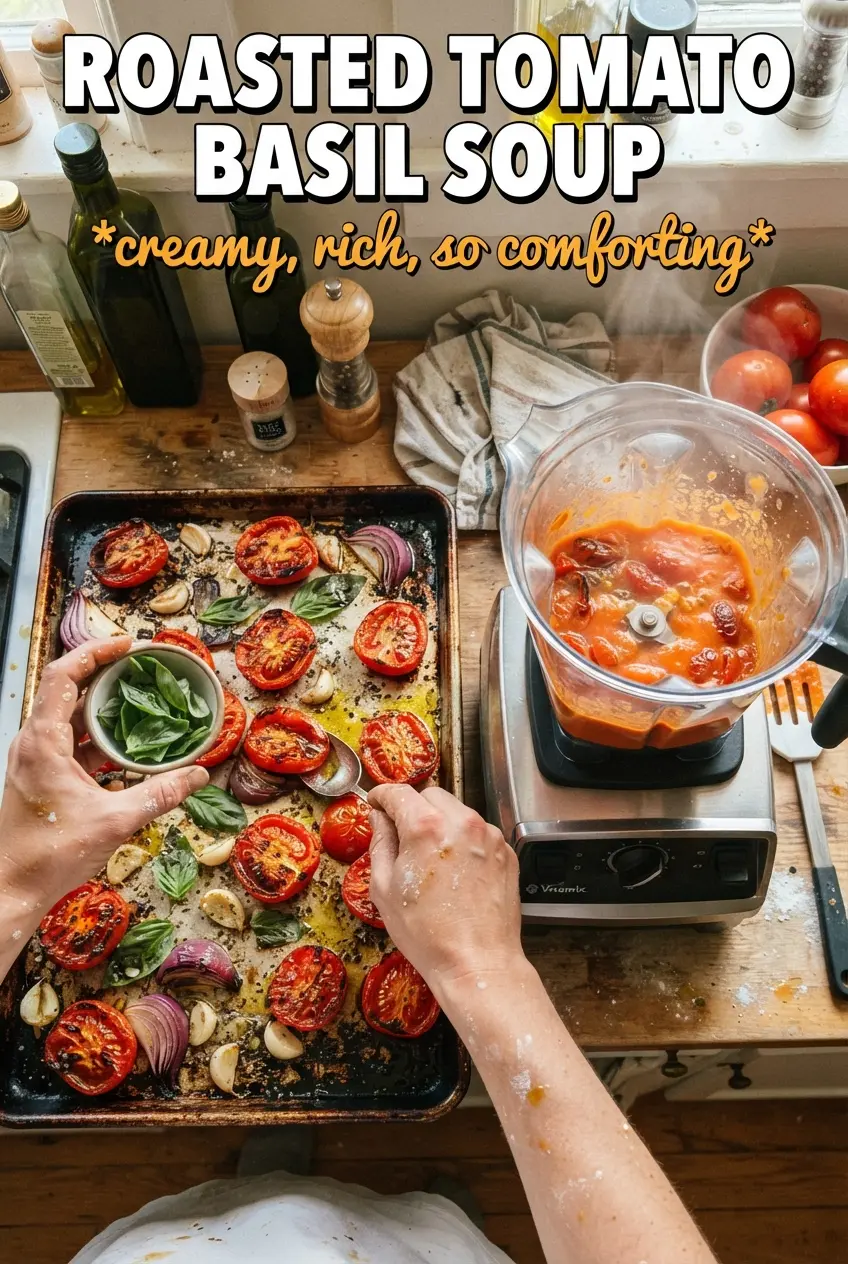
Roasted Tomato Basil Soup
Ingredients
Equipment
Method
- Preheat the oven to 425°F and arrange the tomatoes, garlic, and onion on a rimmed baking sheet.
- Drizzle with 1/4 cup olive oil, then season with salt, pepper, and oregano until the vegetables are evenly coated.
- Roast for 35-40 minutes, until caramelized and slightly charred at the edges.
- Squeeze the roasted garlic from its skins, then transfer all roasted vegetables to a large pot.
- Add the broth and balsamic vinegar, then blend smooth with an immersion blender.
- Stir in the heavy cream and fresh basil, then simmer for 10 minutes.
- Add the sugar and season with salt and pepper to taste.
- Serve hot with grilled cheese croutons or crusty bread.