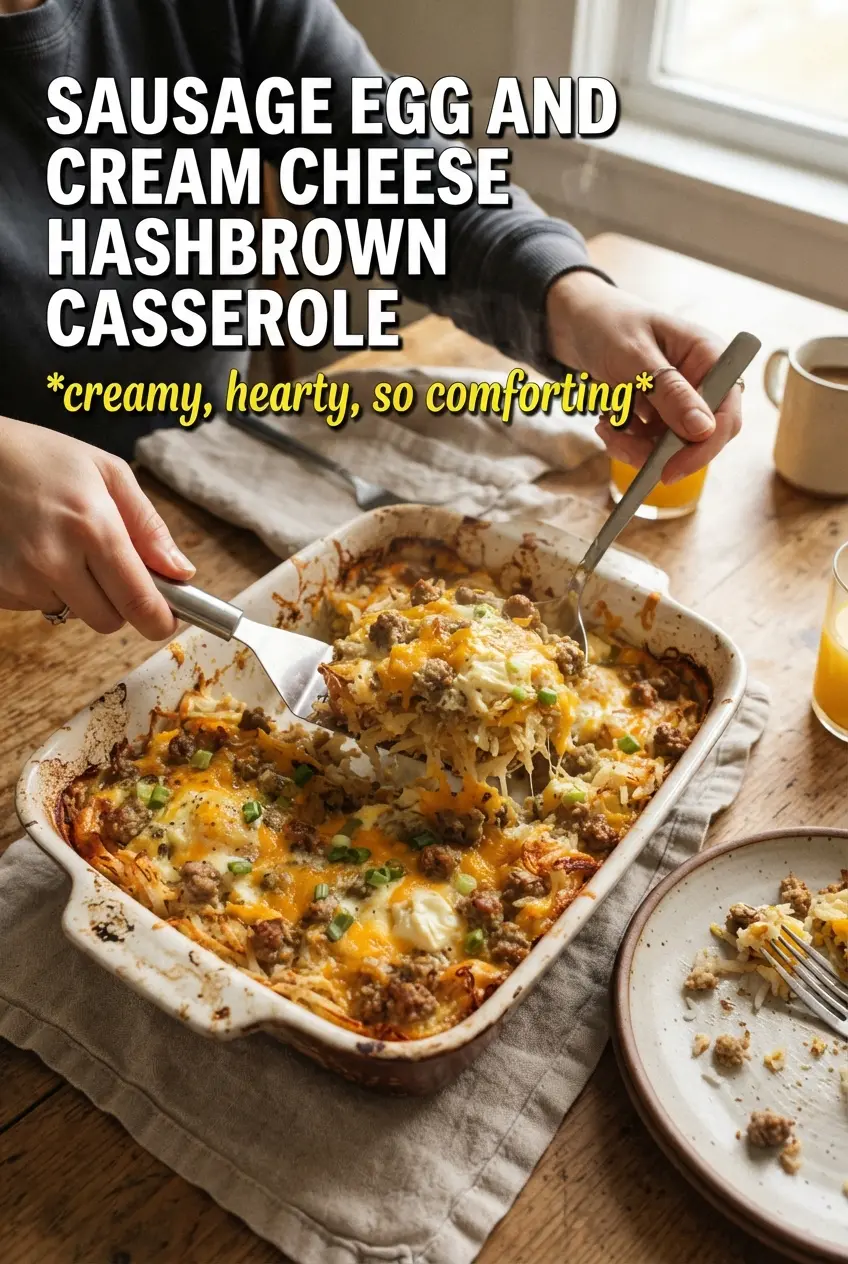
Sausage egg and cream cheese hashbrown casserole comes out with the kind of layers people remember: crisp edges, a tender egg center, smoky sausage in every bite, and little pockets of cream cheese that melt into the hash browns as it bakes. The top turns deeply golden and cheesy while the middle stays soft and custardy instead of dry, which is exactly what you want from a breakfast casserole that has to feed a crowd.
What makes this version work is the balance of fat and moisture. The cream cheese and sour cream keep the eggs rich and prevent the hash browns from baking up dusty, while the sausage brings enough seasoning that the casserole tastes full-bodied without needing a long ingredient list. Thawing the hash browns first matters too. If they go into the pan icy, they steam instead of baking, and you lose the edges that give the dish its best texture.
Below, I’ve broken down the one detail that keeps casseroles from turning watery, plus the ingredient swaps that actually hold up if you need to adjust for what’s in the fridge.
The hash browns stayed tender underneath, but the edges baked up crisp and the cream cheese melted into little creamy pockets instead of disappearing. I served it for brunch and the pan was empty fast.
Save this sausage egg and cream cheese hashbrown casserole for a golden, make-ahead breakfast that slices cleanly and feeds a crowd.
The One Thing That Keeps This Casserole From Turning Watery
The biggest mistake with breakfast casseroles like this is loading them up with too much moisture before the eggs have a chance to set. Frozen hash browns hold on to water, and if they’re still icy, that water ends up in the baking dish instead of evaporating in the oven. Thawing them first, then seasoning the potato layer before anything wet goes on top, gives the casserole a better shot at baking up tender instead of soggy.
The cream cheese also changes the texture in a good way. It doesn’t just add richness; it melts into the eggs and potatoes, giving the casserole a softer, almost velvet-like bite. If you scatter the cubes over the sausage rather than mixing them into the egg mixture, you get small pockets of creaminess instead of one heavy, dense layer.
- Thawed hash browns — These need to be fully thawed so they can bake instead of steam. If they still feel icy, spread them on a towel for a few minutes and blot off excess moisture before they go into the dish.
- Eggs plus milk and sour cream — This is the custard that holds everything together. The sour cream keeps the eggs from baking up rubbery and gives the casserole a softer set.
- Softened cream cheese — Cold cream cheese stays in hard chunks. Softened cream cheese melts into the casserole and gives you those creamy bites throughout.
- Cooked breakfast sausage — Brown it first and drain off excess grease. Too much fat in the pan will pool at the bottom and make the hash browns greasy instead of crisp around the edges.
What Each Ingredient Is Doing in the Pan

- Breakfast sausage — This is the main seasoning engine. Mild sausage keeps the casserole classic, while hot sausage adds more bite without changing the method.
- Eggs — They set the casserole. If you underbake it, the center will wobble like wet custard; if you overbake it, the eggs tighten and the casserole turns dry.
- Cream cheese — This gives the filling body and richness. Cut it into small cubes so it melts more evenly instead of leaving big cold spots.
- Hash browns — They provide the base and absorb the custard without falling apart. Shredded hash browns work best here because they bake into a cohesive layer while still giving you texture.
- Sharp cheddar — Sharp cheddar brings salt and bite, which matters in a casserole with a lot of creamy ingredients. Mild cheddar works, but the finished dish tastes flatter.
- Sour cream — This is the quiet ingredient that keeps the casserole tender. Plain Greek yogurt can stand in if needed, but it brings a little more tang and a slightly firmer texture.
Getting the Layers to Bake Up Clean Instead of Muddy
Building the Potato Base
Grease the baking dish well, then spread the thawed hash browns in an even layer so the bottom has a chance to brown a little before the eggs sink in. Season this layer directly. That’s where the flavor starts, and it keeps you from having to overwork the egg mixture later. If the potatoes are piled unevenly, the casserole will bake with dry corners and a soft center that never quite matches the rest of the pan.
Adding the Sausage and Cream Cheese
Scatter the cooked sausage over the potatoes in an even layer so every serving gets some meat. Then drop the softened cream cheese cubes over the top. Don’t stir them in. They need to melt where they land so you get creamy pockets instead of a blended, heavy filling. If the cream cheese is still stiff, it won’t melt before the eggs set, and you’ll end up with cold spots.
Pouring the Egg Custard
Whisk the eggs, milk, sour cream, and smoked paprika until the mixture looks smooth and slightly thickened, then pour it slowly over the casserole. Tilt the dish a little if needed so the custard reaches the corners. The goal is full coverage without disturbing the layers underneath. If you dump it in too fast, the liquid settles in one spot and the casserole bakes unevenly.
Knowing When It’s Done
Bake until the top is deeply golden and the center is set with just a slight jiggle when you nudge the pan. It should not slosh. Give it the full rest time before cutting, because the casserole keeps firming up as it sits. Slice too early and the layers will run together on the plate instead of holding those clean breakfast squares.
How to Adapt This for Different Mornings and Different Diets
Make-Ahead Breakfast for a Busy Morning
Assemble the casserole the night before, cover it tightly, and refrigerate it unbaked. In the morning, let it sit on the counter while the oven preheats so the dish isn’t going in ice-cold, then bake until the center is set. A cold casserole takes a little longer, and if you rush it, the edges will overbrown before the middle firms up.
Gluten-Free Breakfast Casserole
This recipe is naturally gluten-free as long as your breakfast sausage is labeled gluten-free. That’s the one ingredient people overlook, since some sausage blends use fillers or seasoning mixes that include wheat-based ingredients.
Dairy-Free Swap
Use a dairy-free cream cheese, unsweetened dairy-free yogurt, and a plant-based shredded cheese that melts well. The texture will be a little less rich and the top won’t brown quite the same way, but the casserole still sets up nicely if you keep the same bake time and check the center before pulling it out.
Swap the Sausage
Cooked bacon or diced ham both work, but they change the seasoning balance. Bacon adds a smokier, saltier finish, while ham gives a milder, slightly sweeter bite. If you use ham, add a pinch more salt and pepper so the casserole doesn’t taste flat.
Storage and Reheating
- Refrigerator: Store covered for up to 4 days. The hash browns soften a little as they sit, but the flavor holds well.
- Freezer: This casserole freezes well after baking. Cool completely, cut into portions, wrap tightly, and freeze for up to 2 months.
- Reheating: Reheat covered in a 325F oven until hot in the center. The microwave works for single servings, but use medium power so the eggs don’t turn rubbery before the middle warms through.
Answers to the Questions Worth Asking
Sausage Egg And Cream Cheese Hashbrown Casserole
Ingredients
Equipment
Method
- Preheat oven to 350F and grease a 9x13 dish.
- Spread thawed hash browns in an even layer, then season with salt, pepper, garlic powder, and onion powder.
- Scatter cooked and crumbled breakfast sausage over the hash browns in an even layer.
- Drop cubed cream cheese pieces over the sausage so they dot the surface.
- Whisk eggs, whole milk, sour cream, and smoked paprika until smooth, then pour over the hash browns and sausage.
- Scatter shredded sharp cheddar over the top in an even layer.
- Bake 50-55 minutes at 350F until the eggs are set and the top is golden, with slight browning at the edges.
- Rest the casserole 10 minutes before slicing so the layers hold together.
- Top with green onions right before serving for a fresh, mild bite.