Deep, dark roux gives gumbo its backbone, and when it’s done right, the whole pot tastes layered instead of heavy. The broth turns glossy and rich, the shrimp stay plump, and the sausage brings enough smoky depth to keep every spoonful interesting. Served over rice, this is the kind of bowl that settles in and gets even better as the flavors mingle.
The part that makes this version work is patience with the roux. Flour and oil need steady heat and constant stirring until the color goes well beyond peanut butter and into that deep chocolate-brown zone that smells nutty, almost toasted. That’s where the gumbo gets its body and color. The other key is timing: the okra goes in after the broth has had time to simmer, and the shrimp only need a few minutes at the end so they stay tender instead of turning rubbery.
Below, I’ve laid out the trickiest part of gumbo in plain language, plus a few substitutions and storage notes that make it easier to cook with confidence. If gumbo has ever felt fussy, the breakdown here should take the guesswork out of it.
The roux took longer than I expected, but it was worth every minute. The gumbo had that deep, rich color and the shrimp stayed perfectly tender instead of getting tough.
Save this shrimp and sausage gumbo for the night you want a deep roux, tender shrimp, and a bowl that tastes like it simmered all afternoon.
The Roux Is Where Gumbo Either Succeeds or Stalls
The roux is the whole foundation of this dish, and the mistake most people make is rushing it. If the heat is too high, the flour can scorch before it deepens; if it’s too low, you’ll be standing there forever without getting the color or flavor you need. The sweet spot is medium heat, steady stirring, and watching for the shift from pale tan to peanut butter to a deep chocolate color with a nutty smell.
Once the roux gets dark, the rest of the recipe moves faster than you might expect. The vegetables need to go in right away to stop the cooking and give the flour something to cling to, and the broth should be added gradually while you whisk so the base stays smooth. If the roux looks grainy when the broth goes in, it usually means the liquid was dumped in too fast before the flour had a chance to loosen up.
What the Sausage, Okra, and Filé Are Each Doing

- Andouille sausage — This brings smoke, salt, and fat that carry through the whole pot. A good andouille makes a difference here; a milder sausage will work, but the gumbo will taste flatter and need more help from the seasoning.
- Okra — Okra thickens the gumbo in a natural way and adds that classic Cajun texture. Slice it, don’t chop it too finely, or it can break down too fast and disappear into the broth.
- Shrimp — Add the shrimp at the very end. They cook quickly, and if they simmer too long they tighten up and turn chewy instead of staying juicy.
- Filé powder — Optional, but useful if you want extra body and a more traditional finish. Stir it in off the heat so it doesn’t turn stringy or muddy the texture.
Building the Pot in the Right Order
Cooking the Roux Slowly
Start with the flour and oil in a heavy pot and stir constantly over medium heat. At first it will look pale and smooth, then it’ll darken slowly and take on a toasted aroma. Don’t walk away, because once it starts to brown, the line between deep and burnt gets short. You’re looking for a dark chocolate color that still smells nutty, not acrid.
Softening the Vegetables
Add the onion, bell pepper, and celery as soon as the roux reaches the right color. They’ll sizzle and stop the roux from cooking any further, which is exactly what you want. Cook until the vegetables soften and start to look glossy, then add the garlic for just a minute so it loses its raw edge without browning.
Letting the Broth and Sausage Simmer
Pour in the broth slowly while whisking to keep the base smooth, then add the sausage, Cajun seasoning, and bay leaves. Once it comes together, let the pot simmer long enough for the flavors to settle and the broth to deepen. This is where the gumbo develops its body, and if it boils hard instead of simmering gently, the texture can turn muddy instead of silky.
Finishing with Okra and Shrimp
Add the okra and let it cook until it softens and thickens the gumbo a little more. Then add the shrimp and watch for them to turn pink and opaque, which usually takes just a few minutes. If you cook them until they curl into tight little circles, they’ve gone too far. Pull the pot off the heat, stir in filé powder if you’re using it, and serve right away over rice.
How to Adapt This for the Pot You Have and the Diet You Need
Gluten-Free Gumbo
Swap the all-purpose flour for a gluten-free flour blend that browns well, but keep the same patient roux method. The texture can be a touch less silky depending on the blend, so don’t rush the browning or the gumbo can taste thin.
No Okra Version
If you’re not using okra, lean on the filé powder at the end for a little body, or let the gumbo simmer a bit longer so it reduces slightly. The flavor stays on track, but you’ll lose some of that classic stretchy texture from the okra.
Chicken Instead of Shrimp
Use bite-size chicken thigh pieces and simmer them with the sausage until fully cooked through. Thighs hold up best in the long simmer, while chicken breast can go dry and stringy by the time the gumbo finishes.
Make It Ahead for Better Flavor
Gumbo tastes even better after it sits overnight, before the shrimp goes in. Reheat the base, then add fresh shrimp at the end so they stay tender instead of overcooked from a second round of heat.
Storage and Reheating
- Refrigerator: Store for up to 4 days. The broth thickens as it sits, so expect a richer, slightly denser texture.
- Freezer: The gumbo base freezes well for up to 3 months, but freeze it before adding the shrimp if you want the best texture.
- Reheating: Warm it gently on the stove over low heat, adding a splash of broth if needed. Don’t boil it hard or the shrimp will tighten up and the roux can separate slightly.
Questions I Get Asked About This Recipe
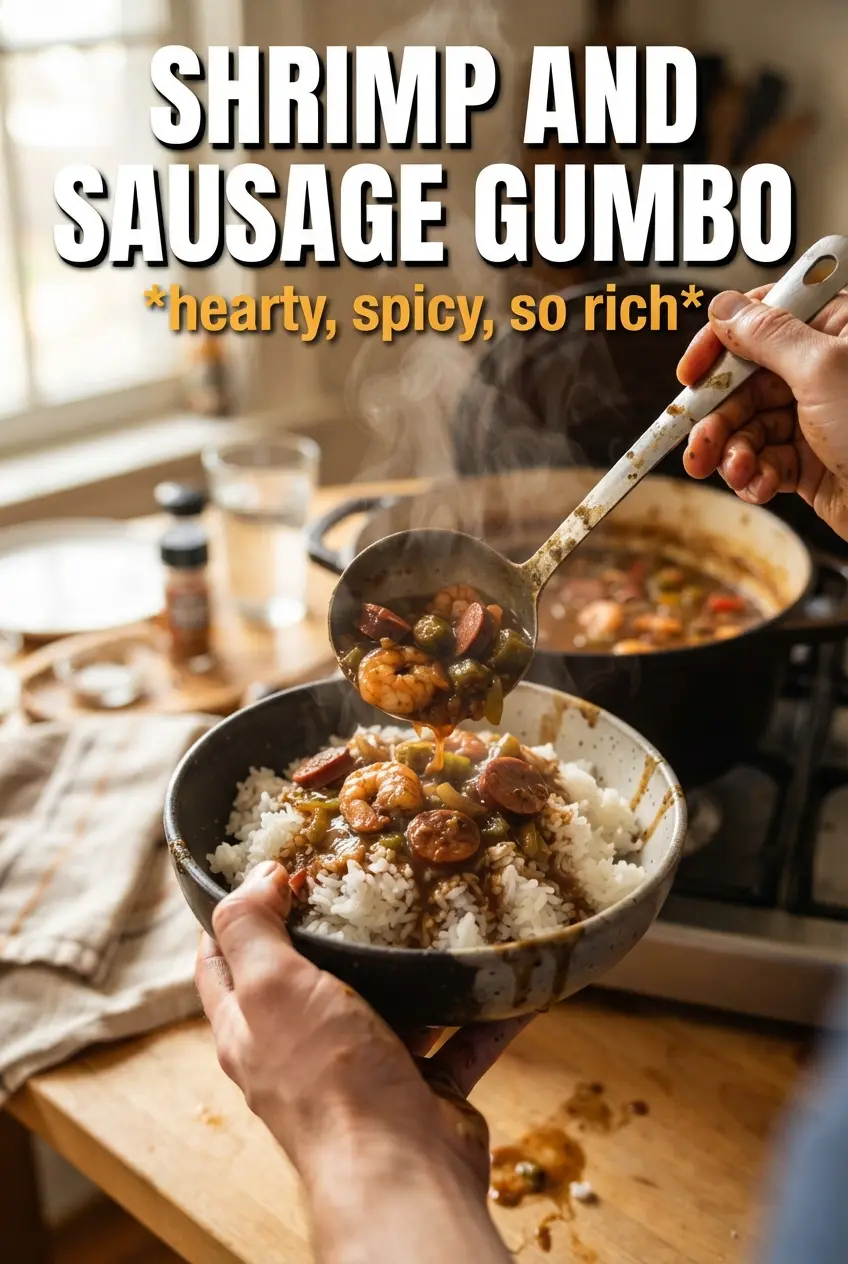
Shrimp And Sausage Gumbo
Ingredients
Equipment
Method
- In a Dutch oven, cook the all-purpose flour in the vegetable oil over medium heat, stirring constantly for 30-35 minutes until deep chocolate-brown.
- Add the diced green bell pepper, diced celery, and diced onion (the Holy Trinity) and cook for 5 minutes.
- Stir in the minced garlic and cook for 1 minute.
- Gradually pour in the shrimp or chicken broth while whisking constantly to keep the roux smooth.
- Add the sliced andouille sausage, Cajun seasoning, and bay leaves, then bring the mixture to a simmer.
- Simmer for 45 minutes.
- Add the sliced okra and cook for 15 more minutes, until the okra is tender.
- Add the peeled and deveined large shrimp and cook for 3-5 minutes until pink.
- If using filé powder, sprinkle it in now and stir to combine.
- Remove the bay leaves, then season with salt and pepper to taste.
- Serve the gumbo over steamed rice and top with parsley and green onions.