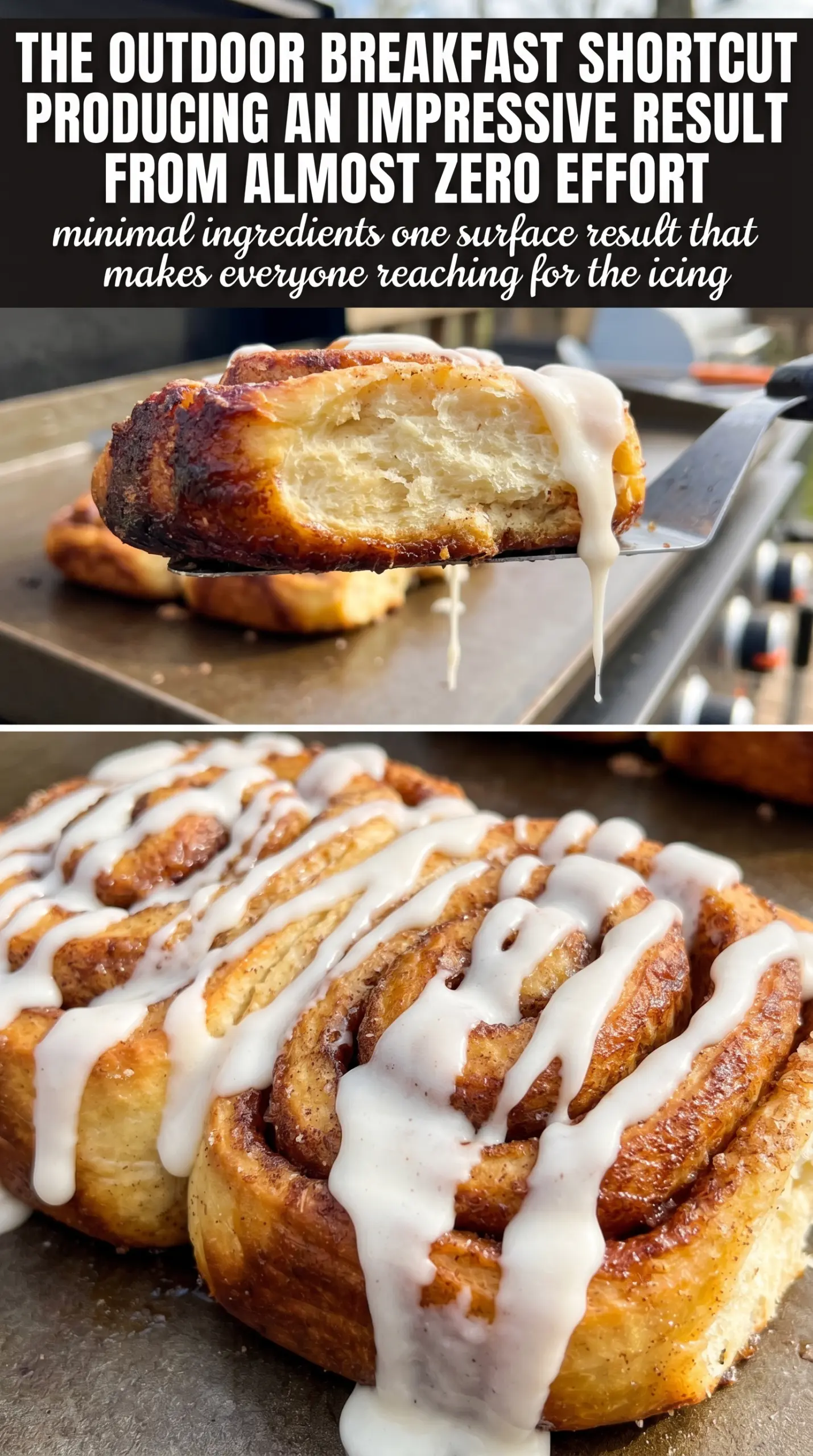
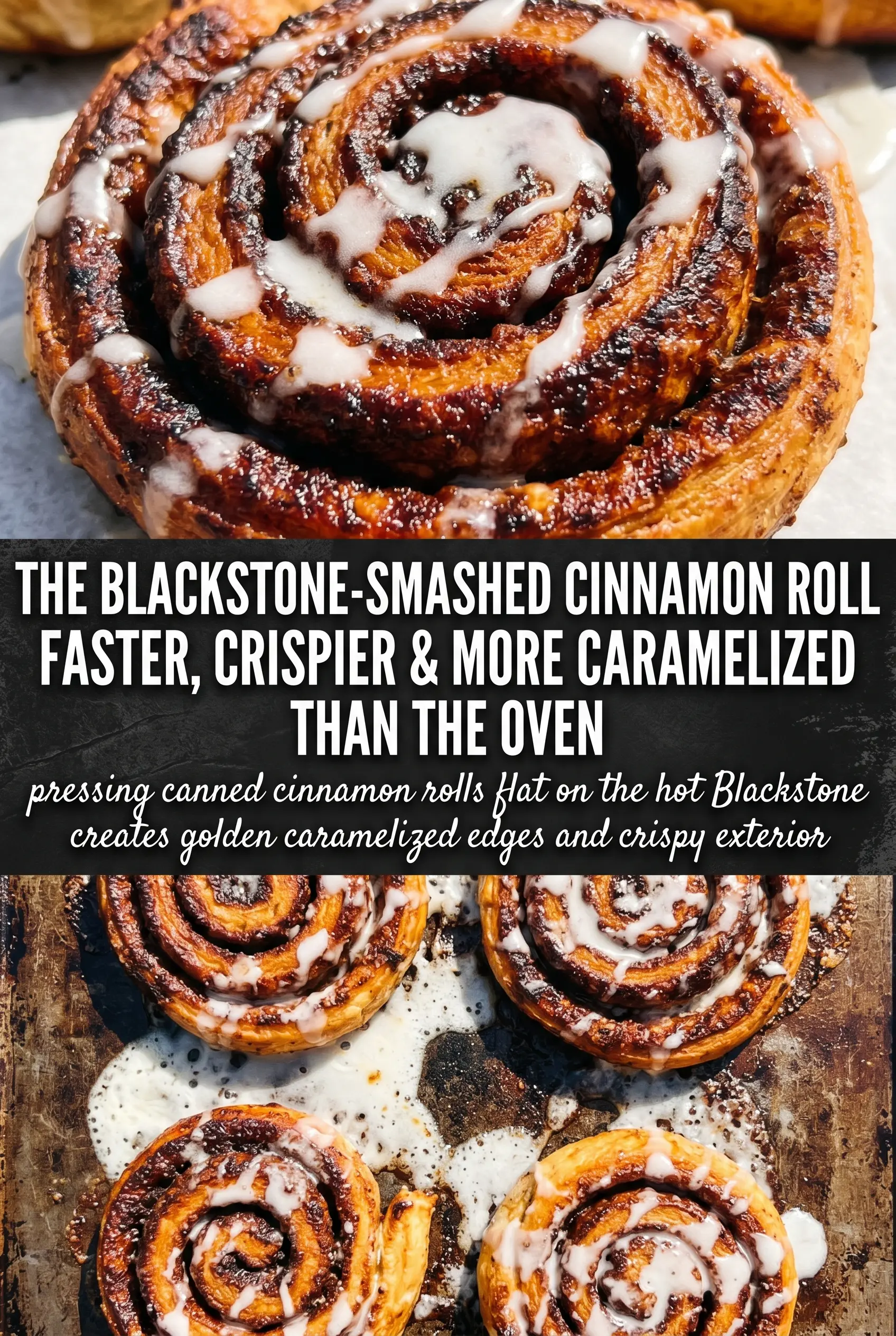
Caramelized edges, a soft center, and warm icing dripping into every little ridge make these smashed Blackstone cinnamon rolls the kind of breakfast people remember. The griddle turns an ordinary canned roll into something with crisp, buttery edges and a toasted sugar crust that a regular oven bake just doesn’t give you.
The trick is heat control and pressure. Medium-low gives the dough time to cook through before the sugars burn, and the smash does more than flatten the rolls — it exposes more surface area to the hot griddle, which means better browning and more of those crunchy, caramelized bits. Butter on the griddle keeps the bottoms from sticking and adds another layer of richness while the rolls cook.
Below, I’ll walk through the exact timing that gives you a crisp outside without a gummy center, plus a few useful variations if you want to switch up the icing or make a bigger batch on the griddle.
The outside got this crackly, caramelized crust while the middle stayed soft, and the cream cheese icing melted right into the nooks. I’ve never had canned cinnamon rolls taste this good off a griddle.
These smashed Blackstone cinnamon rolls get those caramelized edges and dripping icing that make them taste bakery-level fast.
The Reason the Griddle Beats the Oven for These Rolls
The mistake with griddle cinnamon rolls is rushing the heat. If the surface is too hot, the sugar burns before the dough cooks, and you end up with dark bottoms and a raw center. Medium-low heat gives the rolls time to set, and the smash helps them cook evenly by spreading out the dough and pressing more of it into the buttered surface.
You also want to work fast once the rolls hit the griddle. They start soft and pliable, which is exactly what lets you flatten them without tearing. After a minute or two, the edges begin to set, and that’s when the caramelization starts to build. Leave them alone long enough to form a crust before flipping, or they’ll stick and lose that crisp underside.
What Each Ingredient Is Actually Doing in This Campfire Dessert
- Sugar or sweetener (the flavor and texture) — Sugar caramelizes and browns the dessert while adding sweetness. Proper caramelization creates depth, not just sweetness.
- Chocolate (the richness and comfort) — Good chocolate makes the dessert luxurious. Lower-quality chocolate tastes waxy and doesn’t melt as smoothly.
- Butter (the binding and texture) — Butter keeps desserts tender and moist. It also carries vanilla and spice flavors throughout.
- Eggs or binding agent (the structure) — These create texture and help the dessert hold together. Proper ratios are important or the dessert can be too dry or too dense.
- Flour or crust (the foundation) — A proper crust or base keeps the filling contained and provides textural contrast to soft, rich fillings.
- Vanilla or spices (the aromatics) — These add complexity and prevent the dessert from tasting one-dimensional. They should complement the main flavor, not compete with it.
- Careful fire management (gentle, indirect heat) — Desserts need lower heat than savory dishes. High heat burns the outside before the inside cooks through.
- Rest time (letting it cool slightly) — Warm desserts are comforting, but letting them cool for a few minutes helps them set and makes them easier to serve without falling apart.
What the Cinnamon Roll Can and Can’t Do on Its Own
- Refrigerated cinnamon rolls — The canned dough is the backbone here because it puffs and browns predictably on the griddle. I’d use a standard tube with included icing for the easiest result. If you swap in a larger bakery-style roll, it may need a lower flame and a longer cook time so the center doesn’t stay doughy.
- Butter — This does the heavy lifting for flavor and browning. It helps the sugar caramelize and keeps the rolls from welding to the griddle. If you only have salted butter, that works fine; just skip any extra salty finishing on top.
- Cream cheese icing — The included icing is enough for a simple finish, but extra cream cheese icing gives you the thicker, tangier drizzle that plays nicely against the caramelized crust. Add it while the rolls are still warm so it softens and pools instead of sitting in a cold blob on top.
- Cinnamon sugar — This is the quickest way to push the outside from sweet to bakery-style. Sprinkle it right after cooking so it catches on the icing and melts slightly into the hot surface.
Pressing, Flipping, and Finishing Without Burning the Sugar
Heating the Griddle
Set the Blackstone to medium-low and let it come up to temperature before the butter goes on. You want the butter to melt and foam, not smoke. If it browns instantly, the surface is too hot and the sugar will scorch before the rolls cook through.
Smashing the Rolls
Place the cinnamon rolls on the buttered griddle, then press them flat with a heavy spatula. Use firm pressure for a few seconds so the dough spreads evenly. If the rolls spring back a little, that’s fine; they’ll continue to flatten as the outside cooks. Don’t press so hard that the dough tears open, or the center can leak out before it sets.
Building the Caramelized Crust
Cook the first side for 4 to 5 minutes until the bottom is deep golden and the edges look crisp. You should hear a gentle sizzle, not an angry fry. If the rolls are browning too fast, slide them to a cooler spot on the griddle. The goal is a toasted, caramelized base, not a blackened one.
Finishing the Other Side
Flip and cook for another 3 to 4 minutes until both sides are crisp and the centers feel cooked through when pressed lightly. The rolls should hold their shape when you lift them. Pull them off the heat as soon as the dough is set, because carryover heat will keep cooking the center after they leave the griddle.
Icing While They’re Hot
Drizzle on the included icing or cream cheese icing immediately, while the rolls are still warm enough to soften it. That lets it melt into the cracks and cling to the crust instead of sliding off. Finish with cinnamon sugar right away so it sticks to the icing and gives you that final sweet crunch.
Small Tweaks That Change the Result
Cream Cheese Icing Upgrade
Use a little extra cream cheese icing if you want a thicker, tangier finish that stands up to the caramelized crust. The extra richness makes these feel more dessert-like, while the original packet keeps them lighter and sweeter.
Maple Cinnamon Version
Swap the final drizzle for warmed maple syrup mixed with a little icing for a deeper, breakfast-style sweetness. It loses some of the classic bakery icing vibe, but it adds a richer flavor that works well with the browned butter notes from the griddle.
Dairy-Free Griddle Rolls
Use a plant-based butter and skip the cream cheese icing, then finish with the packet icing if it fits your needs, or a simple powdered sugar glaze made with dairy-free milk. The rolls still crisp up well, but the flavor will be a little less rich and a little more straightforwardly sweet.
Make a Bigger Batch on the Blackstone
You can cook more rolls at once if you leave enough space between them for flipping. The catch is that crowding drops the griddle temperature and slows browning, so work in rounds if needed. Better to get a crisp crust on fewer rolls than steam a crowded batch.
Storage and Reheating
- Refrigerator: Store leftovers in an airtight container for up to 2 days. The crust softens a bit, but they still taste great warmed back up.
- Freezer: These can be frozen, but the texture is best fresh. Wrap individually and freeze for up to 1 month, then thaw before reheating so the centers don’t stay cold while the outside dries out.
- Reheating: Warm in a skillet or on the griddle over low heat for a few minutes, or use a microwave in short bursts. High heat will harden the sugar and make the dough tough before the middle heats through.
Answers to the Questions Worth Asking
Smashed Blackstone Cinnamon Rolls
Ingredients
Equipment
Method
- Heat Blackstone griddle to medium-low heat, then add butter and let it melt and shimmer.
- Place the refrigerated cinnamon rolls on the griddle and use a heavy spatula to smash them flat.
- Cook for 4-5 minutes until the bottom is golden and caramelized.
- Flip the smashed rolls and cook another 3-4 minutes until both sides are crispy.
- Remove the smashed rolls from the griddle and immediately drizzle with the included icing or additional cream cheese icing.
- Sprinkle with cinnamon sugar and serve warm.