Sun-dried tomato vegan pasta lands on the table with a sauce that clings to every ridge of rigatoni and penne, glossy and savory with just enough tang to keep each bite awake. The coconut cream gives it body, the tomato paste deepens the flavor, and the sun-dried tomato oil pulls the whole pan together with an intensity you just don’t get from plain olive oil.
The trick here is building the sauce in layers instead of dumping everything in at once. Garlic and sun-dried tomatoes need a short sauté to soften their edge, then the tomato paste needs a minute in the pan to lose that raw taste before the coconut cream goes in. Pasta water matters too; it loosens the sauce without thinning it out into something soupy.
Below, you’ll find the small details that make this one work on the first try, plus a few swaps if you want to adjust the heat, the greens, or the pasta shape.
The sauce turned silky after the pasta water went in, and the sun-dried tomatoes gave it a deep, rich taste without needing any dairy. I used penne and the ridges held onto every bit.
Save this creamy sun-dried tomato vegan pasta for the nights when you want a rich, dairy-free sauce that clings to every bite.
The Reason This Sauce Stays Creamy Without Dairy
Vegan cream sauces often go wrong for one of two reasons: they’re too thin, or they taste flat because every ingredient went in at the same time and never had a chance to build depth. This one avoids both problems by leaning on the concentrated flavor of sun-dried tomatoes, then using coconut cream as the body instead of trying to fake dairy with a plant milk that won’t thicken the same way. The tomato paste is doing more work than it looks like it is. Cooked briefly in the pan, it brings a darker, richer backbone that keeps the sauce from tasting one-note.
The pasta water is what turns the sauce from thick coconut cream into something that actually coats noodles. The starch helps it emulsify, so you get a glossy sauce instead of a greasy layer sitting on top. If the sauce looks too tight in the pan, that’s normal. Add the reserved water a splash at a time until it loosens just enough to flow around the pasta without pooling at the bottom.
What Each Ingredient Is Actually Doing In This Dish
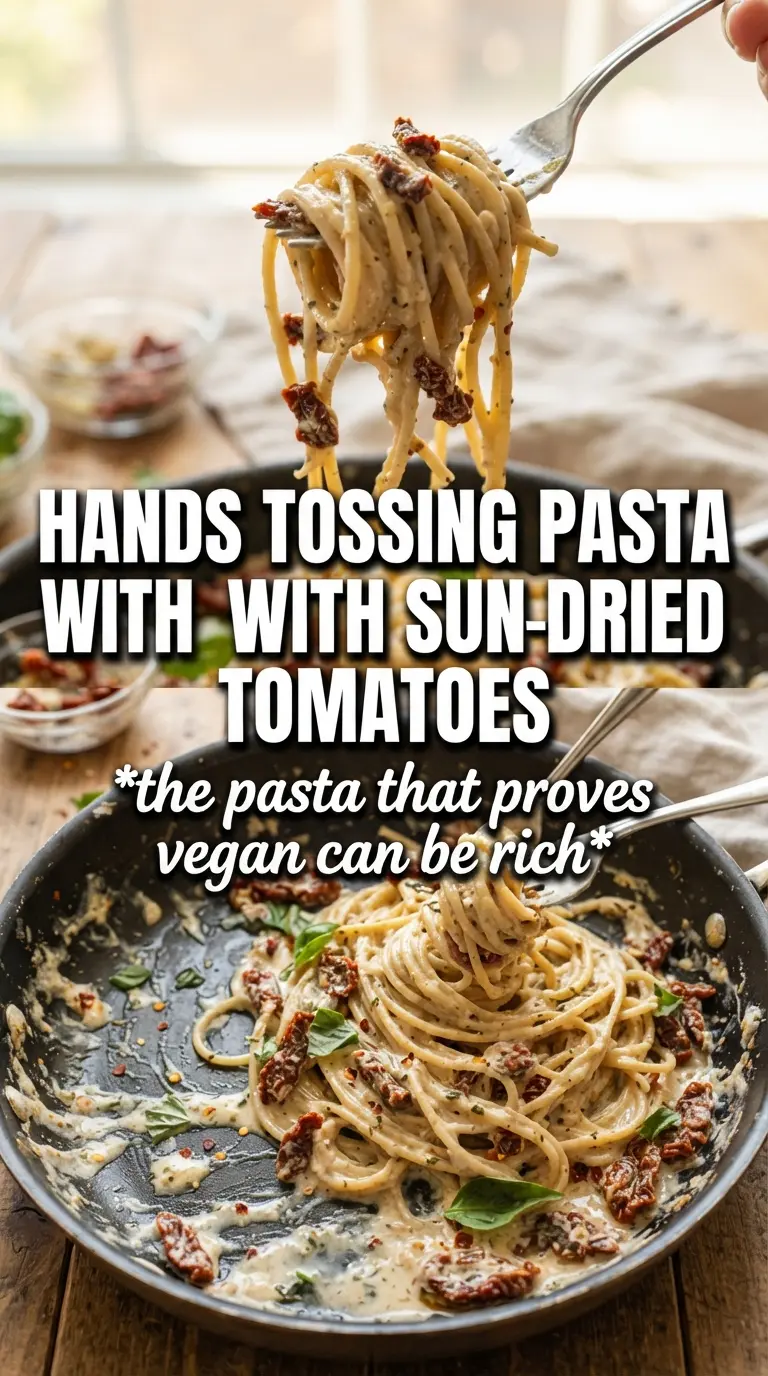
- Sun-dried tomatoes in oil — These bring the concentrated tomato punch that makes the sauce taste slow-cooked in just 20 minutes. The oil matters too, because it carries that flavor into the pan and helps the garlic bloom without burning.
- Coconut cream — Use full-fat coconut cream, not a thin coconut milk, if you want the sauce to cling to the pasta. The mild coconut note fades behind the tomato and garlic, but the texture is what you’re after here.
- Tomato paste — This is the ingredient that gives the sauce its darker color and savory depth. Letting it cook for a minute removes the raw edge and keeps the finished dish from tasting sharp.
- Nutritional yeast — It adds a nutty, parmesan-like savoriness that keeps the sauce from tasting like coconut cream with tomatoes in it. There isn’t a perfect substitute for the same finish, but if you’re out, a spoonful of white miso can bring a similar salty depth.
- Rigatoni or penne — Short pasta with ridges grabs the sauce better than spaghetti here. The shape matters because the sauce is thick, and you want those little grooves and hollows to hold onto it.
- Spinach and basil — Spinach melts into the sauce and gives the bowl some freshness without taking over. Basil should go on at the end so it stays bright instead of turning dark and muted in the pot.
Building The Sauce Before The Pasta Goes Back In
Waking Up The Garlic And Tomatoes
Start by heating the sun-dried tomato oil, then add the garlic and chopped tomatoes. You want the garlic fragrant and just barely softened, not browned, because burnt garlic turns bitter fast in a sauce this quick. Two minutes in the pan is enough to pull the flavor out of the tomatoes and into the oil. If the pan looks dry, add a little more oil from the jar so nothing catches.
Cooking Out The Tomato Paste
Stir in the tomato paste and let it sit in the heat for a full minute before adding the coconut cream. It should darken slightly and smell sweeter, not raw and metallic. This short step is what keeps the sauce from tasting like canned tomatoes. If you skip it, the finished dish can taste flat even if you season it well.
Turning It Into A Sauce That Clings
Pour in the coconut cream, Italian seasoning, red pepper flakes, and nutritional yeast, then let the sauce simmer gently for about five minutes. You’re looking for small bubbles, not a hard boil. High heat can make the coconut cream separate and leave the sauce grainy, so keep it low and steady. When the sauce thickens enough to coat the back of a spoon, it’s ready for the pasta.
Finishing The Bowl
Add the drained pasta to the skillet and toss, then loosen it with reserved pasta water a splash at a time. The spinach should go in at the very end so it wilts from the heat of the sauce instead of overcooking into dark, limp strands. Season with salt and pepper after tossing, because the tomatoes, nutritional yeast, and pasta water all bring their own saltiness. Finish with fresh basil while the pasta is still hot so the aroma stays sharp.
How To Adapt This For What’s In Your Kitchen
Make It Gluten-Free
Swap in a gluten-free penne or rigatoni with a sturdy shape. Cook it just to al dente, because gluten-free pasta can go soft fast once it hits the sauce and sits for a minute.
Make It Spicier
Increase the red pepper flakes or add a little Calabrian chili paste with the tomato paste. That gives the sauce a warm, lingering heat without changing the creamy texture.
Swap The Greens
Kale works if you want a heartier bite, but it needs a few extra minutes to soften in the sauce. Arugula can go in at the very end for a peppery finish, though it won’t melt down the way spinach does.
Use A Different Dairy-Free Cream
If coconut flavor isn’t your thing, an unsweetened cashew cream works too and tastes a little more neutral. It won’t be quite as silky straight from the carton, so keep the pasta water handy to help it loosen and coat the noodles.
Storage And Reheating
- Refrigerator: Store leftovers in an airtight container for up to 4 days. The pasta will absorb some of the sauce, so it gets a little thicker after chilling.
- Freezer: It freezes, but the sauce can lose some of its creamy texture after thawing. If you freeze it, use a tightly sealed container and expect to stir in a splash of water or coconut cream when reheating.
- Reheating: Warm it gently on the stove over low heat with a splash of water to bring the sauce back together. High heat can make the coconut cream separate, so don’t rush it in the microwave unless you stir every 30 seconds.
Answers to The Questions Worth Asking
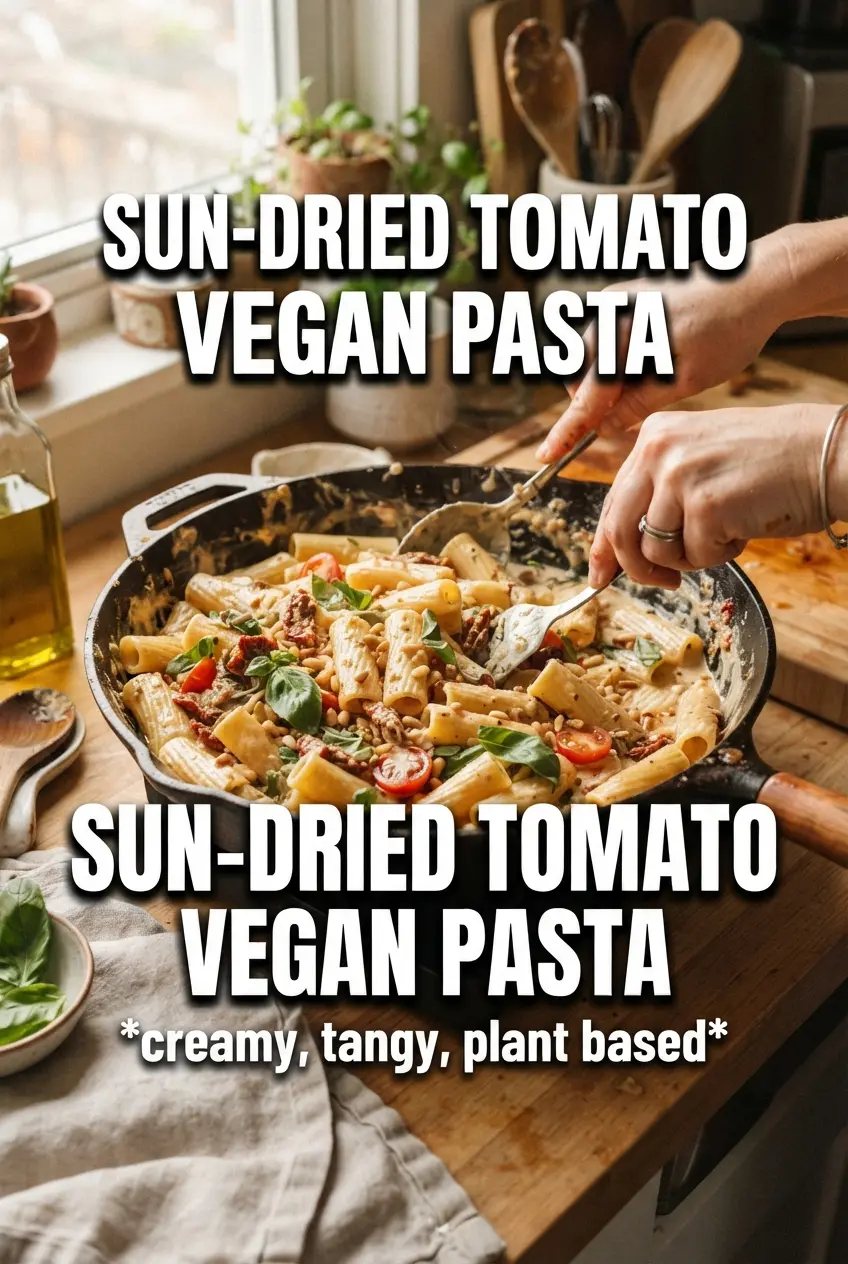
Sun-Dried Tomato Vegan Pasta
Ingredients
Equipment
Method
- Bring a pot of salted water to a boil, cook rigatoni or penne until al dente, and reserve 1 cup pasta water before draining. Visual cue: pasta should still feel firm in the center.
- Heat sun-dried tomato oil in a Dutch oven over medium heat, then sauté minced garlic and chopped sun-dried tomatoes for 2 minutes. Visual cue: garlic becomes fragrant but not browned.
- Stir in tomato paste and cook for 1 minute. Visual cue: paste darkens slightly and smells deeper.
- Add full-fat coconut cream, Italian seasoning, red pepper flakes, and nutritional yeast, then simmer for 5 minutes. Visual cue: sauce thickens to a creamy consistency.
- Add drained pasta to the sauce and toss, adding reserved pasta water as needed to loosen and coat. Visual cue: sauce clings to the rigatoni or penne.
- Add baby spinach and toss until wilted, 1 to 2 minutes. Visual cue: spinach turns bright green and soft.
- Season with salt and pepper to taste, then top with fresh basil and extra nutritional yeast. Visual cue: finish looks speckled and creamy with visible herbs.