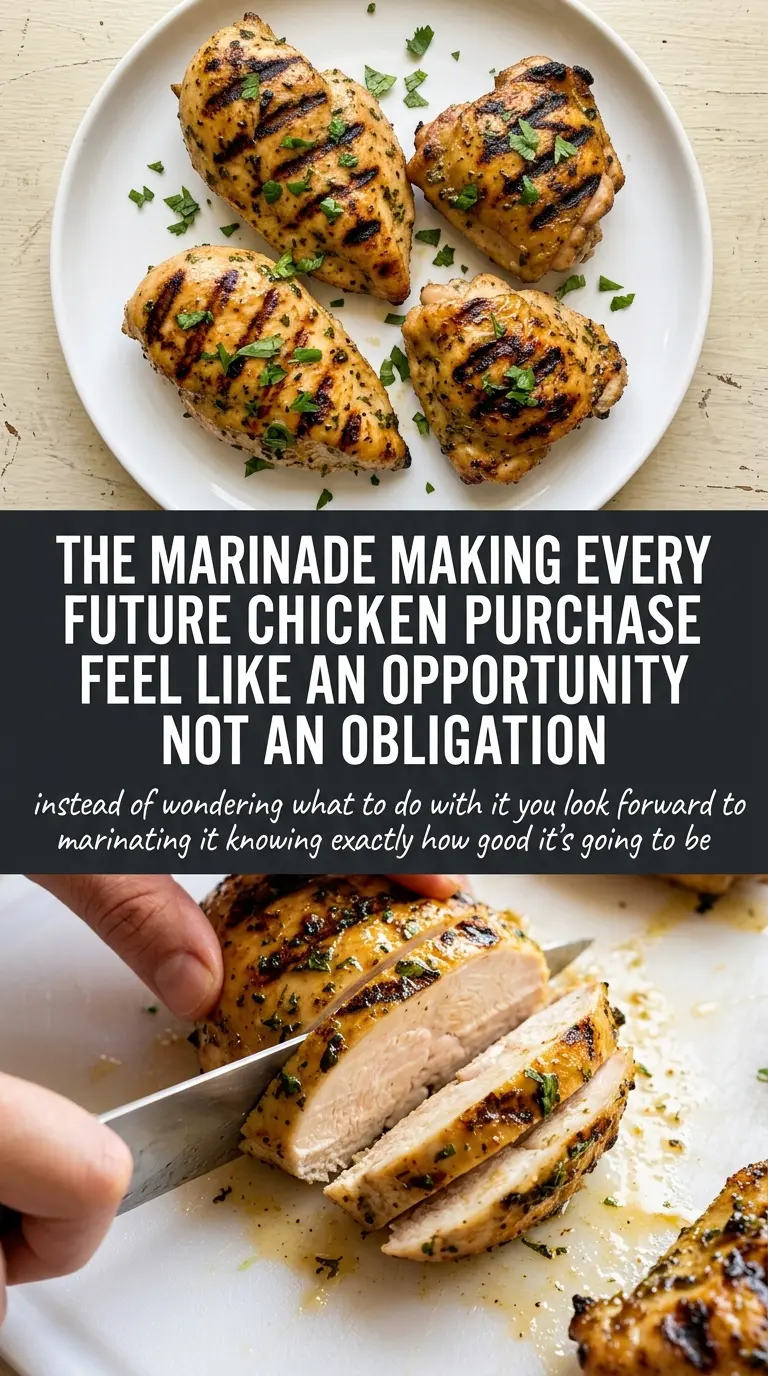
Grilled chicken that comes off the grates juicy, savory, and lightly charred is one of those meals that never gets old. The right marinade doesn’t mask the chicken; it seasons it all the way through, helps the outside brown instead of dry out, and leaves you with meat that tastes like it had an actual plan from the start.
This version gets there with a balanced mix of salt, acid, fat, and a little sugar. Soy sauce and Worcestershire bring depth fast, lemon juice wakes everything up, Dijon helps the marinade cling, and olive oil keeps the surface from tightening too quickly over the heat. The brown sugar isn’t there to make the chicken taste sweet; it helps with browning and rounds out the sharp edges so the final bite tastes full, not flat.
Below, I’ll walk through the one timing detail that matters most, the ingredient swaps that still work, and the mistake that makes grilled chicken turn dry even when the marinade was good.
I marinated boneless thighs overnight and the chicken stayed juicy on the grill with actual flavor all the way through. The lemon and Dijon balanced out the soy sauce perfectly, and the edges caramelized without burning.
Save this grilled chicken marinade for juicy, well-browned chicken with balanced lemon, soy, and Dijon flavor.
The Part Most Marinades Get Wrong: Flavor Without Balance
The mistake with grilled chicken marinades is loading up on acid or salt without giving the chicken anything to protect it on the grill. Too much lemon juice can make the surface tight and a little chalky if you leave it too long, while a marinade that’s all oil and herbs tastes flat and doesn’t help much with browning. This one stays in the sweet spot because the soy sauce and Worcestershire season deeply, the Dijon helps everything emulsify, and the oil slows down aggressive drying over high heat.
The other thing that matters is time. Chicken breasts need enough marinade time to pick up flavor, but not so long that the acid starts changing the texture in a bad way. Thighs are more forgiving. If you’re using breasts, keep a closer eye on the upper end of the marinating window and cook them just to 165°F, then let them rest before slicing.
- Chicken — Thighs stay juicier and forgive a little overcooking; breasts work well too, but they need more careful grilling. Bone-in pieces take longer and develop better flavor at the grill, while boneless cuts cook faster and are easier to serve.
- Soy sauce — This does the heavy lifting for salt and savory depth. Low-sodium soy sauce works fine if that’s what you keep on hand, but don’t replace it with plain salt and expect the same rounded flavor.
- Lemon juice — Fresh lemon juice gives the marinade the right brightness. Bottled juice will work in a pinch, though it tastes a little flatter. The key is not over-marinating delicate cuts in a highly acidic mixture.
- Dijon mustard — Dijon helps the marinade cling to the chicken and keeps the oil and acid from separating as quickly. Yellow mustard won’t give the same sharp, clean finish.
- Brown sugar — A small amount helps the chicken brown and balances the salty, tangy ingredients. You can swap in honey, but it behaves differently on the grill and can darken faster.
- Dried herbs — Thyme, oregano, or Italian seasoning all work. Use what you have, but keep the herbs dry here rather than fresh so they don’t scorch on the grill.
Marinating and Grilling Without Drying Out the Chicken
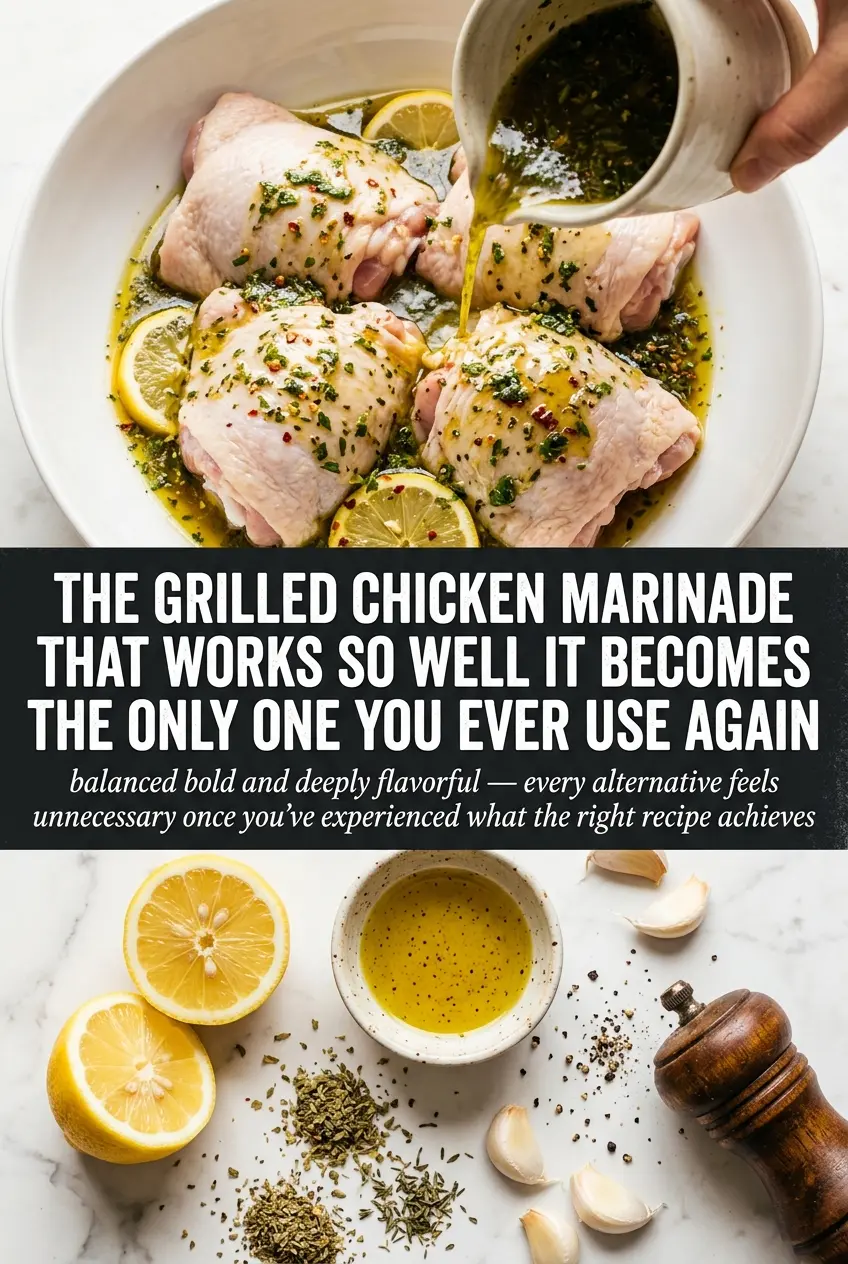
Building the Marinade Base
Whisk the olive oil, soy sauce, lemon juice, Worcestershire sauce, Dijon, garlic, brown sugar, pepper, and herbs until the sugar dissolves and the mixture looks evenly combined. You want the garlic and herbs suspended through the liquid, not sitting in a puddle at the bottom. If the marinade looks separated, keep whisking for another few seconds; that emulsion helps it coat the chicken instead of sliding right off.
Coating the Chicken Evenly
Put the chicken in a zip-top bag or a shallow dish and pour the marinade over it, turning each piece so every surface is coated. Press out extra air if you’re using a bag, then move the chicken to the refrigerator. The biggest failure here is uneven coverage, which leaves some bites seasoned and others bland. For thicker cuts, flip the bag once or twice while it marinates so the flavor reaches all sides.
Getting the Grill Hot Enough
Preheat the grill to medium-high so the grates are hot before the chicken goes on. That heat gives you quick browning without sticking, and it keeps the exterior from overcooking before the center reaches temperature. If your grates are dirty or cold, the marinade will glue the chicken down and tear the skin or surface when you try to turn it.
Cooking to Temperature, Not Guesswork
Place the chicken on the grill and cook until it reaches 165°F in the thickest part, turning as needed for even color and grill marks. Bone-in pieces will take longer than boneless cuts, and breasts usually cook faster than thighs. Pull the chicken as soon as it hits temperature; waiting for darker grill marks after that is how chicken dries out.
Resting Before You Slice
Let the chicken rest for 5 to 10 minutes before cutting into it. That pause lets the juices settle back through the meat instead of running onto the cutting board. If you slice too soon, even well-cooked chicken will seem drier than it should.
How to Adjust This Marinade for the Chicken You Have on Hand
For boneless chicken breasts
Use the shorter end of the marinating window and grill just until the center reaches 165°F. Breasts dry out faster than thighs, so pull them the moment they’re done and let them rest before slicing across the grain.
For bone-in thighs or drumsticks
These can handle a longer marinade and a little more grill time. Move them to a cooler part of the grill if the outside browns before the inside is done, because the higher fat content helps them stay juicy.
Gluten-free version
Use a certified gluten-free soy sauce or tamari and check your Worcestershire sauce label, since some brands contain gluten. The texture stays the same, and the flavor is still deep and savory.
Dairy-free and pantry-friendly swaps
This marinade is already dairy-free, so the main swap is for ingredients you might be out of. Apple cider vinegar can stand in for the lemon juice, though it tastes a touch softer, and honey can replace the brown sugar if you want a slightly glossier finish.
Storage and Reheating
- Refrigerator: Cooked chicken keeps well for 3 to 4 days in an airtight container. It stays moist if you slice it after reheating instead of before.
- Freezer: The raw marinated chicken can be frozen for up to 2 months. Freeze it flat in the marinade, then thaw it in the refrigerator before grilling; cooked grilled chicken can be frozen too, but the texture softens a bit.
- Reheating: Warm it gently in a covered skillet over low heat or in a 300°F oven with a splash of water or broth. High heat is the fastest way to turn grilled chicken leathery.
Questions I Get Asked About This Recipe
The Best Ever Grilled Chicken Marinade
Ingredients
Equipment
Method
- Whisk together olive oil, soy sauce, lemon juice, Worcestershire sauce, Dijon mustard, minced garlic, brown sugar, black pepper, and dried herbs until smooth.
- Place chicken in a large zip-top bag and pour the marinade over the chicken, then seal the bag.
- Refrigerate the sealed bag for 4-24 hours so the chicken absorbs flavor while staying covered.
- Preheat the grill to medium-high heat.
- Grill chicken until the internal temperature reaches 165°F, timing varies by cut, flipping as needed for even cooking and grill marks.
- Rest grilled chicken for 5-10 minutes before serving so juices redistribute for a tender bite.