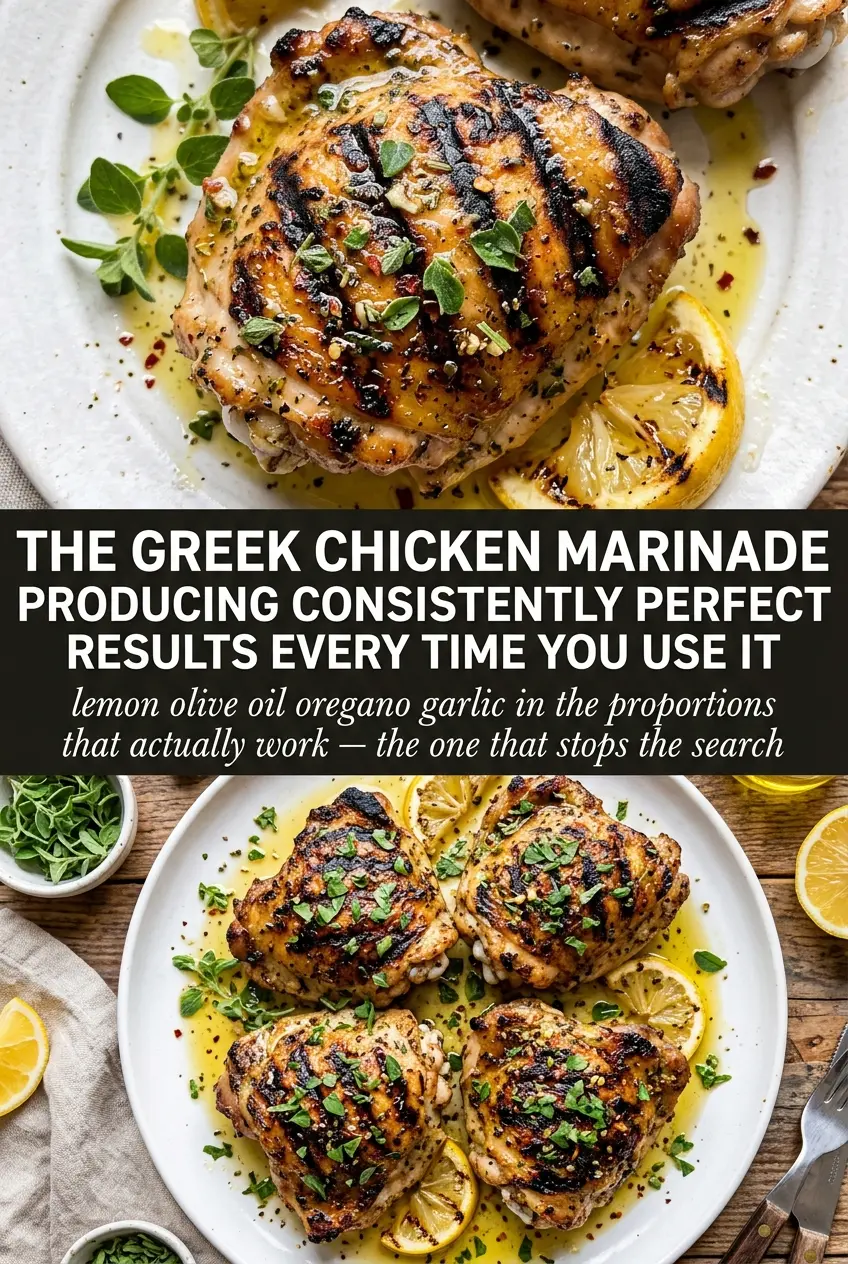
Bright lemon, olive oil, garlic, and oregano turn plain chicken into something you want to eat straight off the cutting board. This marinade gives you that classic Greek-style balance of tangy, savory, and herb-heavy flavor without turning the chicken stringy or harsh.
The trick is keeping the lemon in check. Acid brings the flavor, but too much time in it can make the surface of the chicken firm and a little chalky, especially with smaller cuts. Dijon helps the marinade cling, the olive oil carries the herbs, and the zest adds big lemon flavor without adding extra sharpness.
Below, I’m breaking down the ingredient choices, the marinating window that actually works, and the small details that keep the chicken juicy on the grill. There’s also a storage note for making it ahead, since this one is handy for meal prep and busy weeknights.
The marinade clung to the chicken beautifully and the lemon-oregano flavor came through even after grilling. I did 6 hours in the fridge and the chicken stayed juicy with a nice char on the edges.
Save this Greek chicken marinade for juicy grilled chicken with lemon, oregano, and garlic.
The Lemon Is Doing the Heavy Lifting, So Don’t Overmarinate
The biggest mistake with Greek-style chicken marinade is treating it like an overnight brine and letting the acid sit too long. Lemon juice gives the chicken its brightness, but after about 24 hours the texture can go from tender to tight and a little cured on the surface. Four to six hours is the sweet spot for most cuts, and smaller pieces like thighs or cutlets need less time than whole breasts.
Olive oil softens the edges of the acid and helps the garlic and herbs coat the chicken evenly. Dijon isn’t there to make it taste like mustard; it helps the marinade emulsify, so the lemon juice doesn’t separate from the oil and slide off the meat. That means better coverage and more even flavor once the chicken hits the grill.
What Each Ingredient Is Actually Doing in This Marinade

- Olive oil — This gives the marinade body and keeps the garlic and herbs from tasting sharp or raw. Use a good everyday extra-virgin olive oil if you have it, since the flavor shows up here. Don’t swap in a neutral oil unless you’re in a pinch; you’ll lose the Mediterranean character.
- Lemon juice and zest — Juice brings the acid that seasons the chicken, while zest gives the clean lemon aroma without more bite. Fresh lemon matters here. Bottled juice works in an emergency, but it tastes flatter and the marinade loses its lift.
- Garlic — Minced garlic gives the marinade its backbone. If you grate it instead of mincing, the flavor spreads even faster, which is useful if you only have a short marinating window.
- Fresh oregano or dried oregano — Fresh oregano tastes grassy and bright; dried oregano is more concentrated and classic for this style. If you’re using dried, cut the amount in half by volume because it blooms in the oil and lemon as it sits.
- Dijon mustard — A small spoonful helps the marinade cling and keeps the lemon and oil from separating completely. You won’t taste mustard in the finished chicken, but you will notice more even seasoning on the surface.
- Thyme — Thyme adds a quieter, woodsy note that rounds out the oregano. It’s not the star, but it keeps the marinade from tasting one-dimensional.
Getting the Chicken Coated Evenly Before the Grill
Whisk the marinade until it looks slightly thickened
Start by whisking the lemon juice, zest, garlic, oregano, thyme, Dijon, salt, pepper, and olive oil until the mixture looks glossy and lightly emulsified. It won’t become a mayonnaise, but it should look more unified than separate oil floating on top. If you rush this step, the seasoning tends to settle at the bottom of the bag.
Let the chicken sit flat in the bag or dish
Place the chicken in a zip-top bag or shallow dish and coat it well, pressing out as much air as you can. A flat layer marinates more evenly than a pile of folded pieces, and that matters when you want the lemon and garlic to hit every surface. Turn the chicken once or twice if you’re marinating for several hours.
Grill over medium-high heat and watch for the first signs of color
Preheat the grill before the chicken goes on. You want quick browning and clear grill marks, not a slow cook that dries the meat out before the outside gets any color. If flare-ups start because of the oil, move the chicken to a cooler section instead of chasing the flames around the grill.
Pull it at 165°F and rest it briefly
Use an instant-read thermometer and take the chicken off once the thickest part reaches 165°F. The juices settle during the rest, and that five-minute pause keeps them from spilling out the second you cut in. If the chicken looks a little too dark on the outside before it’s done, lower the heat and finish it gently.
How to Adapt This Marinade for Different Cuts and Different Nights
For chicken breasts
Breasts work well here, but they dry out faster than thighs, so keep the marinating time closer to 4 to 8 hours and grill just until the center reaches 165°F. If the pieces are thick, pound them to an even thickness so the outside doesn’t overcook before the middle catches up.
For chicken thighs or drumsticks
Dark meat handles the lemon more forgivingly and stays juicy on the grill. You can marinate it longer, up to 24 hours, and the slightly richer meat picks up the oregano and garlic in a bigger way.
Dairy-free and gluten-free as written
This marinade already fits both needs without any changes. Just check your Dijon label if you’re sensitive to additives, since some brands include thickeners or trace ingredients you may want to avoid.
For oven roasting instead of grilling
Roast the marinated chicken at a hot temperature, around 425°F, so the surface still browns before the juices have time to soak out. A cooler oven can leave you with pale chicken and a lot of liquid in the pan instead of the kind of color this marinade deserves.
Storage and Reheating
- Refrigerator: Store cooked chicken in an airtight container for up to 4 days. The lemon flavor stays strong, though grilled edges soften a bit after chilling.
- Freezer: Cooked chicken freezes well for up to 2 months. Wrap it tightly and freeze in portions so it thaws evenly without drying out.
- Reheating: Reheat gently in a covered skillet with a splash of water or broth, or warm it in the oven at a low temperature. High heat dries out marinated chicken fast, especially if it was already grilled.
Answers to the Questions Worth Asking
The Best Greek Chicken Marinade
Ingredients
Method
- Whisk together olive oil, lemon juice, lemon zest, garlic, oregano, thyme, Dijon mustard, salt, and pepper until evenly combined and fragrant.
- Place chicken in a large zip-top bag and pour the marinade over the chicken, then seal and press to coat.
- Marinate in the refrigerator for 4–24 hours.
- Preheat grill to medium-high heat.
- Grill chicken until the internal temperature reaches 165°F, timing varies by cut and thickness.
- Let chicken rest for 5 minutes, then serve with lemon wedges.