Perfectly grilled salmon earns its place in the dinner rotation when the skin turns crisp, the flesh stays tender, and the whole fillet lifts off the grates in one clean piece. This version gives you all of that without a complicated marinade or a long soak. The lemon, garlic, and Dijon add enough punch to wake up the fish, but they don’t bury the flavor of the salmon itself.
The real trick is keeping the marinade short and the grill hot. Salmon doesn’t need much time in acid before it starts to lose that fresh, meaty texture, so fifteen minutes is enough here. A well-oiled grate and a skin-side-down start do most of the work, letting the skin protect the fish while it firms up and picks up those grill marks.
Below you’ll find the timing that keeps the salmon from sticking, the ingredient notes that explain why each part matters, and a few variations for changing the flavor without messing up the texture.
I was nervous about grilling salmon, but the skin stayed intact and the fillets released from the grates without tearing. The lemon-Dijon mix was light but had enough flavor that we didn’t even want extra sauce.
Save this grilled salmon for the nights when you want crisp skin, flaky fish, and a fast lemon-Dijon finish.
The Part That Keeps Salmon From Sticking to the Grill
Most grilled salmon problems start before the fish ever touches the grates. If the grill isn’t hot enough, the skin clings and the fillet tears when you try to turn it. If the grates aren’t clean and oiled, the natural sugars in the marinade grab on too early and leave half your salmon behind. The fix is simple: preheat fully, oil the grates well, and put the salmon down skin-side first so the skin acts like a shield.
The other mistake is moving it too soon. Salmon releases more easily once the outside has firmed and the skin has crisped, so those first six to eight minutes need to be hands-off. If it resists when you try to lift it, give it another minute. Forcing it is how you lose the pretty fillet shape and end up with broken pieces on the grill.
What Each Ingredient Is Actually Doing in This Marinade
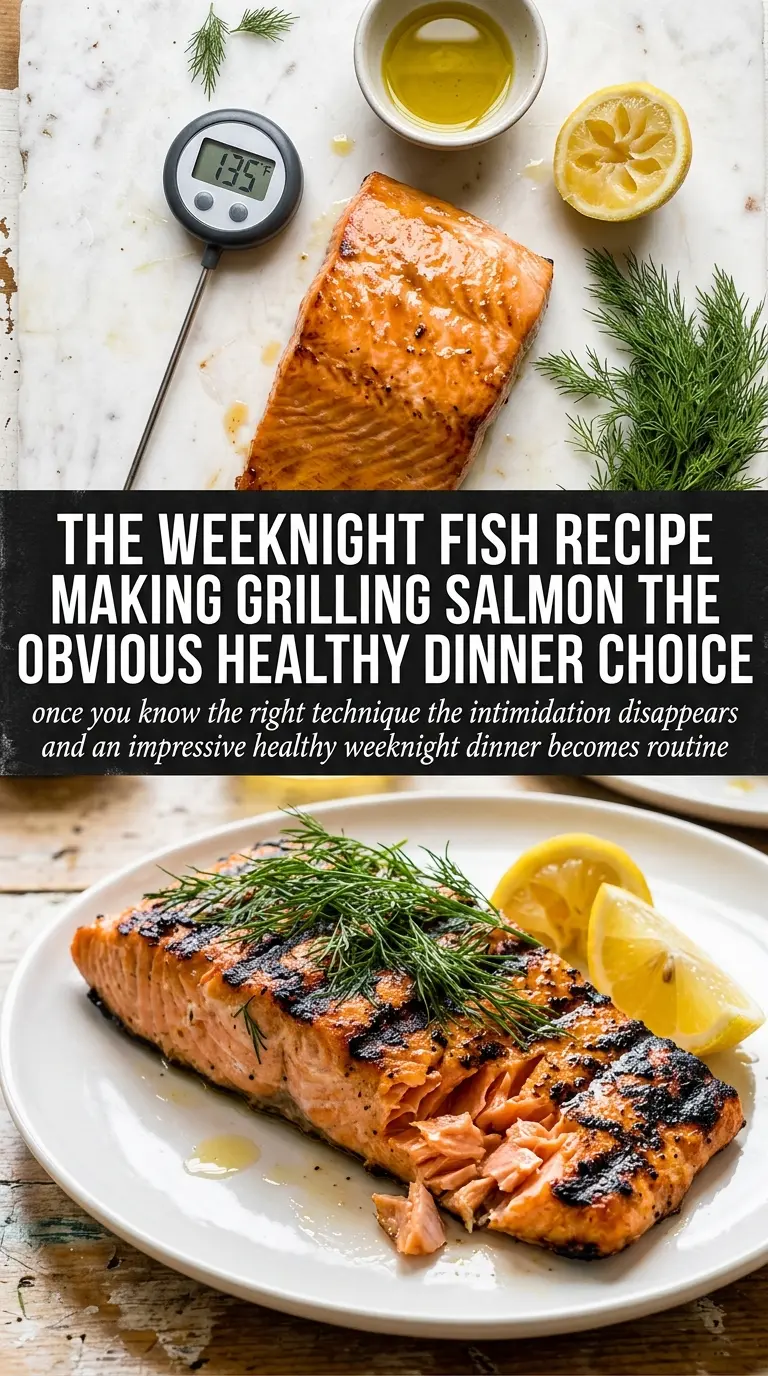
- Salmon fillets — Skin-on fillets hold together better on the grill and protect the flesh from direct heat. If you can choose, pick fillets that are similar in thickness so they finish at the same time.
- Olive oil — This helps the marinade cling and keeps the surface from drying out. A mild extra-virgin oil is nice, but this isn’t the place to use your most expensive bottle.
- Lemon juice — It brightens the fish and keeps the finish clean. The key is a short marinating time; leave salmon in acid too long and the texture starts to tighten.
- Dijon mustard — This adds sharpness and helps emulsify the marinade so it brushes on evenly. Regular yellow mustard won’t taste the same and will make the flavor flatter.
- Garlic — Fresh minced garlic gives the marinade its backbone. Keep the pieces small so they don’t burn on the grill and turn bitter.
- Fresh dill and lemon wedges — These finish the dish with a fresh, clean pop. Dried dill won’t give the same lift, so save that for another recipe.
Grilling the Fillets Without Overcooking the Center
Building the Marinade
Stir the olive oil, lemon juice, garlic, Dijon, salt, and pepper together until the mixture looks unified and a little glossy. You’re not making a thick sauce here; you just want enough body that it coats the salmon instead of sliding off. Brush it over the fillets rather than drowning them, because too much liquid on the surface can keep the skin from crisping.
Letting the Fish Take on Flavor
Let the salmon sit for 15 minutes, no longer. That short rest gives the outside enough time to pick up flavor without changing the texture of the fish. If you leave it much longer, the lemon starts to cure the surface and the salmon can turn a little chalky when it cooks.
Starting Skin-Side Down
Put the salmon on a hot, oiled grill skin-side down and leave it alone. You should hear a steady sizzle, not a loud spatter or a weak hiss. If the heat is too low, the skin won’t crisp and the fish will stick; if it’s too high, the outside burns before the center gets a chance to cook through.
Finishing With a Careful Turn
After 6 to 8 minutes, check the underside. The salmon should lift cleanly and the flesh should look opaque around the edges while still slightly translucent in the center. Flip it only if it releases easily, then give it another 2 to 3 minutes until it reaches your preferred doneness. Pull it off before it looks fully dry on the grill, because it will keep cooking for a few minutes while it rests.
How to Change the Flavor Without Messing Up the Texture
Dairy-Free and Naturally Gluten-Free as Written
This recipe already fits both of those needs without any changes. The only thing to watch is your Dijon label, since a few brands use additives that can catch people off guard. If you want a cleaner finish, keep the marinade simple and let the salmon, lemon, and dill do the work.
No Grill? Use a Grill Pan or Cast-Iron Skillet
A grill pan gives you the charred edges and marks, while cast iron gives you the most even crust. The technique stays the same: start skin-side down and don’t flip too early. The main tradeoff is that you won’t get the same smoky flavor, but you’ll still get crisp skin and tender fish.
Swap Dill for Parsley or Chives
If dill isn’t your thing, parsley or chopped chives keep the finish fresh without changing the structure of the dish. Parsley tastes cleaner and greener, while chives add a gentle onion note. Both work because they’re added at the end, where they brighten the salmon instead of competing with it.
Storage and Reheating
- Refrigerator: Store leftovers in an airtight container for up to 3 days. The skin won’t stay crisp, but the fish will still be good in salads or grain bowls.
- Freezer: Cooked salmon freezes, but the texture softens after thawing. Wrap it tightly and freeze for up to 2 months if you need to, then plan to use it in a cooked dish rather than serving it straight from the fridge.
- Reheating: Warm it gently in a 275°F oven, covered loosely with foil, just until heated through. High heat dries salmon out fast, and the biggest mistake is blasting it in the microwave until the edges turn tough.
Questions I Get Asked About This Recipe
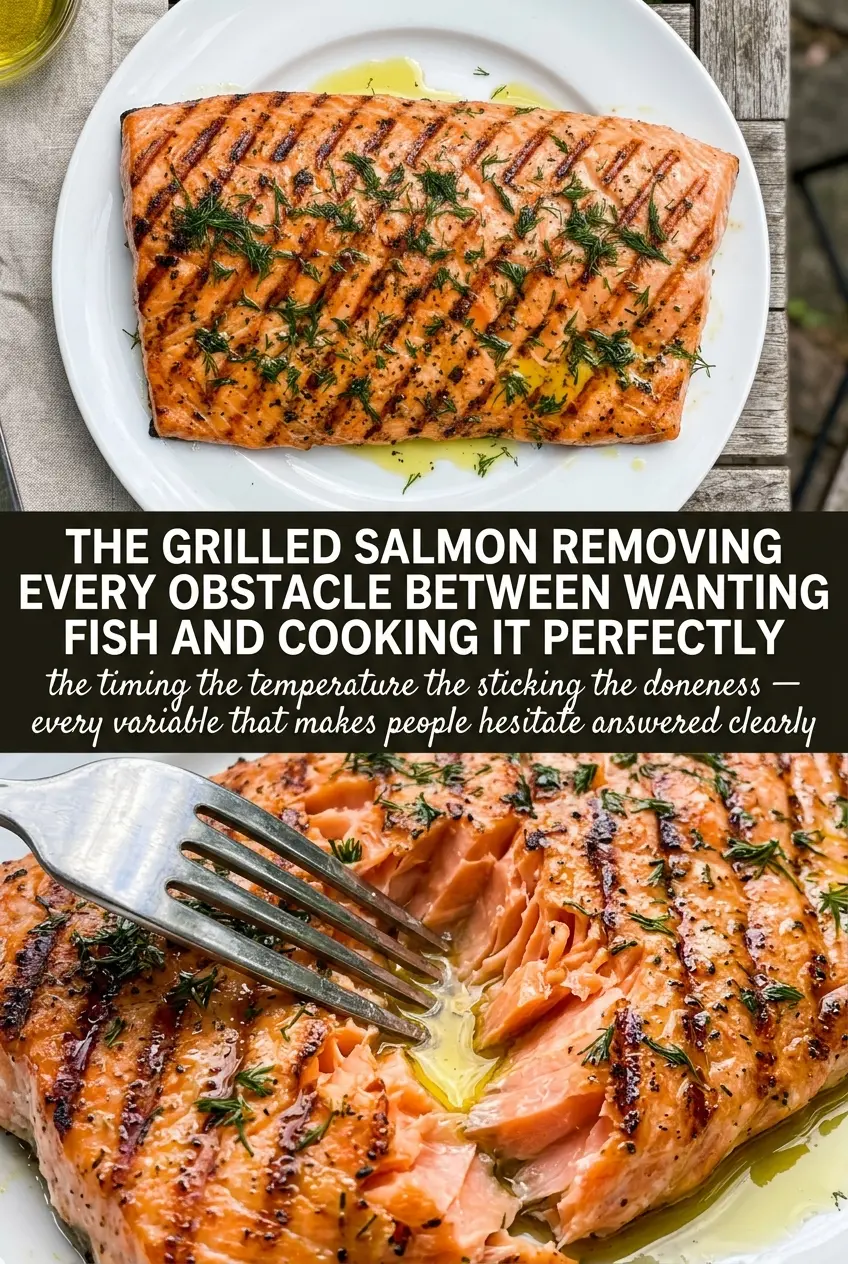
The Best Grilled Salmon
Ingredients
Equipment
Method
- Mix olive oil, lemon juice, garlic, Dijon mustard, salt, and pepper until smooth and combined. The mixture should look glossy and well seasoned.
- Brush salmon with the marinade and let sit for 15 minutes. This rest helps flavor the fillets while the grill heats.
- Preheat the grill to medium-high heat and oil the grates well. You want good sizzle as soon as the salmon touches the bars.
- Place salmon skin-side down on the grill. Lay them in a single layer so the skin can crisp without steaming.
- Grill skin-side down for 6-8 minutes without moving. Look for grill marks and opaque edges forming along the sides.
- Carefully flip the salmon and grill for 2-3 minutes until cooked to desired doneness. The flesh should be tender and flake easily with a fork.
- Serve the grilled salmon with fresh dill and lemon wedges. Add dill on top and squeeze lemon over the flesh right before eating.