Golden caramelized onions turn pasta into something deeply savory, almost creamy, and far more satisfying than a quick weeknight sauce has any right to be. The onions collapse into a soft, jammy tangle with sweetness at the edges, then the pasta water and nutritional yeast pull everything together into a glossy sauce that clings to every ridge of the noodles.
The trick here is patience with the onions and restraint with the heat. If they cook too fast, they brown unevenly and taste sharp instead of mellow. Slow cooking in olive oil and vegan butter gives them time to release their moisture, concentrate, and take on that amber color that makes the whole dish taste layered and finished. The wine cuts through the sweetness, while balsamic and thyme add enough depth to keep the sauce from tasting one-note.
Below, you’ll find the small details that matter: how to know the onions are properly caramelized, why pasta water is the difference between silky and greasy, and the easiest ways to adapt this dish if you need to work with what’s already in your kitchen.
The onions cooked down into this silky, golden sauce and the pasta water made it cling to the rigatoni without feeling heavy. I added extra thyme at the end and it tasted like something from a restaurant.
Save this vegan caramelized onion pasta for the night you want a glossy, savory sauce built from slow-cooked onions and pantry staples.
The Difference Between Silky Onions and Burnt Ones
Caramelized onions fail when the heat is too high. They brown on the outside before the water has a chance to leave, which leaves you with harsh edges and a thin sauce instead of the soft, jammy base this pasta needs. Medium-low heat gives the onions time to soften first, then sweeten, then deepen into that gold-to-amber color that reads as rich instead of bitter.
The other mistake is crowding the pan. Four large onions look like a lot at first, but they collapse dramatically as they cook. Give them room, stir often enough to keep the bottom from scorching, and wait for the color to build gradually. If you rush this part, the sauce never gets the same depth later, no matter how much salt or nutritional yeast you add.
- Olive oil and vegan butter — The oil handles the longer cook without burning, while the vegan butter adds a rounded richness that makes the onions taste fuller. If you only use oil, the result is still good, but a little flatter.
- White wine — This lifts the sweetness and loosens the browned bits from the pan. Use a dry one; anything sweet will push the sauce in the wrong direction.
- Nutritional yeast — This gives the sauce that savory, parmesan-like finish. It won’t melt like cheese, so whisk it in with the pasta water and onions while the pan is still warm enough to emulsify everything.
- Balsamic vinegar — Just a small amount sharpens the onions and makes the caramelization taste more complete. Don’t skip it if you want the sauce to taste balanced rather than sweet.
Building the Sauce So It Clings to the Pasta
Slow-Cooking the Onions
Warm the olive oil and vegan butter over medium-low heat, then add the onions with a pinch of salt so they begin releasing moisture right away. Stir every few minutes, scraping up any brown spots before they turn dark. After 35 to 40 minutes, you want the onions deeply golden, soft enough to spread, and reduced to a concentrated, silky pile. If they start to catch too quickly, lower the heat and keep going; burnt onion bits will drag the whole sauce bitter.
Deglazing and Deepening the Base
Add the garlic and thyme once the onions are already caramelized, not before. Garlic burns fast, and if it goes in too early it turns harsh while the onions are still cooking. Pour in the white wine and let it bubble for about 2 minutes, just until the sharp alcohol smell cooks off and the pan looks glossy again. Stir in the balsamic and red pepper flakes, then taste the onions before you move on; this is the point where the sauce starts to define itself.
Turning Onions Into Sauce
Cook the pasta in well-salted water until just al dente and save at least 1 cup of the cooking water. Add the pasta to the onion pan along with the nutritional yeast and a splash of pasta water, then toss until the liquid turns creamy and coats the noodles. If it looks dry, add more water a little at a time; if it looks greasy, it needs more starch and tossing, not more oil. Finish with salt, pepper, and parsley while the pan is still hot enough to hold the sauce together.
Three Ways to Make This Pasta Work in Your Kitchen
Gluten-Free Pasta Swap
Use a sturdy gluten-free pasta shape that can hold onto the onions, such as brown rice rigatoni or chickpea spaghetti. Cook it just shy of done, because gluten-free pasta gets soft fast once it hits the sauce. Keep extra pasta water nearby; it helps the sauce cling and keeps the final texture from turning pasty.
No Wine Version
Replace the white wine with an equal amount of pasta water plus 1 teaspoon of extra balsamic vinegar or a squeeze of lemon. You lose a little of the bright, sharp edge that wine brings, but the sauce still loosens correctly and stays balanced instead of tasting flat.
Extra-Creamy Finish
Stir in 2 to 3 tablespoons of unsweetened oat cream or a splash of cashew cream at the end if you want the sauce richer and more luxurious. It softens the sharper edges of the onions and gives the dish a silkier finish, but add it off the heat so it doesn’t thin out or separate.
Make It Spicier
Increase the red pepper flakes or finish each bowl with a little chili oil. The heat works best as a contrast to the sweet onions, not as the main event, so add it at the end and taste as you go.
Storage and Reheating
- Refrigerator: Store leftovers in an airtight container for up to 4 days. The pasta will absorb some of the sauce as it sits, so expect it to tighten up.
- Freezer: This freezes better than many cream-based pastas, though the texture softens a bit after thawing. Freeze in portions for up to 2 months and thaw overnight in the fridge.
- Reheating: Reheat gently in a skillet over low heat with a splash of water to loosen the sauce. The common mistake is blasting it in the microwave until the noodles dry out and the onions turn stringy.
Answers to the Questions Worth Asking
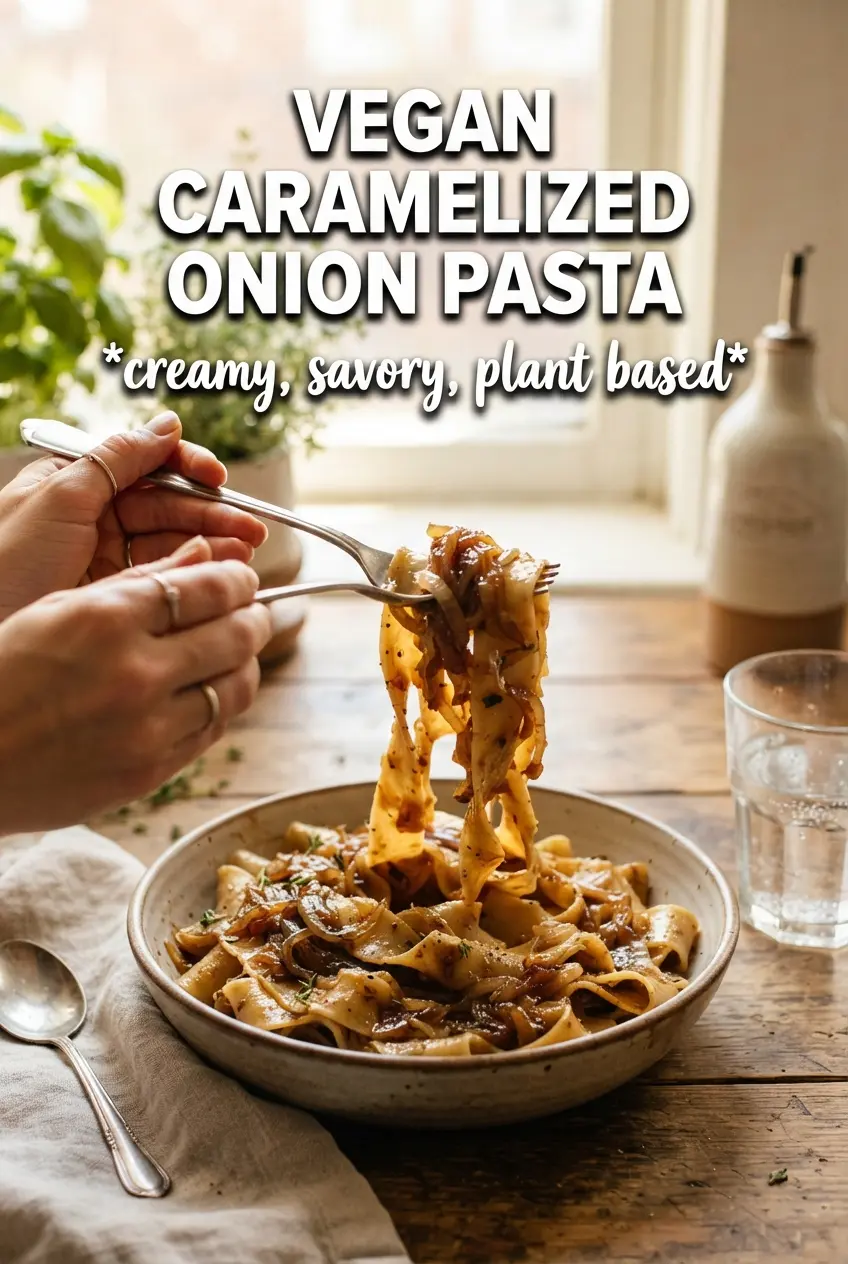
Vegan Caramelized Onion Pasta
Ingredients
Equipment
Method
- Heat the olive oil and vegan butter in a cast iron skillet over medium-low heat for 5 minutes, then add the thinly sliced onions. Stir every few minutes as the onions begin to soften and turn glossy.
- Continue cooking the onions over medium-low heat for 30 minutes, stirring every few minutes, until deeply caramelized and golden. Keep the heat steady to prevent burning.
- Add the minced garlic and fresh thyme to the skillet and cook for 2 minutes. Stir to coat and warm until fragrant.
- Pour in the dry white wine to deglaze and cook for 2 minutes. Scrape up any browned bits so the sauce turns cohesive.
- Stir in the balsamic vinegar and red pepper flakes. Cook for 3 minutes to mellow the flavors and deepen the color.
- Cook the rigatoni or spaghetti according to package directions until al dente. Reserve 1 cup of pasta cooking water before draining.
- Toss the hot pasta with the caramelized onions, nutritional yeast, and pasta water until creamy. Add more reserved water as needed for a glossy coating.
- Season with salt and black pepper to taste, then top with fresh parsley and extra nutritional yeast as desired. Serve immediately while the sauce clings to the pasta.