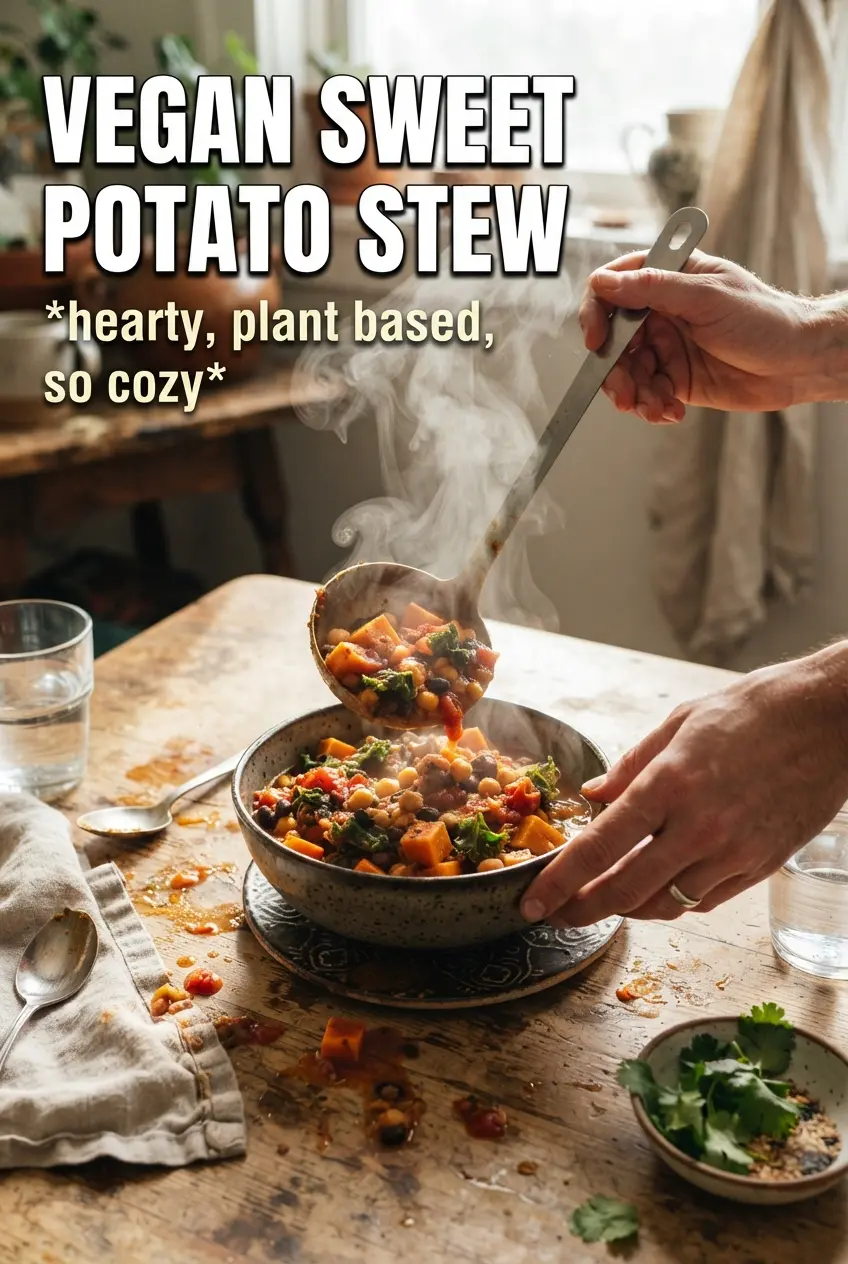
Sweet potato stew gets its best texture when the broth stays brothy enough to spoon, but still clings to the vegetables in a way that feels hearty and complete. This vegan version does that well: tender cubes of sweet potato, chickpeas that hold their shape, and kale that softens without disappearing. The spices stay warm and rounded instead of sharp, and the finish of lemon keeps the whole pot from tasting flat.
The trick is building the base in layers. Onion goes first so it can soften and sweeten the broth. Then the spices bloom briefly in the oil, which wakes up the cumin, turmeric, paprika, cinnamon, and cayenne before the liquid goes in. That small step makes a bigger difference than adding more seasoning at the end. Sweet potatoes need enough time to turn silky, and chickpeas bring body without turning the stew into puree.
Below, I’ve included the little details that matter most: how to keep the broth balanced, when to add the kale, and which swaps work without losing the stew’s depth. If you’ve ever had a vegetable stew taste thin or muddy, this version solves both problems.
The sweet potatoes stayed intact and the broth thickened just enough after simmering. I added the lemon at the end like you said, and it pulled the whole stew together instead of tasting heavy.
Save this Vegan Sweet Potato Stew for a creamy-feeling, tomato-sparked dinner with chickpeas, kale, and a bright lemon finish.
The Reason the Stew Stays Rich Instead of Watery
Most vegetable stews go thin because the vegetables are added in a way that dumps too much water into the pot before the base has a chance to develop. This one avoids that by letting the onion and spices cook first, which creates a more concentrated broth before the tomatoes and stock join in. The sweet potatoes then simmer in seasoned liquid instead of plain broth, so every bite tastes like part of the same dish.
The other thing that matters here is timing. Chickpeas go in at the beginning so they can absorb flavor, but kale waits until the end because it only needs enough heat to wilt. If you cook the greens too long, they lose their color and settle into the background. If you add the lemon too early, the flavor dulls by the time dinner hits the table.
What Each Ingredient Is Doing in the Pot

- Sweet potatoes — These are the body of the stew. They soften into tender cubes and lightly thicken the broth as they cook, which is why this dish feels substantial without any dairy or flour. Cut them into even pieces so they finish at the same time.
- Chickpeas — They add a creamy bite and enough heft to keep the stew from tasting like soup. Canned chickpeas work well here because they hold their shape. If you use cooked-from-dry chickpeas, they should be tender but not falling apart.
- Diced tomatoes — The tomatoes bring acidity and a little body. Use the full can, juices included, because that liquid helps create the stew’s base. Fire-roasted tomatoes work if you want a deeper, slightly smoky note.
- Vegetable broth — This carries the spices and keeps the stew brothy instead of pasty. Use a broth you’d actually drink; bland broth makes the whole pot taste flat. If yours is salty, hold back on salt until the end.
- Kale — Kale adds texture and a slightly bitter edge that balances the sweet potatoes. Strip the tough stems first, then chop it into bite-size pieces so it softens evenly in the final minutes.
- Lemon juice — Don’t skip this. It sharpens the stew after the long simmer and makes the spices taste cleaner. If you use bottled lemon juice, add it a little at a time because the flavor can be harsher than fresh.
Building the Base So the Stew Tastes Cooked, Not Just Combined
Softening the Onion First
Start with the olive oil and onion in a wide pot. Cook until the onion turns translucent and smells sweet, not browned and bitter. If the onion starts catching, lower the heat; you want softness, not color, because browned onion can make the broth taste heavy before you’ve even added the spices.
Blooming the Spices in Oil
Add the garlic, cumin, turmeric, smoked paprika, cinnamon, and cayenne once the onion is soft. Stir constantly for about two minutes, just until the pot smells fragrant and the spices darken slightly in the oil. If the garlic starts to color too fast, the heat is too high. Pull the pot off the burner for a moment rather than letting the garlic burn, because burnt garlic will carry through the whole stew.
Simmering Until the Sweet Potatoes Give In
Add the sweet potatoes, chickpeas, tomatoes, and broth, then bring everything up to a boil before lowering it to a steady simmer. The pot should move gently, not rage; hard boiling can break the sweet potatoes before the centers turn tender. Cook until the cubes yield easily with a fork and the broth looks slightly thicker from the starch in the potatoes.
Finishing with Greens and Brightness
Stir in the kale for the last few minutes only. It should soften and turn a deeper green while still keeping a little structure. Finish with lemon juice, then taste for salt and pepper. This is the point where the stew wakes up, and if it tastes flat, it usually needs more acid rather than more salt.
How to Change the Stew Without Losing Its Balance
Make It Gluten-Free by Serving It with Rice Instead of Bread
The stew itself is naturally gluten-free, so the easiest swap is on the side. Serve it over rice, quinoa, or mashed potatoes instead of crusty bread. You still get the same hearty bowl, just without the bread for soaking up the broth.
Use Spinach Instead of Kale for a Softer Finish
Spinach works if that’s what you have, but add it in the very last minute because it wilts fast. The stew will feel a little softer and less chewy than it does with kale. That’s a fine trade if you want a gentler texture.
Add Coconut Milk for a Creamier, Milder Stew
Stir in 1/2 to 1 cup of full-fat coconut milk at the end if you want a rounder, richer broth. It softens the spice profile and gives the stew a silkier texture, but it also pushes the lemon to the background a bit. Add a touch more lemon at the end if the flavor feels too mellow.
Swap in Butternut Squash When Sweet Potatoes Aren’t Handy
Butternut squash gives you a similar sweetness and texture, but it usually breaks down a little more than sweet potato. Cut it into slightly larger cubes so it doesn’t disappear during the simmer. The stew will taste a touch lighter and more vegetal, which works well with the cumin and paprika.
Storage and Reheating
- Refrigerator: Keep in an airtight container for up to 4 days. The stew thickens as it sits, and the chickpeas soften a bit more overnight.
- Freezer: It freezes well for up to 3 months. Cool it completely first, then portion it into containers so the sweet potatoes don’t get crushed when you reheat.
- Reheating: Warm it gently on the stove over medium-low heat with a splash of broth or water. Don’t blast it in the microwave for too long, or the sweet potatoes can turn mushy before the center is hot.
Questions I Get Asked About This Stew
Vegan Sweet Potato Stew
Ingredients
Equipment
Method
- Heat olive oil in a Dutch oven over medium heat, then add the onion and sauté for 4 minutes until softened and fragrant, stirring as needed and keeping it from browning too much.
- Add garlic, cumin, turmeric, smoked paprika, cinnamon, and cayenne, and cook for 2 minutes while stirring so the spices smell toasted and look slightly darker.
- Add sweet potatoes, chickpeas, diced tomatoes, and vegetable broth, then bring the mixture to a boil over high heat.
- Reduce to a steady simmer and cook for 20-25 minutes, until sweet potatoes are tender when pierced with a fork.
- Stir in kale and cook for 5 minutes until wilted and bright green.
- Stir in lemon juice and season with salt and black pepper to taste until the flavors pop and the broth tastes balanced.
- Ladle the stew into bowls and top with fresh cilantro, serving with crusty bread on the side.