Juicy chicken, caramelized pineapple, and tender peppers turn these kabobs into the kind of dinner that disappears fast from the tray. The marinade clings to the chicken and vegetables, then bakes down into a glossy glaze that gives every bite a sweet-savory finish with just enough char around the edges. It looks like a lot of effort when they come out of the oven, but the actual work is simple and the payoff is big.
What makes this version work is the balance in the marinade and the way the skewers are assembled. Pineapple juice brings sweetness and acidity, soy sauce gives the chicken depth, and honey helps everything brown instead of drying out. I like to marinate the chicken first, then build the skewers with pieces cut to a similar size so everything cooks at the same pace. If the chicken is too large or the peppers are cut too small, you end up with uneven kabobs — one piece underdone, another soft and overcooked. Keep the cuts even and the result is much better.
Below, I’ve included the small details that matter most: how long to marinate, when to brush on extra glaze, and what to change if you want to grill them instead of bake them.
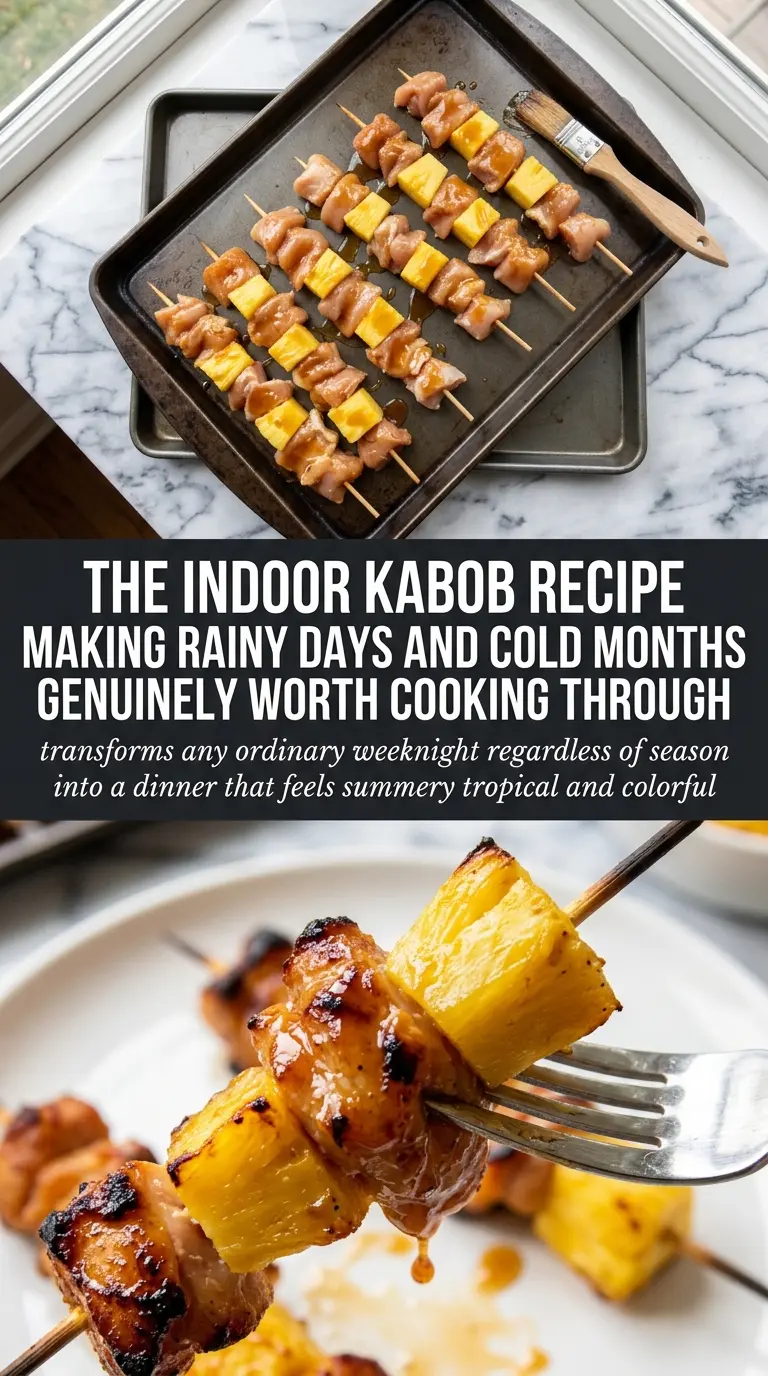
The chicken stayed juicy, and the pineapple caramelized at the edges without turning mushy. I baked them on a sheet pan and the glaze thickened up enough to coat everything beautifully.
Save these baked pineapple chicken kabobs for the night you want sweet glaze, juicy chicken, and colorful skewers with almost no cleanup.
The Marinade Works Because It Balances Sweetness Before the Heat Hits
With kabobs like these, the biggest mistake is treating the marinade like a sauce you’ll fix later. Once the chicken is skewered and baked, you’ve got a short window to build flavor and color, and that means the marinade has to pull its weight from the start. Pineapple juice gives brightness, soy sauce gives salt and depth, and honey helps the edges caramelize instead of drying out.
Marinate the chicken long enough to season it, but not so long that the pineapple juice starts to soften the surface too much. One to four hours is the sweet spot here. If you skip that rest, the kabobs still cook fine, but they lose the rounded, sticky finish that makes them stand out.
What Each Ingredient Is Doing on the Skewer
- Chicken breasts — Lean chicken breast works well here because the marinade and fast bake keep it from drying out. Cut the pieces into even cubes so they finish together; large chunks need extra time and end up stringy by the time the vegetables are done.
- Fresh pineapple — Fresh pineapple caramelizes better than canned and gives cleaner, brighter flavor. Canned pineapple can work in a pinch, but drain it well and expect less browning and a softer texture.
- Soy sauce — This is the savory backbone of the marinade. Use regular soy sauce for the fullest flavor; low-sodium is fine if that’s what you keep on hand, but don’t replace it with plain salt water and expect the same depth.
- Pineapple juice — This reinforces the fruit flavor and helps the glaze cling. If you don’t have juice, you can use a little orange juice, but the finished kabobs will taste less tropical and a bit less sharp.
- Honey — Honey gives the marinade body and helps the edges brown in the oven or on the grill. Maple syrup will work, but it brings a darker note that changes the flavor balance.
- Bell peppers and red onion — These add color, crunch, and enough moisture to keep the skewers from feeling one-note. Cut them to match the chicken so they soften without collapsing.
- Olive oil and garlic — Oil helps the glaze spread and keeps the garlic from tasting harsh. Fresh garlic matters here because it perfumes the marinade; jarred garlic can taste flat once it bakes.
Getting the Kabobs Cooked Without Drying Out the Chicken
Mix the Marinade First
Whisk the soy sauce, pineapple juice, honey, olive oil, and minced garlic until the honey disappears into the liquid. If the honey sits in a streak at the bottom, it won’t coat the chicken evenly. This is the point where the flavor gets built, so take the extra few seconds to blend it smoothly.
Let the Chicken Marinate Before You Skewer
Marinate the chicken for at least an hour and up to four. That gives the salt time to season the meat without turning the outside soft. If you thread the skewers before marinating, the vegetables drink up too much of the glaze and the chicken never gets the same flavor on its own.
Build Even Skewers
Thread chicken, pineapple, peppers, and onion onto the skewers with pieces that are close in size. Leave a little space between pieces so the heat can move around them. If everything is packed too tightly, the vegetables steam and the chicken loses its roasted edges.
Bake Until the Edges Brown
Bake at 425°F for 20 to 25 minutes, brushing with extra marinade while they cook. You want the chicken cooked through and the pineapple turning a little sticky at the edges. If the kabobs are pale and wet after the full time, they need a few more minutes; if the chicken starts looking chalky, pull them immediately.
How to Change These Kabobs for the Grill, the Oven, or a Different Diet
Grilled Kabobs with Charred Edges
Use the same marinade and skewer setup, then grill over medium-high heat for about 5 to 6 minutes per side. Grilling gives you deeper caramelization and smoky edges, but the pineapple can scorch fast if the fire is too hot, so keep an eye on the glaze as it bubbles.
Gluten-Free Version
Swap in tamari or a certified gluten-free soy sauce and keep the rest of the recipe the same. The flavor stays balanced, and you won’t lose the glossy finish because the honey and pineapple juice still do the browning work.
Use Chicken Thighs for Extra Juiciness
Boneless skinless thighs can replace the breasts one-for-one. They stay juicier and handle a little more heat, which makes them forgiving if your oven runs hot or the grill has uneven spots.
Storage and Reheating
- Refrigerator: Store leftovers in an airtight container for up to 4 days. The pineapple softens a bit, but the flavor stays good.
- Freezer: Freeze the cooked chicken and vegetables off the skewers for up to 2 months. The texture of the pineapple changes after thawing, so the freezer works best if you plan to tuck the leftovers into rice bowls or wraps.
- Reheating: Reheat in a 350°F oven until warmed through, about 10 to 12 minutes. The common mistake is blasting them in the microwave, which makes the chicken rubbery and the pineapple watery.
Answers to the Questions Worth Asking

Baked Pineapple Chicken Kabobs
Ingredients
Equipment
Method
- In a bowl, mix soy sauce, pineapple juice, honey, olive oil, and minced garlic until honey dissolves and the marinade looks glossy.
- Reserve any unused marinade for brushing later while the kabobs cook.
- Add cubed chicken breasts to the marinade and stir to coat evenly.
- Cover and marinate for 1-4 hours in the refrigerator, until the chicken looks evenly tinted.
- Thread chicken, cubed fresh pineapple, cubed bell peppers, and cubed red onion onto wooden skewers in a colorful alternating pattern.
- Place the assembled kabobs on a sheet pan with space between skewers so the pineapple can caramelize.
- Bake at 425°F for 20-25 minutes, until the chicken is cooked through and the pineapple edges are browned.
- Halfway through the bake, brush the kabobs with the reserved marinade so a sweet glaze forms and looks slightly sticky.
- Remove from the oven and let rest for 5 minutes so juices set before serving.