Golden, juicy grilled chicken gets a sharp lift from Dijon and a bright citrus edge that keeps every bite tasting fresh instead of heavy. The marinade works fast, so the chicken picks up enough flavor in just a few hours to taste seasoned all the way through, and the sugar in the honey helps the outside caramelize on the grill without turning sticky or burnt.
The balance matters here. Dijon brings body and a little heat, orange juice softens the sharpness, and lemon keeps the finish clean. Olive oil carries the flavor across the meat and helps protect the chicken as it cooks, while garlic and thyme give the marinade a savory backbone that holds up on the grill.
Below, I’ll show you why this marinade stays punchy without overpowering the chicken, which cut works best on the grill, and how to adjust the timing if you’re working with breasts, thighs, or bone-in pieces.
The chicken came off the grill with the nicest browned edges, and the marinade didn’t turn bitter even after a 4-hour soak. The Dijon and orange were balanced perfectly, and the breasts stayed juicy instead of drying out.
Save this Citrus Dijon Grilled Chicken Marinade for bright, juicy grilled chicken with a tangy citrus glaze.
The Trick to Keeping Dijon from Turning Harsh on the Grill
Dijon can go from sharp and balanced to aggressive if it’s pushed too hard over heat or left to sit in contact with the chicken for too long. That’s why this marinade leans on olive oil and citrus in equal measure: the oil rounds out the mustard, and the orange juice keeps the flavor bright instead of blunt. The honey also matters more than it looks like it should. It doesn’t make the chicken sweet; it just smooths the edges and helps the surface color without burning too quickly.
The other mistake people make is treating citrus like a tenderizer they can leave on indefinitely. Two to eight hours is the sweet spot. Less than that and the seasoning doesn’t penetrate evenly; much longer and the acid starts to work against the chicken’s texture, especially if you’re using breasts.
What Each Ingredient Is Actually Doing in This Marinade
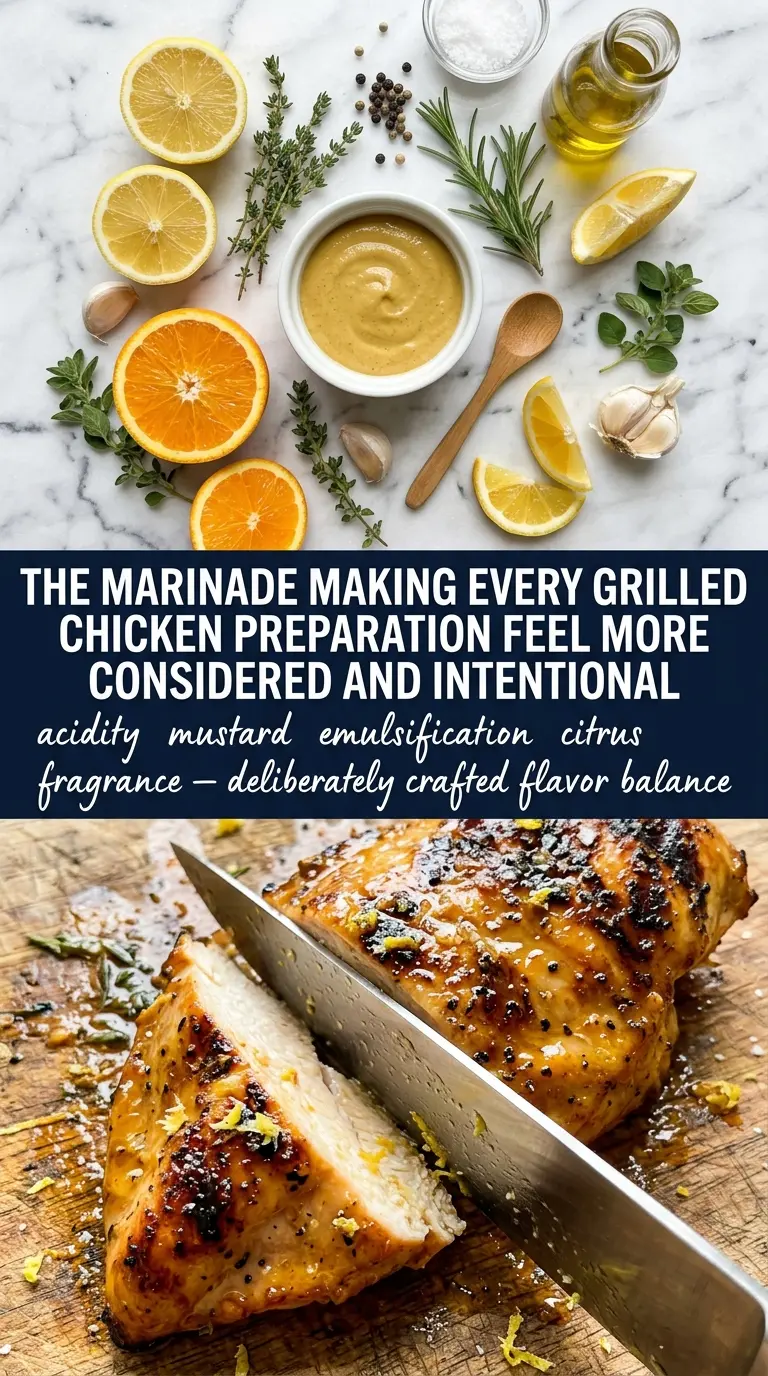
- Dijon mustard — This is the backbone of the marinade. It adds bite, helps emulsify the oil and juice, and clings to the chicken better than yellow mustard ever will.
- Orange juice and lemon juice — Orange brings gentle sweetness and body; lemon keeps the finish sharp. Fresh juice tastes cleaner here than bottled, especially if you want the marinade to stay bright on the grill.
- Olive oil — Don’t swap this for water or skip it. Oil carries the flavor, helps the chicken brown more evenly, and keeps lean cuts from drying out.
- Honey — You need just enough to soften the mustard and help with color. More than a tablespoon starts pushing the marinade toward sticky and can make the surface darken too fast.
- Thyme and garlic — These give the marinade its savory depth. Fresh thyme works too, but dried thyme is steadier and holds up well in a fast marinade like this.
- Chicken cut — Boneless thighs stay the juiciest and are the most forgiving on the grill. Breasts work well too, but they need closer attention because they dry out faster once they pass 165°F.
How to Build the Marinade So the Chicken Stays Juicy on the Grill
Whisk the marinade until it looks fully blended
Start by whisking the oil, mustard, citrus juices, garlic, honey, thyme, salt, and pepper until the mixture looks smooth and slightly thickened. If it looks separated right away, keep whisking; Dijon is doing the emulsifying here, and you want it evenly distributed before it touches the chicken. A well-blended marinade coats more evenly, which means fewer bland spots and better browning later.
Let the chicken marinate in a bag, not a bowl
A zip-top bag keeps the marinade in close contact with the chicken and uses less liquid than a bowl. Press out the air, seal it, and turn the bag once or twice while it sits in the fridge so the pieces soak evenly. If you’re using bone-in pieces, give them the full marinating window; if you’re using breasts, stay closer to the low end so the citrus doesn’t start tightening the texture.
Grill over medium-high heat and watch for clean release
Preheat the grill before the chicken goes on. If the grates are too cool, the marinade sticks and tears; if they’re screaming hot, the honey scorches before the center cooks through. The chicken is ready to flip when it releases easily and has clear grill marks, not when you force it off the grate. Cook until the thickest part reaches 165°F, then pull it right away.
Rest before slicing
Five minutes of rest keeps the juices inside the meat instead of running onto the cutting board. If you slice too early, even perfectly grilled chicken can look dry. Resting also gives the juices a chance to settle, which makes the texture softer and the flavor more even in every bite.
How to Adapt This for Different Cuts and Dinner Plans
Boneless thighs for the juiciest result
Use boneless, skinless thighs if you want the most forgiving option. They take the marinade beautifully, stay moist over higher grill heat, and give you more time before they overcook.
Chicken breasts for a leaner dinner
Breasts work well, but keep them even in thickness and don’t push the marinating time past 4 hours if they’re thin. They dry out faster than thighs, so pull them the moment the center hits 165°F and let the rest do the finishing.
Dairy-free and gluten-free without any special swaps
This recipe is naturally dairy-free and gluten-free as written, which makes it easy to serve a mixed crowd without changing a thing. Just check your Dijon label if you’re cooking for someone with strict gluten concerns, since brand formulations can vary.
Oven finish when the grill isn’t cooperating
Sear the chicken briefly on the grill to pick up color, then move it to a 400°F oven to finish cooking through. That approach keeps the mustard from overbrowning before the center is done, especially with thicker cuts.
Storage and Reheating
- Refrigerator: Store cooked chicken in an airtight container for up to 4 days. The citrus flavor stays good, but the exterior won’t be as crisp after chilling.
- Freezer: Freeze cooked chicken for up to 2 months, tightly wrapped and sealed. Thaw it in the refrigerator overnight so it reheats evenly instead of drying out at the edges.
- Reheating: Reheat gently in a covered skillet with a splash of water or broth over low heat, or warm it in a 325°F oven until just heated through. High heat is what turns grilled chicken stringy and dry, so keep the temperature low and stop as soon as it’s warm.
Questions I Get Asked About This Recipe
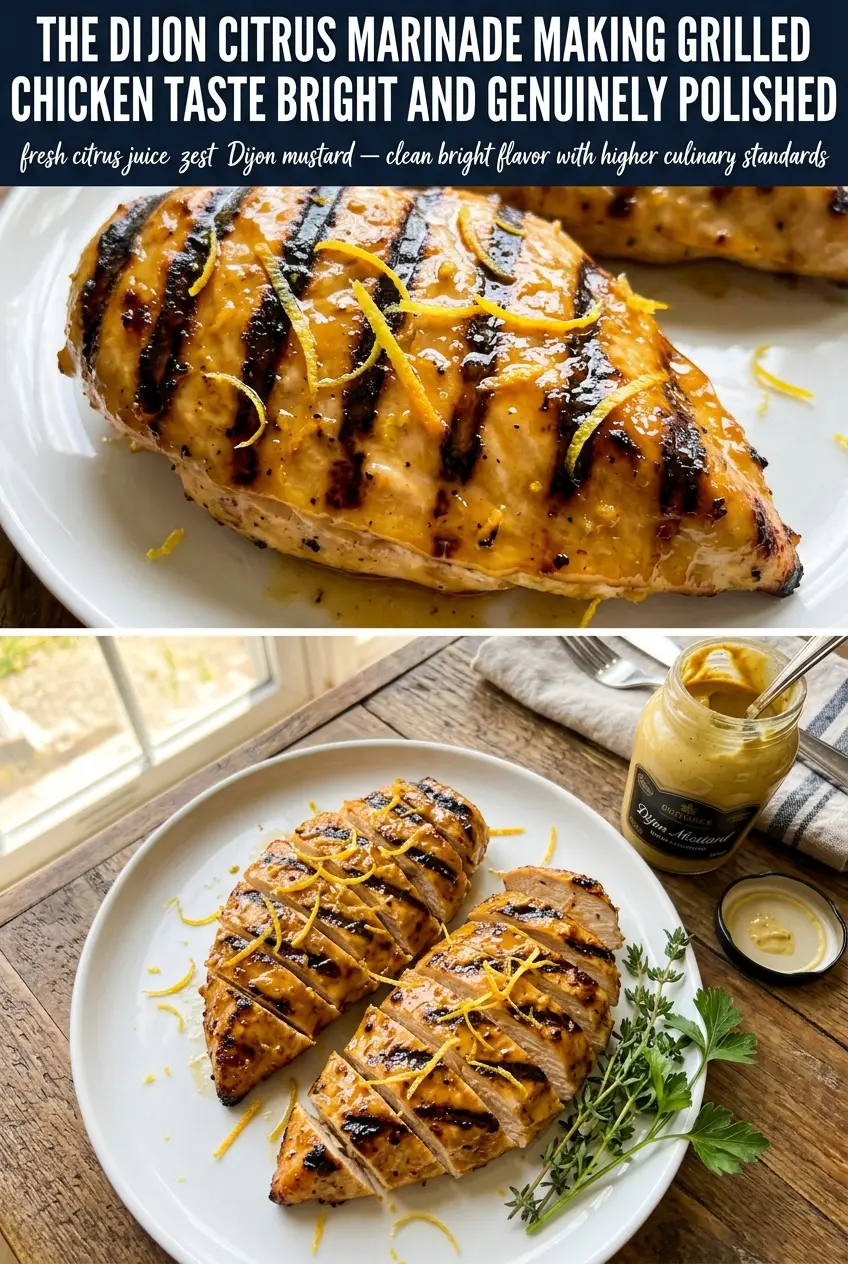
Citrus Dijon Grilled Chicken Marinade
Ingredients
Equipment
Method
- Whisk together olive oil, Dijon mustard, orange juice, lemon juice, garlic, honey, dried thyme, salt, and pepper until smooth and fully combined.
- Transfer the chicken to a large zip-top bag and pour the marinade over it, turning to coat all sides.
- Refrigerate for 2-8 hours so the citrus-Dijon flavor penetrates the chicken.
- Preheat the grill to medium-high heat.
- Grill the chicken until the internal temperature reaches 165°F; timing varies by cut, so check as you approach the target temperature.
- Let the chicken rest for 5 minutes before serving to help the juices redistribute.