Buttery rye, a thin beef patty with a crisp-edged sear, and onions cooked down until they turn jammy and sweet make a patty melt hit the table with the kind of balance people remember. The bread stays sturdy, the cheese melts into the onions and beef, and every bite gives you crunch, richness, and just enough tang from the special sauce to keep it from feeling heavy.
The trick here is treating each part like it matters. The onions need time over medium-low heat so they soften and caramelize instead of steaming, and the beef wants a hot skillet so it picks up a proper crust before the sandwich gets pressed together. Rye is the right bread for this because it brings a little bite of its own and stands up to the filling without turning soggy.
Below you’ll find the timing that keeps the bread crisp, the onions deeply browned, and the cheese melted all the way through. I’ve also included the swap I use when I want a sharper sauce or a more classic deli-style finish.
The onions turned out soft and deeply browned, and the cheese melted all the way through without burning the bread. My husband said it tasted like a real diner patty melt.
Save this patty melt for the nights when you want diner-style crunch, melty cheese, and caramelized onions on toasted rye.
The Onions Need Time, Not Heat
The part that makes or breaks a patty melt is the onion layer. If you rush them over high heat, they brown on the outside before they lose their raw bite, and that sharp edge comes through in the finished sandwich. Slow cooking in butter gives you onions that collapse into a sweet, glossy tangle and actually blend with the cheese instead of sitting in dry strands on top of the patty.
The other mistake is building the sandwich before the onions are ready. By the time the bread is toasted and the meat is cooked, the onions should be soft enough to spread and deep gold in color. That keeps the whole sandwich hot and cohesive when it goes back into the skillet for the final press.
What Each Ingredient Is Actually Doing In This Patty Melt
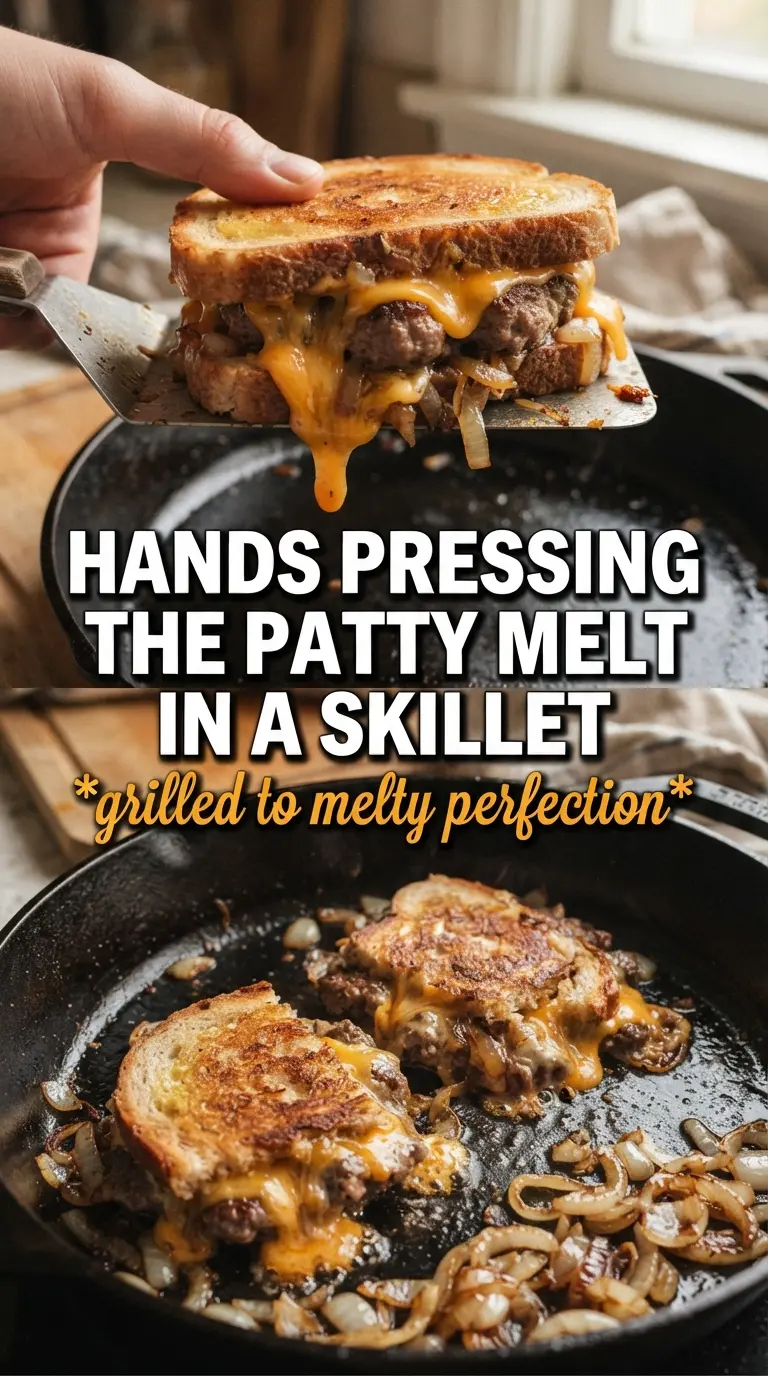
- 80/20 ground beef — The fat keeps the patty juicy and helps it sear instead of drying out. Leaner beef will work, but the sandwich loses that diner-style richness.
- Rye bread — Rye gives the melt its classic character and holds up better than soft sandwich bread. If you swap it, use a sturdy bread with enough structure to survive the press and skillet finish.
- Swiss and sharp American or cheddar — Swiss brings nutty meltability, while the second cheese gives you either creaminess or sharper bite. I like the combination because it melts smoothly without tasting flat.
- Butter — This is what gives the bread its deep golden crust and helps the onions soften evenly. Don’t use a high-heat oil for the bread; you’ll lose that toasted, rich finish.
- Worcestershire sauce — A small amount adds savory depth to both the beef and the special sauce. It’s worth keeping in the mix because it makes the sandwich taste seasoned all the way through, not just on the surface.
- Mayo, ketchup, and Dijon — Together they make the sauce creamy, tangy, and slightly sweet. Dijon is the piece that keeps it from tasting one-note.
Building the Melt So the Bread Stays Crisp
Caramelize the onions first
Start the onions in two tablespoons of butter over medium-low heat and give them time. They should soften, shrink, and gradually turn a deep golden brown without sticking hard to the pan. If they start to scorch before they’re tender, the heat is too high, and the finished sandwich will taste bitter instead of sweet.
Mix and season the beef lightly
Divide the beef into four loose balls, then season with Worcestershire, garlic powder, salt, and pepper. Don’t overwork it; packed meat turns dense after it hits the skillet. You want the patties thin enough to match the bread and quick enough to cook through without drying out.
Sear the patties hard and fast
Heat the cast iron skillet until it’s hot enough that the beef sizzles the second it lands. Smash each ball thin and let the first side develop a crust before flipping, about two to three minutes per side. If the pan isn’t hot, the meat will gray instead of brown, and the sandwich loses that diner-style edge.
Toast, stack, and press
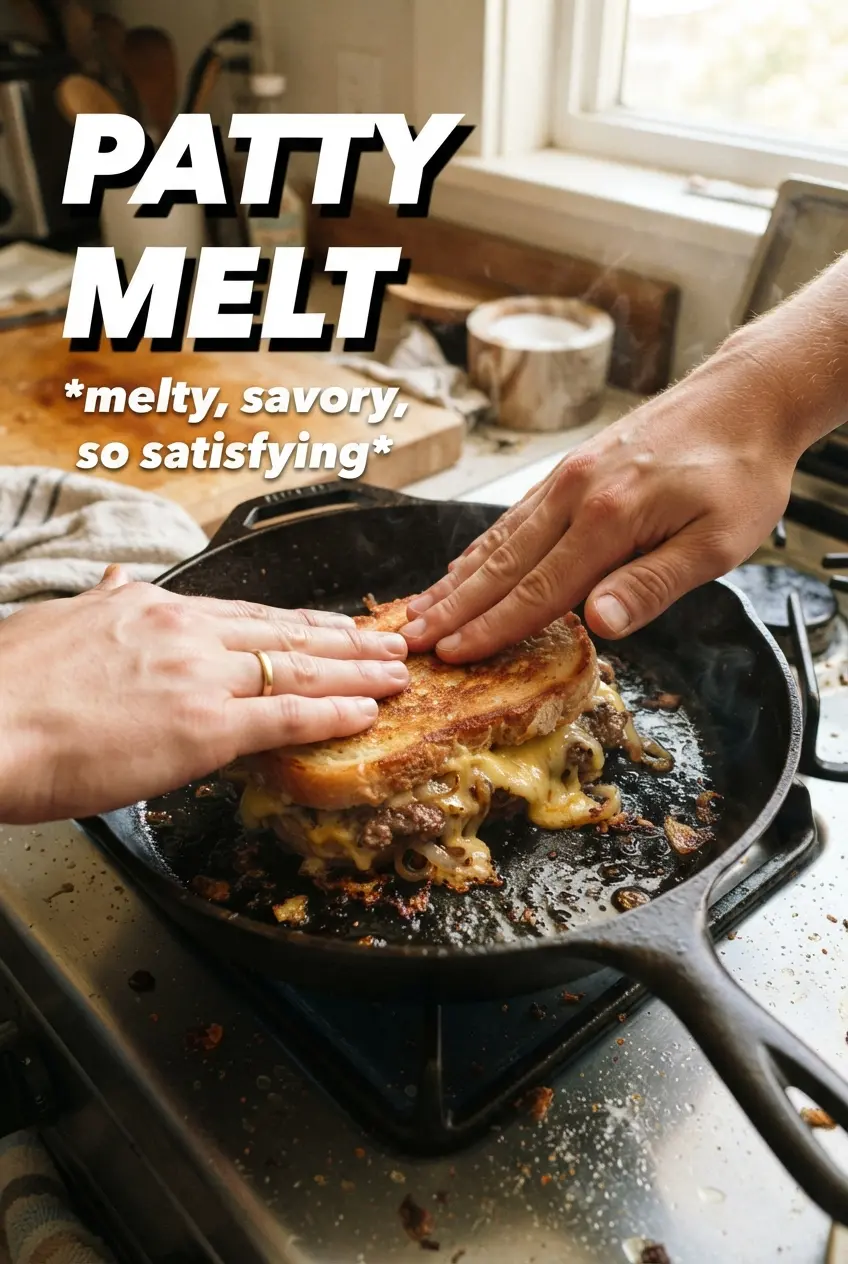
Toast the buttered rye in the skillet until it’s golden and crisp, then assemble with sauce, onions, patty, both cheeses, more onions, and the second slice of bread. Return the sandwich to the skillet and press it gently so the cheese melts into the hot filling. Cook just until the bread is deeply golden and the cheese is fully melted; if you stay on the heat too long, the bread burns before the center is ready.
How to Adapt This Patty Melt Without Losing the Point
Gluten-Free Bread Swap
Use a sturdy gluten-free sandwich bread that can handle buttering and pressing in a skillet. The texture will be a little more delicate than rye, so toast it first and keep the final press short to avoid crumbling.
Cheeseburger-Style Version
If you want a sharper, more classic burger flavor, use cheddar on both sides of the patty and skip the Swiss. You’ll lose a little of the mellow, nutty melt, but the sandwich gets bolder and a little more diner-casual.
Dairy-Free Version
Use plant-based butter for the skillet and a good melting dairy-free cheese. The onions and beef carry a lot of the flavor here, so the sandwich still works, but choose a cheese that softens under heat instead of one that stays rubbery.
Extra Tangy Special Sauce
Add a little more Dijon or a splash of pickle juice to the sauce if you want more bite. That works especially well if your onions are very sweet, because the sharper sauce keeps the sandwich balanced.
Storage and Reheating
- Refrigerator: Store assembled sandwiches for up to 3 days. The bread softens a bit, but the flavor holds.
- Freezer: Freeze the cooked patties and onions separately for best results. I don’t recommend freezing the fully assembled sandwich because the bread turns mushy when thawed.
- Reheating: Reheat in a skillet over medium-low heat with a lid for a few minutes to warm the center, then uncover to crisp the bread again. Microwaving makes the bread limp and the cheese uneven, so skip it if you can.
Answers to the Questions Worth Asking
Patty Melt
Ingredients
Equipment
Method
- Melt 2 tablespoons unsalted butter in a cast iron skillet over medium-low heat, then add the thinly sliced onions and stir to coat. Cook for 25-30 minutes, stirring occasionally, until deeply golden and caramelized (reduce heat if they brown too fast).
- Divide the 80/20 ground beef into 4 balls and season each with Worcestershire sauce, garlic powder, salt, and pepper. Press seasoning into the meat so it stays on during cooking.
- Heat the cast iron skillet over high heat until very hot, then smash each beef ball into a thin patty. Cook 2-3 minutes per side, flipping once, until browned and cooked through.
- In the same skillet, toast the rye bread slices with butter until golden on the surface. Keep heat medium-high so the bread crisps without burning.
- Assemble each sandwich with toasted rye, special sauce, caramelized onions, a smash patty, both cheeses, more onions, and another toast slice. Press lightly so the layers bind.
- Return the assembled melts to the skillet and press gently, cooking 1-2 minutes per side until the cheese is fully melted and the bread is crisp. Serve immediately while the cheese stretches.